I really enjoy all the new footage from Jurassic World that's been showing lately, because otherwise, right about now, my life's kind of boring. LOL. In other news, Mother's Day is just around the corner. Time flies! I don't know if my family is doing something special to celebrate; hopefully we will, but, like I said before, my life's kind of boring right now. Without further ado...
Days till:
It is: 2 days till Mother's Day
It is: 17 days till Memorial Day
It is: 34 days till Jurassic World's opens!
It is: 41 days till Inside Out's release!
In the Spotlight:
Wow! I can't believe that Jurassic World is only just over a month away! After all these years of waiting, waiting a month is going to be a piece of cake. Being so close to the release of the film is so unreal for me. I'm excited!
I love the flood of new footage we're getting from the film. It's coming so fast, I'm literally having a hard time keeping up to date! In any case, this first clip is from a Barbasol commercial advertising Jurassic World-related merchandise. It doesn't feature much, but it does show Owen and Claire trying to escape a flock of Pteranodon and Dimorphodon.
This next video is the latest TV spot that was just released, and it's awesome! It shows loads of new footage, including a dinosaur never before seen in Jurassic World footage. See if you can spot it:
In case you didn't see it, a new dinosaur has made an appearance in the stampede scene: Parasaurolophus! Parasaurolophus is a Cretaceous hadrosaur with a long crest extending from the back of its head. I'm really glad they decided to keep this dinosaur in the movie because it's already been in the previous three. Why break the trend? Topic of the Week by Christian Ryan
The geologic column consists of many rock layers, each with unique sets of animals and plants. How they are interpreted can tell us a lot about the world of our past.
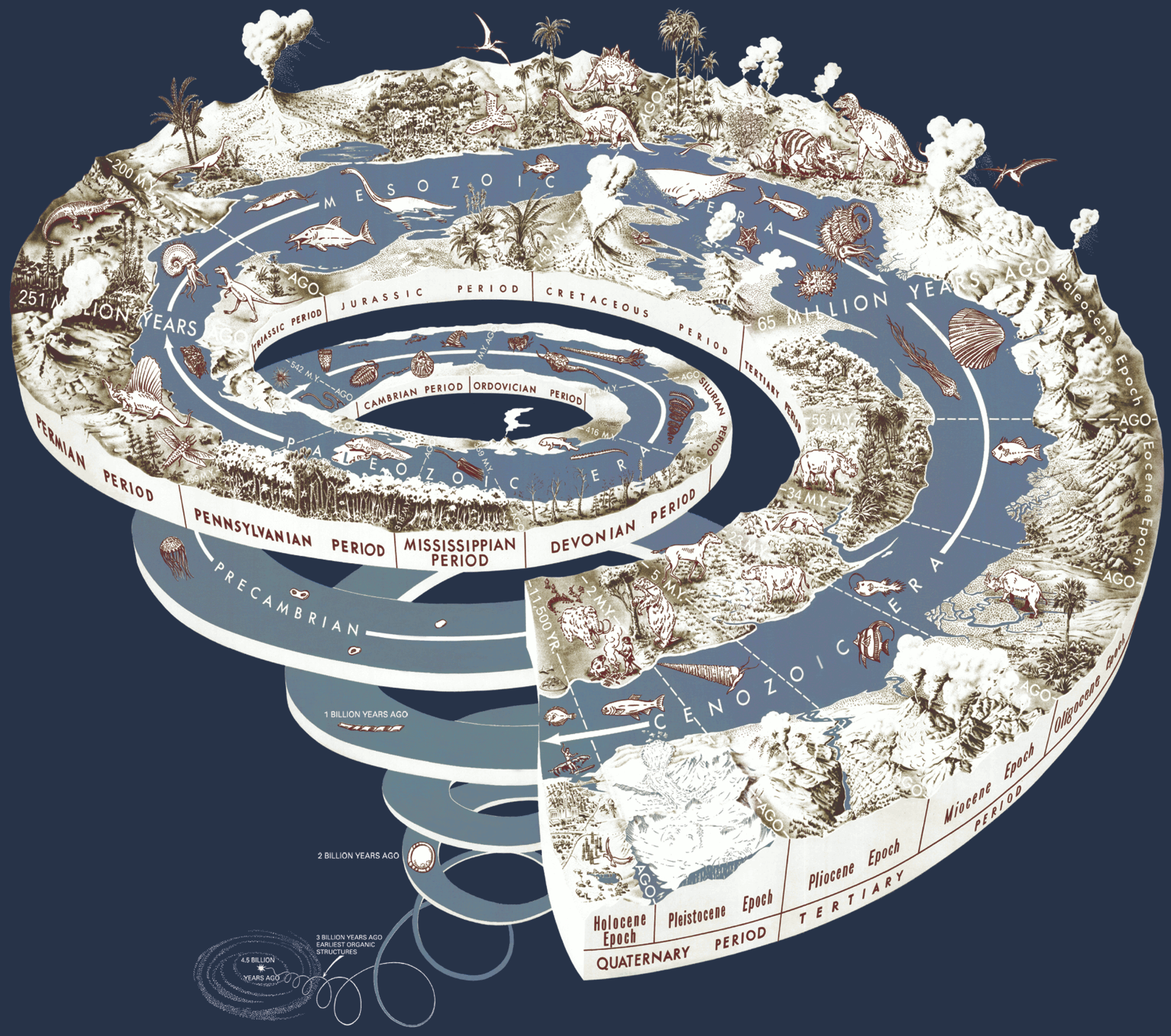
The geologic column, consists of many rock layers – some rock layers are thick, some are thin. Evolutionists claim that these rock layers represent the entire history of life the earth in time periods, which started 3.5 billion years ago. Now there are several problems with interpreting the geologic column, and the fossil record itself – as the entire history of life on earth over a period of millions of years. Radiometric dating and other commonly used dating methods are flawed due to several unverifiable assumptions. In addition to these problems, there are several reasons to suggest that the earth's fossils aren't nearly as old as evolutionists believe them to be (e.g. soft dinosaur tissue and bent rock layers). Is there another way to interpret the fossil record? In fact, there is. The Bible is the inspired Word of God Himself, the only individual who was there before the beginning of time. Since He cannot lie (Numbers 23:19), we can use His word to develop a worldview – a Biblical, or creation, worldview to look at the evidence we see in the rock layers. This three-part series will take a look at the fossil record through a creation worldview and showcase just how amazing the geological history of our earth was!
Fossils come in many shapes and sizes. This trilobite is a fine example.
Firstly, allow me to explain further what the fossil record actually is. The fossil record is split into three main chunks – the oldest, the Paleozoic (meaning “Ancient Life”), the Mesozoic (meaning “Middle Life), and the youngest, the Cenozoic (meaning 'New Life'). And within these three main rock layers are several smaller ones. Within the Paleozoic are: Cambrian, Ordovician, Silurian, Devonian, Carboniferous and the Permian; the Mesozoic consists of: the Triassic, Jurassic and Cretaceous; and the Cenozoic consists of: the Paleocene, Eocene, Oligocene, Miocene, Pliocene, Pleistocene and the Holocene. Due to evolutionists using the fossil record as “proof” for their theory, some creationists have put forth the claim that the fossil record, and sometimes even its fossils, simply do not exist. This approach is unscientific and, in some cases, lazy. In fact, in places like the Grand Canyon, we can see many of the layers of the geologic column, one on top of the other. There are specific sets of creatures and plants unique to each layer. (E.g. T. rex is unique to upper Cretaceous rock layers) The general order of the fossil record can clearly be seen not only here, but in various parts of the planet.
The history of life on earth as commonly portrayed in evolutionary science textbooks.
Now how do we present the evidence we see in the fossil record through a Biblical worldview? Well, the book of Genesis records that God created the world only 6,000 years ago or so. When God originally created the world, and all those living in it, it was without sin, death, sickness and suffering. Around 1,650 years later, Genesis also records that the earth as people once knew it was destroyed by a global flood – the only survivors were some sea creatures, Noah and his family, two of every kind of air-breathing terrestrial “unclean” animal and seven or 14 of every “clean” animal; they all survived on the enormous ark God instructed Noah to construct. What does all this have to do with rock layers and the fossil record?
What types of strange animals and plants would you have seen in the past?
Well, as creationist Ken Ham often states, the fossil record is made up of “billions of dead things, buried in rock layers, laid down by water, all over the earth”. These water-buried now-fossilized remains of plants and animals are found all over the earth and on every continent (including Antarctica), implying that they were all covered by water at some point...sounding familiar? There was only one event that caused the entire planet to be covered by water: the Genesis Flood! Therefore, the Genesis Flood was what buried these fossilized animals and plants! Remember when I said before that each rock layer consists of a unique set of plants and animals? Well, each of these “unique sets” seems to best represent ecosystems and environments that would have covered the earth before the Flood. By looking at rock layers that formed during the Flood, we can learn a great deal about what the world was like in this pre-Flood world (which is one of my favorite time periods in history).
The fossil record actually represents various different ecosystems that once existed on earth, most of them before Noah's Flood.
What was this pre-Flood world like? Well, one thing we know for sure is that it was vastly different from today! While it doesn't provide much information about climates or global temperatures, scripture offers several clues. Genesis 1:9 relays the events that occurred 6,000 years ago, on the third day of the Creation week: “And God said, 'Let the water under the sky be gathered to one place, and let dry ground appear.' And it was so.” Clearly, the Bible tells us that the water was in one place, if this is the case, then the land must also be in one place. Interestingly enough, geological evidence seems to suggest that there weren't seven continents like there are today. Instead, there was only one supercontinent called Rodinia (not Pangaea, which we'll get to in part 2); even all mushed together, the continents were not anywhere close to their present positions. For example, if you were to look out over what would later become the western coast of North America, you'd likely be able to see Eastern Antarctica or Australia!
Before the Flood, the earth was made up of one supercontinent, called Rodinia.
We find fossils from the Flood we find – which represented the world before it was covered by water – indicate that the climate was different on Rodinia as well. Rich coal deposits can be found in the ground from pole to pole. Contrary to popular belief, we don't get coal and other fossil fuels from dinosaurs; it actually comes from ancient plant life. These plants of all different types once grew over the entire earth. We even find fossils of tropical plants in more northern regions; for example, palm trees have been discovered in Montana and wood has been discovered in Antarctica. The pre-Flood wasn't anything like the present one!
Fossils and coal deposits show that the pre-Flood world was mostly lush and tropical.
So what about the fossil record? How does it help us understand what the pre-Flood world was like? Well, you will remember that earlier I explained how the fossil record is contained within rock layers. Each rock layer contains a specific set of creatures and plants, so most creation geologists and paleontologists believe that these layers represent ancient ecosystems (with smaller ecosystems found in different places in each main environment). These extinct habitats and their residents were quite incredible. If you had the power to travel to this pre-Flood time period, what would you have seen? Let's take a look at these environments and the creatures that lived in them.
Cambrian Seas (Cambrian, Ordovician, Silurian)
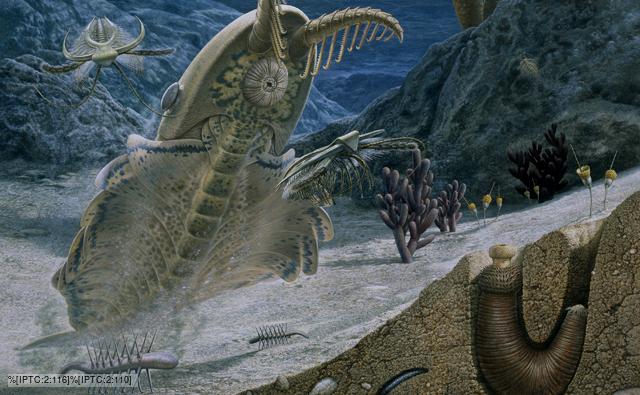
The Cambrian Seas were located near the edges of the pre-Flood continental shelves. Here, a myriad of different animals made their home. (IMAGE CREDITS)
The Cambrian Seas were located near the edge of the continental shelves. It hosted elaborate reefs made up of corals that provided homes and hiding places were a lot of the animals living here. This habitat consisted of a myriad of strange creatures, some of which – like sea urchins, sponges and jellyfish – are still around today. Along with familiar creatures, there would have also been several that were not easily recognized, like trilobites. There were over 10,000 species of these armored arthropods; they resemble modern woodlice, but they could grow anywhere between a few millimeters and three feet in length!
Trilobites were some of the most common creatures in the Cambrian seas.
Trilobites were fed upon by even stranger creatures, like Anomalocaris. Anomalocaris was a species of arthropod about three feet in length with large, compound eyes and two flexible arms that they used to grasp prey. Nothing like it is around today.
Anomalocaris was one of the Cambrian's predators. It had two arms for grasping prey and pulling it toward its mouth.
If you moved closer and closer toward the land, you would notice a habitat change. In addition to trilobites, you would have also seen strange creatures like the eurypterids, also known as sea scorpions. Sea scorpions are unrelated to modern scorpions, and they lack a stinger. However, they still had a pair of pincers for self defense and the capture of prey. There were many different species of sea scorpions. One of the largest was Pterygotus, which grew eight feet long! Unlike sea scorpions, Brontoscorpio was an aquatic true scorpion. It could grow three feet long and had a stinger the size of a light bulb. These aquatic scorpions (both true and sea scorpions) were probably mainly hunters of fish and aquatic invertebrates.
Pterygotus (bottom left) was one of the largest of sea scorpions.
Like all aquatic creatures, animals of the Cambrian Seas were created on Day 5 as the Bible says.
The Carboniferous Floating Forests were large forests that literally floated on top of the ocean!
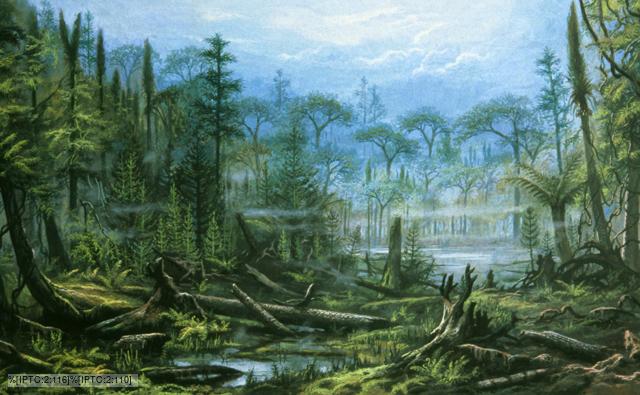
At some point before reaching the coast, you might come across an incredible sight: the floating forests of the Carboniferous. See, larger plants appear for the first time in the fossil record in the Devonian and Carboniferous rock layers. Creationists have realized that these plants had hollow roots, trunks and branches, and that their roots grew outward instead of downwards. Then it occurred to these creationists: these plants formed an intricate network of floating mats of vegetation, similar to today's quaking bogs. Unlike quaking bogs, the Carboniferous Floating Forests floated atop the ocean and were far larger. The plants and trees of these forests were unique; the “Devonian plants” on the outer rims of these forests were small, but as you went toward the center, you would have seen some trees that could grow up to 150 feet tall. It was these plants that were responsible for most of the coal deposits now laid down in the earth.
Plant life in the floating forests were lush and provided homes for amphibians, fish and arthropods. (IMAGE CREDITS)
But the plants weren't the only amazing things to see in the Carboniferous Floating Forest, so were the animals. Insects were common here and grew to massive sizes. The largest flying insect, Meganeura, was a humongous dragonfly with a 2 ½ foot wingspan. Crawling among the “ground” were large spider-like eurypterids like Megarachne and the largest arthropod of all, Arthropleura, a millipede-relative as long as 6-10 feet. Among these arthropods were amphibians and fish, like the unique Tiktaalik.
Meganeura, a giant dragonfly, was queen of the Carboniferous skies! She had a wingspan of 2 1/2 feet!
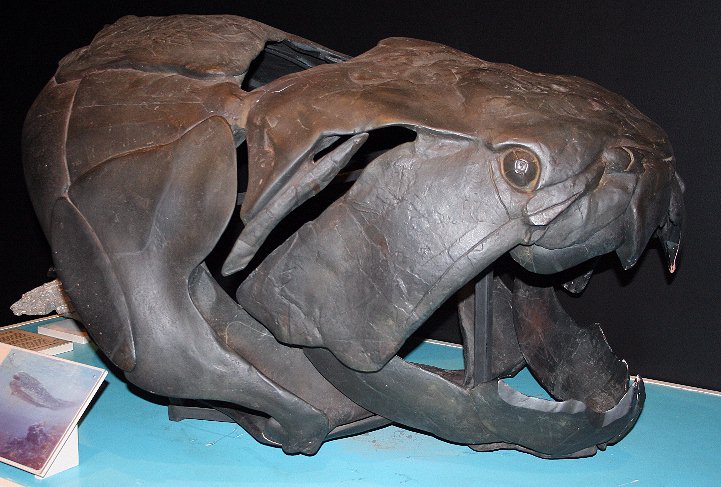
The waters around the floating forests were not safe. Sharks and other predatory fish stalked the water, looking for prey. The largest Devonian predator was a nasty fish called Dunkleosteus, which also likely stalked the Cambrian Seas were checked out earlier. It grew as long as a school bus and was covered in bony armor-plating.
Dunkleosteus was a large predatory fish that lacked teeth. Instead, it possessed sharp shears that could crunch through tough armored prey!
Sandy Permian Coast (Permian, perhaps Triassic)
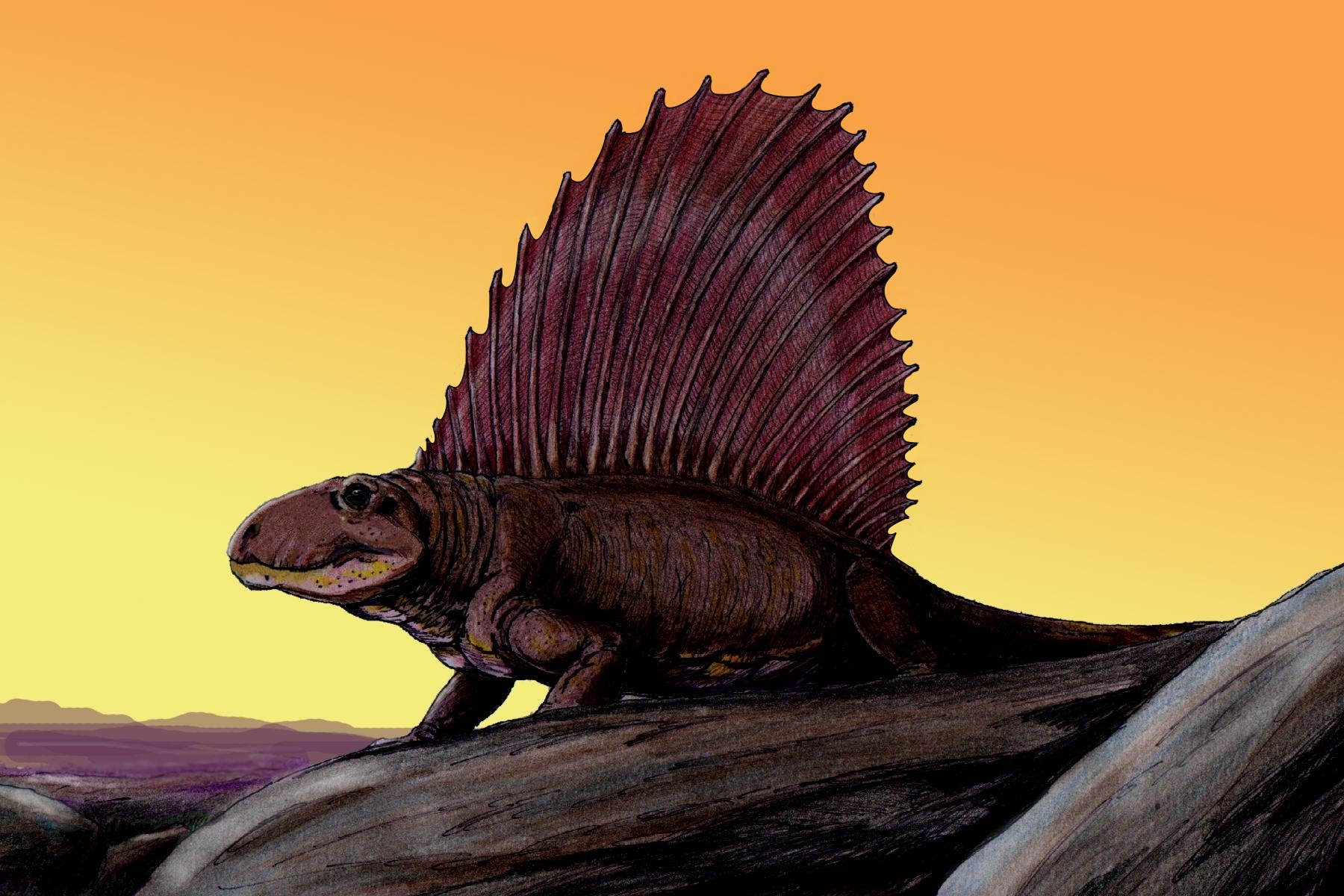
Imagine what it would have been like to see a Dimetrodon basking along the Permian coast at dawn.
Finally, we would reach the coasts of the pre-Flood Rodinia and see new and exciting forms of life. Buried in sandstone all around the world are the most bizarre reptiles you've ever seen, even more bizarre than many dinosaurs. The most common Permian creature was the Lystrosaurus, a pig-sized reptile with tusks. Their fossils have been uncovered in Antarctica, India and South Africa. They used their horny beaks to chomp away at the lush plant life. Other herbivorous reptiles, like Moschops and Scutosaurus could also be found here.
The pig-like Lystrosaurus was very widespread in the pre-Flood world.
The Permian coasts were not without their predators. Dimetrodon, a 6-10 foot reptile with a sail on its back and the grizzly bear-sized gorgonopsid Inostrancevia were apex predators of this habitat. Both predators were equipped to kill (after the Fall of Man) thanks to their unique teeth – while Dimetrodon had differently-sized teeth and Inostrancevia had four-inch saber-teeth to bring down their dinners.
On the Permian Sandy Coast, an Inostrancevia is preying upon a herd of Scutosaurus.
As the sediments are often quite similar, some creationists theorize that the Triassic rock layers represent the same or similar habitats to the Permian. So in addition to the creatures we see in the Permian, we would also see coastal species of dinosaurs, like Coelophysis and Eoraptor, both predators, and herbivores like Plateosaurus.
Plateosaurus would have been one of the largest Triassic herbivores.
Jurassic Environment
The Jurassic environment was busting with ferns and conifers, perfect food for a herd of hungry sauropods!
Heading inland, we meet the glories of the ancient pre-Flood world – dinosaurs. As I mentioned before, each of the main pre-Flood environments contained sub-divisions, each one represented by rock formations (several Jurassic sub-divisions include those of the Morrison, Shishugou and Kayenta Formations). One of the richest rock formations is the Morrison Formation, which mainly stretches into the states of Utah, Colorado, Wyoming, Montana, New Mexico.
Stegosaurus is one of the most recognizable Jurassic dinosaurs, thanks to its four tail spikes and 17 spinal plates.
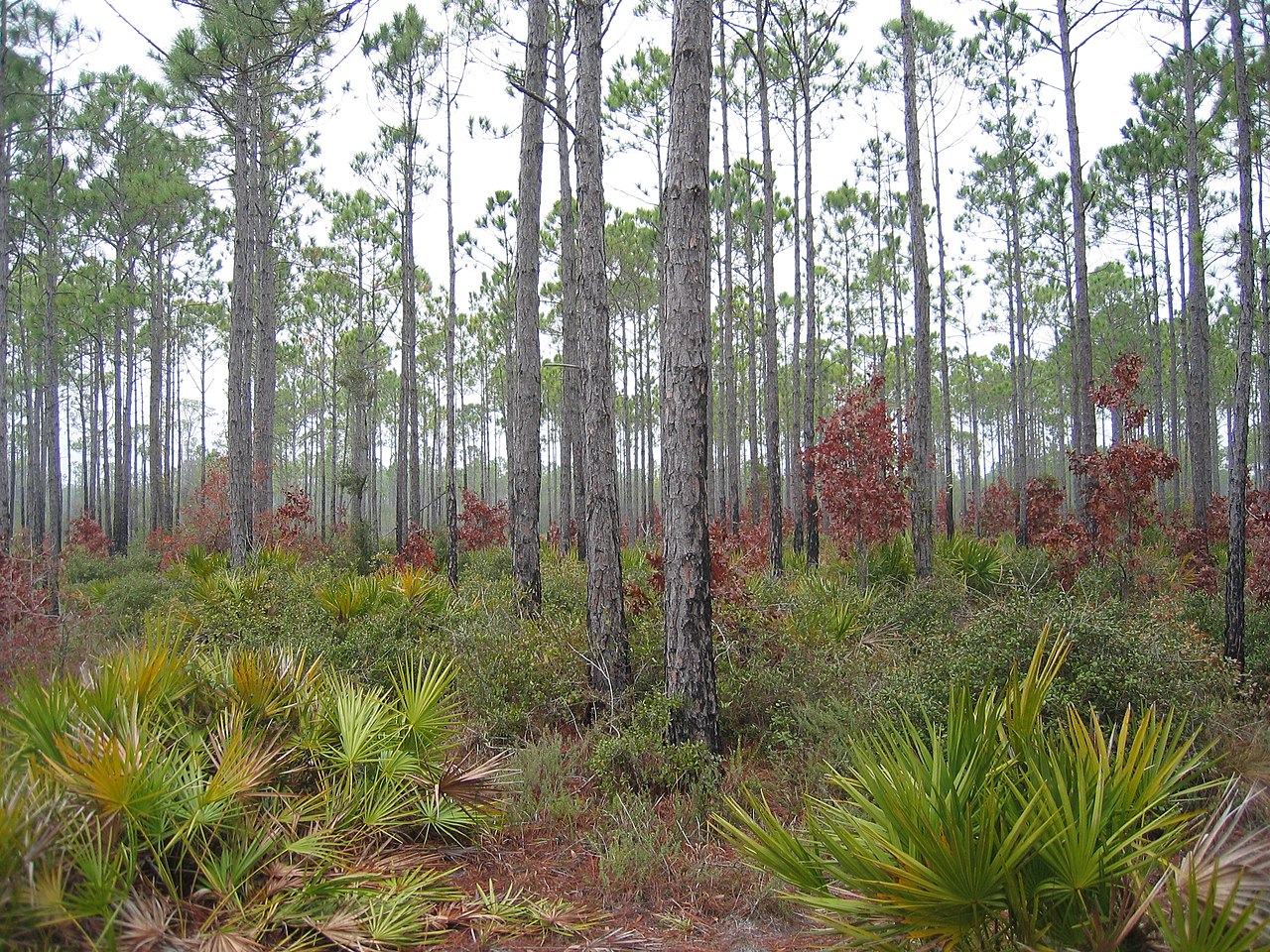
Plants in this habitat varied a little from today's plant variety. Coniferous trees, such as pines, and ferns dominated the floral portion of this environment. In fact, the ground cover seems to have consisted largely of ferns and cycads rather than grasses. Feeding on these plants were the largest animals ever to roam the land: the sauropods, or long-necked dinosaurs. There were many different species of sauropods in the Morrison Formation, so in order to find enough food to eat, they dedicated themselves to eating at different heights. Giants like Apatosaurus, Diplodocus and the newly-reclassified Brontosaurus ate mainly the lowest-growing plants, using their long necks to reach a lot of food without moving the rest of the body. Camarasaurus probably consumed medium-height plants. The tallest trees would be left to the tallest dinosaurs in the Morrison, like Brachiosaurus. Other dinosaurs such as the plate-backed Stegosaurus, the fleet-footed Dryosaurus and the Camptosaurus also coexisted here.
In this picture, we can see several different species of Jurassic dinosaurs, such as the predatory Allosaurus (far left), Camptosaurus (lower left), Ornitholestes (lower right), Stegosaurus (middle right) and the long-necked Apatosaurus (upper right). (PHOTO CREDITS)
These dinosaurs had to protect themselves by predators, either by sharp tail spikes, speed or even great size alone. Theropods like Ceratosaurus, Torvosaurus and Allosaurus would have preyed upon herbivorous dinosaurs.
Cretaceous Environment
The Cretaceous Environment featured many plants that we're familiar with today, such as magnolias, swamp cypress, palm trees and many others.
Finally, we reach the Cretaceous Environment, filled with a different set of plants and animals from those seen in the Jurassic. As with the Jurassic, there were many subdivisions of habitats within the main habitat: the Cretaceous. Some of these would have included: the Chenini, Flaming Cliffs and Hell Creek Formations.
Flowering plants were a common sight in the Cretaceous.
The Hell Creek Formation was where many of our favorite dinosaurs roamed the earth before the Flood. This formation includes portions of Montana, North and South Dakota and Wyoming. The Hell Creek Formation can easily be identified by its plant life; along with ferns, laurels also covered the ground. Adding a dash of color to the otherwise green world of plants were flowers. While we have not yet found evidence of grass in the Hell Creek Formation, it has been discovered in other Cretaceous formations. Growing alongside coniferous trees, angiosperms – broad-leafed trees like palm, maple and magnolia trees – also lived here.
Triceratops fossils are extremely common in the Hell Creek Formation.
Herbivorous dinosaurs were perfectly designed to munch through this vegetation. Duck-billed dinosaurs, scientifically known as hadrosaurs, like the Edmontosaurus had batteries of chewing teeth for grinding up these plants. Fossil bone beds of hundreds of Edmontosaurus skeletons indicates great herds of them roamed across the Hell Creek Formation. Popular dinosaurs like horned Triceratops and armored Ankylosaurus were not only made for a lifetime of eating, but also made for defense against their predators.
Edmontosaurus was a member of the hadrosaur family that roamed the Cretaceous environment in massive herds.
Predators were common in the Hell Creek Formation: the omnivorous Troodon was likely the fox of the Cretaceous, acting as an opportunist. Acheroraptor, a species of raptor closely related to Velociraptor, probably worked in gangs to bring down herbivores larger than itself. The largest predator of the Hell Creek Formation is also the most well-known dinosaur of all, Tyrannosaurus rex! This 40-foot animal had a bone-crushing bite and was the only carnivore capable of taking down a full-grown Triceratops. Danger in the Hell Creek Formation also came from the sky in the form of a pterosaur called Quetzalcoatlus. It wasn't a dinosaur, but it had a wingspan of 33 feet and a height of about 15 feet. It mainly hunted smaller animals on the ground, kind of like a giant, four-legged marabou stork.
Just a few of the many creatures of the Hell Creek Formation: (top left to bottom right) Ankylosaurus, Tyrannosaurus, Ornithomimus, Quetzalcoatlus, Triceratops, Acheroraptor, Pachycephalosaurus and Anzu.
The pre-Flood world was filled with vast and varied habitats, from the Cambrian Seas to the Cretaceous forests. The world God originally created was incredible, just like the world today. As a matter of fact, the pre-Flood world is so different from the present one, that something must have completely reshaped the face of the planet. Again, the Bible gives us the answer.
As beautiful as this pre-Flood world must have been, it was marred...marred with the sinfulness of man. The Bible describes men as only possessing evil in their hearts at all times. Something had to be done. There was only one family left on the planet that still worshiped and obeyed the Lord, and that was Noah's family. So God told Noah to build a huge boat to save him from what was to be the greatest cataclysmic event in the history of life on earth: the Genesis Flood.
After sin entered the world, dinosaurs, like this Edmontosaurus (top) had to defend themselves from carnivorous theropods.
In the next part of this series, we'll explore the geological forces that (literally) shook the world, during the Flood, destroying the face of planet earth as we know it!
Disclaimer: Many (or in some cases all) of the photographs and images above are not mine. If you own one or more of them and would like them to be removed, politely let me know via my email address
It's the first day of May and spring is in full swing...actually here in Utah it feels like summer. Phew! Temperatures average anywhere between the 60's and upper-80's or so. I guess that's what I get for living in a desert. Strangely enough, when I want the sun to be out around here, it rains. Aren't these type of rain showers supposed to be in April so by May we can have spring flowers? I guess not in this part of Utah! In case any of you are wondering why I've been posting so many rerun articles lately, it's frankly because I have been very busy as of late. I have a series of new articles coming out next Friday. I really hope my schedule will open up a little and allow me time to write a bunch of new articles.
Days till:
It is: 9 days till Mother's Day
It is: 41 days till Jurassic World's theatrical release
It is: 49 days till Inside Out's theatrical release
In the Spotlight:
Wow! There's actually so much news on Jurassic World coming out every week that it's actually getting difficult to keep up, even for me, a hardcore Jurassic Park fan! First, let's talk about a little news that's been spread rapidly across the internet. Uproxx recently published an article titled "'Jurassic World' Will Ignore the Events of The Lost World and Jurassic Park III". Jurassicworld.orghas published their thoughts on this article, so I decided to do the same. You can read the article for yourself if you want more details, but essentially, they state that The Lost World and Jurassic Park III are not going to be part of the Jurassic World storyline, but will rather be kicked to the curb and forgotten in this movie. They claim that Jurassic World is going to be a direct sequel to the first film.
Frankly, this claim is utter nonsense. While it is true that The Lost World and Jurassic Park III will be put aside, they're not going to be considered un-canonical! See, the reason for this is because those two films take place on another island, Isla Sorna. Jurassic World takes place on Isla Nublar. Besides, as jurassicworld.org points out, they make a clear reference to Jurassic Park III on the Masrani Global Corporation viral website when they state the following:
"A seasoned security contractor, Vic Hoskins was involved in overseeing the infamous flying reptile "cleanup" operation over Canada in 2001. Due to the professionalism his team displayed, he was hired personally by Simon Masrani to re-develop InGen’s Security Division, which helped oversee the protection of workers on Isla Nublar during Jurassic World’s construction."
As you will recall if you've seen JPIII, several Pteranodons escape from the aviary on Isla Sorna and fly toward the mainland, likely looking for new nesting grounds. So, according to the website, not only is Vic Hoskins' security team responsible for recapturing these Pteranodons, but this is the reason they were hired to work at Jurassic World! In summary, TLW and JPIII are still canon!
In other news, a behind-the-scenes video from Jurassic World's production was released on the internet yesterday. It features some new footage, interviews from the director, Steven Spielberg, Chris Pratt, Bryce Dallas Howard and several other actors from the film. Be sure to check it out below, as well as the screenshot of the hologram display in the park's Innovation Center!
Jurassic World's Innovation Center will feature a hologram display. Spared no expense!
I have two more updates. A video of the game play of the upcoming game Lego Jurassic World was released earlier this week. Even though it starts out speaking in German, it quickly switches to English. Please enjoy our first look at what looks like an incredible game:
Last, but certainly not least, an article in Empire magazine showed off some cool new photos from Jurassic World, including this one featured below:
Owen and the Raptor Squad: Blue, Charlie, Delta and Echo.
Topic of the Week by Christian Ryan
People just love birds. One of everyone’s favorite types is no doubt the parrot. Parrots are very smart birds. We can train them to talk and recent tests even prove that at least some parrots actually know what they’re saying instead of just calling out words! God made these birds for us to enjoy. Parrots come in a wide range of sizes, from small Budgerigarsto the giant Kakapo. Haven’t heard of the Kakapo? Well, it’s this large green parrot that lives on New Zealand. It’s not very parrot-like at all; it can’t fly! Most parrots, as we all know, can fly very well. We often like to have them sit on our shoulders, especially pirates. But one species of parrot is bound to surprise you.
A Kea sitting on a rock.
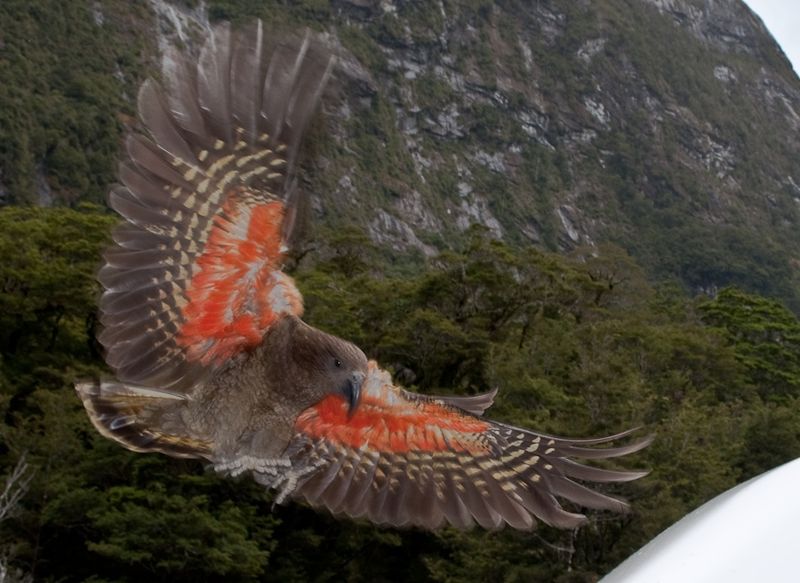
This Kea Parrot is about to land on a white car. As you can see, the undersides of its wings are a beautiful orange color.
It’s called the Kea, a small green parrot (about 19 inches long) living in New Zealand. Most parrot species are loved by millions, but not the Kea. It denies normal parrot behavior and is rather . . . “mischievous”. First of all, it likes to live in urban areas where they will tip over trash cans, break car windows, invade camping sites, and play with windshield wipers to the point of breaking them! (So they’re sort of like foxes on the wing) Another thing that makes this parrot unique is that instead of living in the lush tropical forests, it lives in the snow on the alpine slopes. Keas are the only parrots known to live in this kind of habitat.
But probably the most surprising thing about the Kea is that instead of asking it, “Polly want a cracker?” you may want to ask, “Polly want a lamb chops?” This parrot will eat fruit, but lately, they've decided to go . . . no . . . it couldn’t be . . . could these guys be turning . . . CARNIVOROUS?!? Strange but true, in the spring, summer and fall, they normally eat daisies, berries and other fruits, nectar, pollen, insects and etc. But Keas have been seen actually eating not only stuff from trash cans (which is why they tip them over in the first place), but they also will eat carrion. In winter, these foods are harder to find. The rampage began in the 1800’s when people introduced sheep to New Zealand and the Keas started to eat carrion of dead sheep. Then they really went on the rampage! Keas are believed to have actually killed 200 or so sheep in a single night (in 1884) and 15,000 sheep in a season in. Just when you saw some animals appeared to be giving meat up like the lions did in a post I wrote a couple of weeks ago, another animal switches onto meat.
How on earth do they kill sheep anyway? Well, they fly over to the sheep and start pecking at sores and I’d assume the sheep eventually died of shock and blood loss. Four main theories arose as to why the Kea transformed almost overnight to be a sheep-killer:
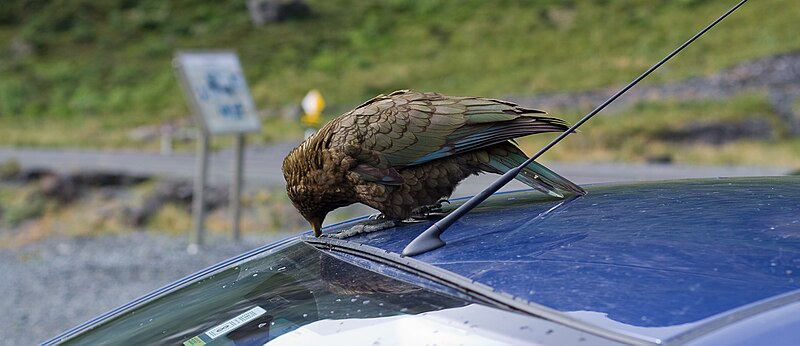
A Kea damaging a car.
They just switched from eating insects to eating sheep
There were maggots in the carrion they were eating so this is when they developed a taste for meat/
The Vegetable Sheep theory is: Keas thought the sheep were plants when they were lying down so they just accidentally ate a sheep and thought, “Hey, this tastes pretty good! We should do this more often!”
The bird’s diet changed because of theory adaptability, intelligence, curiosity and mischievousness
The last theory I mentioned is the one most scientists believe is most likely. Many scientists believe they also used to feast on Moa carrion too (Moas are giant birds that went extinct a few hundred years ago). Boy, I’m sure glad these birds don’t prey on people! If they did, we’d all be in big trouble no doubt! Because of their sheep-hunting behavior, the Kea was hunted and actually became endangered. The good news is, this bird received full protection in 1986.
Fortunately for all sheep-kind, Kea predations on livestock have gone down drastically. They are getting rarer and rarer over the past few years. However, occasional Kea attacks on sheep are still being reported, and most of these attacks are on sheep that are old, weak or sick (but some people sometimes will find healthy sheep with Kea wounds). So it seems as though the Kea is finally calming down . . . at least for the moment . . .
But don’t you start thinking this is the end of it! Kea’s aren’t the only so-called herbivores that weren’t told they are supposed to eat plants! A farmer in India lost 48 of his chickens. He suspected some dogs had done the deed, so he and his brother went out one night to catch the culprit. Boy were they in for a surprise when they saw his cow named Lal sneak into the chicken coop and started to grab and eat the chickens! How shocking in deed. So it turns out those cows promoting Chick-Fil-A aren’t only promoting the business, they’re also eating at the business!
Another example would be the was when someone took a trip to Kangaroo Island in Australia, the person dropped a BBQ steak sandwich. Then two grey kangaroos came in and devoured the sandwich, bread, meat and all.
In 1992, a wild Panda Bear killed and ate 26 goats before being captured and studied. In 2002, a British researcher got quite a shock when she saw a sheep snatch an oblivious grouse and devoured it whole!
Another sheep was seen gobbling up nine chickens. There’s even a horse that actually will chase down chickens and eat them whole. And believe it or not, when a film crew was filming a migration of Wildebeest in Africa, they were migrating through a river where our “friendly” hippos live. Some wildebeest were killed by crocodiles who also inhabit the river, but before some of the crocodiles could eat, hippos came in and started eating the carcass!
Should I go on? Just as many carnivorous animals will have a vegetarian diet, many animals have become carnivorous herbivores. This, as horrifying as it may be, is a reminder to us that all animals were originally designed to eat plants as it says in Genesis. But after the first people rebelled against God, animals could go either ways. Most chose to go herbivorous because that was what their bodies were most designed for, but others chose to become carnivorous. Of course though, as we just learned, animals can change their diets. Fortunately most animals tend to stick with the diets that best suits their bodies (for instance, while horses can eat chickens, they must have a hard time tearing the bird apart with those dull teeth). Most animals probably would get sick if they tried to eat food that doesn’t suit their body. However, even in this fallen world we live in, God has promised us to one day, restore His beautiful creation.
Disclaimer: Many (or in some cases all) of the photographs and images above are not mine. If you own one or more of them and would like them to be removed, politely let me know via my email address.
Earth Day, the day we use to bring awareness to stewardship of the earth, was just two days ago. What did you all do for Earth Day? That's not the only thing that happened this past week...THE SECOND OFFICIAL TRAILER (not TV spot) WAS RELEASED ON MONDAY!!! More about that below. But first...
Days till:
It is: 16 days till Mother's Day
It is: 49 days till Jurassic World's theatrical release
It is: 56 days till Inside Out's theatrical release
In the Spotlight:
Unless A) you've been living under a rock, B) extremely uninterested in dinosaurs or C) have been eaten by raptors, you'll know that Jurassic World, the third sequel to Jurassic Park, is coming out on June 12! The awesome new trailer just released last Monday, and let me tell you, it's better than all the other trailers and TV spots we've seen so far combined with loads of new footage. Don't waste anymore time. Check it out now:
One word: AWESOME!!! I was so awestruck by how cool this trailer is. It's got just about everything you could want concerning the new film. But as if that wasn't enough, another clip from the film aired yesterday! The clip below features Indominus rex as she breaks out of her enclosure. It mostly features clips we've seen from the trailer, but at least we can now see them the way they'll be in the film:
This clip is also one of the few in which we here Simon Masrani's unqiue Indian voice.
As if these clips still weren't enough, last Friday, Saturday and Sunday brought us official all-new Jurassic World posters! Check 'em out below:
Claire and Indominus rex have a staredown!
There's always a bigger fish...er, Mosasaurus, in the sea!
Owen and the Raptor Squad race through the jungle!
Topic of the Week by Christian Ryan
Several of the many animals we share the planet with are rapidly becoming endangered. As their numbers decrease, it becomes more and more evident that they need our protection. Sometimes, no matter what we do, animal species go extinct, forever lost from the earth. Often times, most people only hear about examples of animals that are still endangered or have become extinct. However, there are also instances where the opposite is the case and we successfully save an animal from extinction – today, many of these successes result in the animal becoming overly bountiful today!
Animals all over our planet are in dire need for conservation!
In honor of Earth Day (which is on the 22nd), we are going to look at some of the many instances where a previously endangered species was saved from extinction. This has been mostly thanks to the work of conservationists – people and organizations that work together to protect and preserve nature. While some conservationists attempt to breed such endangered animals in captivity, later to be released in the wild, others improve the habitat of these creatures (making more areas for the animals to live or making the habitat they have more habitable) and some are conservative game hunters, who manage populations of wild animals to ensure more common species don't cause rarer ones to die out.
Below is a list of just a few of these endangered animal success stories, how they became endangered, and what people did to help them out.
American Alligator
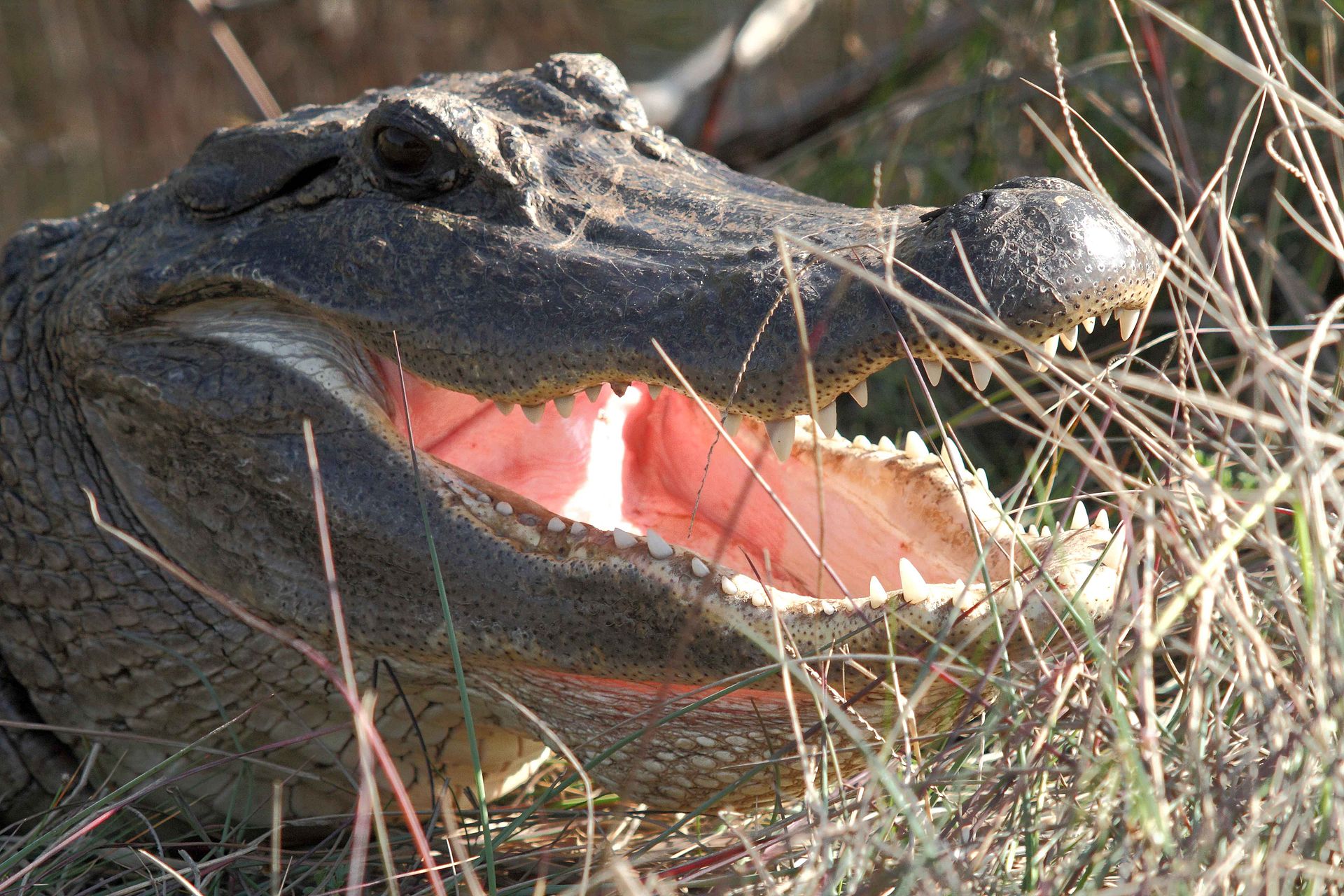
The American alligator was once commonly hunted for their beautiful hides.
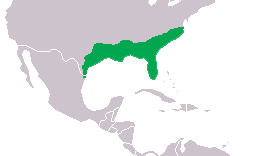
The American alligator is the most common member of the crocodilian family in North America. It's a carnivorous reptiles about 10-15 feet in length and 1,000 pounds in weight. They primarily can be found in many of the southeastern United States' lakes, rivers, swamps and marshes. They are particularly common in Florida (where I spent most of my childhood) and Louisiana. Alligators are the apex predators of their ecosystem, so they are needed to keep their prey from becoming too numerous. This made it bad when alligator numbers began to decrease.
Alligators began going extinct thanks to people clearing out their habitat to make room for human developments and because they were hunted for their hides. People had been using their tough skin to make leather since the 19th century. Conservationists realized that alligators needed help, so it was put into protection under the law in 1962. The government made it illegal across the United States to hunt and kill alligators. Conservationists quickly got to work; thanks to much captive breeding and releasing members of the species into the wild, the American alligator made a thriving comeback. Today, there are more than 5 million of these cold-blooded predators swimming through the southeastern waterways, and are even starting to expand their range northward into North Carolina.
The range of the American alligator is now spreading, thanks to conservation methods.
Bald Eagle
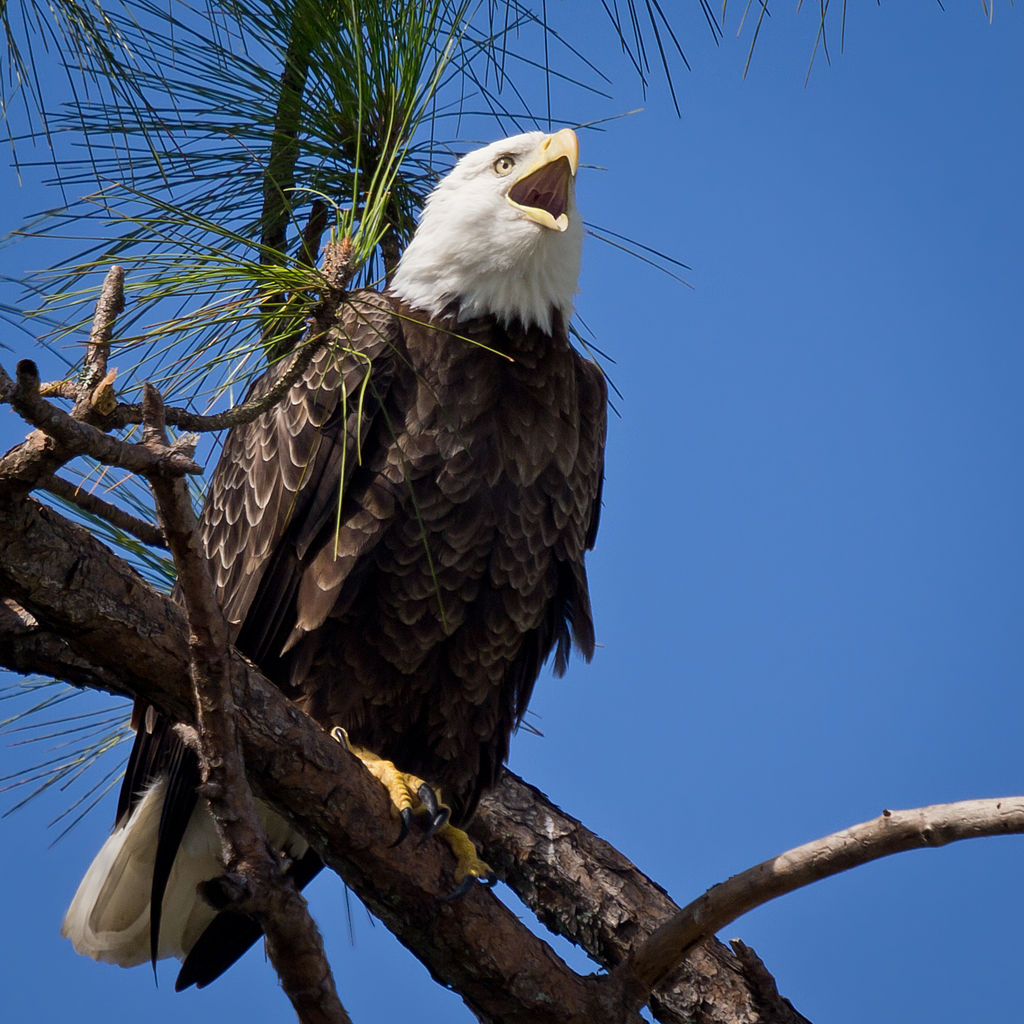
Bald eagle's were threatened with extinction from the pesticide DDT
It might come to a surprise to some that the bald eagle was once on the Endangered Species List! This majestic bird is the national emblem of America itself. It has a wingspan of up to eight feet and can weigh 6.5-14 pounds. Bald eagles have a hook-like beak and sharp talons that are used to catch their prey and tear it apart once caught. Despite their name, the bald eagle isn't actually bald; rather its head is covered in white feathers. They are also known to mate for life.
In addition to the killing of bald eagle's to keep them from eating fish stocks, for sport and habitat loss, the bald eagle, along with other birds, also greatly suffered from a chemical pesticide called DDT. The DDT pesticide was put into use after the end of World War II to protect crops from insects that ruined them. However, DDT would often get washed into the waterways where it was absorbed by fish and aquatic plants. Birds like bald eagles that ate the fish also became poisoned with the chemical. DDT wasn't deadly to the birds themselves however (most of the time); instead, DDT caused the mother birds to lay eggs with thin egg shells that would either break when the mother sat on them for incubation or fail to hatch. With fewer eagles being born, their numbers plummeted to dangerously low levels.
Conservationists began to get concerned by 1963. At that time, only 487 or so nesting pairs of bald eagles had managed to survive. In order to help save the species from extinction, the bald eagle was considered endangered in most states. They also heavily restricted the use of DDT in 1972. As with the alligator, breeding eagles in captivity, releasing them into the wild and preserving their habitat and nesting areas, the eagle was saved from extinction by 2007. The bald eagle can now remain the national bird of the United States of America for years to come.
Bald eagles have a bright future ahead of them!
American Bison
American bison are relics from the Ice Age.
When someone says “wild west”, the image that often comes to mind is a great herd of buffalo stampeding across the great plains, perhaps being pursued by wolves or native Americans. However, these large, hairy mammals are actually not “buffalo”, because this term is actually referring to creatures such as the water buffalo of Asia and the Cape buffalo of Africa. The correct name for the American “buffalo” is American bison, or Bison bison (arguably one of the easiest-to-pronounce scientific names ever). Since the Ice Age, great herds of tens of millions of bison roamed the Great Plains of North America from Alaska to Mexico; they were hunted by saber-toothed cats, grazing with woolly mammoths and were crucial to Native American lifestyles.
But this all changed in the 19th century upon the arrival of early pioneering settlers from Europe. Unlike the native Americans, who were very conservative about the number of bison they hunted, early settlers killed bison in vast numbers for food, sport and even just to lower the Native American population. As many as 50 million bison were wiped out by Europeans, lowering their numbers into the low hundreds. Europeans also, as usual, cleared out bison habitat to make room for their own settlements.
Bison once roamed in herds numbering into their millions across the American plains.
However, when conservationists realized bison were in decline, drastic measures were conducted to ensure their survival. In 1889, less than 1,100 bison remained. The American Bison Society was formed at the Bronx Zoo in 1905 to help increase bison numbers. They began releasing them into large reserves. Today, there are around 20,000 bison in the wild, and about 500,000 members of the species total. It may take a while to fully restore their numbers, but at least things are finally looking up for this great American species.
Bontebok
At one time, only 22 bonteboks were left in existence.
Antelopes roam far and wide across the African savanna. There are several different species, from the corkscrewed-horned kudu and nyala, to the tiny dik dik and the migratory wildebeest and the largest, the eland. Most species of antelope are quite common, but this is not the case for the bontebok. The bontebok can easily be recognized by its dark-colored coat and the white markings on its face and rump.
Bonteboks were commonly hunted throughout the early 1800's. In fact, they were so commonly hunted that only 22 members of the species survived. This is why the last-surviving bonteboks were kept in a large fenced area in order to prevent them from being shot at. It is thanks to efforts such as these that the bontebok has increased greatly in number – there are now over 3,000 individuals in several conservation areas in Africa. Talk about a comeback!
Gray Wolf
Wolves were hunted extensively because they were considered a threat to livestock.
Alongside the bison, the gray wolf is often viewed as one of American's national heritages. Scientists believe that this species, or a similar canine, was the ancestor of the domestic dog. They live throughout the northern hemisphere, even into Asia and Europe (up until recent times, they were even residents to northern Africa). Wolves are social creatures, living in packs averaging about seven or eight individuals. Wolves don't really howl at the moon, instead they howl in order to communicate with other wolves, often sending messages of “get lost!” to rival packs. Before their decline, it is believed that over 2 million of these canines roamed the North American continent.
As with many apex predators, Europeans saw the need to get rid of wolves for several reasons. Wolves were known to kill livestock and were thought to be vile, vicious, devious and evil animals, so people shot and poisoned countless numbers of them. They also killed them to use their pelts as clothing. Another threat to the wolf was (and often times still is) habitat loss. Most wolves were killed merely because of the misconception that they were evil and dangerous creatures. Whereas in reality, wolves actually tend to avoid people if possible. Due to all the killing and habitat loss, the gray wolf's numbers were reduced so much that there were only a few hundred still left in the wild.
After becoming listed under the Endangered Species Act in 1974, wolves made an incredible return! Now, thousands of wolves can be found in the wild...but at one point, the success seemed almost too good. Wolves still needed the law's protection, but the government considered removing the gray wolf from the Endangered Species List in 2013 due to their apparent comeback. Thankfully, this was prevented and in the February of 2014, it was decided the consideration of removing the gray wolf from the Endangered Species List was too soon and based on insufficient data. Therefore, the gray wolf still receives protection to this day.
Humpback Whales
The humpback whale is known for leaping into the air; this is called breaching and its purpose is not fully understood.
Whales are the largest animals ever to have existed on the planet, the biggest species being the blue whale. While not as large, the humpback whale is still and interesting species. These marine mammals are known for their underwater songs that they use to communicate with other humpbacks. These sounds can be quite complex and consist of cries, howls and moans, among other sounds. Scientists still don't completely understand these beautiful songs. A full-grown humpback whale can be 48-62 feet long and weigh up to 40 tons.
Even the largest animals are subject to becoming extinct. For thousands of years, whales have been hunted for their meat, old and blubber. This practice is referred to as “whaling”. Even today, thousands of whales are killed each year. Whaling has been responsible for the decline in whale populations worldwide, including those of the humpbacks. By the middle 1960's, the humpback populations had decreased to only 1,200 in the North Pacific! Fortunately, the Endangered Species Act came to the rescue once again.
Because laws are now prohibiting whaling in many areas around the world, humpback numbers are slowly on the increase. There are 22,000 or so humpbacks alive today that descended from the aforementioned population of only 1,200. But illegal whaling practices are still occurring around the world. If we are to ensure the humpback whale's survival, the whaling industry must be nipped at the bud.
Southern Sea Otter
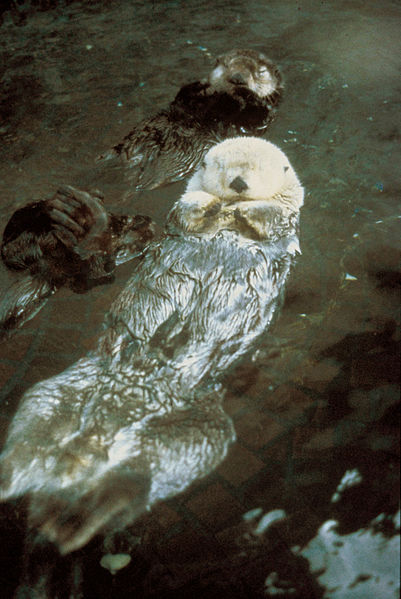
Who would want to kill such an adorable creature? Unfortunately, many people did.
It's hard to imagine how a critter as cute and cuddly as the sea otter could be endangered, but nonetheless, some people apparently couldn't care less! You see, sea otters have two layers of fur – the outer layer to keep them dry and another layer underneath that to keep them warm in the often chilly waters they swim in. This fur was nearly their downfall. During the 1700's and 1800's, people thought the thick fur of sea otters was attractive and they were hunted extensively by fur traders.
Before the 1700's, there were an estimated between several hundred thousand to over a million. Afterward, there were only about 1,000 to 2,000 of these creatures left. These semi-aquatic mammals are very important to the kelp forests they live in. Sea otters love to eat sea urchins (among other invertebrates). Sea urchins in turn, dine on seaweed. The otters eat the urchins, therefore enabling seaweed to grow, and the seaweed provides a home for otters and loads of other aquatic species. Without the otters, seaweed would be much rarer and harder for animals that depend on it to find.
Fortunately, sea otters gained protection under the International Fur Seal Treaty of 1911, and the Marine Mammal Protection and Endangered Species Act in the 1970's. While their numbers are still far below their initial population, the fact that there are around 100,000 to 150,000 sea otters alive today just goes to show you how greatly their numbers have increased thanks to conservation methods.
White-tailed Deer
The white-tailed deer's population dropped to almost 300,000 in the United States.
As hard as it is to believe, the white-tailed deer was once an endangered species! This species can be found across most of North America and Central America, and northern South America. The underside of their white tail (which gives them their namesake) is used to signal other deer nearby, particularly if there's a predator in the area. As with most deer, males – also called bucks – have a set of antlers that they use for fighting other bucks in the autumn.
In the early 20th century, white-tailed deer were, as is often the case with many once-and-now-endangered animals, suffering from unregulated hunting. In the year 1930, the number of white-tailed deer dropped to almost 300,000 in the United States. Hunters and conservationists began to get worried by the loss of deer, so went to action. They were able to get laws passed that made it illegal to commercially exploit these deer and hunting was extremely regulated.
The white-tailed deer is a prime example of how a species bounced back from its endangered status – as of 2005, there were as many as 30 million of these deer in the United States alone and their numbers are still growing! However, there are now so many deer that there are too many for some ecosystems due to humans having killed off their the majority of their predators.
This is why the work of a conservationist is never done. These people who have dedicated their lives to protecting animals and their habitats must always stay on their toes to find out why animals are becoming endangered and how to save them. In the future, I hope to see many more stories of how conservationists and conservative game hunters worked together to pull animals back from the brink of extinction.
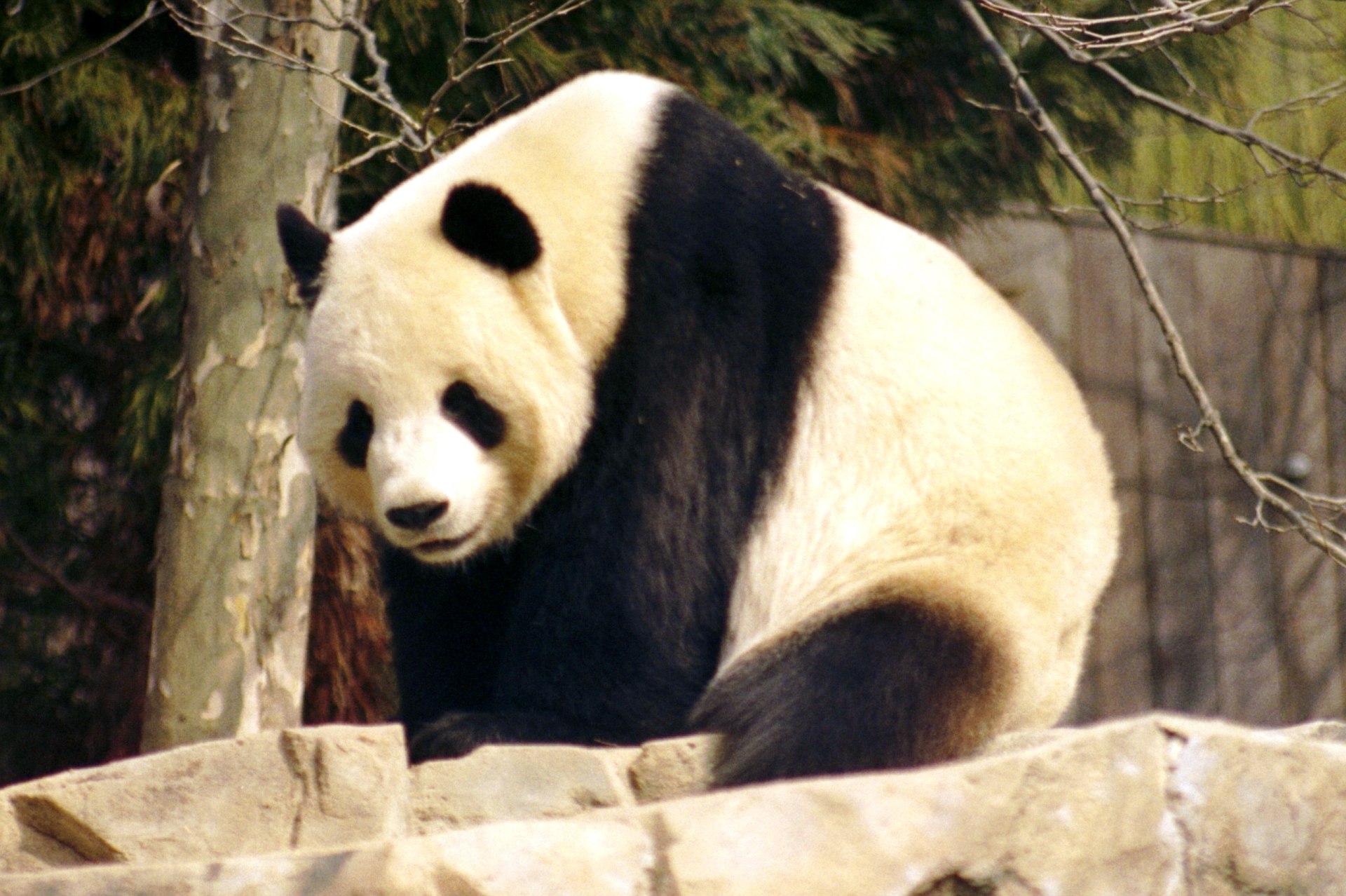
Several animals, like the giant panda, still need our help!
Disclaimer: Many (or in some cases all) of the photographs and images above are not mine. If you own one or more of them and would like them to be removed, politely let me know via my email address.
Sorry for being MIA last week. My church's drama, Victory at the Cross was last Friday and boy was it a lot of work! It was a great turn out, though. So anyways, I am now back and since Easter is over, I have an interesting rerun article and some exciting news about Jurassic World.
Days till:
It is: 3 days till Patriot Day
It is: 5 days till Earth Day
It is: 23 days till Mother's Day
It is: 56 days till Jurassic World's theatrical release!
It is: 63 days till Inside Out's release!
In the Spotlight:
Not much to share this week in terms of Jurassic World, but there was a new image from the film released not too long ago. Here it is:
The gyrosphere ride at Jurassic World among Apatosaurus (left), Triceratops (right) and a herd of Stegosaurus in the background.
This image is different from most screenshots released of the film. Most feature only the human characters, but this photo gives us a glimpse at the park's dinosaurs, like Triceratops. With the exception of the short clip in the second trailer, we have never seen the movie's Triceratops before (unless you want to count the pictures on the website). It is nice to see how the dinosaurs in this part of the park are coexisting and feeding together...a banquet for Indominus rex when she breaks out!
Also, this came out a little while ago, but it slipped past me completely. A new trailer for Pixar's upcoming Inside Out was aired! You can check it out below:
Based on the trailer, it looks like this is going to be an interesting movie. I can't wait to see how they make a movie staring...emotions. Sounds kind of like a strange concept at first, but I expect Pixar is going to turn it into a great movie. It definitely is very unique.
Topic of the Week by Christian Ryan
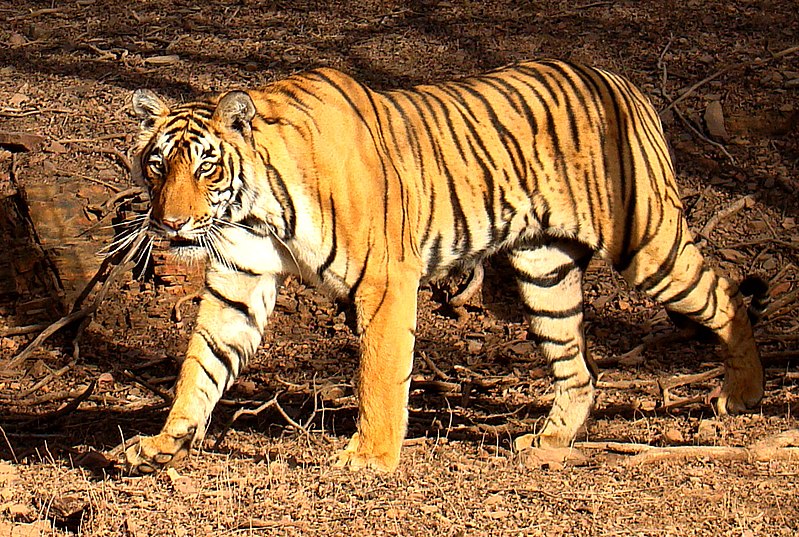
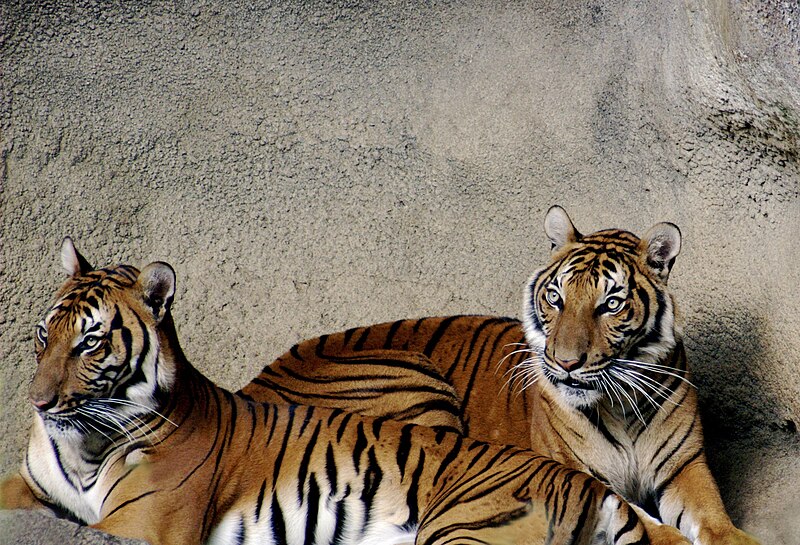
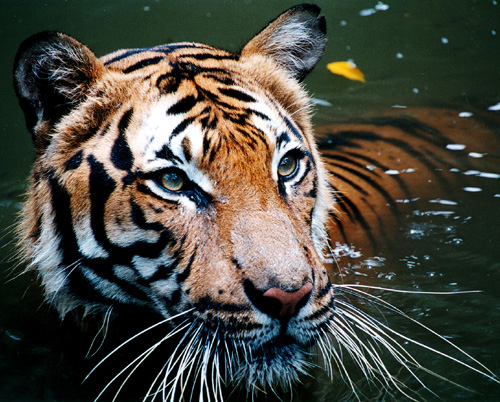
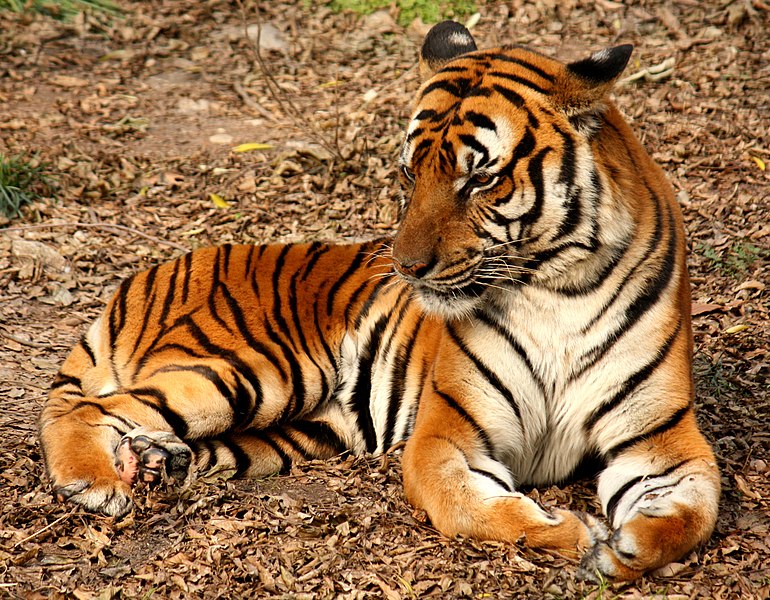
Not many people know this, but there were actually nine subspecies of tigers that have lived on the continent of Asia:
Bengal Tiger
Indochinese Tiger
Siberian Tiger
Malayan Tiger
Sumatran Tiger
South Chinese Tiger
Javan Tiger
Caspian Tiger
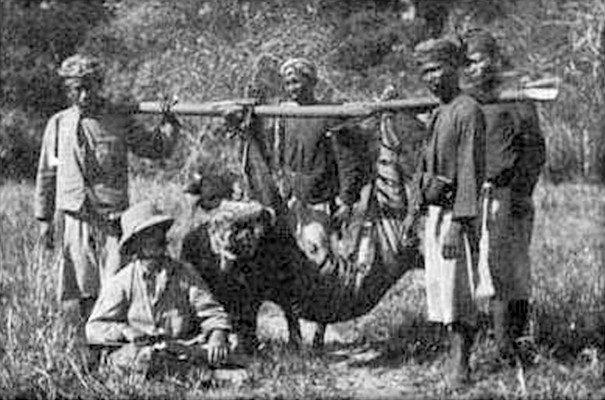
The only free Bali Tiger picture I could track down
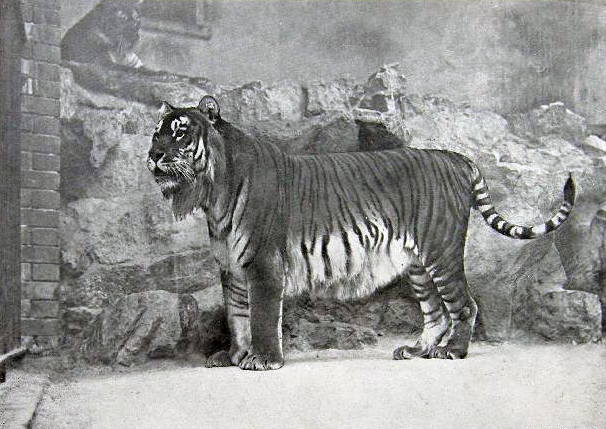
Today, there are only six species; the Caspian (which went extinct in the 1970's), the Bali (which went extinct in 1937) and Javan Tigers (which also went extinct in the 1970's) are all gone, which is why the pictures I found are in black and white. We’ll talk about why in just a minute. Now technically, tigers actually are related to lions, as only a single pair of cats came off Noah’s Ark after the Flood. And this cat kind had the DNA in it for ALL the later species of cats. And from this cat kind, a species called the tiger emerged from a process of natural selection. Natural selection is NOT evolution, by the way. However, today I wish to stay on the tiger topic, so for more on natural selection, check out one of my previous posts entitled “Return of the Great Mammoths”.
Now, where was I? Oh yes, I remember. Tigers all descended from the cat kind and from there they spread out over Asia and diversified into the different sub-species of tigers. A subspecies is different from a species. “Subspecies” is a term that is used to describe the differences within a species of animal, in this case, the tiger.
Tigers habitats very greatly. They live everywhere from the lush tropical forested, almost swampy habitats, to the freezing cold Polar Regions called the Taiga. They also hunt a wide range of prey, including wild pigs, monkeys, orangutans, deer, baby elephants, you name it! They use those black stripes to camouflage into the dense jungle. Did you know that tigers are the only cats to have orange skin? Yep, the fur is not the only orange thing on this cat. Tigers also can be white. This is caused by a genetic mutation. However, no matter how hard you look, you will never ever see an adult white tiger in the wild. Why? Well, because they are too easy to spot in the dark jungles. A predator can easily spot a baby tiger and eat it. And even if the baby white tiger managed to survive predators, it wouldn't be able to catch enough food because prey would see it from a mile away. Now if these white tigers lived near, let’s say the North Pole and they had a thick coat of fur, they would be quite common in the wild. But apparently, God didn’t want these cats in the North Pole. So if you’re looking for a white tiger, try the nearest zoo.
You have probably heard about a famous extinct cat called the Saber-Toothed Tiger. It probably got this name, not only because it has saber-teeth, but also because of its resemblance to a tiger. But guess what, the name “Saber-Toothed Tiger” is really a misnomer, since these cats are only distantly related to tigers. This is why scientists prefer to call them “Saber-Toothed Cats”. By the way, since we are talking about extinct cats, this is probably a good time to bring up the topic of why some subspecies of tiger have gone extinct. The answer is that they were overhunted. Who could dare over hunt the beautiful tiger? Well, their beauty is also their downfall. Many hunters over the years have hunted these cats for their coats. Fortunately, some ingenious people noticed that tiger populations were in decline, so they had the tiger put on the Endangered Species List so it was illegal to hunt the tiger. Now they’re safe . . . right? Not quite. See, there are still people who will illegally go out and kill tigers. These evil hunters are called poachers. Even today, tiger skin and bones will fetch a pretty price in some countries. You may be wondering why on earth so many folks would want tiger bones (and most of these people don’t wish to display the tiger bones in a museum or something). In many cultures, people believe that tiger bones have medical capabilities and are crushed up to use as medicine! Really, I’m not joking around! And believe it or not, these so-called “medicines” don’t really work, so they have no practical use to the buyer (but apparently, the buyers don’t know that). The South Chinese Tiger is really on the brink, it is almost extinct in the wild. The majority of these tigers is in captivity. And even the ones in captivity only came from about six individuals, so the gene pool is very small. It is already too late to save the Bali, Caspian and Javan tigers, but what can we do to save the other six species of tigers?
Well, people have set up national reserves to protect the living space for these predators! Also, people have been breeding tigers in captivity so that their numbers can eventually go up. In the past few years, tiger numbers world-wide are starting to become stable. There is also a way that you can help! How? Well, tell your friends and family not to buy tiger products and to also tell other people about the tiger’s plight. You can even send money to special organizations who help tigers (I’m not saying use money that would otherwise go in the offering plate at church. Give 10% to God, the creator of the tiger and then use some for the tigers themselves). By doing all these things, we can save one of God’s creations, the tiger, from extinction!
Disclaimer: Many (or in some cases all) of the photographs and images above are not mine. If you own one or more of them and would like them to be removed, politely let me know via my email address.





.jpg/1280px-Paradoxides_gracilis_and_Olenoides_serratus_233_(4).jpg)