Friday, September 25, 2015

Rerun Article: The Miraculous Spiral Staircase of Loretta Chapel


Finally, I have some cool stuff to share this week! More news on "Jurassic World 2" and The Good Dinosaur, plus an article from a while back. What a great way to open up the Fall season

Days Till
It is:17 days till Columbus Day
It is: 6 days till Vegetarian Day
It is: 36 days till Harvest Day
It is: 61 days till The Good Dinosaur's release

In the Spotlight
OK, so we know that Jurassic World's sequel will be out on June 22, 2018. Even with the long wait ahead, we already know a couple things about the film. For example, it has been confirmed that Owen Grady (Chris Pratt) and Claire Dearing (Bryce Dallas Howard) will be returning (more romance, perhaps?). We also know that the next film will not take place on one of the previous islands from the movie (Isla Nublar and Isla Sorna), and will also not involve a theme park. Colin Trevorrow is quoted for saying:

"[It will not be] just a bunch of dinosaurs chasing people on an island. That’ll get old real fast...I feel like the idea that this isn’t always going to be limited to theme parks, and there are applications for this science that reach far beyond entertainment. And when you look back at nuclear power and how that started, the first instinct was to weaponise it and later on we found it could be used for energy...And this isn’t something necessarily that was in the book but is a seed that I wanted to plant in this movie, is that might be able to grow in more of these movies if they decide to make more of them, is: What if this went open source? It's almost like InGen is Mac, but what if PC gets their hands on it? What if there are 15 different entities around the world who can make a dinosaur?...And Dr Wu says in the film, when he's warning Dr Mesrani [actually "Mr. Masrani"], 'we’re not always going to be the only ones who can make a dinosaur'. I think that’s an interesting idea that even if we don’t explore fully in this film, there is room for this universe to expand. I shouldn’t use the word universe, because people will think we’re making a Jurassic World universe -- we’re not. (Italicizing is my own doing)." -- Colin Trevorrow
What might happen in this film? Trevorrow's not telling all the secrets, but he did reveal something about Owen Grady and Claire Dearing:
"We know Owen is going to be in it and Claire will be in it and neither are going to be in the same place that we left them in this movie. Even though Claire is the one who evolves the most over the trilogy, it’s her story that mirrors this changing world, Owen has **** to deal with. The two of them opened Pandora’s Box in ‘Jurassic World,’ and each of them are responsible for different elements of it in different ways." -- Colin Trevorrow

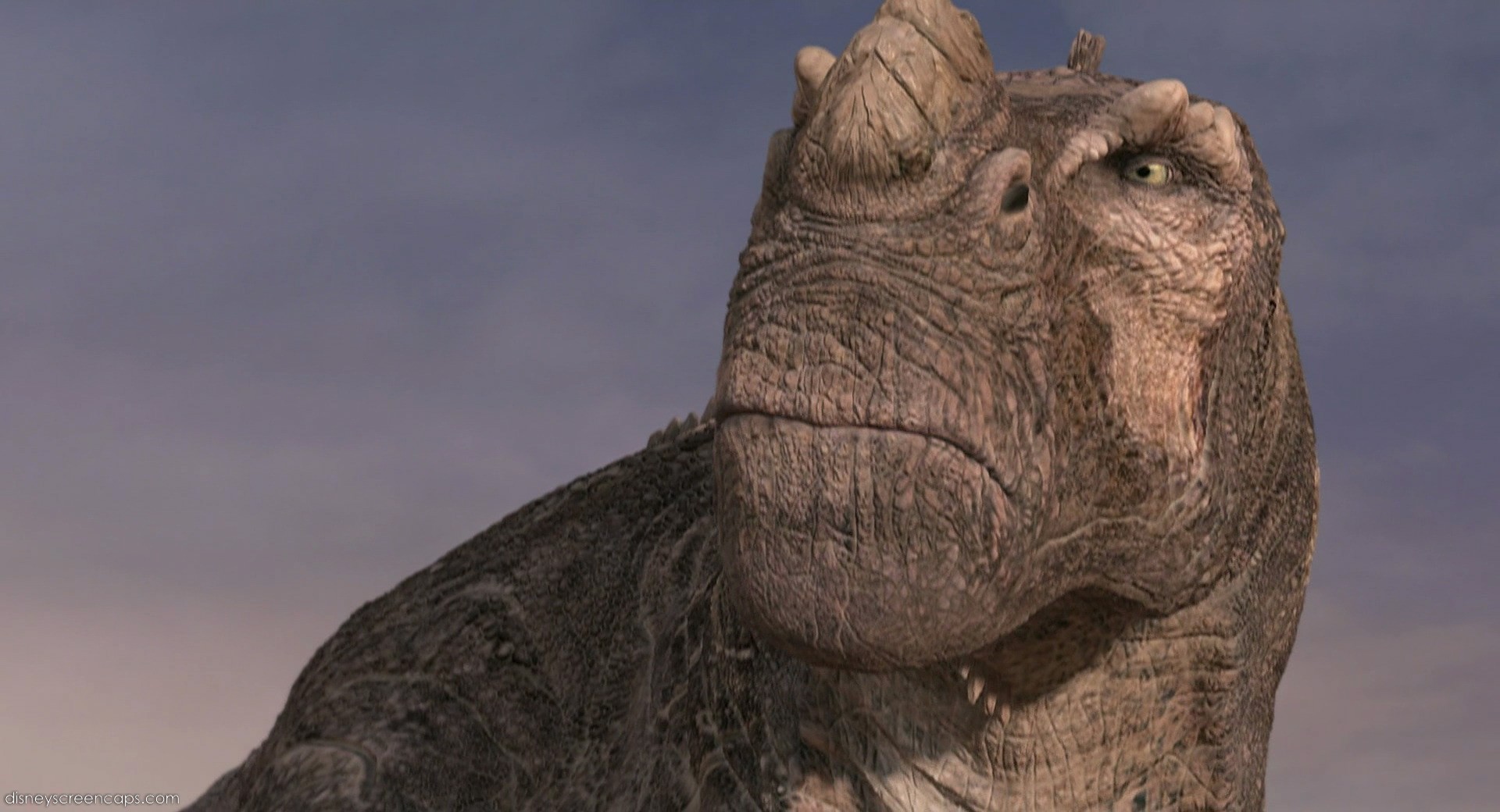
In addition to this exciting news, another trailer has been released for a dinosaur movie that will be released much sooner than Jurassic World: The Good Dinosaur. In it, we finally here some of the characters talking. Check it out below:


I gotta say, I'm loving the look of the father T. rex character. I especially like the bite marks on his face; after all, we have evidence that real Tyrannosaurus weren't always playing nice!

Topic of the Week by Joy Hammond, as told to by Lizzy the Lizard

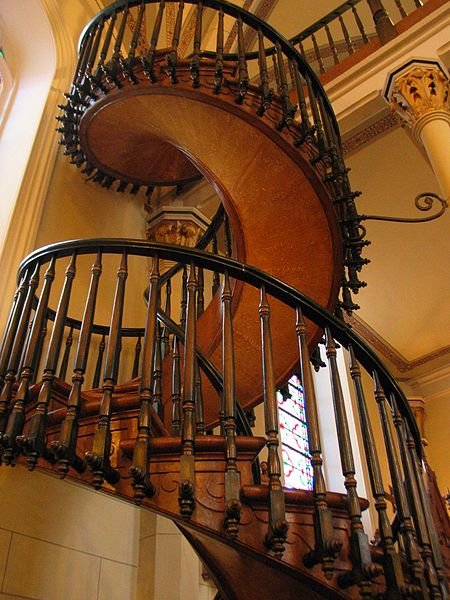
Who constructed these beautiful staircases in the Loretta Chapel in 1872? We don't know, but read more about them in the article below.
A mystery that has plagued people for decades has intrigued me to go with and take a look myself. Allow me to introduce myself, my name is Lizzy the Lizard and I've asked Daniel P. Smiwthwater, my boss's photographer to come with me on interesting journey to the Loretta Chapel in Santa Fe, New Mexico. Rumor has it that a staircase was built there and that it's maker's identity lays unknown. I've decided to go check out this sight. I asked for a private tour with Nathaniel and asked some questions to our tour guide Bill.
“What makes this staircase famous other than the mysterious identity of it's maker?”
“Well in order to explain that I'd have to take you back to 1872.” Bill exclaimed, “Jean-Baptiste Lamy ordered for a convent to be built for the Loretta sisters.”
“How does that explain anything?” i interrupted,as Nathaniel took some pictures.
“Where's the support beams and all?” Nathaniel muttered.
“Hold a second, listen” Bill stated, “They hired a french architect named Antoine Mouly to build this convent. However he died suddenly and later on after much of the building was complete did the builders realized that a staircase was needed to reach the choir loft. They were in a huge predicament since the the staircases then where too big. One day a carpenter came by and asked if he could build a staircase for them.”
“Saint Joseph!” I interrupted.
“Actually no one know his name,” Bill insisted. “So it is said, the carpenter asked for complete privacy and locked himself up in the chapel for three months. When it was finished, he vanished without a trace. He made a spiral staircase, with no supports beams or anything. He just used his primitive tools and his own two hands. The wood that he used was like nothing seen in New Mexico. No one knows who he is, how he built the staircase, or where he got his wood from.”

“Why did they name him Joseph, if they didn't know who he was?” I asked.
“Good question” Bill said, rubbing his chin. “The sisters of Loretta offered a reward for the identity of the carpenter but no one came. Eventually they believed that it was the St. Joseph that built the impossible staircase.”

“Wow that is an amazing story!” I exclaimed, “boy I wish I could go back in time and found out what happened to him.”

“Don't we all” he chuckled, as I looked at the staircase.
So as we packed up our bags and headed back to New York, I thought about the carpenter and his good dead. How he didn't accept the praise. People like that are rare to find but when they come to your door, you are very blessed. Doing something to help others and not accepting any praise or reward is one of the amazing ways people reveal who they truly are. So the next time you notice a problem that you can fix such as helping someone out. Do a secret good deed and don't let them know. You'll realize you feel good inside and so will the person you helped.

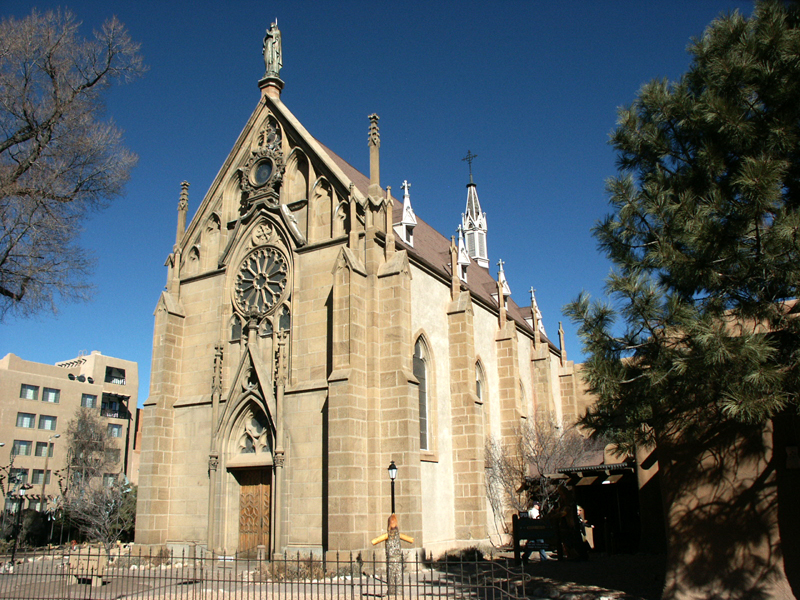
The Loretto Chapel in Santa Fe, New Mexico.

Disclaimer: Some (or all) of the photographs above are not my own; if you own them and would like them taken off this blog, politely make the request and it will be done.

Friday, September 18, 2015

Rerun Article: The Blood-Thirsty Lion?

Hi! We had our first official somewhat-chilly day today. Brr! I only wish I brought my jacket. I'm just glad it's warm indoors! (I know, and I thought last week was nippy!) We've also been pretty busy around here too, getting things ready for the youth rally this Saturday. Fortunately, I still have time to publish an article that I wrote close to when I first started this blog. But first, it's time for...

Days till:
It is: 5 days till the first day of Fall
It is: 24 days till Columbus Day
It is: 68 days till The Good Dinosaur's theatrical release

In the Spotlight:
Unfortunately, I have nothing to share in this section today either.

Topic of the Week by Christian Ryan


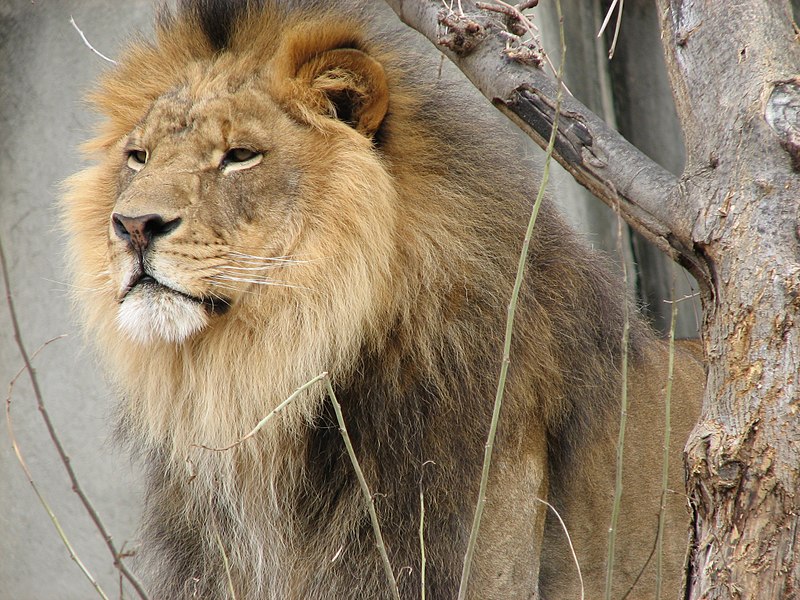
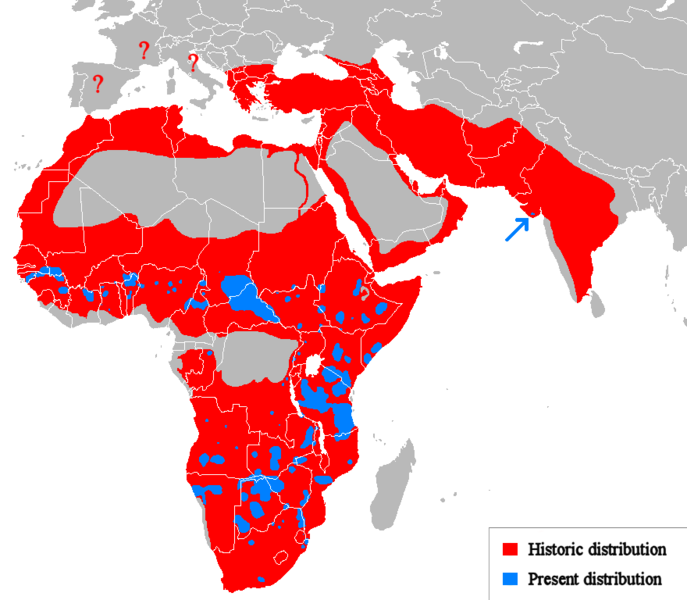
Think you know everything about the “King of Beasts”? Well, we’ll see about that! First of all, some of you might be thinking that lions and tigers don’t really meet in the wild because they live on two separate continents -- lions in Africa, tigers in Asia. For the most part, that’s true, today at least. But back in the day, lions were quite numerous on both continents. Their range went from the Kalahari Desert in Africa all the way to South East Asia! The Bible even talks about this to some extent, as you will recall that the shepherd boy David killed a lion when it came to attack his flock of sheep (with God’s help of course). Another account of lions in the Bible was when Daniel was put into a den of lions when he refused to worship the king. And another event was when a disobedient prophet was killed by a lion (1 Kings chapter 13). This prophet (the Bible doesn’t give us his name) was told by God to go deliver a message to a town and he was told not to eat a thing. After delivering the message, he visited a old prophet who insisted that God said he could eat now. Then the old prophet really did get a message from God: that the unnamed prophet had disobeyed by eating on his trip. Then God had a lion kill him. So after looking at these and countless other ancient accounts (in and out of the Bible), it would be impossible that lions did not live in the Middle East.

The "Panthera Leo's" former and present habitat.


Lions were revered in many countries. They are very dangerous animals as we all know. Now, let’s pretend you had a pet lion. What would you feed it? Meat of course! I mean, lions are carnivores so they have to eat meat to survive because they simply can’t digest plants and other non-meats . . . right? Well, I guess nobody told “Little Tyke” that. From 1946 to 1955, a female African lion was owned by Georges and Margaret Westbeau. They nicknamed the lion, “Little Tyke”. She was born and raised in America. Now they fed this lion liked a strange diet: grain, raw eggs and milk. If even one drop of blood were added to her milk, she would sniff it and walk in the other direction! This is a meat-disliking carnivore! What’s wrong with her? Folks were sure that lions had to eat meat to survive, but Little Tyke proved this was not the case. For her whole life of nine years, she didn’t eat a single speck of meat. Little Tyke isn’t the only “vegetarian-carnivorous” lion. 

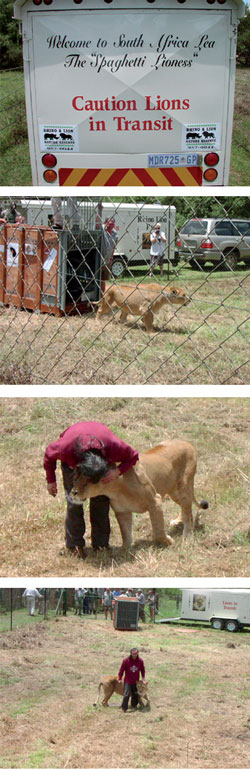
In 2002, Lea, a lioness arrived at Rhino & Lion nature reserve all the way from Rome in Italy. Like Little Tyke decades before her, Lea didn’t eat red meat either. Instead this seven year old lion was raised on a diet of potatoes, green vegetables and cheesy pasta (speaking of cheesy pasta, I’m feeling hungry just thinking about it). There was just one food however she liked more than any other: spaghetti. Then it’s no wonder she got the nickname “Spaghetti Kid”! Now only was she picky on what she liked, she was also picky on how what she liked was prepared. When her new keepers fed her spaghetti with cut tomatoes, she refused to eat. The keepers had to be corrected: Lea only like tomato sauce, not cut tomatoes. So she’s a “picky-vegetarian-carnivore”. Apparently the keepers didn’t feel good about this diet so they were able to switch her diet to red meat within a week.

These images were taken from http://creation.com/lea-the-spaghetti-lioness

Some lions don’t like eating meat, as we just learned. However, some lions even have trouble killing the meat. In 2002, one wild lioness named ­­­­Kamunyak (which means "blessed one"), did a weird thing with a baby antelope she just caught. Instead of killing it like she normally would, she started to take care of it! Many people were surprised that a ferocious killer like Kamunyak could actually take care of her prey. Scientists were astonished! Kamunyak was so devoted to the baby antelope that she even neglected her own health to ensure the baby was protected. Unfortunately however, the baby was killed by a roving male lion (that’s just plain tragic! I’m going to have to give that male lion a call and tell him he just upset hundreds of people!). But one baby wasn’t enough for Kamunyak. She adopted five more baby antelope, and while they didn’t survive nearly as long as the first, we can plainly see that this lion was not the ferocious killer that we’d expect her to be!

Lions refusing to eat meat, lions caring for their prey . . . hmm, this is strange! This has never happened before in the history of the planet! Actually, it has. As a matter of fact, the Bible clearly states that this sort of behavior isn’t new. It is actually rather . . . old. In the book of Genesis, chapter 1, verse 30: “ ‘And to all the beasts of the earth and all the birds in the sky and all the creatures that move along the ground – everything that has the breath of life in it – I give every green plant for food.’ And it was so.”  This is God’s voice commanding every animal on the planet that they were to eat fruits, vegetables and other plants. You see, God created everything to be perfect. Even the lions, or whatever cat God created, was to eat plants. However, when man sinned all of Creation was cursed and everything became corrupt. But let’s look at another book of the Bible, Isaiah 65:25: “The wolf and the lamb will feed together, and the lion will eat straw like the ox . . .” This is a section of the book of Isaiah that explains not the past or present world, but a future. This future world is different than anything we have experienced before. If you read on in the book of Isaiah and Revelation, you would see that this new world is when God creates a new heaven and a new earth. There will be no more sin, curses, death, disease, struggle, hardships, sadness, pain, etc, etc, etc. And it appears that in this new world, God will create animals that will eat plants, just like Lea and Little Tyke did. And best of all, we will be able to see God Himself. Boy, I’d better book a permanent visit to this new world. Wait a minute, I’m already booked! Would you like to be booked to this permanent visit too? Well, first you should know that God has a problem with sin, the bad things that we do. And believe me, we “all have sinned and fall short of the glory of God.” Romans 3:23 (and yes, that includes me, too). Sin would include things like stealing (even a rubber band of CD), hating someone (God compares hatred to murder), being disobedient to parents, lying (even the so-called “white lies”) and committing adultery (God says that even looking at a person with lust is committing adultery). A common way people sin every day is saying the expression “Oh my God.” This is misusing God’s holy Name. People who use God’s name as a curse word have also sinned. Due to all the sin we’ve done throughout our lives, we don’t deserve to even book a visit to this new world. Instead, we deserve a booked permanent visit to Hell. Fortunately, God doesn’t want us to miss out on this permanent holiday destination. Instead, God provided a way for even us sinners to get to Him. He sent His only begotten Son named Jesus Christ to take the punishment we deserve: death, even though He did nothing wrong. However, three days later he rose again and went back up to live with His Father. Would you like to book a permanent visit to the new world? It’s not hard to do. You just need to follow these simple steps that are as simple as A-B-C:
·         A: We must Admit to God that we’ve sinned and turn away from it
·         B: We must Believe that Jesus is God’s Son and accept His gift of forgiveness
·         C: We must Confess out faith in Jesus as our Savior and Lord and live our life for Him.

See? Can’t get much easier than that! Would you like to make those steps right here? Right now? Well, say this quick little prayer to God:

Dear God,
I know that I’m a sinner, and I also believe that Jesus is Your Son and that He came into the world to take a punishment I cannot pay. Please come into my heart today, oh God, and help me to live for You for the rest of my life, amen.

If you said that prayer and meant it with ALL your heart, you are now officially booked into that permanent trip to the new world! Congratulations!* Please be sure to send me an email to the address near the bottom of this post so that we can help you get on the road to living a brand new life with God as a Christian.
Oh! I almost forgot! The “new world” isn’t quite open for business yet! However, after we die, God has provided a perfect place for us to wait for its opening. A cool place called heaven! Oh boy, won’t this be exciting! A permanent holiday destination that’s absolutely free. Thank you for joining me today and be sure to check back next week for more cool stuff. Good bye!
Disclaimer: Many (or in some cases all) of the photographs and images above are not mine. If you own one or more of them and would like them to be removed, politely let me know via my email address.

*Update: Remember, it's not saying the sinner's prayer doesn't actually save you. In fact, you can pray a different prayer than the one mentioned above and still be saved. True salvation from Jesus Christ comes from our willingness to truly and wholly surrender our lives to Him.

Friday, September 11, 2015

The Floating Forests of the Carboniferous


I don't know if anyone else has sensed the change, but as the month of September approaches, things tend to get a little colder! Even here in Utah, we feel the chill. Today was the first day I actually felt nippy coming outside this morning. Brrr! And the cold means something really special is coming up: Harvest Day, Thanksgiving, Christmas, New Years, my birthday! The best holidays of the year are coming up real soon!

Days till:
It is: 12 days till the first day of Fall
It is: 75 days till The Good Dinosaur's theatrical release
It is: 31 days till Columbus Day

In the Spotlight:
Unfortunately, I have nothing to share in this section today either.

Topic of the Week by Christian Ryan
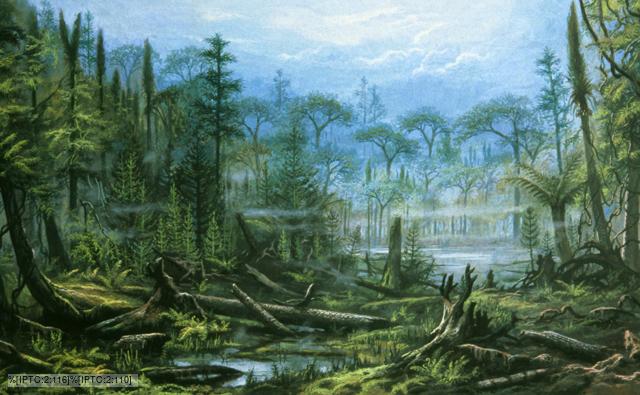
The Carboniferous was an ancient habitat of the pre-Flood world with a unique set of plants and animals not seen today.
Giant tree-like plants, a bog-like environment, and giant insects, arthropods and other strange animals unlike anything we have alive today – these are just some of the many wonders of the pre-Flood ecosystem known as the Carboniferous forests. Unlike modern ecosystems, the Carboniferous forests was one of the original ecosystems God created only 6,000 years ago or so that was destroyed by the Genesis Flood about 4,350 years ago. But perhaps one of the strangest things about the Carboniferous forests was that they weren't located inland like forests of today – instead, these forests grew from continent-sized masses of vegetation that floated on the ocean! Welcome to the floating forests of the Carboniferous.

The Floating Forest of the Carboniferous was a home to many species of plants and animals. (PHOTO CREDITS)

A forest that floats across the ocean? Even though it sounds like something out of Peter Pan, these incredible habitats actually existed until about 4,350 years ago. But before we learn more about the floating forest, we must establish what the Carboniferous actually is? To find that out, we have to know our geology. The earth contains several different rock layers with different sets of fossil animals and plants. Scientific evidence shows most of these rock layers (Cambrian, Ordovician, Silurian, Carboniferous, Permian, Triassic, Jurassic and Cretaceous) were deposited during the global Flood of Noah's time, reflecting not the history of life on earth, but rather an order of burial as the flood's watery carnage rose and eventually conquered the land.

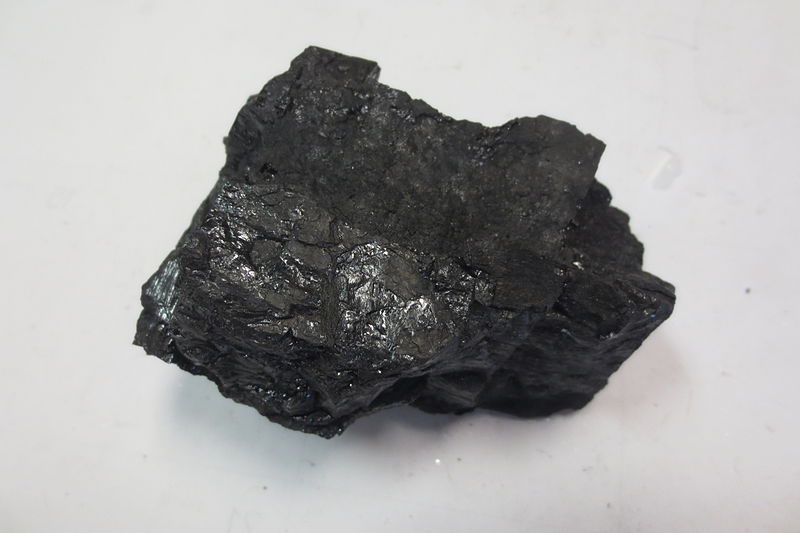
If Carboniferous doesn't sound English to you, that's because it isn't. It's actually composed of two Latin words: carbō (which means “coal”) and ferō (which means “I bear, I carry”), in essence, meaning “coal carrier”. This rock layer is perhaps one of the most important to human kind because, as its name suggests, it provided us with a material that helped us progress into the future: coal! Even though the use of coal as fuel is being looked down upon today (due to all the pollution it causes), it's been used for thousands of years; even the ancient Chinese people mined for this material. It is thanks to coal that the Industrial Revolution came about. Contrary to popular belief, coal, oil and fossil fuels don't actually come from dead dinosaurs, but from the remains of dead plants. If all the vegetation we have on earth today was turned into coal, it would only equal around 3% of how much coal the earth contains! So there must have been a lot of plant life all over the world in ancient days, and that's exactly what the fossil evidence suggests!

Coal and other fossil fuels don't actually come from dead dinosaurs; they actually come from compressed plant matter. (Wikimedia Commons)

In addition to loads and loads of coal, we also find numerous plant fossils in Carboniferous rocks. Most (if not all) of these plants have two things in common:
  1. They are often found in marine sediments and associated with marine animals.
  2. The roots, trunks and rootlets of these plants were hollow, and the roots of these plants grew outward rather than straight down, like most plants.
These two characteristics are features of plants that are designed for floating on water. Paleontologist  Dr. Kurt Wise noticed this, and he put his theory forward that the pre-Flood world hosted huge mats of floating forests that existed atop the shallow seas fringing coastlines of some regions of the earth's original supercontinent Rodinia (it would later break up and reform into the supercontinent of Pangaea during the Flood, only to once again break up, this time into today's seven continents). It has been suggested that floating forests covered over half of the pre-Flood world's ocean surface. Ecosystems with floating vegetation aren't restricted to the pre-Flood world though – modern quaking bogs bare resemblance to these floating forests, but are far smaller. When floating forests are added to the equation, around 75% of earth's surface was mushrooming with plant life, compared to the six times less-lush planet we have today. So movies taking place in pre-Flood times (e.g. Darren Aronofsky's Noah, a film I do not condone) should really have lush, almost tropical environments rather than barren wastelands.

Believe it or not, this was what earth looked like between 6,000 and 4,350 years ago! (PHOTO CREDITS)
We've talked a lot about how lush these floating forests are, but not so much about what kinds of plants we would have seen had we been able to journey to this ecosystem. Well, in modern quaking bogs, the “ground” is made up of peat – a soil-like material composed of decomposed vegetable matter. Perhaps the floating forests vegetation mat was made up of something similar. The edges of the vegetation mat the forest floated upon was thinner, covered in smaller plants (many from the Devonian rock layers) and likely also possessed shallow pools which provided homes for many animals (we'll get to them in a minute). It isn't until you venture further into the forest where you meet the giants of the Carboniferous world – giant ferns, giant horsetails and conifers were common, but they were dwarfed by giant  lycopod “trees” (actually giant relatives of tiny, modern club mosses!), which had no branches and could grow over 100 feet into the air!

Giant ferns, horsetails and conifers were common in the Carboniferous; some Carboniferous trees grew over 100 feet tall! (Wikimedia Commons)
But these Carboniferous floating forests were not inhabited by plants alone; an entire host of animals existed here too. Perhaps the most notable are the arthropods – segmented invertebrates with hard exoskeletons. In the pools of water beneath the great trees you would have discovered strange creatures such as Megarachne. Its name means “giant spider” and lends mention to the fact that this creature was once incorrectly considered a giant spider until relatively recently. However, fossil discoveries have revealed that Megarachne was actually a species of eurypterid, or “sea scorpion” that grew the size of a human head!
Once thought to be a giant spider, Megarachne was a species of sea scorpion. (Wikimedia Commons)
Another inhabitant of the shallow bodies of water on the forest floor was the amphibian-like fish, Tiktaalik. What made this fish unique was its ability to drag itself out of the water to like the modern lungfish via its powerful front fins. It could probably breathe air as well. These two features helped it move from pool to pool to access new living space or a new potential food source. Evolutionists have long tried to make Tiktaalik a transitional form between fish and land-dwelling tetrapods because it had features of both groups. In truth however, God perfectly designed Tiktaalik for its habitat in the floating forest*.

Tiktaalik was a fish capable of traversing between pools of water thanks to its powerful fins and (potential) ability to breathe air. It was perfectly designed for the Floating Forests. (Wikimedia Commons)
* One of the problems with the idea that Tiktaalik was the transitional form between fish and tetrapods is that it been found in rocks above the tetrapods it allegedly evolved into (it would be kind of hard for Tiktaalik to be its descendants offspring!).

Petrolacosaurus was a small lizard like creature.

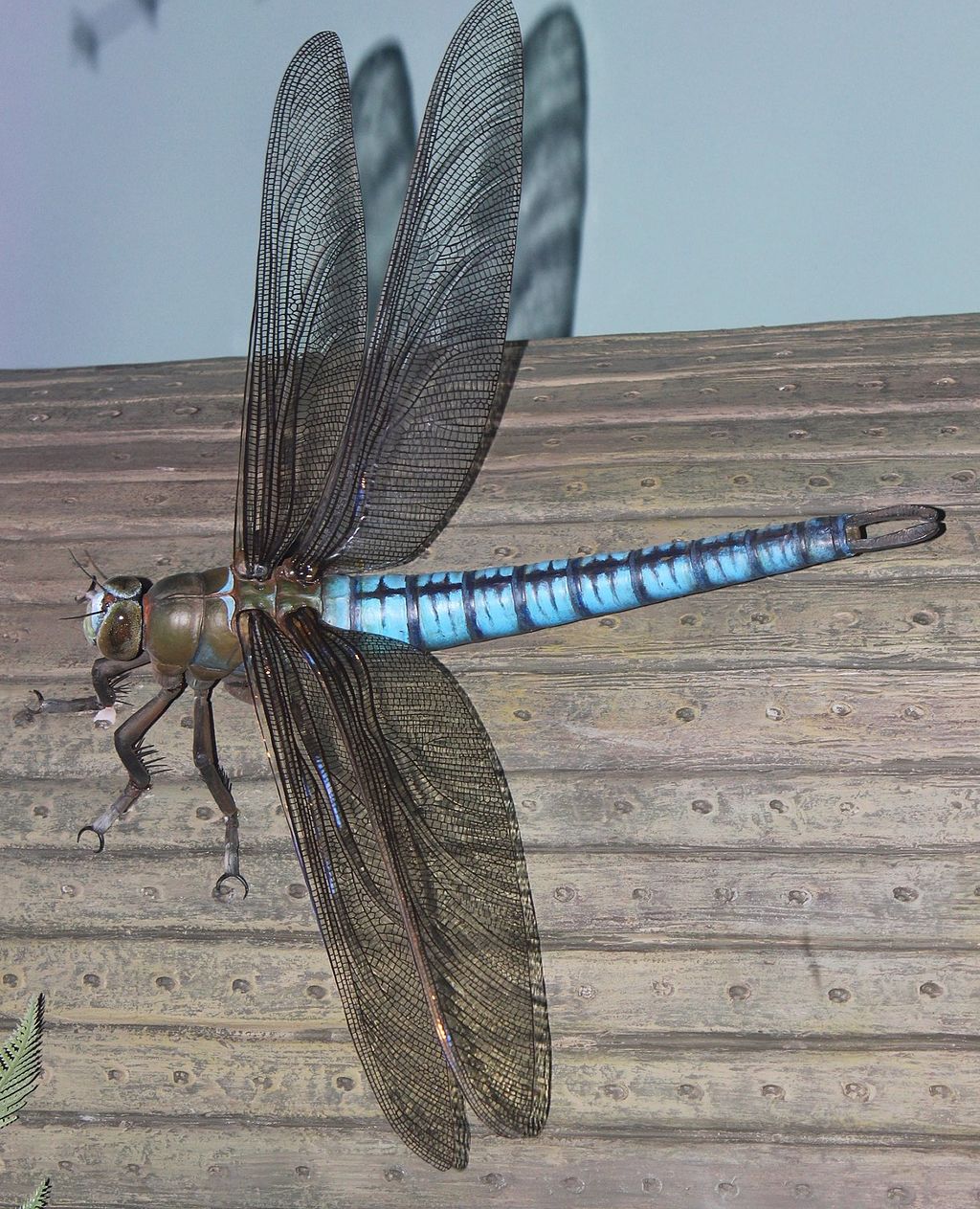
In the floating forests themselves, other creatures would have been seen. Some were amphibians, like Proterogyrinus (imagine a sharp-toothed salamander over seven feet long), and others were small reptiles, like the lizard-like Petrolacosaurus. Strangest of all the floating forest-dwellers however were still the arthropods. Mayflies are one of the several insect species found here, and they look very much like modern mayflies do today. Crawling along the ground were giant cockroaches, some of which 3.5 inches in length (that's twice as big as the ones that we squish and spray today). Feeding upon smaller arthropods (and perhaps small amphibians and reptiles), were the much more sightly dragonflies. These dragonflies were almost identical to the ones that hover in the air today, except for one thing: they were giants! With a wingspan of over 2 ½ feet, the gull-sized Meganeura was one of the largest of them all. Like modern dragonflies, Meganeura was probably swift and agile in the air, capable of reaching speeds in excess of 30 mph!

Meganeura was a monster dragonfly; with a wingspan of 2 1/2 feet, it was the largest flying insect ever! (Wikimedia Commons)
While Meganeura preyed upon things above ground, hunting terrestrially was Pulmonoscorpius, one of the largest scorpions of all time. It grew almost three feet long and had a stinger the size of a light bulb. Not a critter you'd like to bump into in the middle of the night! All these aforementioned giant insects and other arthropods lived in the company of a true giant. Meet the enormous millipede Arthropleura – it grew six to eight feet from head to tail. Thankfully, this monster was an herbivore, feeding on vegetation, such as ferns. Arthropleura has always been a personal favorite of mine. As we've seen, many strange and wonderful creepy crawlies, amphibians and reptiles once called the floating forests home.

Arthropleura was a giant millipede six to eight feet long. Thankfully, this creature was a plant eater. (Wikimedia Commons)
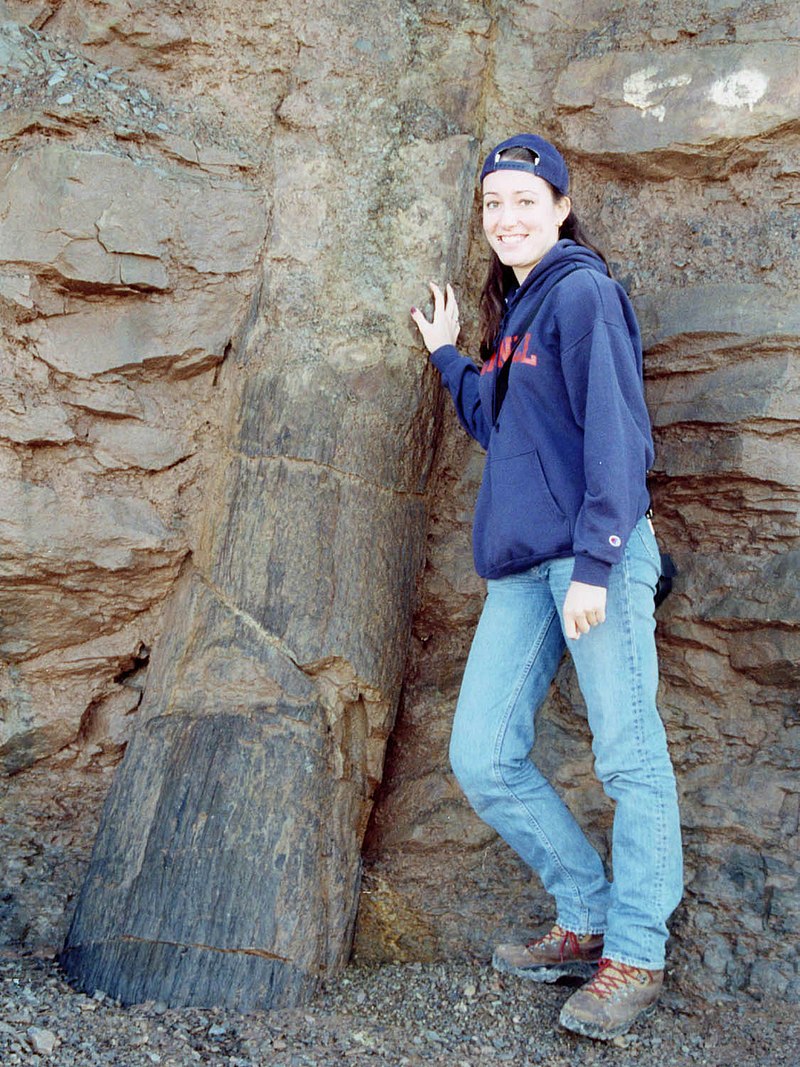
Alas, as beautiful as the Carboniferous floating forest was, it was not to last. 4,350 years ago, the Genesis Flood changed the earth forever. Tsunami-like waves would have ravaged the floating forests, tearing them apart, burying countless plants and animals under sediment and stripping the forests' trees of their bark. Many of these trees continued to float in the ocean for some time before they too were buried. Then, thanks to great temperature and pressure the trees and other plants experienced under the ground they made the extraordinary transformation from plants into the coal we burn today within just months (there is a lot of evidence that goes against the belief that coal takes millions of years to form).

The fossils of plants, giant dragonflies, millipedes, scorpions and other animals we find in Carboniferous rocks are a reminder of just how devastating the Flood was – after all, according to Genesis 6:11-13, God sent the Flood upon earth as a judgment upon the sin we produced that had blemished the earth. It is only because of fossils that we are able to “travel back in time” to see what those beautiful, floating forests of the Carboniferous might have been like, more than 4,350 years ago. What a sight they would have been to see!

Remains of those Carboniferous giants can only be found in the fossil record.

References:
www.answersingenesis.org/biology/plants/how-did-we-get-all-this-coal
www.answersingenesis.org/geology/sedimentation/sinking-a-floating-forest
www.answersingenesis.org/creation-science/field-trip
www.science.nationalgeographic.com/science/prehistoric-world/carboniferous
www.wikipedia.org/wiki/Carboniferous
www.prehistoric-wildlife.com/species/m/megarachne
www.prehistoric-wildlife.com/species/m/meganeura
www.prehistoric-wildlife.com/species/a/arthropleura

Disclaimer: Many (or in some cases all) of the photographs and images above are not mine. If you own one or more of them and would like them to be removed, politely let me know via my email address.

Friday, September 4, 2015

Rerun Article: The Sound of Nature

Hi guys and girls! Today, I've got an article that I published over a year ago. Without further ado, let's get started!


Days till:
It is: 3 days till Labor Day
It is: 19 days till Fall
It is: 82 days till the theatrical release of The Good Dinosaur

In the Spotlight:
Once again, I have nothing noteworthy to share this week.

Topic of the Week by Joy Hammond
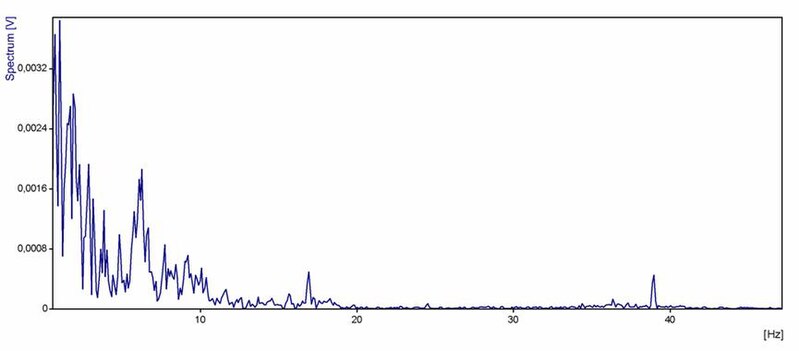
The Sound of Music . . . and I'm not talking about the movie! There is so much of this world that has been discovered from the tiniest particles to the tallest mountains. Name three or four things that are invisible but you that their there through your other senses. I bet you wouldn't have named this: infrasound. Now your probably wondering what in the world is infrasound. Well, infrasound is a sound frequency below 20 hertz. Which means it's a sound that can be seen and is barely heard with the human ear. However, your body can feel it and may react to it, such as getting dizzy, nausea, or have headaches. Do you want a type of example of an infrasound?

This is an infrasound recording.
Believe it or not, nature really does have a song of its own, you just can't hear it . . . unless you have some type of high-tech machine. Sound is powerful just like it's told in class, let your voice be heard. Tiger and lion roars have been known to temporally stun their prey. Scientists can predict tornadoes several minutes before it touches down because of its infrasound. Sometimes you have this feeling of a sense of dread before a thunderstorm occurs or and avelanche. With this knowledge, people maybe able to save lives in the future by detecting infrasound waves of occurring disasters.


We all know that the mighty roar of a tiger means it's time to start running the opposite direction!
Humpback whales can call each other from 100 miles away; talk about international cellphone coverage! The Sumatran rhinoceros carry on a constant infrasonic “song” when they were originally thought to be quiet and solitary. Unfortunately, these sounds rarely be heard with the human ear. It just shows that nature really does have a song of its own. Did you know that on February 15, 2013, the Chelyabinsk meteor exploded over southern Russia and that its sound waves circled around the world several times and lasted more than a day! It was the loudest sound ever recorded, unfortunately it was an infrasound so we couldn't hear it, but maybe we had some type of response to it? Although we can't hear it, our mind can sense it. This goes to show that sound is everywhere, perhaps if you stop and listen, you may be able to hear the sounds of nature and its song.

Disclaimer: Many (or in some cases all) of the photographs and images above are not mine. If you own one or more of them and would like them to be removed, politely let me know via my email address.

Friday, August 28, 2015

Movie (& TV Show) Characters I Will Always Miss

Hi, everyone! Another week has passed and I've been busy with many things in my life (good things). One of those things was setting up a brand new blog for Connect 180 youth group in St. George. Be sure to check it out here: Connect 180. Now it's time for...

Days till:
It is: 10 days till Labor Day
It is: 26 days till the first day of Fall
It is: 89 days till The Good Dinosaur's theatrical release

In the Spotlight:
Nothing to report on this week. Sorry guys.

Topic of the Week by Christian Ryan
There are plenty characters from certain movies who had untimely disappearances from the series...otherwise known as “deaths”. I personally have a lot of characters I loved from movies and television shows – many of which are some of my favorites – that I kind of miss after their death. So instead of doing an article on dinosaurs or some other “sciency” topic, I want to look at some of my most missed characters from films and TV shows. This should be pretty obvious, but just in case anyone somehow hasn't gotten the hint, this article is a HUGE SPOILER ALERT for loads of movies and TV shows. So read with caution!

Bruton (Dinosaur)

Bruton is an Altirhinus from Disney's Dinosaur

You didn't really think I was never going to mention dinosaurs in this whole blog post? What can I say, I'm a dinosaur enthusiast. In any case, the first most missed character on my list is Bruton from Disney's 2000 movie Dinosaur (a personal favorite of mine). For those, of you who don't know, this film is about a young Iguanodon named Aladar who finds himself stolen from his nest as an egg and ends up on an island inhabited by lemurs, who adopt him as their own. After he grows up among the primates, an asteroid impact destroys the island and the surrounding landscape, forcing the lemurs and Aladar to find a new home. On their journey, they come across a multi-species herd of dinosaurs (from the gigantic Brachiosaurus to the diminutive Microceratus) also on the same quest. The herd is led by the cruel, stubborn Iguanodon named Kron.

Bruton is an Altirhinus (a close relative of Iguanodon) and is Kron's second-in-command. Usually, he is responsible for giving out Kron's orders and is much like Kron in behavior – they're both ruthless, uncaring, cranky, and want only the strongest members of the herd to survive, abandoning those unable to keep up. But after being fatally wounded by a predatory Carnotaurus (think T. rex with bull-like horns, even tinier arms, a mouth full of teeth and a really bad attitude!), Aladar's determination to assist him and Plio's kindness allows him to have a change of heart. Aladar, his lemur family and a few other dinosaurs from the herd and himself find themselves trapped in a cave endangered by a pair of Carnotaurus and Bruton risks his own life to save the others, dying in the process as the cave roof collapses. (John 15:13, anyone?)

Bruton's last minute change of heart makes me want to add him to this list. We don't get to see much of his “kinder” side. Later in the list, we'll see characters meet their untimely demise after we've gotten far more associated with them!

John Roxton (The Lost World)

Lord John Roxton certainly cares more for his traveling companions than he does for himself; this is exhibited when he offers to sacrifice his own life for theirs. (PHOTO CREDITS)
Lord John Roxton is a renowned sportsman (and responsible for helping abolish Brazilian slavery) who makes an appearance in Sherlock Holmes creator, Arthur Conan Doyle's novel, The Lost World (1912). In the novel, he joins an eccentric scientist named Professor Challenger and as they and other members of his team journey to a remote region of South America to find a plateau where, allegedly, dinosaurs have survived the extinction of their kin.

However, as Roxton gets back home to London safe and sound in the novel, I'm not listing him to talk about his character in the novel, but rather his character that appears in the BBC adaptation miniseries of the same name as Doyle's novel. Here, Roxton and the other explorers find residence on the plateau with a tribe of natives. Roxton eventually receives the attention of the chief's daughter and they marry. The tribesfolk and Challenger's team live together in perfect harmony until a pair of allosaurs (presumably Allosaurus or Epanterias, which might actually be a large Allosaurus) attack the village, destroying buildings and killing several natives in the process. Both allosaurs are eventually shot down, but the natives blame the Europeans for this event and chase them into a cave (they superstitiously believe Challenger is the “devil”). Roxton attempts to take his (willing) wife with him through the cave, but a hostile ape once kept captive in the village (upon Challenger's urging) wounds Roxton before he and his wife can escape with the others. As Roxton tries to keep the angry natives away from the cave to allow Challenger's team an escape, he succumbs to his wounds and begins a slow, agonizing death. Upon which, the chief's son (who's father, the original chief, died via an allosaur) has a change of heart, but it seems too late. Though not evidenced in the miniseries, I'm sure London mourned this man's loss when Challenger told them of his death.

Why didn't I put this terrible death further down the list? Because he didn't really die! It is revealed just after the credits roll that Roxton has recovered from his injury and now lives happily married to his wife on the plateau.

Captain Nemo (Twenty Thousand Leagues Under the Sea)

Captain Nemo was an amazing genius.
Captain Nemo, son of an Indian Raja, was a scientific genius who patrolled the ocean depths aboard his submarine called the Nautilus. He was created by Jules Verne for his 1870 French science fiction novel, Twenty Thousand Leagues Under the Sea. But as with Lord Roxton, I'm not putting him on this list to talk about his character in the book (he survives in the first book; I can't speak for the other books as I've yet to read them). I'm going to talk about his character in Twenty Thousand Leagues Under the Sea the movie, which was released in 1954 and the only science fiction film to be produced by Walt Disney himself.

In the film, as in the novel, Captain Nemo is in charge of his submarine, the Nautilus, which patrols the world's oceans in the search of scientific discoveries, virtually unknown to the rest of the scientific world. However, this is only one of his vessel's purposes – the other is to destroy cargo ships that provided supplies for wars and warships. He loathed the concept of war, particularly after his wife and son were tortured to death by a “hated nation” when he had not revealed secrets of his work to them. After sinking a ship carrying Professor Aronnax, his assistant Conseil and master harpooner Ned Land, Captain Nemo allows them to board the Nautilus and they take part in the captain's many adventures through the oceans. In order to shield all of his knowledge hidden in his hideout in the island of Vulcania from surrounding warships, he decides to destroy the hideout with a bomb. In the process, Nemo is shot by one of the soldiers trying to scope out his soon-to-be-destroyed base and after navigating the Nautilus away from the island, he confirms that he wants everyone on board to join him in death; having hit a reef, the Nautilus will soon flood and kill everyone inside. Ned, Professor Aronnax and Conseil don't approve of this and make a bold escape as the Nautilus begins to sink. In what seems to be Nemo's last moments of life, he looks out at the ocean through a viewing window.

Though bearing a corrupt opinion on how to treat humanity, Captain Nemo has been a favorite character of mine and I was saddened by his death. However, as with Lord Roxton, Nemo doesn't actually suffer death. Somehow, he must have managed to survive his dreadful wound and the sinking of his beloved submarine, because he reappears in the film Mysterious Island (1961), inspired by Jules Verne's book of the same name. In this film, Nemo tries a different approach to rid the world of wars – on a remote, tropical island, he has successfully created mutant oversized animals that he hopes will enlarge the world's recourse of food, a common war stimulator. However, before he can accomplish his plan, he “dies” when the island's volcano explodes. Given that Nemo survived his first brush with death, I have little doubt that he might have found a way to survive even this once again. Though no sequels were made of Mysterious Island, we can always hope that our incredible, ocean explorer extraordinaire still roams the sea.

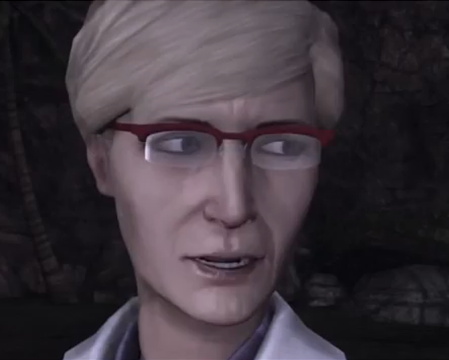
Dr. Laura Sorkin (Jurassic Park: The Game)

Dr. Laura Sorkin allowed her passion to get the best of her...and the creature she was trying to free consumed her.
Technically, this list is for movie and TV show characters, but I couldn't leave out one of my favorite anti-protagonists, Dr. Laura Sorkin from Jurassic Park: The Game, which is considered in the same canon as the Jurassic Park films.

Dr. Sorkin was a geneticist and even though she'd been arrested several times in the past for animal rights-protesting, she still received the job of chief geneticist at InGen. Even though the later-chief geneticist Dr. Henry Wu often gets the credit for figuring out how to recreate the dinosaurs, it was Dr. Sorkin who actually laid the foundations for the plot. She reached a barrier however; in order to create the dinosaurs, she needed a complete genome, but the DNA found in the amber-encased mosquitoes they were using had holes in the genetic code. While Dr. Sorkin wanted to use more research and time to find a way to use dinosaur genes to fill the genome gaps, InGen's Board of Directors wanted a cheaper and quicker method, a method Henry Wu came up with. His plan was to use frog DNA to fill in the genome gaps. As Dr. Sorkin wouldn't comply, Dr. Wu got promoted to her previous position and Dr. Sorkin devoted her time to studying the dinosaurs they were cloning.

Over the course of the game, she is of great help to the other main characters. However, when she learns that Isla Nublar was going to be destroyed via bombing from the US military, she believed the dinosaurs should have the right to live on. So she not only held the rest of her group hostage, but threatened to free the park's Tylosaurus. Unfortunately for her, when Dr. Sorkin fell into the water, the Tylosaurus grabbed and presumably consumed her.

John Hammond (Jurassic Park & The Lost World: Jurassic Park)

"Spared no expense." - John P. Hammond
John Parker Hammond was the founder and creator of Jurassic Park in the movie and novel by the same name. And he was portrayed by a wonderful actor: Sir Richard Attenborough (brother of one of my favorite nature presenters: David Attenborough). He had a dream to bring dinosaurs back to life so that people everywhere could see these amazing animals live again in his wonderful theme park. Unfortunately, as we all know, it didn't quite turn out that way.

He had Jurassic Park built on an island off the coast of Costa Rica called Isla Nublar. But in 1993, a year before the park was due to open, some of the park's more aggressive attractions caused several incidents, resulting in the park's investor's concerned. To ensure everyone that the park was safe, Hammond invited paleontologist Alan Grant, paleobotonist Ellie Sattler, chaoticianist Ian Malcolm and his investor's lawyer, Donald Gennaro to inspect it. But this investigation didn't go as planned either – the dinosaurs escaped and some (mostly the Velociraptors) killed several people. Jurassic Park became indefinitely closed to the public...until the 21st century that is! (But we'll get to that in a minute).

The last time Hammond appears in a Jurassic Park film is in The Lost World: Jurassic Park, and we see him suffering from some physical ailments. However, despite this, Hammond decides to forehead the movement to protect the dinosaurs his company recreated on the island where they were cloned – Isla Sorna – and turn it into a nature preserve. (Spared no expense, of course) According to the Masrani Global Corporation website, Hammond died in 1997, as InGen began to face an inevitable Chapter 11. But, before his death, he passed over the company to Simon Masrani of Masrani Global. He took the baton from Hammond to continue his work.

John Hammond has always been one of my favorite characters from the franchise. Though we never saw it onscreen, his death was probably inevitable, as Richard Attenborough died on September 24, 2014. Jurassic Park fans everywhere mourned his loss. Even before he died however, he was pretty ill, that explains why the creators of Jurassic World had him die. I will always miss John Hammond/Richard Attenborough, as will many – the dreamer, the scientist, the man who spared no expense.

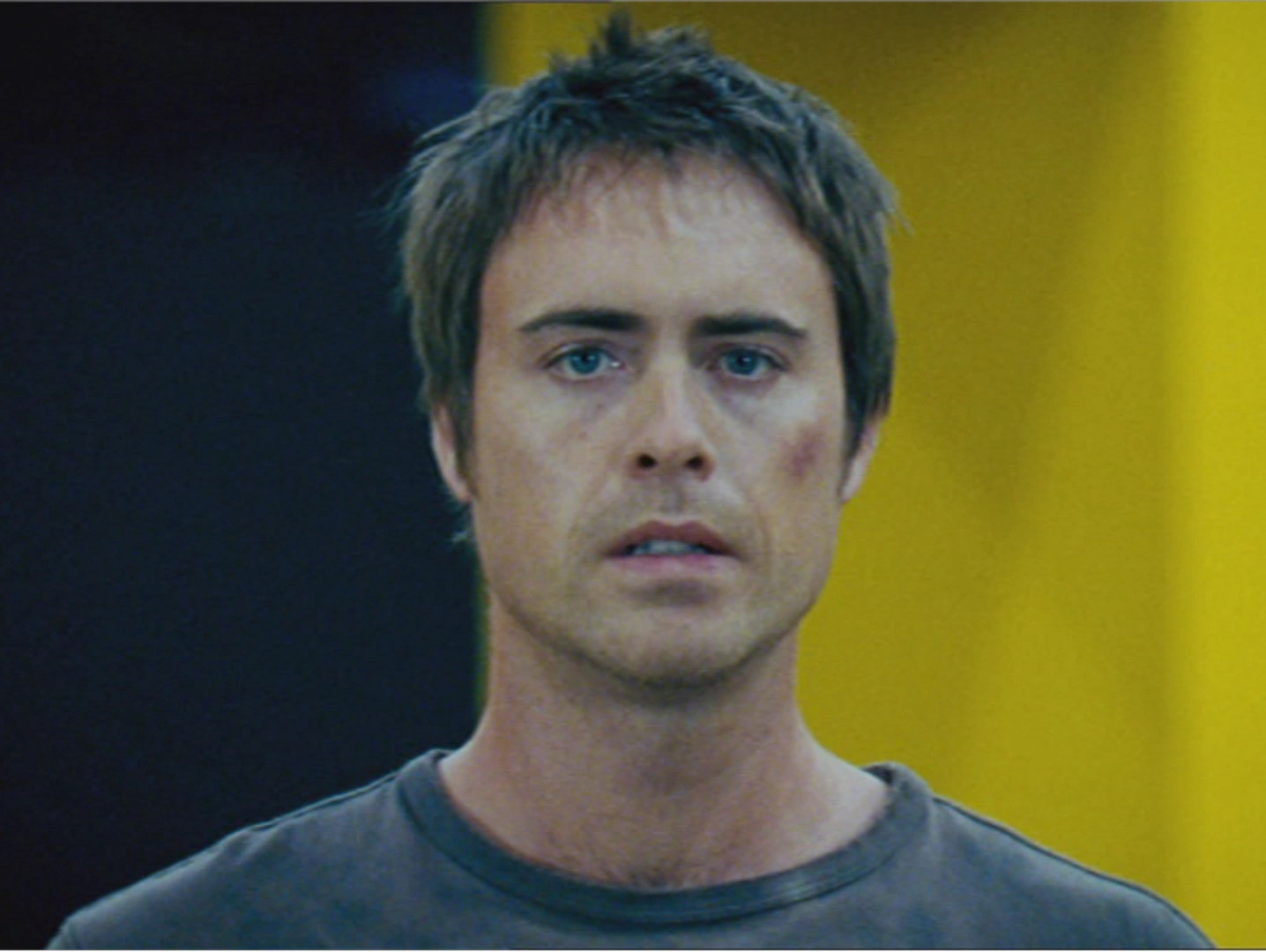
Stephen Hart (Primeval)

Stephen Hart risked his life to save the world from an invasion of predators from different eras in history and the future.
Stephen Hart was from the BBC series Primeval, seasons one and two. For those of you who are unaware, Primeval was about a group of people (scientists, government workers and some amateurs) all working together to research strange natural occurrences called anomalies. Anomalies can best be described as rips in the timeline that allow animals from the past and future to infiltrate the present. This team of people is trying to prevent creature incursions and solve the mysteries surrounding the anomalies. It was a popular show, running from 2007 until 2011. Stephen Hart was a main character of the show during season one and two and served as the right-hand man and lab technician to the show's main protagonist Professor Nick Cutter. He was also good friends with several other characters in the show, including Connor Temple and Abby Maitland (who had a brief crush on him at one point.)

Stephen Hart knew Nick from the beginning; they were close friends. However, this is when extinct animals begin to enter the present time through anomalies. The events that follow begin to make their relationship very convoluted. Stephen can be a cold, aloof person, but he's also brave and loyal to his friends, whether he's defending his friends from a dangerous gorgonopsid or taking down a Silurian scorpion single-handed. It is also revealed that he has a complicated relationship with Nick's ex-wife Helen Cutter; they seem to have been romantically involved in the past.

Though he had his character flaws, Stephen's loyalty toward his friends extended even to the end as he sacrificed himself to make sure ancient and futuristic creatures from a creature prison didn't escape into the outside world and threaten the rest of humanity.

Simon Masrani (Jurassic World)
Simon Masrani quickly picked up the baton, right where Hammond left it.

Just before Hammond died, he passed the reigns of his company, InGen, to Simon Masrani, CEO of Masrani Global Corporation (which was passed down to him by his father). Simon Masrani appears in the recently released Jurassic World.

After obtaining InGen, Simon Masrani made it his goal to bring John Hammond's dream of creating a dinosaur theme park a reality. In 2005, he did! The Jurassic world opened and it ran successfully for ten years. By this time, lack of public interest in the park made the company want to create a new attraction – not just any dinosaur, but the park's first genetically-modified hybrid. Masrani assigned Henry Wu to create the hybrid, which was later called Indominus rex. Unfortunately, this proved to be the park's downfall – I. rex escaped and many people died in the mayhem, including Masrani himself.

While trying to subdue the Indominus rex from the air, Simon Masrani piloted a helicopter with two military men inside ready to shoot her down. But the hybrid crashed into the park's Aviary, freeing dozens of Pteranodons into the air. They attacked the chopper and caused it to fall to the ground in a great heap of flames. Because Jurassic Park fans got to know Simon Masrani via the company's website and other sources, I'm sure many of us are sad that Masrani died. As with John Hammond, he will be missed.

Stoick the Vast (How to Train Your Dragon, Dragons: Riders of Berk, Dragons: Defenders of Berk & How to Train Your Dragon 2)
Stoic the Vast appeared throughout the first film and the TV series, which makes it even sadder and unexpected when he dies in the second film, saving his son.
What happened to this character was completely unexpected if you ask me! Stoick the Vast helms straight from the Scottish island of Berk, an island inhabited by vikings in the How to Train Your Dragon franchise. Stoick is the village's chief, and a mighty, brave warrier.

Stoick had a wife, Valka, and a son named Hiccup Horrendous Haddock III. Valka was abducted by a dragon when Hiccup was just a baby and presumed dead. Hiccup meanwhile grew up to be his father's disappointment until his mid-teens. In fact, Stoick and Hiccup had a rather strained relationship, with Hiccup feeling largely misunderstood by his father and Stoick not feeling Hiccup was a proper viking. This all changed when Hiccup downed a nightfury dragon he later named Toothless. Eventually, Hiccup's love of dragons transformed the entire village, including Stoick and they became closer. In the second film, Stoick's opinion of Hiccup has increased, so much so that he's decided to promote Hiccup to the status of chief of the entire village so he can retire! Hiccup, however, in unconvinced he can do the job properly. Later on, Hiccup and Stoick find that Valka did not die as everyone thought, but had instead been living among dragons for over 20 years, to study their behavior and anatomy. But before the three of them can return home as a big, happy family, Drago Bludvist, a crazed man wishing to take over the world, and his army of men and mind-controlled dragons attack Valka's dragon sanctuary. During the great fight that ensues, Drago mind-controls Toothless via his enslaved Bewilderbeast and just before Toothless fires a deadly blast at Hiccup, Stoick shoves his son out of the way, getting hit by the blast himself. Saddened by his death, Valka, Gobber the Belch (longtime friend of Stoick), Hiccup and his friends conduct a ceremony, honoring the death of this great viking, before going off to defeat Drago once and for all.

I was extremely surprised by Stoick's death, which is why he's so far down on this list! I mean, Stoick was in the first film and two seasons of the How to Train Your Dragon TV series, so I wasn't expecting his death to come in the third. I mean, it's almost as if Mufasa from The Lion King died in, not the first movie, but in The Lion King II: Simba's Pride. (In fact, it was me watching Stoick's death on the second film that made me want to do this blog post!) Of course, fans of the series, such as myself, grieve Stoick the Vast's loss, but with Hiccup now filling his father's shoes, it looks like Berk is in good hands.

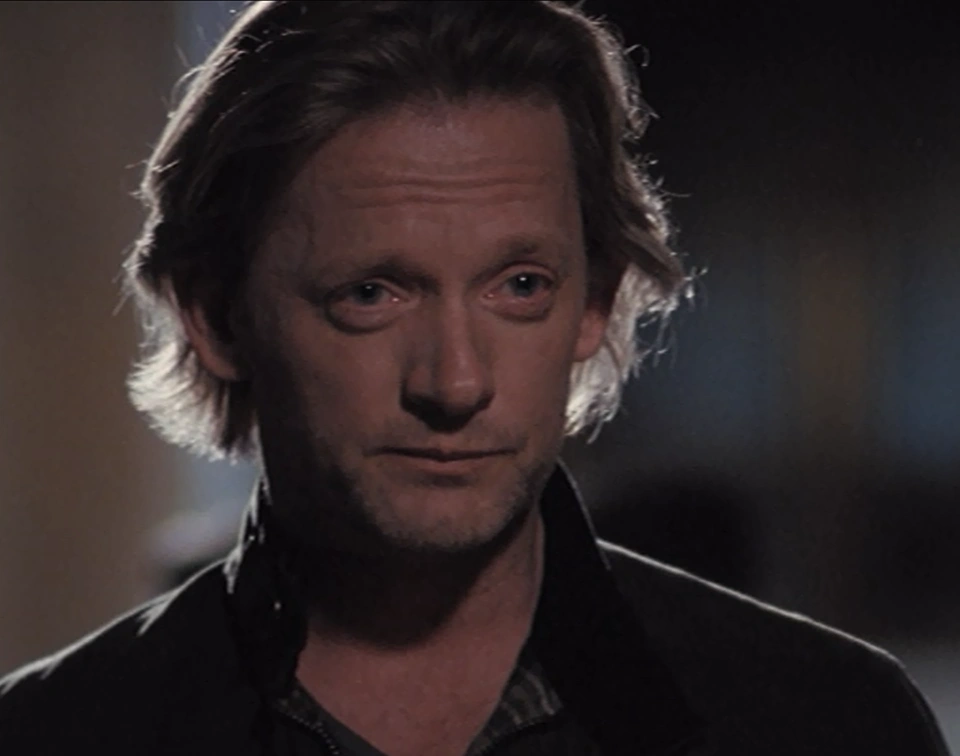
Professor Nick Cutter and Claudia Brown (Primeval)


Nick Cutter was the head of the anomaly research in Primeval.

 Yes, my most missed now-deceased character in the movies/TV shows I've seen isn't actually one character, but two: Professor Nick Cutter and Claudia Brown from BBC's Primeval. The two may have started out as work partners, but their relationship deepened until the tragic events at the end of the first season took place.

Claudia Brown was a government worker at the Home Office.


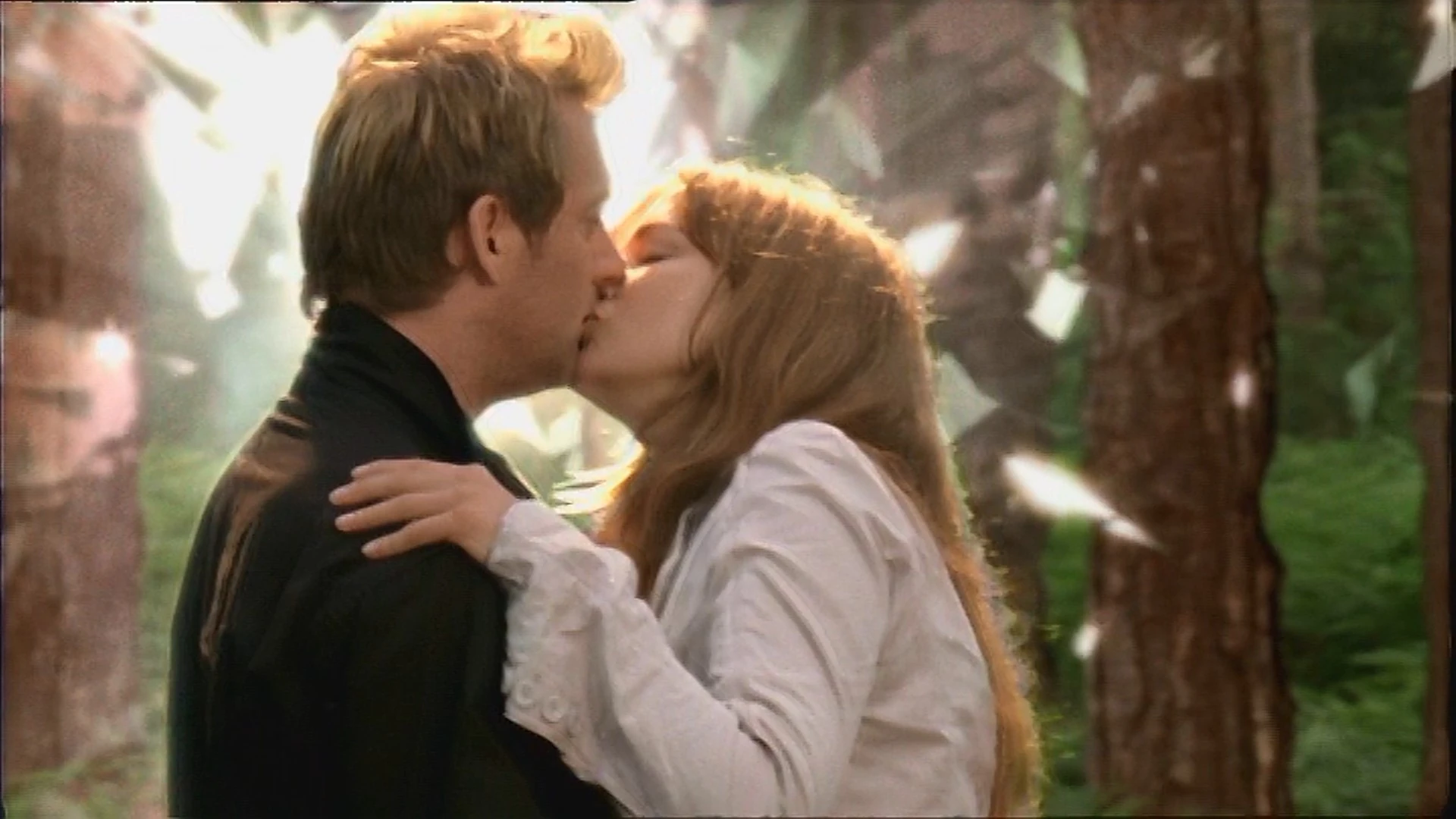
Claudia Brown was a Home Office official sent to the Forest of Dean to investigate strange creature sightings. She teamed up with Nick when she realized he was going to the same destination for the same reason. After discovering a living Scutosaurus in the forest at night, along with Connor Temple, Stephen Hart and Abby Maitland, they all teamed up with the Home Office to investigate these strange creatures and the anomalies that allowed them access to the present world. Claudia and Nick were in a love/hate relationship from the start, as their personalities often conflicted. This all changed when a flock of bloodthirsty Anurognathus attacked the hotel the couple were hiding in and after defending her from these pterosaurs, the two of them shared a kiss. The two of them were in love. Aside from Connor and Abby's relationship, my favorite romantic relationship in the Primeval series was the one between Claudia and Nick. But their relationship didn't last – in the final episode of season 1, Nick, his ex-wife Helen and some other team members prepared to enter an anomaly in order to try and find an anomaly leading to the future. Claudia warned him not to go, feeling something was wrong. But Nick assured her everything would be fine. Regardless, the two kissed again just before Nick entered the anomaly. Upon coming back to the present, things had changed. The most notable change: Claudia appeared to have literally been vanished from the time line! Something (still not revealed in the series) had changed in the past, causing the present to alter as well. Claudia had been replaced by her doppleganger, the public relations manager Jenny Lewis. It was almost as if Nick had a second chance at Claudia (he even accidentally called Jenny “Claudia” several times, much to her annoyance), but that's not what fate had in store. Nick's eccentric ex-wife, Helen, seemed convinced that the aggressive Future Predators' existence was Nick's fault. So near the beginning of season 3, she fatally shot him in the heart, leading to a slow, sad death.


Claudia Brown and Nick Cutter are two of my most missed now-deceased characters from any movie or TV show I've seen. I still get teary-eyed occasionally when I think of this cute couple. Gosh, my eyes are getting wet now!

This is their last kiss before Nick enters the anomaly and Claudia vanishes from the time line...I just had to post this.


I hope you enjoyed this look on some movie/TV show characters that are close to my heart that I will miss. They're a great set of characters, but alas, not everything in life is good, right? Bad things and good things happen in life as life continues to forever change and evolve. With all the changes happening in the world today, it can be hard to find something to be happy about. But at times like that, we should remember the one Individual who never changes, no matter how much life fluctuates...that Individual is Jesus Christ. As it says in Hebrews 13:8, “Jesus Christ is the same yesterday and today and forever.” What a magnificent thing to be thankful to God for!

References:
Obviously, this is normally where I'd put my resources for the information presented above, but as I'm talking about characters in different movies and TV shows today, I think putting my sources down here is unnecessary.

Disclaimer: Many (or in some cases all) of the photographs and images above are not mine and are still-shots from the movies, TV shows and games mentioned above. If you own one or more of them and would like them to be removed, politely let me know via my email address.
Friday, August 21, 2015

Rerun Article: The Dueling Dinosaurs

Well, another week has come and gone. August (and a little later, the summer) will be gone in a blink. I've been pretty busy lately as I prepare for the youth rally my church is doing and the theatrical drama we're producing in late Fall. Oh! And I'm also going to be taking part in National Novel Writing Month's challenge this November too, so I've been brainstorming for the novel I plan to write. Lot's of stuff's going on! Thankfully, I've had enough time to do this blog, Smiley's News and my fanfiction stories. While we're on the subject, if you haven't already, be sure to check out Smiley's News and the two fanfiction stories I've been working on. They're really cool. I'll provide links below:

Smileys News
Jurassic World: Apocalypse
Phineas and Ferb Visit Jurassic World!

Days till:
It is: 17 days till Labor Day
It is: 33 days till Fall
It is: 96 days till the theatrical release of The Good Dinosaur

In the Spotlight:
Yup, you guessed it. I have nothing to report on today...or do I...ACTUALLY, I DO!!! You might recall the 2005 remake of that classic film King Kong. Well, it turns out that they are making a spin-off! The film will be called King Kong: Skull Island. It will be written by Derek Connolly, the same man who was co-writer of Jurassic World! Considering how much I love dinosaurs, it might come as a surprise to some that I've never seen the 2005 version of the film, and I only saw the original King Kong earlier this year! Considering a spin-off is being made to the 2005 version though, I am definitely going to check out that 2005 version real soon.

Topic of the Week by Christian Ryan
The year was 2006 when an amazing fossil discovery, possibly one of the most amazing fossil discoveries ever made, was uncovered in the badlands of Montana. On Mary Ann and Lige Murray's Montana ranch were the ancient fossil remains of dinosaurs, but upon their discovery, it was obvious that this was no obvious dinosaur find! First of all, you might like to know that when scientists find dinosaur skeletons, they don't normally find them articulated (that is, aligned in the order they were in life); they're normally found in a dismantled array of broken fossils and the skeleton is normally not complete. Often times, paleontologists only have a few fossil teeth or a few bones or a fossilized skull to go by. When Therizinosaurus, a large herbivorous theropod (that's the group with mostly carnivorous dinosaurs) was discovered, scientists only found the claws of this beast and accidentally classified the creature as a giant turtle!

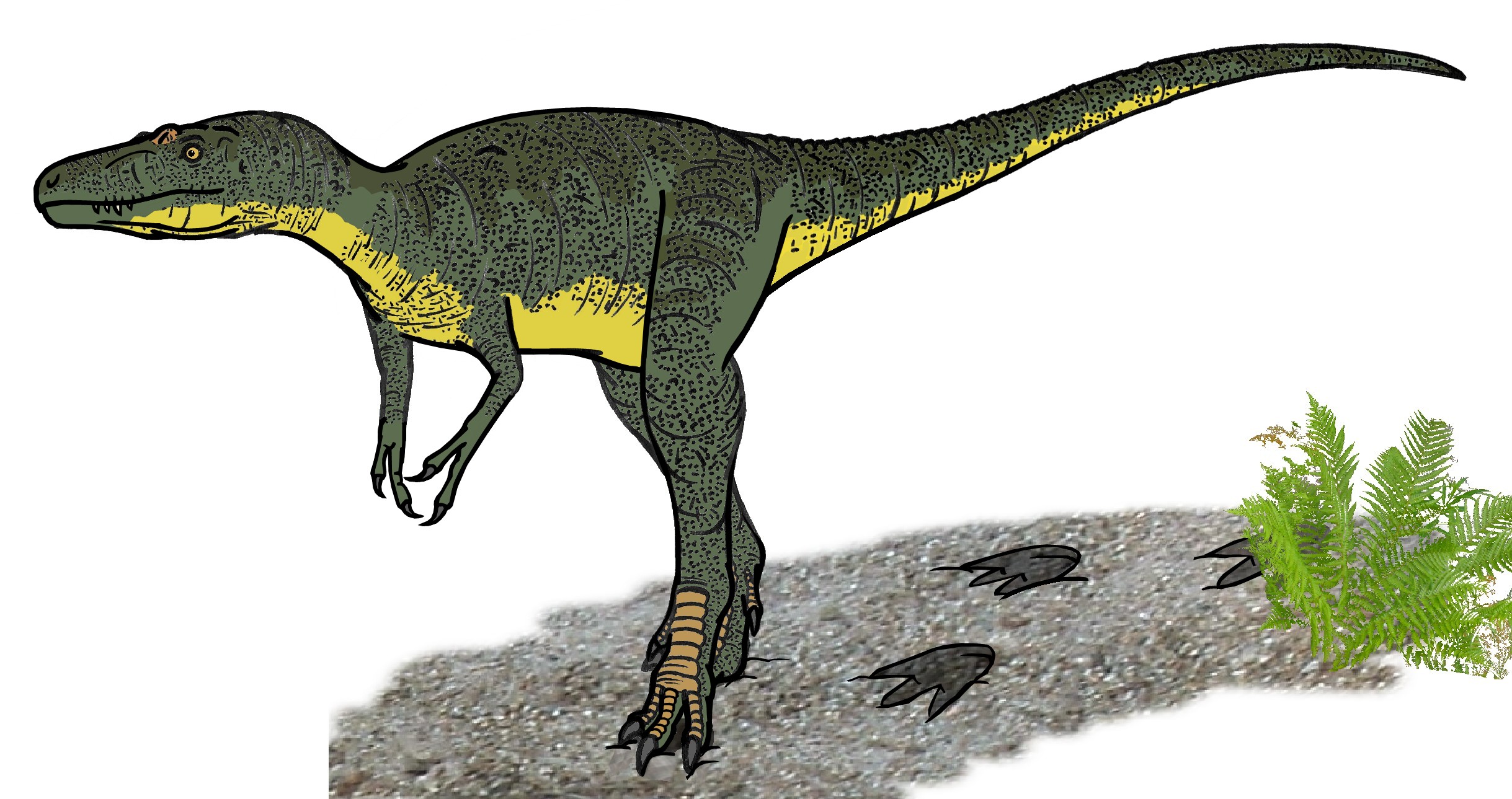
This was not the case with these new dinosaurs that we're going to talk about! In the ground were not one, but two dinosaurs in the exact same location . . . no really, their bodies were partially intertwined! One was a theropod from the tyrannosaur family, possibly Nanotyrannus, and the other was an unidentified species of ceratopsian or horned dinosaur. Perhaps this was a new species! But that's not what drew the most excitement – most of the excitement was from the mere fact that both animals were not only articulated, but intertwined as if they had interacted in life! These two dinosaurs had probably died in the middle of a fight. This isn't the first case when two species of dinosaurs were found together; in the 1970's, the fossilized skeletons of a Velociraptor and a ceratopsian called Protoceratops were found locked in a deadly fight and died caught in the act. The new specimen however, referred to as “The Dueling Dinosaurs”, is of much larger dinosaurs. Yet, despite the amazing state of this find, it was rather ignored until earlier this year where it's attracted lots of attention from the press lately. Before we get into that though, let's take a closer look at what many scientists hope to discover with these finds.
Here's a photo of the dueling dinosaurs; two creatures probably caught in a deadly fight.
First, this amazing find could finally settle a really old debate concerning Nanotyrannus and its larger and far more popular cousin, Tyrannosaurus rex. Many scientists believe that Tyrannosaurus changed as it matured; when it was younger, a baby T. rex would have been much more lanky in proportion to body size, would have had a longer snout and had a faster speed than the adult. The discovery of Nanotyrannus meant to some scientists that they'd actually discovered a juvenile T. rex instead of a new species. Before the “Dueling Dinosaurs” discovery, only two specimens of Nanotyrannus had ever been discovered, and they are both juveniles at only around 15 feet long. The new specimen is estimated to be 30 feet in length. So after the scientists actually can thoroughly study the fossils and can classify it as a Nanotyrannus, then it might be proven that Nanotyrannus was its own species after all and only a cousin to T. rex. Even if they can't find this out, many scientists feel that the other two specimens of Nanotyrannus are too different from an adult T. rex to be a juvenile of T. rex.
"The Dueling Dinosaurs" specimens might solve the mystery as to whether Nanotyrannus is its own species or a juvenile T. rex.
Another question that must be dealt with concerning this find is how on earth these two dinosaurs died together in the first place. One thing we know for sure is that they wouldn't just drop dead in the open and expect to become fossilized! The reason why fossilization doesn't work that way is because of numerous reasons. First of all, when exposed to the elements, dead animals will quickly rot and decay and leave nothing but dust. Not to mention the fact that there are plenty of animals that will happily scavenge from animal carcasses, also not giving them the chance to fossilize. For an animal to become fossilized, it has to be buried very quickly. Evolutionists, who date these fossils at 66 million years old, still often scratch their heads as to why so many animals fossilized so long ago. Is there another alternative with an answer as to why “The Dueling Dinosaurs” fossilized?
When animals die, they normally decompose or get eaten; in order to fossilize, they needed to be buried quickly.
As a believer in God's Word, there's one thing that came to my mind the first time I read about this extraordinary discovery. These dinosaurs were killed and buried in Noah's Flood. Noah's Flood was the most catastrophic time in earth's history and could have easily killed both creatures in the middle of their possible struggle. But how much will scientists be able to learn about these dinosaurs?

When the dinosaurs were unearthed, they remained encased in the block of rock they were found in and they didn't get any attention until earlier this year. However, that's not where this story ends! The fossils were uncovered by non-professional fossil hunters and so they don't own the fossils – no one technically does! What was decided to become of these amazing fossils? Well, it turns out that these particular fossils are going to be in an upcoming auction! That's right! People with big money to spend will be able to hope to buy “The Dueling Dinosaurs”. This also means that there's a good chance that the fossils will go to a private fossil collector and the worry among many paleontologists is that if they go to a private collector and the private collector doesn't donate the fossils to a museum, scientists won't be able to study them thoroughly and won't be able to learn as much as they can from these beautifully preserved dinosaurs. And to make matters worse, these dinosaurs are predicted to break the record for the most expensive dinosaurs ever sold, breaking the record of the auction-sold skeleton of a Tyrannosaurus rex sold to a museum named Sue for around $7,000,000! “The Dueling Dinosaurs” are expected to be sold for around $9,000,000 dollars! WAY more than I can afford; otherwise I'd be happy to buy the specimens myself and donate them to a museum.

I for one hope that a museum can rally up enough money to buy the fossils or that a generous buyer donates the specimens to the museum, or else these dinosaurs might in fact go extinct twice; the first time being when they died and the second time when they get sold and fade into obscurity because we might not get to learn anything from these fossils. Let's hope and pray that these dinosaurs make it to a good museum where they can be studied, because these fossils can help us unlock the mysteries surrounding some of the most magnificent animals ever to walk the earth.
The "Dueling Dinosaurs" forever entombed in stone.


Update: For a while, the fate of the specimens mentioned above was pretty much unknown to most people. However, last June, National Geographic released an a documentary that talked about the importance of the "Dueling Dinosaurs" specimens to science and their fate after the auction. Thank you National Geographic!!! You can see a clip from the documentary below:


Disclaimer:Many (or in some cases all) of the photographs and images above are not mine. If you own one or more of them and would like them to be removed, politely let me know via my email address.

Friday, August 14, 2015

Ten UnBee-lievable Honey Bee Facts

Bees are (or at least should be) on everyone's mind right now, because National Honey Bee Awareness Day is tomorrow! It's the day (every third Saturday of August) we commemorate to nature's little pollinators and honey producers. You might not believe it, but there is a lot more to honey bees than their stinger, yellow bodies and black stripes. If you want to impress your friends with some interesting bee facts, look no further! But first, it's time for...

Days till:
It is: 1 day till National Honey Bee Awareness Day
It is: 24 days till Labor Day
It is: 40 days till Fall
It is: 103 days till the theatrical release of The Good Dinosaur

In the Spotlight:
Sorry, I don't have anything to report on this week...but I do have a short video clip to show, since National Honey Bee Awareness Day is coming up:


Topic of the Week by Christian Ryan
Honey bees are very fascinating insects.
Well, National Honey Bee Awareness Day is right around the corner, so naturally, everyone is unbeelievably excited about honey bees! And why not get excited about these busy little insects? After all, if it weren't for them, where would our honey come from? Beelieve it or not though, there are quite likely some things that you don't know about these little pollinators. So today, instead of beeing beehind on your knowledge of these bee-autiful insects, take a look at my list of ten amazing facts that you may or may not know about our bee-sy bee friends. (Sorry, couldn't help but through a few bee puns in there!)

The Honey Family (Snap, Snap)*
The honey bee, like other insects, has a body made up of three parts (head, thorax and abdomen) and three pairs of legs.
When the word “bee” is said, undoubtedly the honeybee is what comes to most people's minds. However, this extremely undermines the extent of the bee family. In fact, there are over 25,000 members of the family Apidae, or bee family, around the world! Out of those, 4,000 can be found in the United States. These numbers are likely to expand in the future though, because as with many insects, new species of bees are being discovered all the time.

Some species of bees include carpenter bees, orchid bees, cuckoo bees and the bumblebee, which is capable of carrying nearly half its own body weight in pollen back to its hive!

Bumblebees are incredibly strong for their size, as they are capable of carrying half its own body weight of pollen.
* In case you didn't get the reference, this was a nod to the Adam's Family theme song.

Social Workers
Honeybees live in huge colonies that can consist of over 80,000 individuals!
Honeybees are social insects, living in cooperative colonies that can consist of over 80,000 bees! But did you know that there are three types of bees in a hive: workers, drones and the queen?

As their title suggests, the workers carry out all the work in the hive. Worker bees are always female, and their job description includes building and (if need be) repairing their hive, defending the hive, raising the young, collecting food, cleaning the hive, making the honey and many other jobs necessary to keep the hive functional. No wonder they're so busy! In fact, worker bees are so busy, that during the time of year these insects are making and storing honey, they only tend to live five to seven weeks. Thankfully, the queen ensures that these frequent deaths don't deplete the population of the colony.

Honeybees communicate via the "waggle dance", as seen above. The angle and distance of a honeybee's movements tells the other bees where sources of food or a good place for a new hive might be.
Did you know that bees are really talkative too? Instead of using verbal communication like most animals we're familiar with, bees communicate using a series of movements called the “waggle dance”. If a worker bee has located a potential place to make a new hive or a good source of food, she will return to the hive and begin to move in a figure eight while shaking her abdomen. The length and direction of each dance motion tells the other beers the distance and direction of the flowers.

The worker bee in the center of the picture is performing the waggle dance.
But instead of just talking about the waggle dance, why not watch this video on the topic?


I've Got a Stinger and I Know How to Use It! (Or) Honey, I Stung the Kids
"Honey, I stung the kids," this bee might say when she returns to the hive. Worker bees can only sting once, because they die soon after.
Honeybees are little insects that would make a tasty snack for many predators if they didn't possess a stinger at the base of their abdomen. The stinger is attached to a venom gland in the insect's abdomen; it's this venom that gives a beesting its punch. Once a bee stings something (be it animal or human), a fishhook-shaped barb at the end of the stinger prevents it from being pulled out easily. Therefore, the stinger remains in the victim even after the bee flies away, continuing to pump additional venom into the wound. Thankfully, unless a person is allergic to bees, a beesting is not dangerous.

The honeybee might beg to differ, however, as stinging a victim is dangerous for the bee. When a bee stings something, the entire stinger and venom  gland are torn from the bees abdomen. This causes it to die soon after. This isn't the case with all bees though; bumblebees lack a barb on the end of their stingers, allowing them to continue stinging something several times if need be. (The same is true of queen honey bees, but since they rarely leave the hive, the chances of getting stung by one are extremely slim.)

Honeybees and the Flowers
Honeybees are one of our most important pollinators.
Bees share a special relationship with flowering plants. When a worker bee goes out to collect what it needs to make food for the rest of the hive, she finds a flower and crawls into it to access the nectar inside. In the process, pollen attaches to the bee. Every time this bee lands on another flower, she drops and picks up pollen, meaning pollen is carried from flower to flower. It is this pollen that the bee drops off that allows the flower to produce fruit with seeds in it, meaning it can reproduce after its own kind. Isn't this process ingenious? In this fashion, bees and flowers share a symbiotic relationship – the flower is allowed to reproduce and the bee gets nectar she needs to make the food she eats...er, drinks, actually. The flower can't live without the bee and vise versa.

Nature's Honey Manufacturers
Would you believe me if I told you that honey is technically honeybee vomit?
A worker honeybee extracts nectar using her long, tube-like tongue called a proboscis, storing it in a portion of her gut designated for temporary nectar storage, or “honey stomach”, as it's sometimes called. Once full and weighing twice her usual body weight,  she flies back to the hive and honey manufacturing begins. Once arriving at the hive, another worker bee will stick her own proboscis down the nectar-filled bee's throat and she sucks out the nectar. This nectar is then processed in her mouth and honey stomach for about half an hour to give the nectar time to be broken down by special enzymes that make the nectar easier for the bees to digest once it's made into honey. After the 30 minutes or so is up, the honeybee regurgitates the nectar into a honeycomb. So essentially, honey is honeybee vomit...still sound yummy?

The Queen Bee
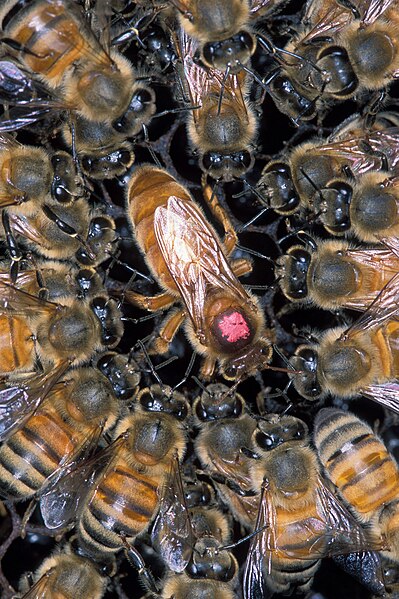
Though she's unlikely to win any spelling bees, the queen bee is one of the most important bees in the hive. Here, she is marked with a red dot by her researchers so they can easily locate her amid possibly 80,000 other bees.
Earlier, I mentioned that there are three types of bees. One of which is the Queen Bee. The queen bee is the largest individual in the colony and it's her job to ensure that there's always a steady addition of new bees born. She also releases chemicals into the hive that stimulate the behaviors of other bees in the hive. Needless to say, the queen is extremely important, and without her, the hive goes haywire fast! So when a queen bee dies, the workers must quickly make a new queen form. How do they create a new queen? The answer lies in a special food called “royal jelly”.

These two queen bees are given royal jelly to help them grow into the roles as queens.
Royal jelly is a special diet that worker females feed to a select group of female baby worker bees. The royal jelly triggers the development of several “queen bee exclusive” features in their body, including reproductive organs. Then when the first queen bee reaches maturity, she will kill off the other developing queens to ensure she has no competition. Now, she top bee in the hive. As their life isn't nearly as busy as that of a worker bee, a queen bee can live between three to five years in the wild.

Did I mention royal jelly is sold for human consumption too?

What About the Boys?
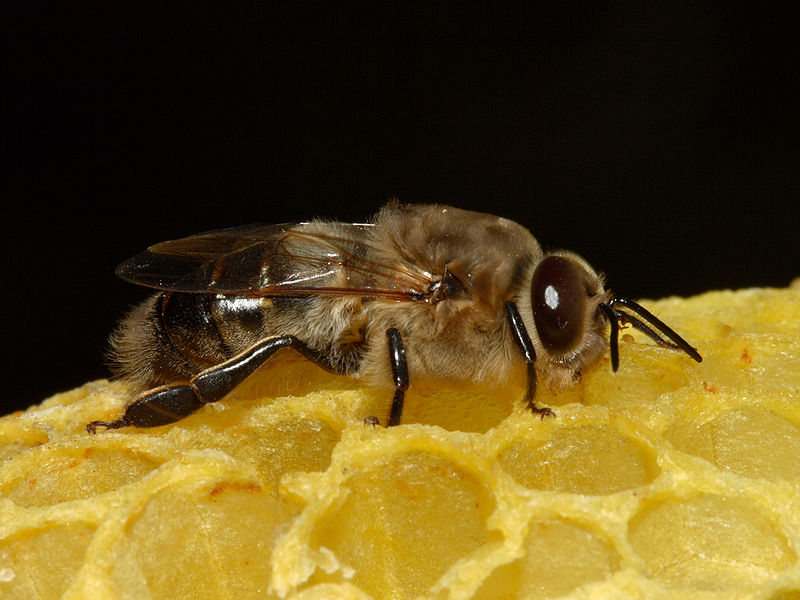
Honeybee drones, or males, do not sting. Their only purpose in life is to mate with the queen bee.
Most often talked about concerning bees are the workers and queen bees, but not all bees are female. There are several hundred drone, or male, bees in a hive. They don't have stingers and have nothing to do with the upkeep of the hive, or collecting food. Their only job in life is to mate with the queen. However, during the leaner winter months, the drones are banished from the hive in order to ensure there's enough food for the colony to last the entire winter.

What Come Winter?
In winter, honeybees, like these giant honeybees pictured above, gather together to conserve warmth.
Honeybees (the workers anyway) work throughout the spring and summer months to ensure there's enough food to last the entire winter, where flowers no longer produce nectar. In order to retain a high body temperature during the colder parts of the year, the colony bunches together into a tight ball. It is also during this time of year that bee larvae are fed and developed for their life of constant work, so that when the spring dawns, the next generation of bees is ready to fulfill their purpose in life.

Once a Bee, Always a Bee
We know exactly what the bees dinosaurs lived with looked like because they are perfectly preserved in fossilized amber. Believe it or not, these bees are almost identical to modern bees.
When the word “fossil” comes to mind, bees are not usually brought up. However, we've found numerous fossils of bees in the fossil record; the lowest rock layer we've found bees in so far has been the lower Cretaceous rock layers, and using unreliable and unverifiable dating methods, age these rocks to be approximately 100 million years old. Unlike dinosaurs, we're able to even learn what these ancient bees would have looked like because we don't only find them as fossils, but also preserved in fossilized tree sap, called amber! Amber is almost like a time capsule, able to preserve the insect so that it remains exactly how it looked in life!

We can learn a lot from bees found preserved in amber. For one thing, we can easily recognize these insects as bees. They've changed very little in the past (alleged) 100 million years. But while evolutionist scientists would argue that these fossil bees are like snapshots of their evolution, this can hardly be the case considering the bees are almost identical to modern bees. The fact that the bees are almost identical better fits a scientific model that evolution hadn't occurred at all in bees. We see no evidence in the fossil record to suggest that bees evolved from any other kind of insect. Instead, just like the Bible says in Genesis chapter one, the fossil record reveals that bees have been reproducing after their own kind. They were created during the creation week around 6,000 years ago and since then have diversified into tens of thousands of different species. But never once have bees developed into anything other than a bee.

Beela Vanilla
This little guy, er...girl, actually, is a Melipona bee, the kind of bee responsible for the pollination of vanilla plants.
So we know we get honey (and of course, beeswax) from bees, but there's something else that we get from bees that most of us couldn't imagine living without: vanilla! That's right! Vanilla is also produced by bees! The bees responsible for making vanilla are called Melipona bees. These bees are native to South America and, unlike their honey-making relatives, don't have a stinger. Melipona bees have a symbiotic relationship with the vanilla orchid. This species is one of the few capable of pollinating these orchids, making them just as important to the orchid as the orchid is to the bee. It is thanks to these little pollinators that we have vanilla today.

I hope you learned an unbeelievable amount of bee facts from this article. Tomorrow, as we celebrate National Honey Bee Awareness Day, be sure to spare a thought for these little creatures. Because if God had never made them, we'd never have beeswax, (vanilla in the case of the Melipona bees) or honey.

Happy National Honey Bee Awareness Day everyone!

References:
www.wikipedia.org/wiki/Apidae
www.buzzaboutbees.net/types-of-bees
www.npr.org/sections/thesalt/2015/08/03/427844248/heavy-loads-of-pollen-may-shift-flight-plans-of-the-bumblebee
www.orkin.com/stinging-pests/bees/honey-bee-life-span
www.fcps.edu/islandcreekes/ecology/honey_bee
www.hiveandhoneyapiary.com/TheWaggleDanceTalk
www.pbs.org/wgbh/nova/nature/waggle-dance
www.hiveandhoneyapiary.com/howbeesmakehoney
www.animals.nationalgeographic.com/animals/bugs/honeybee
www.wikipedia.org/wiki/melipona

Disclaimer: Many (or in some cases all) of the photographs and images above are not mine. If you own one or more of them and would like them to be removed, politely let me know via my email address.