Showing posts with label mosasaurs. Show all posts

Wednesday, December 30, 2015

The New Dinosaurs of 2015

I can't believe it, but we're already approaching the end of 2015, which I think has been my best year of life so far. Not all of 2015 was easy, but this year made for a great life experience for me. So much great stuff happened over the course of this year. 2016 will soon be upon us, and we'll have new adventures to partake in. I can't wait to see what they are!

Once again, it's time to look at the past year's dinosaur discoveries!
Days Till:
It is: 2 days till New Year's
It is: 6 days till My Birthday
It is: 19 days till Martin Luther King Jr. Day

In the Spotlight:
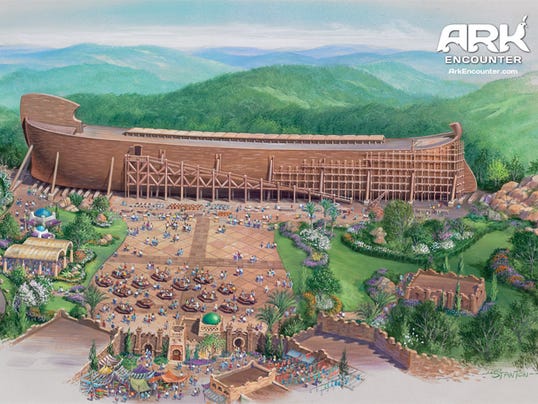
The Ark Encounter, opening July 7th, 2016. (Property of Answers in Genesis)

In addition to the many other things we have to look forward to next year, I'd like to draw your attention to a new “theme park” opening on July 7th, 2016 called “Ark Encounter”. In case you're one of the individuals who's unaware, the Ark Encounter is a subdivision of the creationist company Answers in Genesis (I'm a BIG fan of their work...in case you somehow haven't noticed); not too long ago they opened the Creation Museum in Kentucky. Now, not far from the Creation Museum, AiG is constructing a life-size wooden ark, modeled after the one Noah built in Genesis 6-7. It's going to be 510 feet long, 51 feet tall and 84 feet wide when complete! While the real Noah's ark was technically a floating zoo, perfectly designed to stay afloat on the high global seas, the Ark Encounter vessel will be so much more. The best I can describe it is as a museum inside of an ark, it's going to feature many different kinds of animals depicted as they might have looked on Noah's ark, and several dioramas and exhibits talking about how we know the global Flood of Noah's time happened, the Ice Age, the wickedness of the pre-Flood world and so on. But don't take my word for it, check out a video they recently released talking about what kinds of exhibits they'll have inside the ark:


When you're finished with that video, please go to their newly-designed website talking all about the Ark Encounter, and even a little bit about what kinds of animals they'll feature and so much more: www.arkencounter.org.

Topic of the Week
by Christian Ryan2015 has been a great year for dinosaur lovers. We've had more dinosaur movies/documentaries than you can shake a stick at (e.g. T. rex Autopsy, Dino Death Match, Dinosaur Britain, The Good Dinosaur and, the biggest of them all, Jurassic World). But not only have there been a multitude of dinosaur documentaries/movies, we've also had a great year for dinosaur discoveries. Below is a list of just a few of the newest species of dinosaurs discovered and new research on dinosaurs discovered in previous years.

New Dinosaur Species of 2015

Carnufex

Carnufex could swim after you in the water, and run after you on land! (Image Credits)
 OK, so Carnufex carolinensis is by no means a dinosaur, it's discovery is still quite fascinating. It was a species of crocodile-like reptile (a crocodylomorph to be more specific) that was discovered in North Carolina. Carnufex was about nine feet long from snout to tail. What makes it unique is that it probably could walk on its hind legs, like a theropod dinosaur. It inhabited the Triassic ecosystem of the pre-Flood world until 4,350 years ago when it and countless other animals were wiped out in the global Flood of Noah's time. Armored reptiles and so-called "mammal-like reptiles" would have likely served as prey for this creature.

Chilesaurus
Chilesaurus was an herbivorous theropod. (Image Credit: Gabriel Lio)
Theropod – the word often conjures up images of large predators like Tyrannosaurus and Allosaurus, or perhaps fast and deadly smaller predators like Velociraptor and Coelophysis. So imagine paleontologists' surprise when seven-year old Diego Suárez discovered Chilesaurus, a theropod from Chile, in 2004. However, it wasn't scientifically described until 2015. It had an overall body shape of a theropod, but it had a small head with a beak and leaf-shaped teeth akin to stegosaurs, a hip structure like an ornithopod, hind feet like a prosauropod and two-fingered hands like a T. rex! It's no wonder scientists nicknamed it the “platypus dinosaur”. Despite being a theropod, 10-foot long Chilesaurus' leaf-shaped teeth, beak and large gut tell us that it was an herbivore.

Dakotaraptor

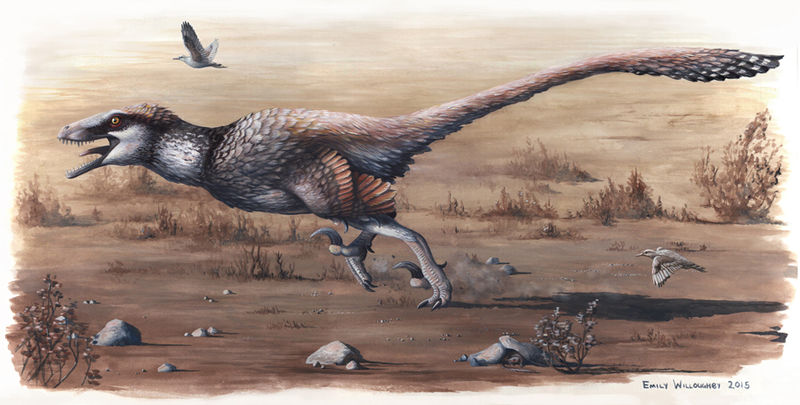
Dakotaraptor was one of the most dangerous dinosaurs ever to walk the earth. (Image Credit: Emily Willoughby)
Up until 2015, the only apex carnivores known from the Hell Creek Formation (which spans Montana and the Dakotas) were the turkey-sized, Velociraptor-like Acheroraptor, and of course, Tyrannosaurus rex. This all changed this year, when scientists studied and described fossils of a large raptor uncovered in South Dakota in 2005. Meet Dakotaraptor! This dromaeosaur was 18 feet long, six to nine feet tall, weighed over 500 pounds and could run at speeds of 30-40 mph. As if this weren't dangerous enough, Dakotaraptor may have hunted in packs like its cousins, like Deinonychus and Utahraptor. In addition to blade-like teeth and incredibly strong arms, it had a nine-inch sickle-shaped claw on each foot for dismembering prey. If you're ever exploring the pre-Flood ecosystem of Hell Creek, beware of this dinosaur!

To read more about Dakotaraptor, please see my full article.

Hualianceratops
Hualianceratops was a smaller relative of Triceratops. (Image Credits:PortiaSloanRollings)

Triceratops is the most popular member of the ceratopsian baramin (“created kind”), but cousins of this 10-ton herbivore come in all shapes and sizes, from another 2015 discovery, the extra-frilled Regaliceratops which grew over 15 feet long, to the spaniel-sized Hualianceratops. This ceratopsian made its home in what is now China's Gobi Desert; at the time, the area was certainly much more forested than it is today. This Jurassic ecosystem boasted a wide range of dinosaurs, from long-necked sauropods, to the predatory Guanlong, a small raptor-like tyrannosaur described in 2006. Unlike its larger relatives, Hualianceratops lacked horns and an elaborate frill and it walked on two legs rather than four.

Kunbarrasaurus
Kunbarrasaurus was thought to belong to the genus Minmi until very recently. (Image Credits: Australian Geographic)

Ankylosaurs are a group of dinosaurs known for being covered in tough armor plates. These plates cover the entire upper half of the animal – even the eyelids are hardened! Some ankylosaurs even had clubs on the ends of their tails. Kunbarrasaurus is a newly discovered ankylosaur from Queensland, Australia. Actually, Kunbarrasaurus was officially dug out of the ground in 1989, but it was thought to be a genus of ankylosaur already discovered, called Minmi (a previous record-holder for the shortest dinosaur name). But recently, scientists found that Kunbarrasaurus' fossils have enough distinctions to make it a different genus.

Qijanglong
Qijanglong had a neck half as long as its entire body! (Image Credits: Lida Xing)
Dinosaurs like Guanlong and  Hualianceratops roamed in the shadows of giants, like the newly discovered Qijanglong, emphasis on “looong”! This dinosaur was a member of the sauropod group, a group of dinosaurs known for having long necks. However, Qijanglong and its closest kin, members of the mamenchisaurid family, had necks long even for sauropods. The necks of most sauropods are a third the length of their bodies, but in the 45-50-foot Qijanglong, its neck was almost half the length of its body! How did sauropods carry such long necks without toppling over? Well, the ultimate Designer (the God of the Bible) made sauropods with neck vertebrae that were filled with pockets of air, making them both strong and lightweight. Interestingly, Qijanglong's skull was discovered attached to its neck; usually sauropod skeletons lack skulls because they easily become detached after the animal dies.

Morelladon
Morelladon was a sail-backed relative of Iguanodon. (Image Credits: Carlos de Miguel Chaves)

Dinosaurs just get weirder and weirder, don't they? (And we're not even to the weirdest one on the list yet!) Morelladon was an iguanodont dinosaur with a sail on its back. Scientists aren't sure why this Spanish herbivore had this feature; it's likely however that the sail was used for display purposes. Morelladon wasn't the only dinosaur to possess a sail: the fish-eating spinosaurs and another iguanodont called Ouranosaurus also had sails. However, perhaps the most elaborate sail of all the dinosaurs belonged to Spinosaurus – its sail stood over six feet tall!

Phosphorosaurus
Phosphorosaurus is not a dinosaur, but a marine lizard of the mosasaur family. (Image Credits: Tatsuya Shinmuru)

Mosasaurs were marine lizards that were very similar to modern monitor lizards. They got a burst of popularity when Mosasaurus (the type species of the mosasaur family) ate Jaws for lunch in the Mosasaurus Feeding Show. Unlike the monster, 60-foot long Mosasaurus, the newly-discovered Phosphorosaurus was not an apex predator of the pre-Flood seas. It was only 10 feet long and fed on fish and squid-like animals. Paleontologists believe Phosphorosaurus may have hunted at night because it had large, forward-facing eyes, unlike other mosasaurs. This means it probably would have been capable of night-vision. Phosphorosaurus was discovered in Japan.

Ugrunaaluk
Ugrunaaluk was misidentified as Edmontosaurus for decades. (Image Credits: James Havens)

Diplodocus. Stegosaurus. Parasaurolophus. You thought those names were hard to pronounce! But you haven't seen a hard-to-pronounce dinosaur name until you've tried to say Ugrunaaluk (Ug-ru-naa-luk). It took me forever to learn how to pronounce this one! This dinosaur was a member of the hadrosaur (duck-billed dinosaur) family and if its name sounds rather unusual for a dinosaur, that's because it isn't derived from the Greek or Latin like most dinosaur names are, but the Inupiat language reflecting where the dinosaur was found – northern Alaska; Ugrunaaluk means “ancient grazer”. Pretty much since the 1980's, scientists have unearthed over six thousand hadrosaur fossils from Alaska. At first, they were believed to belong to a type of lambeosaurine hadrosaur (a hadrosaur with a bony crest). But after more examination, the fossils were classified as Edmontosaurus fossils. However, in 2014 scientists continued to study the fossils and found out something shocking – they weren't Edmontosaurus fossils, or the fossils from any other known hadrosaur, but a new species! As if this weren't surprising enough, many of Ungrunaaluk bones aren't actually fossilized – these are “fresh” dinosaur bones! You would think that this would be a revolutionary discovery, but alas it has been ignored by most of the media or “shoved under the rug”. This is likely because it would further jeopardize the idea that the dinosaur bones are millions of years old and make the biblical view that these dinosaurs were buried in the waters of the Genesis Flood the only logical explanation.

Yi
Yi qi and similar weirdos are from the strange family scansoriopterygidae. (Image Credits: Dinostar)

Dinosaur names are known to be long, tongue-twisty and hard to pronounce, especially names like Ugrunaaluk. So try this one for size: Yi. Yes, that's actually the name of a dinosaur, and it was almost as weird as its name. Its full name (genus and species name) is Yi qi (pronounced “ee-chee”) and it means “strange wing”. So what makes Yi qi stand out? Firstly, this Chinese dinosaur is small, about the size of a pigeon. It also boasts the smallest name of any dinosaur (beating previous record-holders, Mei and Minmi). The most amazing thing about Yi qi though is that it possessed a special membrane supported by a bony rod protruding from its wrist. It was the first, and so far only, dinosaur discovered with bat-like wings! Now it couldn't fly like bats or pterosaurs (flying reptiles with similar wing membranes); instead it was probably a glider, moving from tree to tree, using its “wings” to glide long distances between them. Evolutionists call an instance where a creature has similar features to another unrelated creature “convergent evolution” (strangely, when the same finds occur in creatures they claim are related, it is presented as evidence that the creatures evolved). Instead, Yi qi's bat-like wings point to a Designer who created both Yi qi's baramin and bats. Another interesting thing about Yi qi's discovery is that scientists found melanosomes, which contain pigment cells. By looking at these, scientists were able to tell that Yi qi glided through the forest in a shade of black, with yellow-brown coloration on its head and wing membranes.

Zhenyuanlong
Zhenyuanlong is from the same ecosystem as many other well-known so-called "feathered dinosaurs", including Microraptor, Sinosauropteryx and Sinornithosaurus.

While being touted as positive proof that it's supposed cousin Velociraptor was a feathery feign, Zhenyuanlong is hardly the proof dino-to-bird theorists are looking for. What was actually discovered in China's Liaoning Province? Well, scientists recently described a five-foot-long, nearly complete skeleton complete with fossilized feathers. Contrary to popular opinion, aside from the tremendous evidence against the idea that theropod dinosaurs evolved into birds, Zhenyuanlong cannot act as an aid to the theory, as it has several features that identify this creature as a bird, and not a dinosaur; certainly no cousin to Velociraptor. To see why, please see this article by Answers in Genesis. So what of Zhenyuanlong's clawed wings, long bony tail and sharp dinosaur-like teeth? Well, like many other now-extinct birds, like Alexornis, Archaeopteryx, Microraptor, Hesperornis and Ichthyornis, Zhenyuanlong was a species of predatory bird, unique to the pre-Flood world. Zhenyuanlong must have been a terror to smaller creatures in the forest it lived in.

To read more about why dinosaurs could not evolve into birds, please see this article.

New Research of 2015

Brontosaurus
Brontosaurus, once considered synonymous to Apatosaurus, might make a comeback! (Photo Credits: Davide Bonadonna)

Since the early 20th century, scientists have thought that sauropod Brontosaurus was the same species as the closely related Apatosaurus. Therefore, the name invented first – Apatosaurus – was kept and Brontosaurus was dropped, until a 2014-2015 study, that is. A group of scientists was able to conclude that after reevaluating the fossils of both dinosaurs, that Brontosaurus was distinct enough to return as its own species. See an article about the discovery here.

Cave Lion
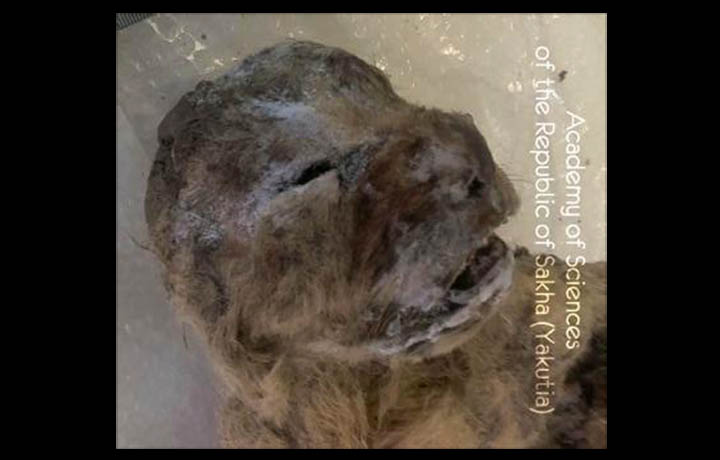
This cave lion cub is one of the best preserved extinct cats ever found. (Image Credits: Academy of Sciences in Yakutia)

While clearly not a dinosaur discovery, I thought this was worthy to bring up. A few months ago, scientists reported on the discovery of two cave lion cubs that were found frozen in Russian permafrost. Cave lions were a subspecies of the modern lion that lived throughout Europe and Asia during the Ice Age. This discovery is rather amazing because the cubs are the best preserved extinct cats ever found. Until now, we have only had cave lion skeletons and paintings of these cats by Ice Age people to know what they looked like.

For more on this discovery, go here.

Well, that wraps up my blogging until next year. To everyone out there:
HAVE A HAPPY NEW YEAR!
See you in 2016!

Disclaimer: The images above are not my own unless otherwise indicated. If you own one of the above images and want it removed, please notify me via my email.

References:
www.sci-news.com/paleontology/science-carnufex-carolinensis-new-prehistoric-crocodile-north-carolina-02617
www.birmingham.ac.uk/news/latest/2015/04/Chilesaurus
www.icr.org/article/new-fossil-dubbed-platypus-dinosaur
www.livescience.com/53039-new-jurassic-horned-dinosaur
www.sci-news.com/paleontology/kunbarrasaurus-ieversi-new-armored-dinosaur-species-03507
www.earthsky.org/earth/long-necked-dinosaur-roamed-china-160-million-years-ago
www.sci-news.com/paleontology/phosphorosaurus-ponpetelegans-new-mosasaur-species-03498.html
www.news.discovery.com/animals/dinosaurs/new-dinosaur-had-a-sail-on-its-back-151216
www.wikipedia.org/wiki/Ugrunaaluk
www.prehistoric-wildlife.com/species/u/ugrunaaluk
www.creation.com/unpermineralized
www.prehistoric-wildlife.com/species/y/yi
www.phenomena.nationalgeographic.com/2015/04/29/chinese-dinosaur-had-bat-like-wings-and-feathers
www.answersingenesis.org/dinosaurs/feathers/what-if-dinosaurs-really-had-feathers

Friday, July 10, 2015

Jurassic World pt. 3: The Dinosaurs


I've had a very interesting time since last Friday to say the least! I saw some awesome fireworks on July 4th, and I've been pretty busy getting ready for my youth group's upcoming "Youth Rally" (more on that a little later). I've also got the final article of my three-part series on Jurassic World. Let's start with...

Days till:
It is: 59 days till Labor Day
It is: 75 days till The First Day of Autumn
It is: 140 days till The Good Dinosaur's release

In the Spotlight:
OK, I don't have much to share about upcoming movies for this week. Hopefully this will change next week!

Topic of the Week by Christian RyanAs promised, after looking at the background for the #1 movie worldwide, Jurassic World, and its characters, I am going to close this three-part series with a little information on all the dinosaurs that appear in the film!

PS. Warning – Spoilers ahead!

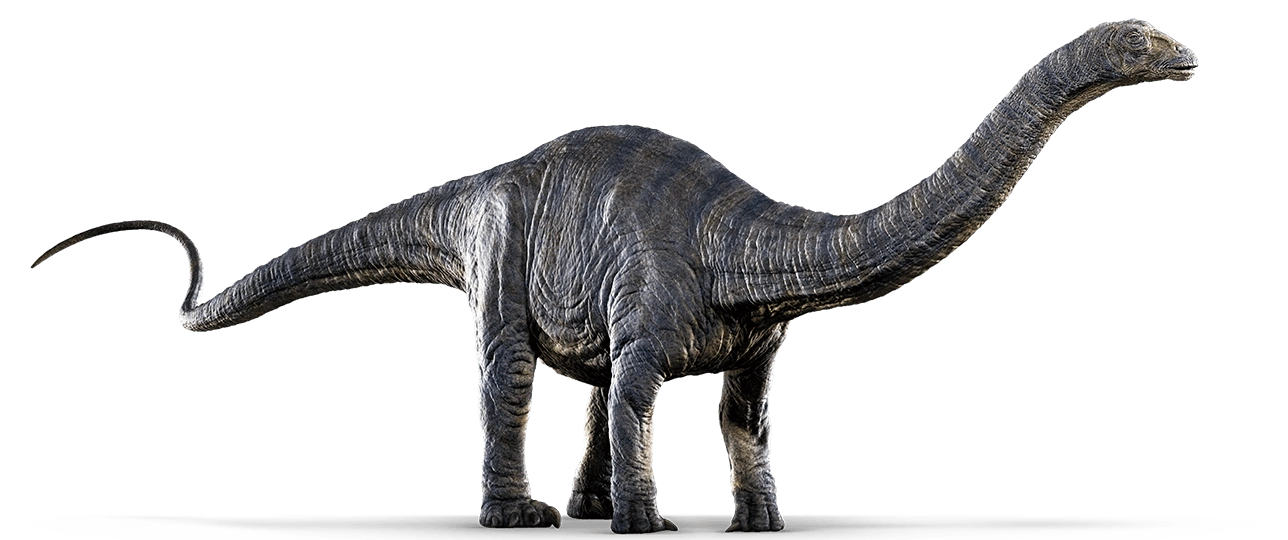
Apatosaurus

Apatosaurus is the largest dinosaur in Jurassic World.
The majestic Apatosaurus is the largest dinosaur in Jurassic World, and one of the largest land animals that has ever existed. These Jurassic-habitat long-necked dinosaurs, or sauropods, can reach 75-90 feet in length and weigh up to 36 tons! Thankfully, these behemoths are only herbivores, consuming ferns and conifer branches. As it can't chew, it has to swallow its food whole, using stones the animal swallowed to grind up the food in the gut.

Apatosaurus is one of the dinosaur species to appear in both the Gentle Giants Petting Zoo and on the Gyrosphere ride. With a gyrosphere vehicle, tourists are able to ride up right alongside these incredible beasts. Thanks to their size and long whip-like tails, they are almost immune to attack from predators. However, as is later evidenced in the film, they are no match for the genetically-engineered Indominus rex, who kills five and injures another during her rampage across Isla Nublar.

Apatosaurus has been featured in both Jurassic Park novels by Michael Crichton. However, it was replaced with Brachiosaurus in the first Jurassic Park movie and the eccentrically long-necked Mamenchisaurus in The Lost World: Jurassic Park. So it's nice that Apatosaurus finally gets some limelight, something this species doesn't experience very often in recent movies. (I mean, when was the last time you've seen an Apatosaurus in a dinosaur movie?).

Triceratops

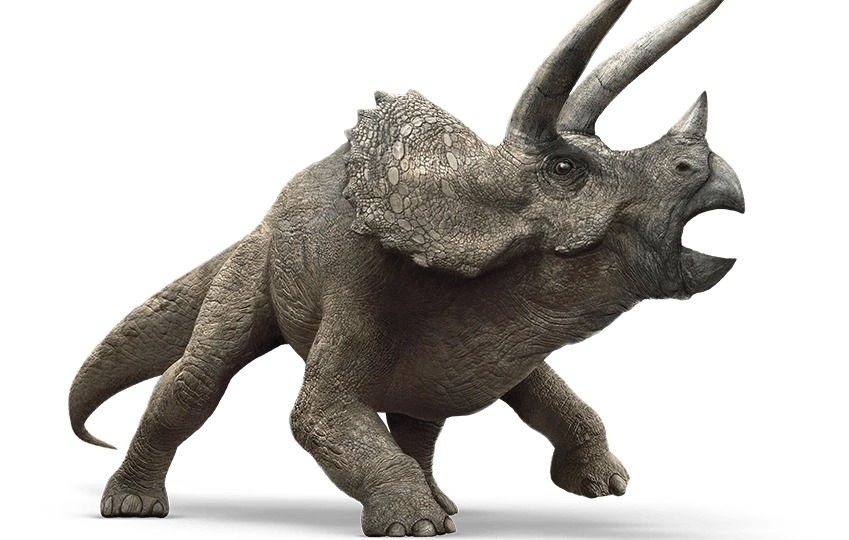
With three horns on its head, Triceratops looks aggressive, but these dinosaurs are rather passive unless provoked.
Even though Triceratops is quite a popular species of dinosaur and one of everyone's favorites, it hasn't played a huge part of any of the previous Jurassic Park films. However, several specimens appear in Jurassic World and could be seen on the Gyrosphere ride and in the Gentle Giants Petting Zoo.

These herbivores can be as long as a school bus – up to 30 feet long – and weigh 10-12 tons! This makes them one of the largest non-sauropod dinosaurs to exist in North America. These animals roamed the Cretaceous plains in herds, grazing on low-growing plants, such as ferns and cycads. In the Gentle Giants Petting Zoo, baby Triceratops could be hand fed special dino-feed by park guests. When they reach adulthood, Triceratops possess three-foot horns above their eyes and a massive shield-like frill on the back of their skull. In the wild, these features were used for protection against predators, such as the infamous Tyrannosaurus rex! Despite their fearsome appearance, Triceratops in Jurassic World are “gentle giants”, not attacking a human being unless provoked, and even like to be petted behind their frills.

Stegosaurus
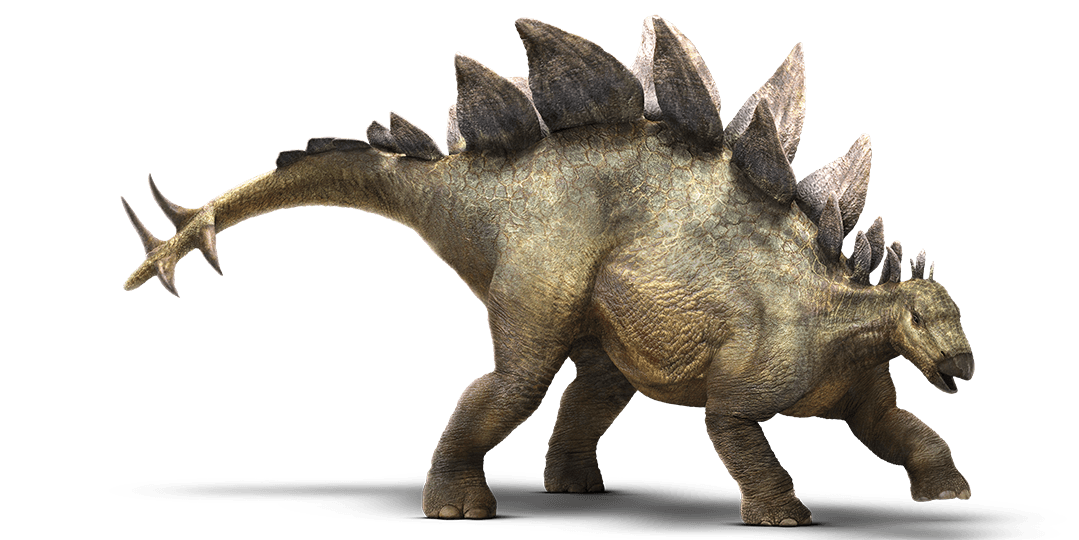
Prior to the recreation of the species in Jurassic World, scientists thought the Stegosaurus had a second brain in its rump!
The five-ton, 30-foot long Stegosaurus can be found on Jurassic World's Cretaceous Cruise, the Gyrosphere ride and of course, the Gentle Giants Petting Zoo. These herbivores browse on ferns and cycads and are one of the most recognizable dinosaurs thanks to their 17 kite-shaped plates running down the neck, down its back and the base of the tail. For defense, the Stegosaurus boasts four meter-long spikes that would have been used to swing at predators.  The plates of Stegosaurus are not used for defense however; they are primarily used for display, to attract mates and deter rivals and for species recognition.

Ankylosaurus
The heavily-armored Ankylosaurus was the dinosaur version of a tank!
Ankylosaurus makes only a brief appearance or two in Jurassic Park III. Its role in Jurassic World is substantially larger and this dinosaur is even mentioned by name (out of the film's 13 dinosaurs, only six or seven are mentioned by name at some point).

Ankylosaurus can grow 30 feet long and weigh six tons as adults. They feed on low-growing plants and have been called “living tanks” by paleontologists. This is because they are one of the most protected dinosaurs ever discovered. Their bodies are covered in spiky armor and fused bony plates. Even its eyelids are made of bone! As if this wasn't enough, Ankylosaurus also has a rounded club at the end of its tail that was quite capable of breaking the legs and ribcage of even a Tyrannosaurus!

When Gray and Zach are in the a gyrosphere, they venture into the restricted area of Isla Nublar and find a herd of Ankylosaurus in the forest. Unfortunately, it turns out that Indominus rex is hunting here as well and she successfully kills an Ankylosaurus. The fact that I. rex can kill the heavily armored Ankylosaurus goes to show you just how dangerous this theropod really is!

Parasaurolophus

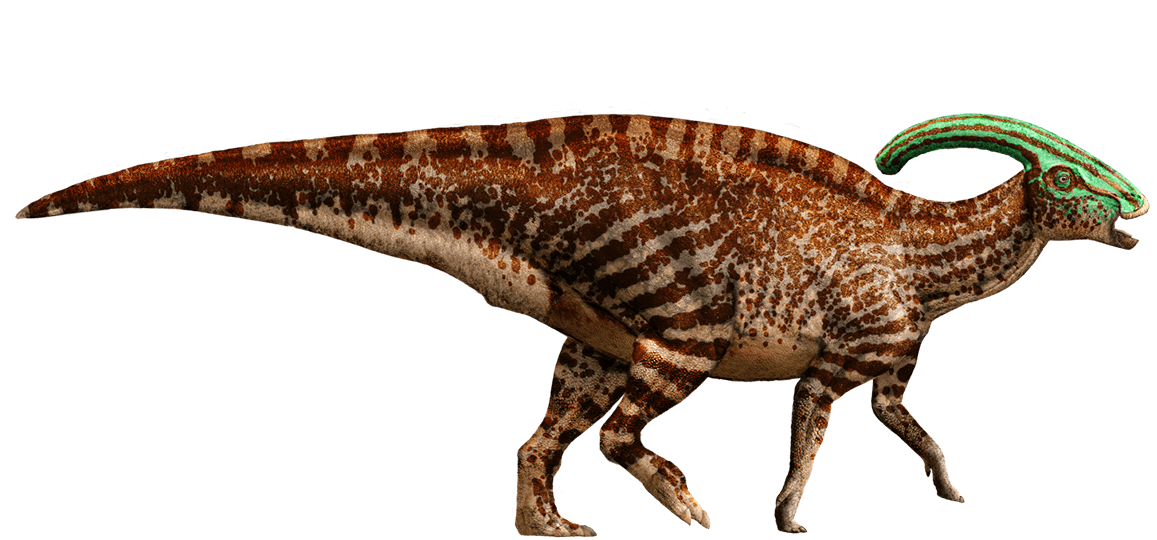
With its long head crest, the Parasaurolophus is capable of giving haunting, beautiful cries.
Parasaurolophus is the most recognizable hadrosaurs, duck-billed dinosaurs, in Jurassic World (the other hadrosaur in the park is Edmontosaurus, which does not appear in the film) thanks to its crested head. The crest on this animal's head is elongated and hollow; the dinosaur uses it to emit haunting, beautiful cries to communicate with other Parasaurolophus. An adult Parasaurolophus can grow up to 40 feet long and weigh 2 tons. They are herbivores and live in large herds in the Gyrosphere area of the park.

Gallimimus
 
Gallimimus can run 30-50 mph if they're ever out in the open.
Don't be fooled by the ostrich-like body, toothless beak and long, skinny legs, because that's where the similarities between the modern ostrich and Gallimimus stop! These dinosaurs have sharply clawed hands and a tail, features the ostrich does not. Gallimimus makes a small appearance in Jurassic World; they are seen running alongside a jeep in Gallimimus Valley, near the Gyrosphere area. These dinosaurs are capable of reaching speeds of 30-50 mph and prefer to dine on soft vegetation found throughout Gallimimus Valley.

Gallimimus is notable for being the very first species of dinosaur ever seen from Jurassic World, as it first made its appearance in the first teaser for the film, all the way back in November!

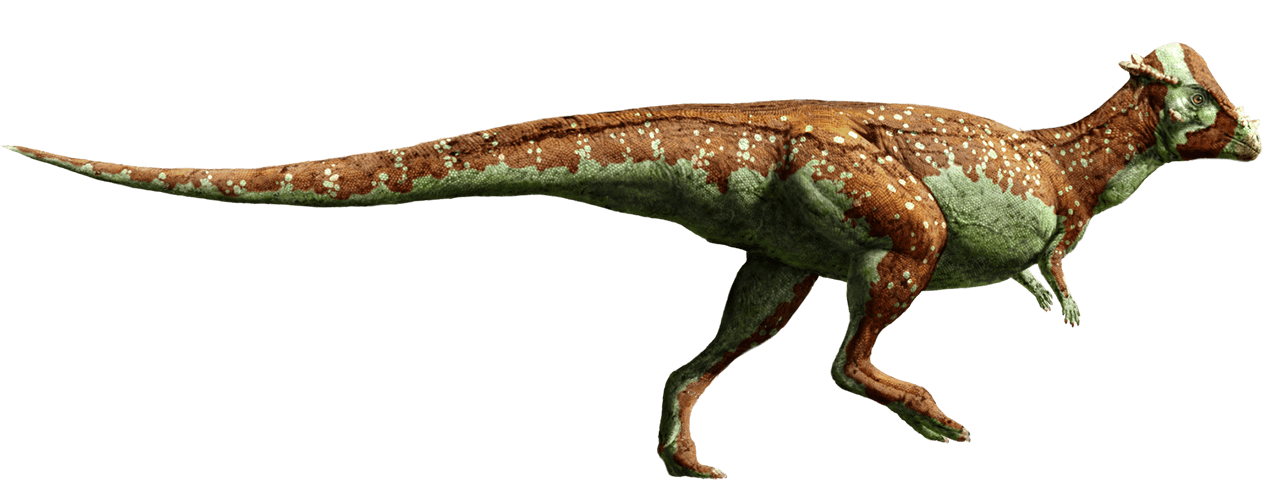
Pachycephalosaurus


Pachycephalosaurus has a skull up to 10 inches thick!
If you're looking for Jurassic World's Pachycephalosaurus, look no further than the Pachy Arena. These “thick-headed lizards” have an incredibly thick skull, which can be up to 10 inches thick! In the wild, these animals would ram their heads into predators and rival Pachycephalosaurus to protect themselves and to win mates.

This dinosaur is only on screen for a blink, but it's nice to see Pachycephalosaurus return to the franchise nonetheless, as we haven't seen it since The Lost World: Jurassic Park in 1997.

Mosasaurus

Mosasaurus is the first marine reptile to appear in the Jurassic Park movies!
Unlike most of the creatures at Jurassic World, the Mosasaurus is not a dinosaur, but a species of sea-going lizard. It was similar to modern monitor lizards, but was 50-60 feet long and weighed 15-20 tons! It was one of the largest predators ever to stalk the Cretaceous oceans. Mosasaurus had a fearsome array of teeth to catch just about anything else in its environment – fish, birds, other marine reptiles, and even great white sharks! An extra set of teeth on the roof of the mouth ensures prey does not escape the Mosasaurus' jaws!

In Jurassic World, Mosasaurus can be seen leaping to catch (young) great white sharks in the Mosasaurus Feeding Show, similar to how killer whales might act in SeaWorld. Here, sharks are not the apex predators and Mosasaurus is queen. She has a superb sense of smell and thanks to a powerful tail, she can propel herself forward with ease. Mosasaurus is also capable of leaping from the water to snag flying reptiles, such as a hapless Pteranodon.

Mosasaurus also plays a role in defeating Indominus rex near the end of the film. When the I. rex is cornered against the Isla Nublar Lagoon by Blue and Rexy, this giant marine lizard breaches and catches the hybrid like a killer whale catches a seal and hauls her into the water for consumption.

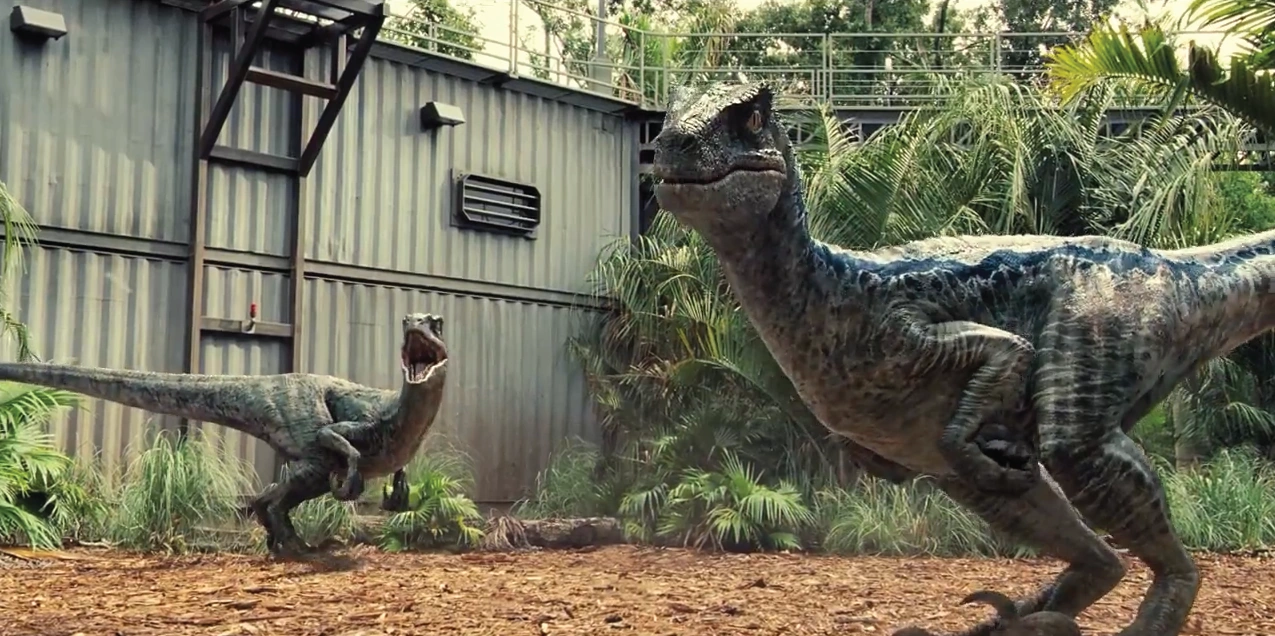
Velociraptor

Charlie and Blue are two of the park's four Velociraptors. Pound-for-pound, these dinosaurs the most dangerous in the entire park.
One of the most intelligent dinosaurs in Jurassic World are no doubt the Velociraptors. They are swift – capable of running 40-50 mph if they're ever out in the open – agile and hunt in packs. Raptors, which stand five to six feet tall and 13 feet long, are incredibly dangerous dinosaurs and were not yet ready for public display. Instead, a pack of four Velociraptors is being trained and studied by ex-military man, Owen Grady.

The pack consists of: Charlie, the rookie, Delta, the stalker, Echo, the runner-up in the pecking order, and Blue, the beta. Having raised them since birth, Owen has established himself as alpha of the pack. As Owen explains to Claire at one point in the film, he doesn't control the raptors, but instead developed a relationship with them based on mutual respect. The relationship Owen has developed with the Velociraptors is a tenuous one, to say the least, as they still seem quite intent on ripping his guts open.

Velociraptors are wonderfully adapted for hunting and killing prey. They have powerful senses of sight, hearing and sense of smell. Dozens of needle sharp teeth line their jaws. But the most impressive weapon of a Velociraptor is the six-inch retractable claw on each foot. The dinosaur uses them to slash into the prey's body, killing it quickly.

These abilities didn't go unnoticed by head of InGen Security, Vic Hoskins. He was amazed by Owen's ability to “control” the raptors and wanted to use these and similar animals for use in the military. Owen declines the offer. Later, after Indominus rex escapes, the raptors are released and used to track down and kill the hybrid, but instead of attacking, the raptors bond with the larger theropod and accept I. rex as their new alpha. The raptors kill several humans before Owen is able to reestablish his initial bond with these dangerous creatures. Together, and with the help of Rexy and the Mosasaurus, Owen and his “raptor squad” defeat the Indominus rex. Velociraptor truly is – pound for pound – one of the most dangerous dinosaur ever to exist.

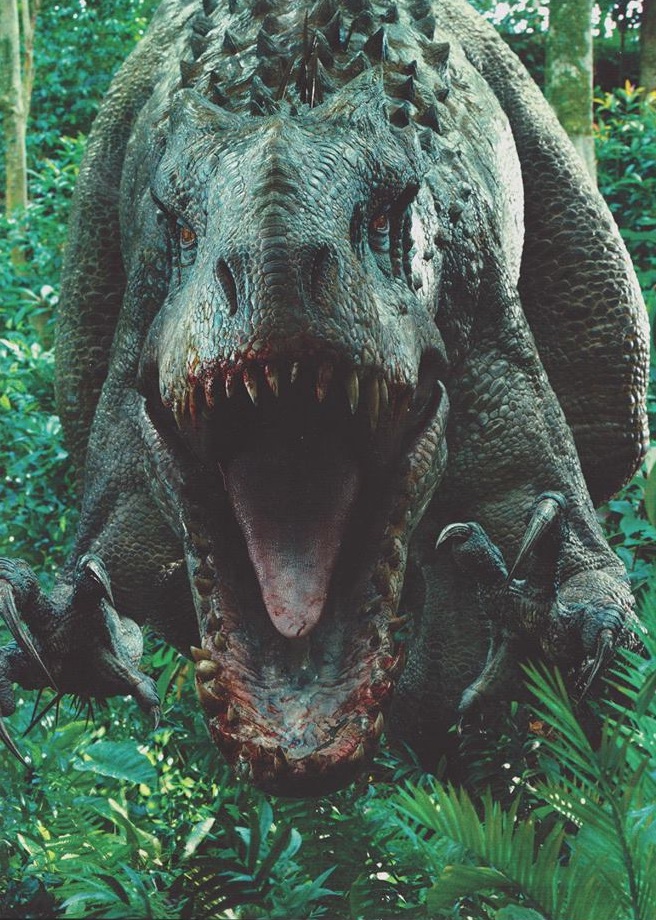
Indominus rex

Indominus rex is Jurassic World's first genetically-modified hybrid.

When public interest in the park began to decline, Jurassic World's investors thought genetic modification would up the wow factor – they wanted something bigger, scarier and with more teeth. So Dr. Henry Wu set out to create a brand new species of dinosaur to wow audiences and called it Indominus rex. Though he revealed the base genome was Tyrannosaurus, he refused to reveal what other DNA of other animals was used in the beast's creation.

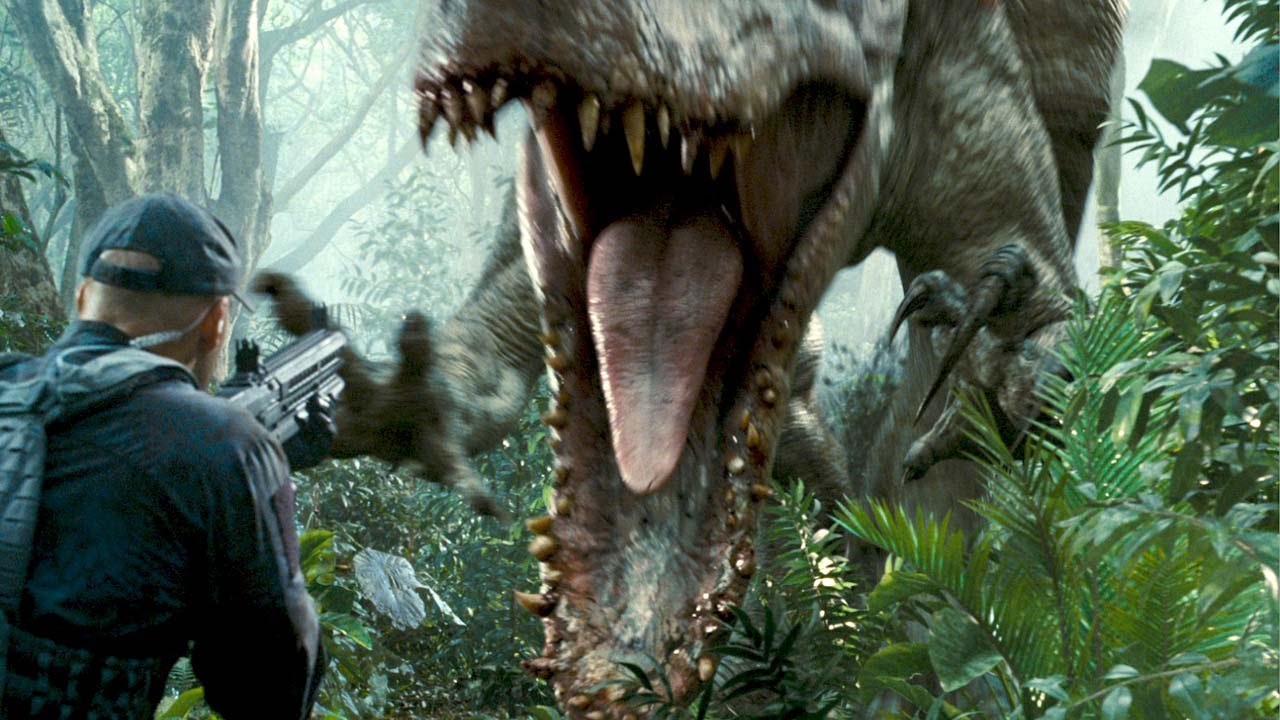
Indominus rex, meaning “untameable king”, would have been 50 feet when fullygrown and the most fearsome dinosaur ever to be displayed at Jurassic World. She was intelligent, huge and fast, able to run up to 30 mph...inside her enclosure! Though Indominus might bear some resemblance to a T. rex, the park website also revealed this beast to include DNA from Carnotaurus, Majungasaurus, Carnotaurus and Giganotosaurus. Like sharks, crocodiles and other theropods, I. rex would replace teeth throughout her lifetime to ensure she always had a nice set of them ready for the next chomp.

This beast showed her intelligence by tricking several people, including Owen, into entering her enclosure and “assisting” her in her escape. She was able to kill several more people as more of her abilities were revealed throughout the course of the movie. She could camouflage to look almost invisible against her surroundings, she could cancel out her heat exchange to hide from thermal-detection cameras, it seemed she was largely unaffected by bullets, and she was even capable of controlling Owen's raptor squad, causing them to turn on the humans. Through Jurassic World, Henry reluctantly reveals that some of the creatures whose DNA was used to create Indominus rex incuded the tree frog (able to control its thermal exchange), cuttlefish (for camouflaging ability) and for some reason not yet known, the DNA of Velociraptor. After causing many deaths of both human and dinosaur alike, she eventually meets her demise when Blue, Echo and Delta turn on her and Rexy joins the assault. When Indominus rex is trapped against the Isla Nublar Lagoon, she is snagged by the Mosasaurus and pulled into her watery doom.

As everyone found out the hard way, Indominus rex was not a good theme park attraction...because she never was meant to be; she was actually designed to be used as a military weapon. While Masrani wanted a new dinosaur to impress park guests, Hoskins wanted a dinosaur that could be trained and used for war. So Henry Wu decided to kill two birds with one stone and created both. Even after seeing the damage I. rex caused, Hoskins wanted a pack of smaller versions of the same dinosaur. Thankfully, he was unable to meet his desire when he was brutally killed by Delta.

Indominus rex, according to the director Colin Trevorrow, is a dinosaur that embodies human want for more money – greed. No matter how inconvenient, stupid, or in this case, dangerous an idea may be, human beings will be willing to try it for the love of money.

Pteranodon

Pteranodon is an aggressive flying reptile, not a dinosaur.
Pteranodon has gotten increasingly larger roles in Jurassic Park films. While absent from the first movie, this pterosaur, or flying reptile, makes a cameo appearance in the second film, and has an entire scene devoted to it in Jurassic Park III. Now, it has another rather large role in Jurassic World.

The head-crested Pteranodon is Jurassic World's largest species of pterosaur and is housed in the park's Aviary alongside Dimorphodon. These giant pterosaurs have a wingspan of about 18 feet and weigh 70 pounds. Though they normally eat fish, but Pteranodon is also very aggressive and will prey upon humans if the opportunity arises...and it does when I. rex crashes through the Aviary, allowing them to fly out. They soon take down Simon Masrani's helicopter before wreaking havoc in Jurassic World's Main Street, plucking guests up with their powerful talons. One victim turns out to be Zara, Claire's personal assistant. The Pteranodon however accidentally drops her into the lagoon and as it dives to retrieve her, the Mosasaurus leaps from the water and engulfs both Zara and the helpless Pteranodon.

Dimorphodon

For its size, Dimorphodon is rather aggressive.
Just because it's small doesn't mean Dimorphodon is harmless. This pterosaur has a wingspan of about eight feet and primarily feeds on fish and insects inside the Aviary where it coexists with Pteranodon. Once I. rex breaks into the Aviary, the Dimorphodon and Pteranodon swarm across Main Street. Instead of picking people up, the Dimorphodon prefer to attack people with their teeth and foot claws, as Owen Grady soon finds out. He is however saved by Claire, who shoots the pterosaur down and is thanked with what is probably a first kiss from Owen.

At one point in Jurassic World, a Dimorphodon is seen flying above the ocean surrounding Isla Nublar. This individual is shot down by a military solider, but it does raise a question of what happened to the dozens of other newly-freed pterosaurs? Perhaps this is a question to be answered in the sequel.

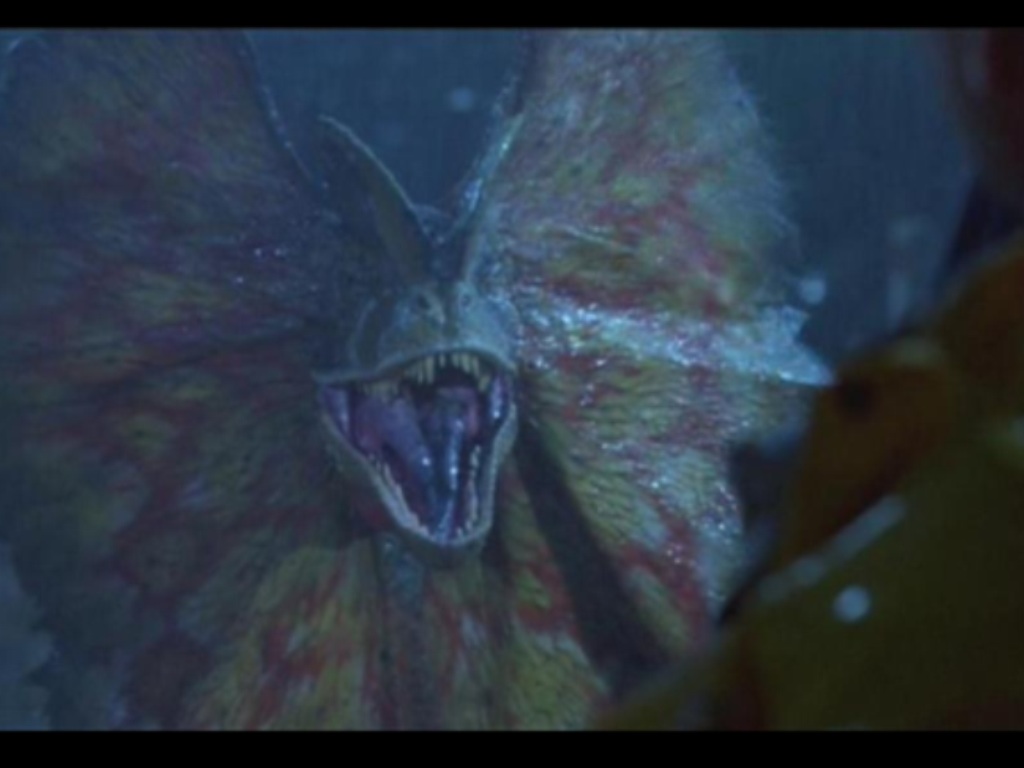
Dilophosaurus

Dilophosaurus makes a non-physical cameo in Jurassic World.
Though Dilophosaurus doesn't make a physical appearance in Jurassic World, it does have an “appearance” that I believe deserves a mentioning. As many will recall, Dilophosaurus made its one and only physical showing in the first film, where it killed Dennis Nedry as he tried to steal dinosaur embryos. When Jurassic World goes haywire, however, Claire, Owen, Zach and Gray find themselves being pursued by Delta through the Innovation Center. Gray uses the holographic display of Dilophosaurus to distract Delta, giving the humans time to escape.

Tyrannosaurus (Rexy)

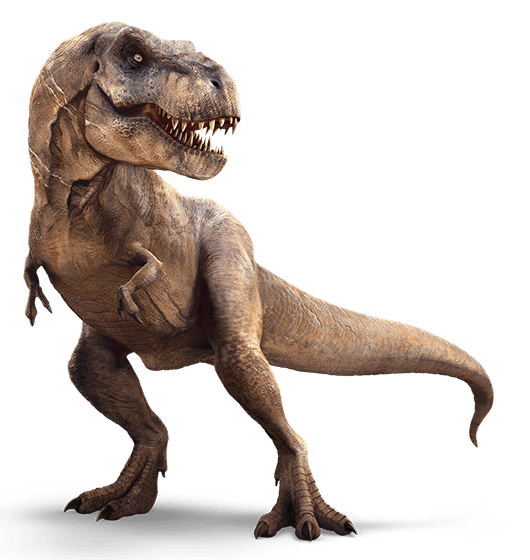
Rexy, the true queen of Jurassic World, stands 13 feet tall, 40 feet long and weighs 9 tons!
No visit to Jurassic World is complete without a stop at T. rex Kingdom, which houses not just any ordinary T. rex, but Rexy herself, the adult female Tyrannosaurus rex from the first Jurassic Park. This monster was apparently recaptured sometime before Jurassic World's completion and appeared for a special feeding show every two hours.

Rexy is the largest carnivore yet to appear in the franchise (the Spinosaurus of JPIII wasn't fully grown), standing 16 feet tall, 40 feet long and weighing nine tons. Rexy's species is also one of the largest carnivores ever to stalk the planet. Tyrannosaurus made their home in Cretaceous western North America and were the apex predators of their environment, hunting other dinosaurs such as Triceratops and Edmontosaurus.

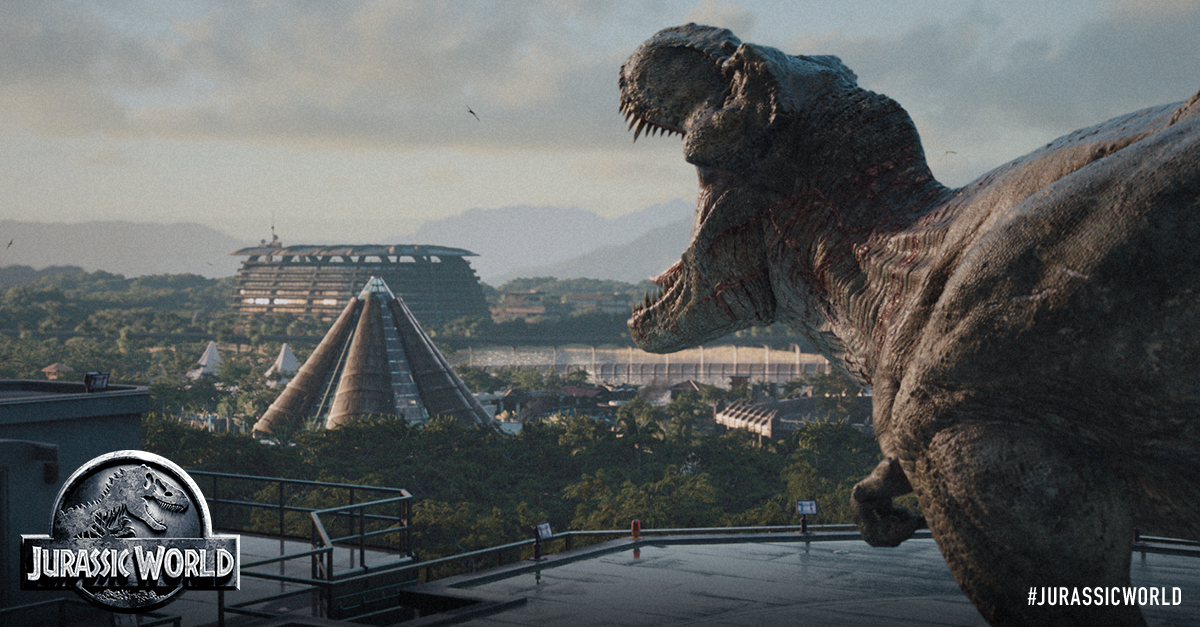
Rexy was absent for most of the movie until near the end when she was freed by Lowery and lured onto Main Street to fight the Indominus rex. The two behemoths faced off and Rexy was nearly killed. But before I. rex could make the killer bite, Blue rushed in and attacked her, giving the T. rex time to right herself and continue the fight. Inadvertently working together, Rexy and Blue force the hybrid against the lagoon where she is killed by the Mosasaurus. Having won the fight, Rexy leaves Main Street peacefully. The last time we see Rexy is at the film's climax when she walks onto Masrani's old helipad looking over the park. In the daylight, the scars on her neck from the Velociraptor that she fought in the first film can still be seen. With Indominus rex defeated, Rexy gives a mighty roar, declaring herself official queen of Isla Nublar – Jurassic World!

This ends my three-part overview of Jurassic World. The long wait has been well worth it and I have actually seen the movie twice already! That's how much I fell in love with it, and for good reason. It has great characters, an terrific plot, and an awesome set of dinosaurs. It's pretty much been confirmed that a sequel is in the works. What will happen in Jurassic World 2? Can we really know at this point? I suspect a clean-up operation might be required on Isla Nublar, to ensure the dinosaurs and other “prehistoric” reptiles stay on the island where they're supposed to and not cause havoc on the mainland.

Thanks to everyone who's been reading my blog posts regarding Jurassic World. The time between pre-production, production, post-production and the final product have been some of the best years of my life. I can't wait for Jurassic World 2 to relive the experience again!

Jurassic World was one of the most awesome experiences of my life!

References:
wikipedia.org/wiki/List_of_cloned_animals_in_Jurassic_Park
www.jurassicworld.com/dinosaurs/apatosaurus
www.jurassicworld.com/dinosaurs/triceratops
www.jurassicworld.com/dinosaurs/stegosaurus
www.jurassicworld.com/dinosaurs/ankylosaurus
www.jurassicworld.com/dinosaurs/parasaurolophus
www.jurassicworld.com/dinosaurs/gallimimus
www.jurassicworld.com/dinosaurs/pachycephalosaurus
www.jurassicworld.com/dinosaurs/mosasaurus
www.jurassicworld.com/dinosaurs/velociraptor
www.jurassicworld.com/dinosaurs/indominus_rex
www.jurassicworld.com/dinosaurs/pteranodon
www.jurassicworld.com/dinosaurs/dimorphodon
www.jurassicpark.wikia.com/wiki/dilophosaurus
www.jurassicworld.com/dinosaurs/tyrannosaurus
Jurassic World (2015)

Disclaimer: Many (or in some cases all) of the photographs and images above are not mine. If you own one or more of them and would like them to be removed, politely let me know via my email address.

* I know this image is crazy blurry, but I couldn't find any others from the Jurassic World movie of Rexy that weren't.

Friday, June 19, 2015

Mosasaurs - Kings of the Cretaceous Seas

Just look at this beautiful Mosasaurus leaps from the water to snag her prey in Jurassic World.
Well, since Jurassic World was just around the corner, I found it only fitting that today's article should focus on an animal that will be appearing in the film: the mosasaur! Specifically, the mosasaur appearing in Jurassic World is a Mosasaurus maximus, but I will be talking about several different species of mosasaurs in the article. But first, let's move on to...

Days till:
It is: 0 days till Inside Out's release!
It is: 2 days till Father's Day
It is: 15 days till Independence Day

In the Spotlight:
Well, since Jurassic World is already out, I can't talk much about that movie in terms of updates. However, there is one that is rather remarkable: Jurassic World received the highest box office weekend of all time! That's pretty remarkable! It's great to see that Jurassic World was so greatly received.

Jurassic World achieved $208.8 million during its first weekend! That's the highest of any movie in just one weekend!
Thanks to this great turnout, we can now confirm that this is not the last intallment of the Jurassic Park series! You read that right! In fact, Chris Pratt has already signed on for future installments. This is great news for fans of the franchise, such as myself. To read more about this: check this out.

In addition to this news, Inside Out is released in theaters today. Be sure to check it out!

Topic of the Week by Christian Ryan
Ancient pre-Flood seaways would have been stalked by large carnivorous reptiles called mosasaurs!
Jaws, the great white shark, is the reason many feel unsafe about entering the ocean, despite the fact that REAL great white sharks are actually one of the less dangerous species (they only attack humans because they mistake us for their favorite prey or if they are provoked). But there was once a family of predators that roamed the earth's oceans before the Noachian Flood in the book of Genesis; they would have been capable of eating Jaws in one bite. I'm talking about the mosasaurs! These great marine reptiles were not dinosaurs, but they roamed the earth at the same time and were some of the greatest predators ever to stalk the sea. They were true sea monsters.

Taniwhasaurus was one of many species of mosasaurs.
Unlike many animals in the fossil record, mosasaur fossils are relatively common and have been found on every continent, including Antarctica. Thanks to fossil discoveries since the 1700's, we've been able to learn a lot about these incredible creatures. Mosasaurs might look like a crocodile hybridized with a shark, but these creatures were actually giant lizards, similar to modern monitor lizards like the Komodo dragon. Unlike the Komodo dragon which God made on Day 6 of the Creation week, 6,000 years ago, mosasaurs were created a day before (Day 5) along with other marine creatures.

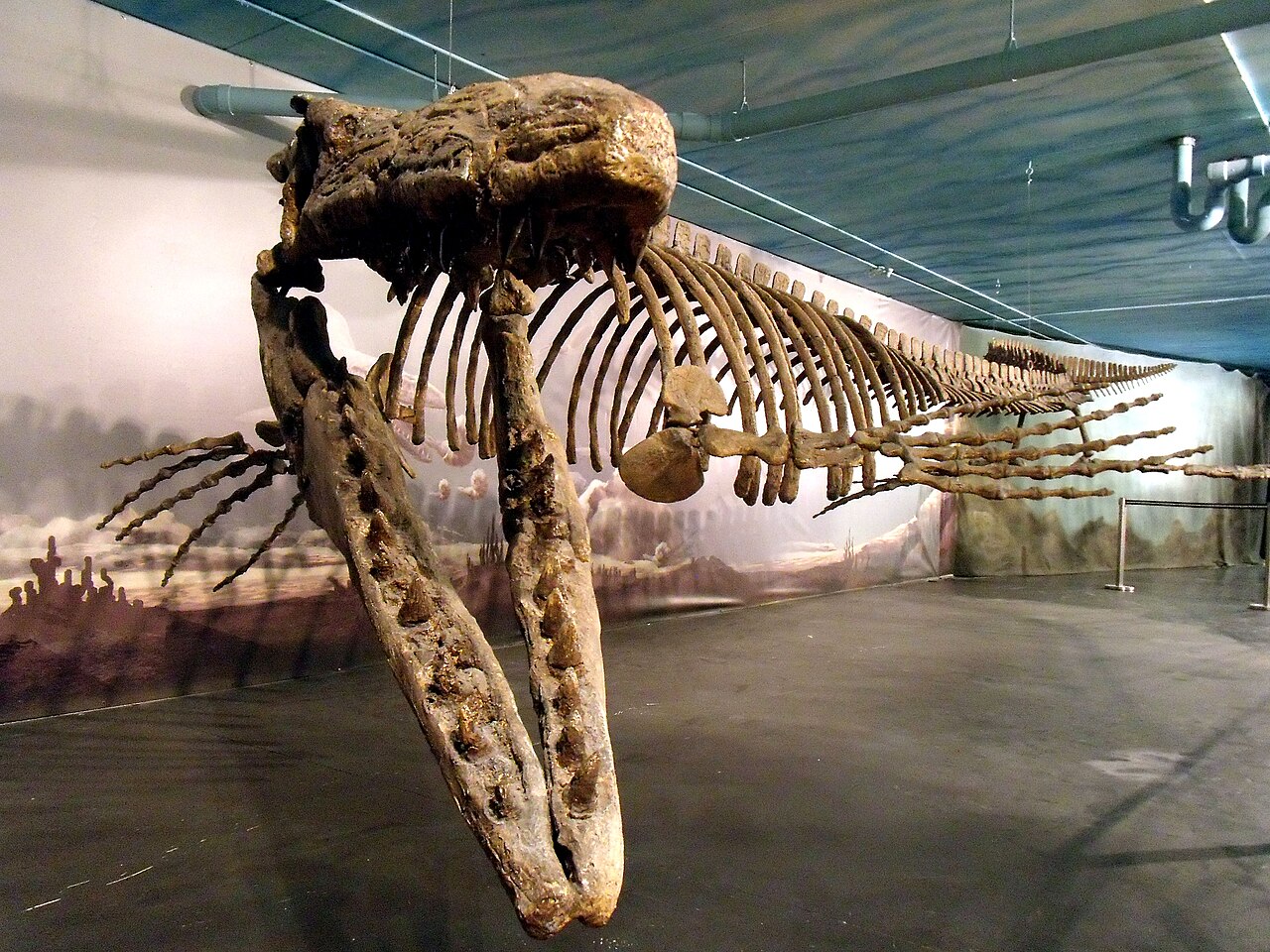
Mosasaurs were an aggressive family of ocean-going predators that came in all shapes and sizes. Some, like Dallasaurus, were only three feet long. Others, such as Mosasaurus and Tylosaurus grew in excess of 50-60 feet and weighed up to 20 tons! Talk about a sea monster! Mosasaurs are known for their elongated skulls, filled with sharp teeth. Since they were reptiles, they would have needed to come up to the water's surface to breath. Though they're similar to monitor lizards of today, God would have needed to install several design features to make these animals suited for life in the water. For example, mosasaurs had elongated bodies for swimming with speed. Mosasaurs were once thought to swim using an eel-like undulation, propelling themselves forward with their paddle-like tails. However, recent fossil discoveries have revealed that mosasaurs actually had a tail fluke, similar to a tuna or a shark. This meant that they would have been able to keep its body relatively stiff in the water, using its tail for propolsion. Mosasaurs also had four flippers to use in steering and stabilizing itself. A sharp pair of eyes sat forward-facing on the lizard's face, perfect for finding prey. Scientists also believe mosasaurs had an acute sense of smell for tracking down their prey.

Mosasaurs such as Platecarpus are now known to have possessed a shark-like tail fluke, enabling them to propel themselves forward with ease.

The discovery of fossil mosasaurs plays a huge part in the origins of paleontology. The first known discovery of mosasaur fossils occurred in 1764 near the Meuse River in the Netherlands. At a time before dinosaurs were known to science, these fossils were erroneously identified as belonging to a fish or a whale by Martinus van Marum, who studied them in 1790. After this discovery, scientists found more and more mosasaur fossils – enough to conclude they weren't just big fish! Some scientists believed these fossils belonged to some whale or a large crocodile, or perhaps a giant monitor lizard. The reason why no one attributed these fossils to an extinct reptile was because most scientists at the time believed that God never allowed any kind of animal have become extinct, an idea not supported by Scripture. The genius who finally was able to identify the fossils as an extinct reptile was Georges Cuvier. After finally being declared an extinct reptile, it was named “Mosasaurus”, by William Daniel Conybeare in 1822. Mosasaurus means “Meuse River Lizard”, in reference to where the first mosasaur fossils were discovered. Since then, the number of mosasaur fossil discoveries have increased and we still are learning a lot about these incredible reptiles.

Mosasauruswas discovered in 1764 and were thought to be large fish or whales.


Mosasaurs have been found in upper Cretaceous rock layers that were deposited late during the Genesis Flood. Before the Flood though, they reigned the ocean supreme. Now God didn't create all the different types of mosasaurs on Day 5. Rather, scientific and Biblical evidence suggests that God only created the original baramin, or “created kind” 6,000 years ago. Between this time and the Flood, the other species of mosasaurs descended from the “created kind” through the process of natural selection. This is similar to what we see in the dog and cat family today. Just a few of the many species of mosasaurs include: Mosasaurus, Tylosaurus, Dallasaurus, Platecarpus, Globidens, and etc.

Mosasaurs have been portrayed extremely inaccurately in the past!
What did mosasaurs eat? Pretty much anything they wanted! How do we know? Well, because they left their bite marks in virtually everything in their domain! We've also found stomach contents inside the guts of these marine reptiles. The diet of mosasaurs varied between the different species based upon their size.
 
Meter-long Dallasaurus was, as you might recall, one of the smallest species of mosasaurs. Unlike other mosasaurs, it bore legs rather than flippers. It is likely that it was capable of clambering out onto land; therefore it probably consumed both terrestrial and aquatic prey. It probably ate fish, invertabrates and other small animals.

Dallasaurus was probably capable of clambering onto land, unlike most mosasaurs.

Globidens was a medium-sized mosasaur, growing about 20 feet from nose to tail fluke. Most species of mosasaurs had  sharp teeth for snatching slippery prey from the water, but not Globidens! Its teeth were semi-spherical in shape with rounded nubbin-like points, hence the  meaning of its name: “globe teeth”. Scientists believed that Globidens used its teeth to crunch through the tough shells of small sea turtles, clams and squid-like animals called ammonites. Globidens fossils have been discovered in both North American and Africa.

Globidens' diet consisted of sea turtles, clams and ammonites.

One can't talk about mosasaurs without talking about the really large species, such as Tylosaurus and Mosasaurus, the biggest mosasaur of them all. These creatures were massive – both were about 50 feet in length (Mosasaurus often pushed up to 60 feet) and weighed 15-20 tons in life. The shark Jaws was only 25 feet long by comparison. These predators were fast; scientists estimate that they could swim 30 mph in short bursts. They couldn't keep this speed up for long, so they likely were ambush predators, slowly stalking their prey until the moment of attack. A 2014 study on the newly discovered melanosomes (aka color pigments) preserved associated with mosasaur fossils reveal that some (if not most/all) species of these lizards were dark-colored on the top half of their bodies. This would have made them almost invisible while slowly tracking their prey as they blended in with the dark depths. Prey wouldn't have seen a hungry Tylosaurus until it was too late!

Mosasaurus was one of the largest species of mosasaurs, reaching 50-60 feet in length!
When a large mosasaur – Tylosaurus or Mosasaurus – attacked, the prey wouldn't have stood much of a chance. Imagine the colossal beast rushing from the depths, propelled by its powerful tail. Its jaws would open and grab hold of the prey. Tylosaurus had a five-foot jaw lined with sharp teeth. Its no wonder that this mosasaur and its kin have been nicknamed the “T. rex of the Sea”. As if the teeth lining their jaws weren't enough, mosasaurs also possessed a second set of teeth on the roof of their mouths that could move independent of the rest of the jaw! They would have used this second set of teeth to pull prey further into its mouth. This, combined with their re-curved shape of their serrated teeth, prey could be sure that there was no escape!

Tylosaurus was an apex predator of the Cretaceous ocean. Its double rows of sharp teeth insured prey did not escape.
As I mentioned prior to this point, large mosasaurs left their bite marks and teeth embedded in pretty much everything in their environment. A Tylosaurus skeleton from South Dakota was discovered with the following creatures in its gut: a seabird called Hesperornis, a bony fish, possibly a shark, and even a smaller mosasaur called Clidastes. We also have evidence that these large mosasaurs also consumed fish, ammonites, sea turtles, giant squid, long and short-necked marine reptiles called plesiosaurs, sharks the size of Jaws and, of course, other mosasaurs. But mosasaurs didn't only kill each other for food. A Tylosaurus specimen has been discovered that seems to have had its neck snapped by another Tylosaurus. Perhaps they were fighting over food, a territory or a mate like modern Komodo dragons do today.

Tylosaurus consumed virtually everything that moved: sea turtles, fish, squid, plesiosaurs, birds and even other mosasaurs!
In the dangerous seas mosasaurs lived in, it was important that these creatures reproduce to keep their population in check. Unlike most modern reptiles, we have evidence that mosasaurs gave birth to live young rather than laying eggs (they were unable to crawl out of the water to do so). In 2015, some scientists reported that a collection of fossils from Yale University's fossil collection were misidentified as birds – they were actually the remains of newborn mosasaurs. These fossils seem to suggest that mosasaurs birthed their young live and ready for action out in open ocean.

Unlike most reptiles, mosasaurs gave birth to live young rather than laying eggs on land, something they would have been unable to do. (PHOTO CREDITS)


Giving birth to live young in the ocean presents many challenges. Fortunately, God provided mosasaurs with the capabilities to do just that. Unlike marine mammals, the mother mosasaur's eggs would have developed in her body cavity. The eggshells would disintegrate as the babies grew, still nurtured by an egg yolk. Finally, once the young were large and strong enough, the mother would give birth to them. Would the mother mosasaur care for her newborn young ones? It's certainly a possibility, as crocodilians and even several species of lizards engage in similar parental behaviors. We may never know for sure, but the babies would definitely have benefited from their mother's protection from predators of the deep pre-Flood oceans.


A Mosasaurus snagging a sea turtle in its jaws!
We find fossilized remains of mosasaurs in Cretaceous deposits dating to the time of the Flood, 4,350 years ago. They had up until that time to be supreme rulers of the pre-Flood ocean. However, it is likely that a relative few of these creatures may have lived through the Flood and continued to survive for sometime after (perhaps the tales of sea serpents ancient sailors told were of their observations of mosasaurs?). Nonetheless, these creatures went into decline, ending their reign. We don't know why the mosasaurs went extinct. Perhaps the climatic changes after the Flood were too much for them, or they were unable to find enough food to sustain them. Whatever the reasons, all we have left to hint at their existence today is their fossilized remains, silent reminders of the wonderful and exciting lives these “Meuse River Lizards” lived!


Tylosaurus was a true king of the Cretaceous seas!

References:
www.wikipedia.org/wiki/mosasaur
www.oceansofkansas.com/about-mo
www.fossilguy.com/gallery/vert/reptile/mosasaur
www.prehistoric-wildlife.com/species/m/mosasaurus
www.wikipedia.org/wiki/mosasaurus
www.prehistoric-wildlife.com/species/g/globidens
www.answersingenesis.org/aquatic-animals/sea-monsters
www.wikipedia.org/wiki/tylosaurus
www.icr.org/article/8689

Disclaimer: Many (or in some cases all) of the photographs and images above are not mine. If you own one or more of them and would like them to be removed, politely let me know via my email address.

Thursday, March 20, 2014

Ancient Monsters of the Deep - Now in Color!

Well, spring is here and winter is finally over! Isn't it great! Here in Utah, we don't have a whole lot of seasonal changes, but we have been experiencing dogwoods and other trees in bloom. Their very beautiful this time of year. Anyway, let's get started with our “usuals”.

Days Till
It is: Springtime!!!
It is: 24 days till Palm Sunday
It is: 33 days till our Friday performance of the “The King on a Cross”
It is: 31 days till Easter

In the Spotlight
Today we've got some more terrific news from two great upcoming films: Dolphin Tale 2 and Jurassic World. Concerning DT2, as many of you might know, they recently finished the production process and have moved on to the post-production stage. On April 11, the first trailer for the film is going to appear on television!!! I can't wait to see it!

Just last week, it was revealed that the Asian actor Irrfan Khan is portraying the owner of the new Jurassic Park in the film Jurassic World (initially titled Jurassic Park IV). Earlier this week, we learned some more terrific news about the film: IGN had a recent interview with the film's director Colin Trevorrow and he not only spills some facts we never knew before about the the new characters in the film, but he also revealed a character from the first Jurassic Park that will be in JW – Dr. Henry Wu!!!

B. D. Wong is going to portray Dr. Henry Wu in Jurassic World!!!
Dr. Henry Wu – who was portrayed by B.D. Wong – was the head geneticist at Jurassic Park and is one of the people responsible for bringing John Hammond's dream to reality. Jurassic Park: The Game (which is considered part of the Jurassic Park film canon) reveals that Dr. Wu took over the role as head geneticist after the former head geneticist, Dr. Laura Sorkin, disagreed to take “short cuts” when it came to recreating the dinosaurs and was demoted. In the first film, Dr. Wu has a very small but also very crucial part. In the fourth film however, it appears that he'll have a much larger part. Here is a snippet of the interview with Trevorrow where he talks about Dr. Wu and some information about the film's new characters:
"I know a lot of fans want to see the original characters back. They’re iconic. But I respect those actors too much to shoehorn them into this story for my own sentimental reasons. Jurassic Park isn’t about the bad luck of three people who keep getting thrown into the same situation. The only reason they’d go back to that island is if the screenwriters contrived a reason for them to go. But there is a character from the first film who makes sense in our world. This hasn’t been announced yet, but BD Wong will be returning as Dr. Henry Wu. He had a much larger role in the original novel, he was the engineer of this breakthrough in de-extinction. He spent two decades living in Hammond’s shadow, underappreciated. We think there’s more to his story."
He went into detail about Chris Pratt's character, Owen:
"He’s a classic hero in a very modern context. He’s the guy who will get you through the jungle alive – but like Malcolm, Grant and Sattler, he’s an expert in a scientific field that’s connected to our story. The character allows us to explore some new ideas about our relationship with these animals, without losing the humor and sense of adventure. He’s a great contrast for Bryce Dallas Howard’s character, who starts off very corporate, very controlled. Until the running and screaming starts. Then they need each other."
I'm really glad that Dr. Henry Wu is making a comeback and I agree with Trevorrow's decision not to include Dr. Ian Malcolm, Dr. Alan Grant and Dr. Ellie Sattler in the fourth film; after all, they criticized the park! Why on earth would they be in JW's new park if they despise it? So really, Trevorrow's decision makes a lot of sense to me.

Topic of the Week by Christian Ryan
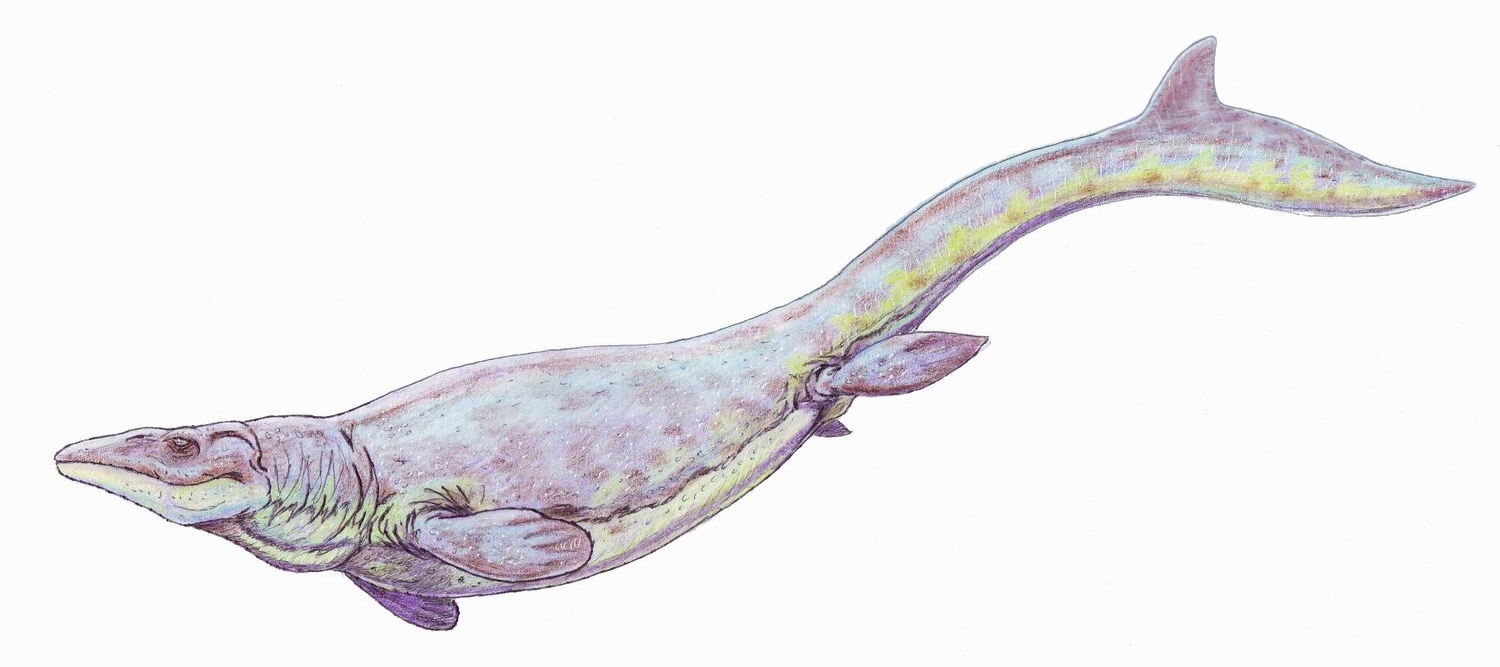
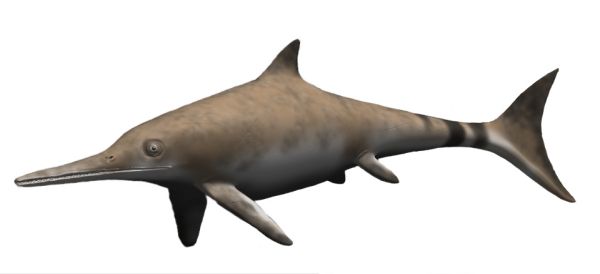
In the January of 2014, scientists at the Lund University in Sweden discovered that by looking at the melanosomes on specimens of fossilized marine reptile skins, they've been able to tell what their most likely skin color was in life! There were three marine reptiles involved in this study: one was an extinct species of leatherback sea turtle, an agile dolphin-like reptile known as an ichthyosaur, and (my favorite of the three) a colossal sea-going lizard called the mosasaur. Mosasaurs looked a lot like a cross between a monitor lizard, a whale and a great white shark; some mosasaurs grew 40-50 feet in length!

New research has shown that at least one species of mosasaur (bottom) and an extinct species of leatherback sea turtle (top) were black with lighter colored underbellies, while at least one species of ichthyosaur was completely black.
The coloration of most extinct creatures has been a mystery since coloration doesn't (normally) appear in fossils. So pretty much since we dug up the first fossils of extinct creatures, scientists and others have had to make educated guesses as to what colors they were. However, this all changed a few years back; a few months ago, I wrote an article concerning the discovery of melanosomes (those are special cells which contain the color pigment in both animals and humans) that could be seen with a microscope on the fossils of some dinosaurs and extinct birds. It turns out that scientists can look at the size and shape of the melanosomes and the distance between the melanosomes to determine the coloration of some creatures! Now, this same science is being used to color other extinct creatures – this time creatures of the sea!

So how did the scientists determine the creatures' color? Well, first they wanted to see whether or not the microscopic objects in question were really melanosomes or from the result microbial contamination. What they did was use a special technique known as “energy-dispersive X-ray microanalysis”. In other words, they used an X-ray to test how the sample of the specimen reacted. The scientists learned that the objects in question were in fact associated with preserved skin film that was found on the three fossilized creatures and not something else. Thanks to this information, the scientists began looking closely at the melanosomes of the three animals (which were oval-shaped, by the way) to determine their distance apart from each other.

Despite its appearance, ichthyosaurs, like this Ichthyosaurus, were not fish, but reptiles.
The study revealed that the leatherback sea turtle was – like the modern leatherback sea turtle – was probably mostly blackish on the upper regions of its body with a paler underbelly. They found this to be true with the mosasaur as well! The ichthyosaur was a different story – instead of being blackish on the top and whitish on the bottom, it seemed to be all blackish colored! (This study doesn't mean however that all species of mosasaurs or ichthyosaurs were these colors) Why did all three of the animals have black on their bodies? Was it just coincidence? And what was the purpose of the black coloration anyway?

Prognathodon was one of the many species of mosasaurs.

Well, we can't say for sure, but scientists can make some educated guesses by looking at modern animals. You might have noticed that mosasaurs and the extinct species of leatherback sea turtle have a similar coloration to a wide variety of modern sea animals; killer whales, great white sharks, modern leatherbacks, penguins, dolphins and many others have a darker coloration on the top portions of their bodies and lighter portions on the bottom portion. It turns out that this form of coloration can be very helpful to marine animals, both living and extinct.
Penguins and many other animals have black or dark-colored tops and paler undersides.
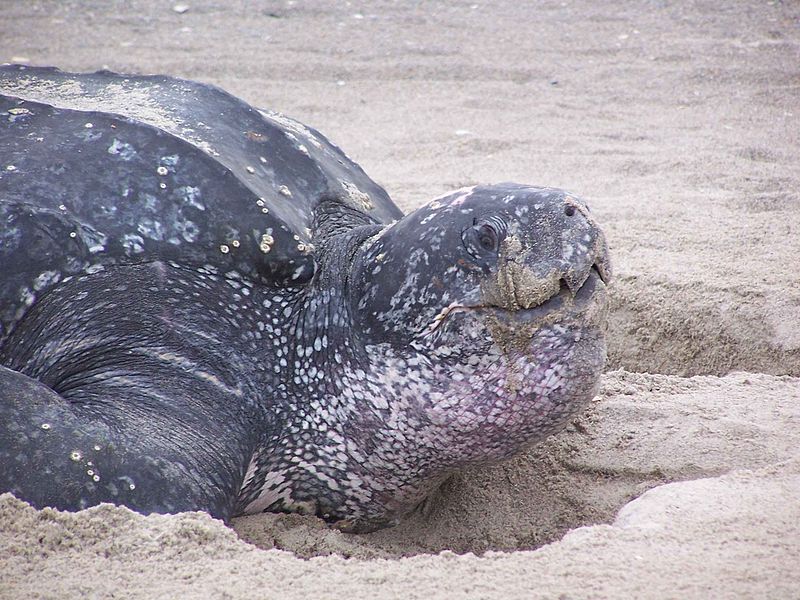
Modern leatherbacks' backs can become quite hot when exposed to the sun. This is helpful since the turtle is a cold-blooded reptile that needs to stay warm in order to move its body around, and that's not easy for the leatherback because these widespread reptiles often can be found living within the chilly waters of the arctic circle! Darker colors – black in this case – attract more heat than lighter colors, so therefore black coloration warms up the turtle more than a lighter color would. While the extinct species of leatherback was coldblooded, we have no idea whether mosasaurs and ichthyosaurs were or not. However, even a warmblooded animal can find black pigmentation on the top useful.

The leatherback sea turtle of today has the same coloration as its extinct relative.
While mosasaurs use could swim at high speeds (probably as fast as 30mph) using their powerful tail flukes, they couldn't keep up the high speed for long. So instead of chasing prey over long distances, when mosasaurs found prey nearby, they probably stalked them like great white sharks do today, far below their prey (mosasaurs ate pretty much anything they could catch – fish, sharks, plesiosaurs, sea birds, turtles and even other mosasaurs). Then when the moment was right, the mosasaur would probably undulate its tail fluke to launch itself upward and catch the prey in its five-foot, toothy jaws. The black coloration of mosasaurs was probably used a lot like modern predators: while stalking their prey, the black coloration would help them blend in with the depths so that prey won't notice them above. And from above, the lighter colored underbelly would make a mosasaur or sea turtle hard to see because the lighter color breaks up its outline. Cool, huh? While the turtle wouldn't be stalking fast-moving prey, its coloration would probably be helpful in staying out of sight from hungry predators. This is important because unlike most sea turtles, the shells of leatherbacks aren't made of hard shell, but rather are constructed of bony struts under the skin, making the shell much easier to bite into.

Mosasaurs, such as the 50-foot Tylosaurus, could have used their coloration to remain concealed from prey until the attack!
What about ichthyosaurs? Why was the one involved in the study completely black? Well, long before the coloration of the creature was discovered, scientists suspected that ichthyosaurs would often hunt deep underwater because of their large eyes. One species of ichthyosaur, Opthalmosaurus, has some of the largest eyeballs of any animal in proportion to body size at four inches across! Their large eyes would help them see both prey and predators in the darkness of the water. If the species of ichthyosaur involved in this study was a deep-diving creature, a lighter colored underbelly like the mosasaur had would possibly give its presence away. But with an all-dark body, an ichthyosaur has a lesser chance of getting detected. The modern sperm whale bears similar coloration to this ichthyosaur – dark colors all over the body – for this exact reason.

Opthalmosaurus had some of the largest eyes in proportion to its body size of any creature.
All three of these amazing reptiles we looked at seem to be beautifully designed for marine life, even down to the color of their skin. Evolutionists are often puzzled why some animals bear similarities to other animals if they just evolved. In fact, some evolutionists have questioned whether or not the fact that the animals involved in the study mentioned above had black coloration because of mere coincidence. But how likely is that? I mean, this isn't the only “coincidence” in nature; there are many animals with features similar to other unrelated animals. For instance, four kinds of animals are capable of powered flight: birds, bats, pterosaurs and insects, and evolutionary scientists believe that the power of flight evolved four different times! And it's the same thing with the three marine reptiles mentioned earlier. How likely would it be that creatures would be similar to other creatures in this way?

The fact that many animals are often designed with features similar to other unrelated animals should actually point us to the One who created these amazing animals. Its way more believable that these animals have similarities with other animals because they have the same Designer. By looking in the first chapter of the book of Genesis, we learn that God created mosasaurs, sea turtles and ichthyosaurs on the Fifth Day of the creation week, no more than 6,000 years ago. Isn't it wonderful that God designed these creatures to thrive in the environments He placed them in? So the next time you see an animal that has similarities with another unrelated animal, sit back and think about all the thought God placed into making both of them and praise Him for that.

God provided many ways for the creatures He made to thrive in the environments they lived in.
PS 1: To post a comment (this is highly encouraged), please simply click the post you wish to comment on, scroll to the bottom of the page and put what you wish to say or ask in the comment box. Then in the box below the comment box choose who you’re going to comment as. And then click preview or publish. If you aren’t signed into Google, you’ll be asked to type in a word and a number in the space provided. Type the word, put a space and then put the number. Then your comment is on the blog!

PS 2: Have a puzzling question about animals (including dinosaurs), myself, my latest book, my stop-motion movies, Creation or etc? Please post your question as a comment or send me an email at animaladventures@aol.com.

PS 3: What’s the new in the news? Check it out at SMILEY’S NEWS.