Showing posts with label valentines day. Show all posts

Thursday, February 11, 2016

Love in the Time of the Dinosaurs

Hey, everyone! Sorry for being late with this post, but I've had yet another busy week. I think the busyness period is mostly over, so I should be able to post weekly now. Anyway...Valentines Day is right around the corner! The good news is that I have the perfect article for the occasion...I mean, even dinosaurs need a little love in their lives, right?

Days Till
It is: 1 day till President's Day
It is: 3 days till Valentine's Day
It is: 35 days till St. Patrick's Day
It is: 50 days till April Fool's Day

In the Spotlight:
About a month or so ago, I talked about the band Girl and the Dreamcatcher's, featuring Dove Cameron and Ryan Mccartan, previously-latest songs. Well, as of one or two weeks ago, they released a new song called Glowing in the Dark. It's a little sad, but it sounds awesome. Check it out:


Topic of the Week by Christian Ryan
Warning: The topic in this article is intended for adults and teens, not young children. You will find no inappropriate pictures of dinosaur sexuality (no private parts!), crude comments or adult jokes about certain body parts here, but the content is frank and not appropriate for younger audiences.


We know the height, length and diet of huge dinosaurs like Giraffatitan...but how did this 50-ton beast reproduce? By Axel Mauruszat - Own work


Valentine's Day is in just a couple of days. Couples show their affection for each other in various ways. However, love isn't just for humans, and it certainly isn't new. Every year, all animals must reproduce, and this was true with dinosaurs as well. How did dinosaurs attract members of the opposite sex, mate and reproduce?

What color were the dinosaurs? What was the biggest dinosaur? How did they go extinct? These are the types of questions most people ask about dinosaurs. Very few spare a thought for questions like: how did dinosaurs attract a mate? How did dinosaurs mate with all those spines, scutes, spikes and long tails? Since they relate to the behavior of dinosaurs, they are much harder to answer. However, fossils still give us clues that allow us to hypothesize how dinosaurs reproduced after their own kind, as God commanded them in Genesis 1:24.

♂ or ♀
How did dinosaurs, like T. rex, tell each other apart? By user:Eqdoktor - Own work, CC BY 3.0

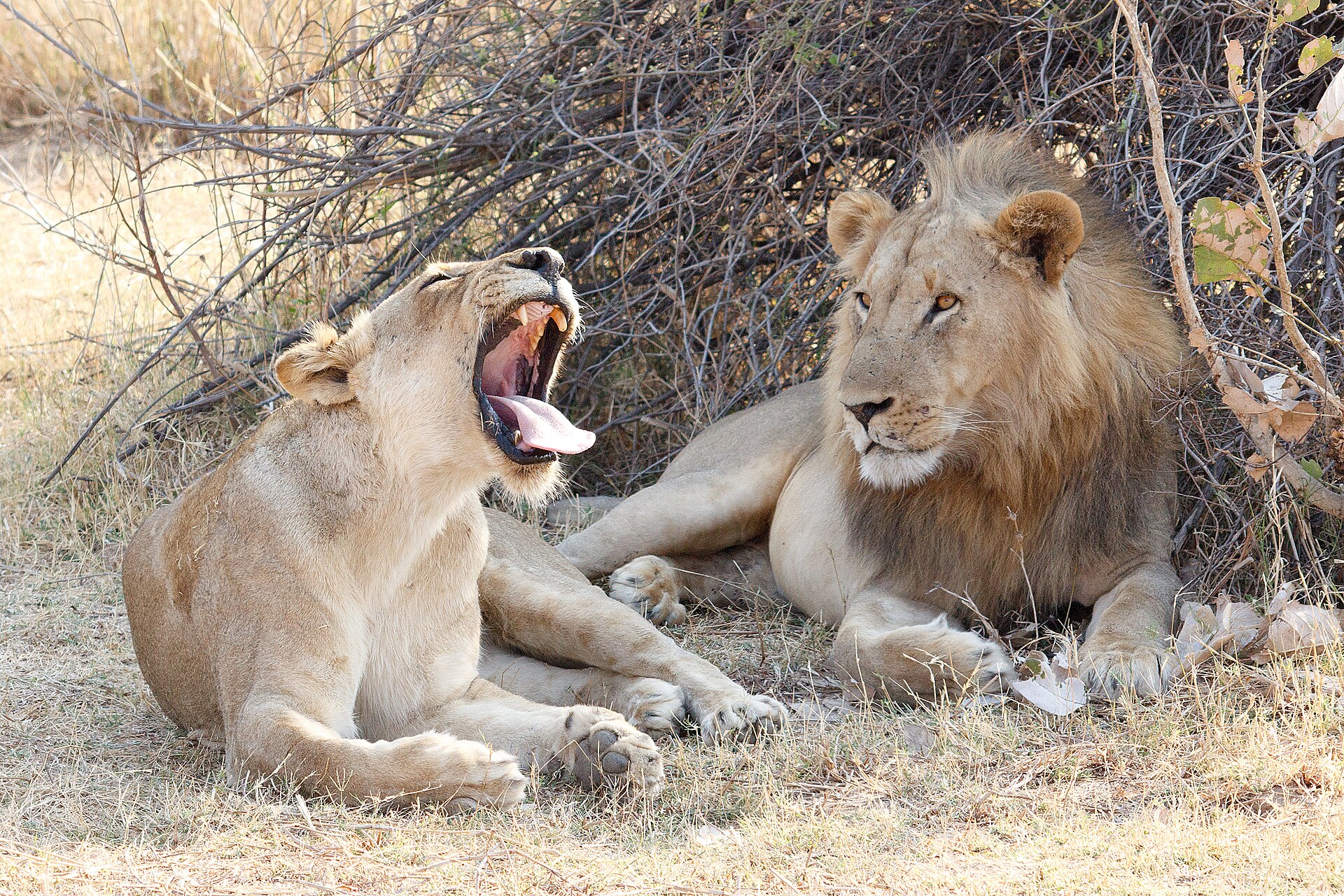
Before we get into how dinosaurs reproduced, perhaps we need to figure out how on earth we tell the difference between a male and a female dinosaur. The answer is: we don't know for sure. Today, animals of different sexes are often visually different: for example, male lions have manes, deer have antlers (exception: reindeer, as both sexes have antlers), peacocks have that elaborate tail and roosters are larger and have a larger comb (that's the fleshy organ on top of their heads) than the females. This is called sexual dimorphism. As most evidences of sexual dimorphism would have been fleshy, and dinosaurs are mostly known of by the fossils we find of them, we can't really know for sure which ones are males or females. But this hasn't stopped scientists from trying to figure it out.


While male lions have manes, lionesses lack them. By Prabir K Bhattacharyya - Own work, CC BY-SA 3.0, https://commons.wikimedia.org/w/index.php?curid=17038978
However, paleontologists have noticed that some dinosaur species come in two different morphs, or versions. A gracile version and a robust version. Maybe these represent different genders, but without finding a fossilized genitalia, it's hard to say which is which. Scientists once thought that they could tell the sex of a Tyrannosaurus by examining the absence of a chevron (a bone that protrudes downward from the tail vertebrae) between the first and second caudal vertebra in robust Tyrannosaurus. This was thought to be the case in female crocodiles, indicating that robust tyrannosaurs were females. But recently, scientists have discovered that this doesn't always hold true in crocodiles, rendering this piece of evidence as weak.


Is it impossible then, to sex a dinosaur? It once was. But inside the leg of a tyrannosaur specimen called B-rex, Dr. Mary Schweitzer identified finding medullary bone. Medullary bone is known to form in the bones of female birds when they are just about to ovulate so that they are able to store up calcium for their developing eggs. Finding medullary bone proved that B-rex was a female. B-rex was also gracile morph, indicating that perhaps the gracile morphs were females and the robust morphs were males. Another attempt to tell dinosaur genders apart occurred in a study published in 2015. A master's student of the University of Bristol named Evan Saitta took notice of the two morphs of a species of Stegosaurus called S. mjosi. One of the morphs had oval-shaped plates, while the other had narrow plates. Saitta hypothesized that the oval-plated morph represented the males of this species since they would have been the largest of the two plate types and therefore might have been used to attract females. Other scientists aren't yet convinced that this is the case, but the possibility remains open.

Scientists might be able to tell the difference between male and female Stegosaurus mjosi by looking at their plates. Photo: Evan Saitta
Sexual dimorphism was almost certainly present in dinosaurs. How sexual dimorphism was exhibited in these creatures – whether it be that one gender grew larger than the other, different crest, frill or horn shapes, different scent and definitely their genitalia – is still unknown. However, that doesn't prevent us from coming up with intriguing possibilities.

Getting Her Attention
Dilophosaurus' head crest was probably brightly-colored. This would have helped the males of this species to attract mates.
With a few rare exceptions, in the animal kingdom, it is the male's job to attract a female with which to mate. Modern animals have a wide array of features and methods to get the job done. Some animals use a visual display approach; the frigate bird is an example of this. When a female frigate bird flies overhead, the males of the species inflate a red-colored throat sac and call out, hoping the female will take notice. Deer on the other hand flaunt their branch-like antlers. Other animals use sound to attract a mate. Male alligators will make deep bellowing sounds during the mating season at the surface of the water, causing water droplets to literally “sprinkle” or “dance” on their backs. Could dinosaurs use similar tactics?

Look at the dewlap (that fleshy appendage hanging from the bottom of the head) on this iguana. Dinosaurs may have had similar fleshy appendages as well, but we don't know for sure (exception: Edmontosaurus regilis). By Eric Kilby from Somerville, MA, USA - Iguana Closeup, CC BY-SA 2.0, https://commons.wikimedia.org/w/index.php?curid=44425921
While the colors of most dinosaurs are a mystery, the species found with melanosomes (cells responsible for producing color), including Sinosauropteryx, seem to have been very colorful animals. Sinosauropteryx was reddish-orange in color and had ginger-stripes on its tail. Maybe male Sinosauropteryx could show off their tails to impress potential mates.

Most fleshy appendages dinosaurs may have had to woo mates, if they had them, would have rotted away, but what didn't decay with time are the plates, spikes, horns and frills displayed on some species of dinosaurs. Initially, these features like the crests of hadrosaurs such as Corythosaurus, the frill and horns of ceratopsians like Chasmosaurus and the crest-like horns adorning Ceratosaurus' head were believed to be strictly weapons for combat. However, features like these were often too fragile to be used for fighting; instead, they were likely brightly colored and used for display. In fact, paleontologists have noticed ceratopsian frills and stegosaur plates would have been loaded with blood vessels in life. This could mean these dinosaurs could flush their frills and plates with blood, making them turn red. Wouldn't that impress the ladies? Remember when I said most fleshy appendages dinosaurs may have had rotted away after the animal died? Well, a few years back, scientists discovered that a duckbilled hadrosaur, called Edmontosaurus regillis, had a crest made of flesh rather than bone as in most hadrosaurs. This was probably brightly colored. What other fleshy appendages may dinosaurs have had?

Edmontosaurus had a fleshy crest on its head for display.
After attracting a mate, modern animals often conduct elaborate dances as a form of courtship. Since behavior generally doesn't fossilize, we can only speculate as to what dinosaurs may have done.

Love in the Time of the Dinosaurs
Now for the million-dollar question: how did T. rex mate? By Usuario:NeGRa - Tomada por Noemy García García usando una cámara Nikon E3200., CC BY-SA 2.5 es, https://commons.wikimedia.org/w/index.php?curid=1789845
It's time for dinosaur reproduction 101! How did dinosaurs mate? This is a question that has kept paleontologists awake at night for centuries. I mean, it's not easy to envision a 75-ton Argentinosaurus or a plate-backed Stegosaurus getting into a comfortable position to mate.

This question of dinosaur reproduction is made even trickier by the lack of a fossilized genitalia. However, if modern reptiles are any indication, we can get a significant clue about what their genitals were like. Like modern reptiles, dinosaurs had a cloaca. This was a slit in the base of the tail through which waste would exit the body and where sexual organs resided. Unlike (unfortunate) male mammals, the testicles and penis of male dinosaurs would have been inside the body. The penis would have only protruded when the animal was ready to mate with a female. And how big were these genitals on the biggest sauropods? Of course, we can't know for sure, but scientists speculate that those of sauropods could have been over 12 feet long! Like the cloaca of a female reptile today, the cloaca of a female dinosaur would have also functioned as the vagina.
Tyrannosaurus might have also used its tiny, but strong, arms to cling to its mate during copulation. By No machine-readable author provided. Fastfission~commonswiki assumed (based on copyright claims). - No machine-readable source provided. Own work assumed (based on copyright claims)., CC BY-SA 3.0, https://commons.wikimedia.org/w/index.php?curid=1027353
How would female sauropods hold the tremendous weight of their partner? Surely, their Creator must have designed their backbones to be strengthened to cope with the weight of the male. How did other dinosaurs mate? Well, in order to deal with the lengthy tails, one way paleontologists think dinosaurs like T. rex and Triceratops might have mated by mounting the female along the side the equivalent of her rump. This way, the lengthy, likely prehensile, penis could maneuver underneath the female, find the cloaca, and insert sperm.

Sauropods, like these titanosaurs, must have had a strong skeleton to support the weight of the mating partner. PHOTO CREDIT


What about stegosaurs? While some members of the family, like Stegosaurus had plates on its back, some stegosaurs like Kentrosaurus had spikes instead! This must have made things especially difficult for the male. Instead of mounting the female in traditional dinosaur fashion, Kentrosaurus males may have allowed the female to lay down on her side. This would make it possible for the male to rear up and rest his torso over her hindquarters.
How did these spiky-tailed Kentrosaurus mate? With GREAT care!


We don't know for sure how dinosaurs reproduced, but we know they must have done so...somehow!

What Happens Next?
What happened after mating? Who can say? Did the male T. rex stick beside his mate to protect her from rivals and help rear her young? Did sauropods split up after mating like many modern herd animals? We just don't know. With a little help from new technology and new fossil discoveries, we can hope that one day, the truth about dinosaur reproduction will finally be revealed for our curious minds.
Maybe it wasn't convenient, but dinosaurs needed to reproduce to propagate their species. Jose Antonio Penas/Science Photo Library
References:
www.scientificamerican.com/article/how-did-dinosaurs-have-sex
www.iflscience.com/plants-and-animals/how-sex-dinosaur
www.smithsonianmag.com/science-nature/how-did-the-biggest-dinosaurs-get-it-on
news.discovery.com/animals/dinosaurs-gender-males-females-110602

Friday, February 6, 2015

The History of Valentines Day


The month of January passed by in a flash of lightening. I am positive the rest of the year will go fast as well. Anyway, I have great Jurassic World news today, so you'll want to check that out, along with my special Valentine's Day article. Exciting stuff! But first, let's get started with the "Days till" section.

Days till:
It is: 6 days till President Lincoln's Birthday
It is: 8 days till Valentine's Day
It is: 10 days till President's Day
It is: 39 days till St. Patrick's Day

In the Spotlight:
As promised last month, an all-new trailer for Jurassic World was released during the Super Bowl! This trailer is shorter than the one that showed on Thanksgiving, but there are a lot more dinosaurs seen in it and, in my opinion, it gives us a better sense of the plot. Check it out below:


Cool, huh? Here are some screenshots from the film:


After the first trailer was released, many complained about the quality of the CGI dinosaurs and other "extinct" creatures (though I saw nothing to complain about). However, it is clear they were not, and are likely still not finished with editing. You can see below that several scenes from the first trailer were greatly improved in the Super Bowl trailer. It is probably going to look even better by the time of the movie's release:


As if this were not enough, we even have the trailer for the Lego Jurassic World game we've been constantly hearing about! Here it is below:


And as if this were not enough, there's even a picture of the Owen character in Lego form:

Owen from Jurassic World in Lego form!

Jurassic World comes out on June 12th, but in the meantime, check out the viral site because loads of new content was uploaded, including the park's mounted camera feeds, information on some more attractions and even Indominus rex's bio page.

Topic of the Week by Christian Ryan

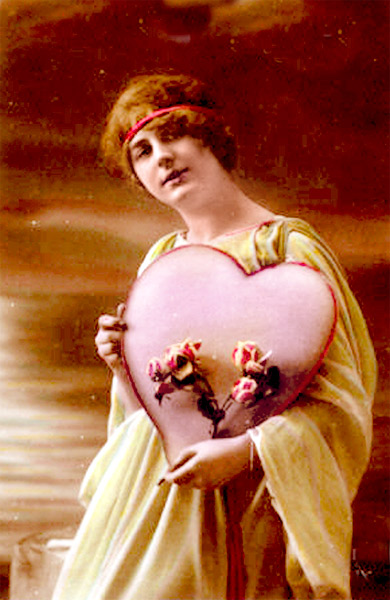
Valentine's Day is almost here!
Valentine's Day is generally associated with hearts, love, roses, hugs and kisses and happy couples. But how did this holiday start? Did you know that even though Valentine's Day is a “fluffy” time of year for us today, the origins to this day were anything but. Read on to find out the roots of Valentine's Day.

My heart goes pitapat!
The simple answer to Valentine's Day's origins is that no one really knows how it got started. However, this does not by any standard mean the trail is completely cold. Some historians believe the roots to Valentine's Day lie with a Roman (or possibly earlier) festival that took place between February 13th  till the 15th and it was called Lupercalia. This celebration gets its name from either Lupercal, the cave in which, according to mythology, a “she-wolf” named Lupa (who the festival was partly in honor of) nursed Romulus and Remus or the mythical Roman god Lupercus, the god of shepherds. The purpose of this festival was to further fertility and dispel evil. This event had several bizarre practices that were not what one would expect for a day possibly linked to Valentine's Day; the festivities included sacrificing goats and a dog, the offering of cakes by the Vestals and the horrifically peculiar ritual regarding fertility. This ritual involved two young men – wearing animal skins – who would run around the city with strips of goat skin. The goat skin was used to slap women and was believed to result in pregnancy in infertile women and help delivery if the women slapped were already pregnant.

Was Lupercalia, a Roman fertility festival, where Valentine's Day found its origins? Most historians don't think so.
Most historians don't believe Lupercalia, saying that there is no proof this event was related to the holiday in any fashion. The jury is still out for now. Regardless of which opinion rings true, Pope Gelasius I (492-496) was the man who eventually abolished Lupercalia in 496 AD. Thank goodness for Pope Gelasius!

Pope Gelasius abolished Lupercalia in 496 AD.
There is a historical legend that might be responsible for the actual origins of Valentine's Day. After the end of Lupercalia, Pope Gelasius established another event set for February 14 – St. Valentine's Day, to honor a man by that very name. Today, it is unknown which St. Valentine Gelasius was referring to, as according to the Catholic Encyclopedia, at least three Christian saints had this very name. Many scholars think the St. Valentine Gelasius was referring to was a priest whom was disliked by Claudius II, the emperor of Rome in the year 270.

Once again, the history of Valentine's Day steps into the shadows of uncertainty, but there is a legend about this priest St. Valentine that might hold some clues. The story goes that Claudius II banned marriages for young men because he believed unmarried men would make better soldiers for his army; perhaps one reason for this was because he figured they were less likely to get distracted homesickness when out at war. But St. Valentine decided to marry couples in secret. He was found out and put under arrest. His sentence was to become executed. But before his execution, he fell in love with his jailer's daughter. St. Valentine is said to have given her a note which simply said, “From your Valentine” – this would have been the very first “valentine”. Historians often doubt the legitimacy of this legend, as history indicates Claudius II's marriage ban was never issued and he even encouraged his soldiers to take for themselves two or three women when they had victory of the Goths. Another legend has it that St. Valentine was executed because he refused to reject his religion. But after his death, the jailer and his household accepted Jesus Christ and became baptized. Will we ever know the truth about St. Valentine's connection with Valentine's Day?

This is a shrine of St. Valentine in Whitefriar Street Carmelite Church in Dublin, Ireland. Was St. Valentine responsible for Valentine's Day as we know it?
Perhaps not. However, in the end, we don't celebrate Valentine's Day because of how it started. We celebrate for the love of loved ones around us and the love we feel for that “someone special”. Before I end this article, I should like to remind you of our first love – the love God felt for us. He wanted a relationship with us, but our sin caused us to fall away from Him, as God cannot be associated with sin. So God sent His Son, Jesus Christ, to pay the penalty for our sin – death. Now, we can have that relationship with God. It is the love God has for us that we can spread around to those around us this Valentine's Day!

But God demonstrates His own love for us in this: While we were still sinners, Christ died for us.” Romans 5:8.

HAPPY VALENTINE'S DAY!

References:


Disclaimer: Many (or in some cases all) of the photographs and images above are not mine. If you own one or more of them and would like them to be removed, please kindly let me know.