Hi everyone! My co-writer Joy is back with a great article today featuring characters from my other blog, Smiley's News. I know you'll like it. But first, let's go through some of our "usuals":
Days till:
It is: 3 days till Columbus Day
It is: 21 days till Harvest Day, usually referred to as "Halloween"
It is: 23 days till Daylight Savings Time Ends
In the Spotlight:
This week, I have some awesome news about Jurassic World, the upcoming fourth movie in the Jurassic Park franchise. If rumors are to be believed, it seems as if Universal Studios is doing test-screenings for the upcoming trailer for JW! Basically, for those of you who don't know, a test-screening is when a movie company wants ordinary people to view a movie trailer to see the reception before they actually release it. This is so that they are able to make changes based on what the public wants. YouTube user Ivan Flores claims to have been one of those fortunate few to see the trailer! He said the trailer is not finished in terms of special effects, but it's just to help the viewer get an idea of what the final edition of the trailer is.
So what did Ivan Flores describe about the trailer? Well, if he is to be believed, the trailer starts off with a ferry taking tourists to Isla Nublar, where the Jurassic World theme park is located. The park is then shown in its full glory; the trailer shows off a variety of attractions including a safari jeep ride through an enclosure, in which a flock of presumably Gallimimus are seen around a jeep, and the gyrosphere ride in which two tourists are seen viewing a large sauropod (we don't know what species just yet, but it considering Apatosaurus is going to be in the movie, it is a fair bet that the sauropod in the trailer is of that species). Then it shows Bryce Dallas Howard's character saying something along the lines of, "We've learned more about genetics in the past decade than we have in the past century...now we can make our own dinosaurs from scratch". It also shows Chris Pratt's character with one of the Velociraptors from his behavioral studies; near the trailer's end it portrays a pack of raptors running through the forest.
I think the trailer sounds legit and if it is, I can't wait to see it. There's also a very interesting reason why I believe this trailer is legit: Ivan Flores posted a video about the trailer on YouTube, but the video was soon removed due to copyright infringement. Hm... why would Universal care about the video being on YouTube if Ivan Flores just made it up?
Remember, Jurassic World comes out June 12, 2015!
Topic of the Week by Joy Hammond
“Hi guys Lizzy here and I'm in the kitchen with Chef Rack-coon. He's preparing a special dish for our picnic on Columbus day. What exactly do people eat on Columbus day?” I ask, following him around the kitchen.
“Good question, Lizzy.” Chef Rack-coon replied, “Columbus day, as you know, is to celebrate Christopher Columbus's arrival to America...actually to a nearby island near America. Well anyway, many Italian-Americans view that day as a day to celebrate their heritage. So some of the food dishes we're preparing for the picnic are Italian.”
“Italian, sounds interesting. What kind of dishes do you have in mind?” I ask, as Chef Rack-coon turned to the stove. “I wasn't thinking of Pizza if that's what you were hoping for,” he joked. “I was thinking along the lines of backed chicken and spaghetti or maybe Ziti or a bruschetta.”
“What's a Bruschetta?” I ask.
“It's an Italian appetizer to be honest.” Chef Rack-coon admits, “it's easy to just show you.”
He took out several ingredients and they filled the counter space.
“First of all here's what I need: six to seven tomatoes (about 1 ½ lbs), two cloves of garlic (about 2 teaspoons), one Tablespoon of extra virgin olive oil, one teaspoon of balsamic vinegar, six to eight fresh basil leaves (thinly sliced or chopped), 1 teaspoon of kosher salt (depending on taste), ½ teaspoon of freshly ground black pepper (depending on taste), one Baguette of french bread or similar Italian bread, and finally ¼ cup (60 ml) of olive oil.”
“Wow that's a lot of ingredients,” I comment. “I can't wait to get started!”
Chef Rack-coon got out a a pot and poured 2 quarts of water into it. He started up the oven to boil the water. Then he took the tomatoes and cut the tips of them in a cross pattern.
“It makes them easier to peel later,” He stated. “You don't cut the tomatoes fully just yet. Just do a small cross cut on the ends.”
The water started to boil but he didn't put the tomatoes in just yet. He took the pot off the stove and then dumped the tomatoes in.
“We leave the tomatoes there for a minute to blanch.” Chef Rack-coon explained.
“Blanch? Sounds like Ranch.” I exclaim, “What does that mean?”
“Blanch is when you boil water and then put food into the water without actually cooking it but just partially and then you put it into cold water to cool down but it's different in this case.”
Chef Rack-coon took a spoon and scooped up the tomatoes one by one and set them on the cutting board. When the tomatoes were cool enough to handle, he started to peel off the skin. Chef Rack-coon used a paring knife and cut the tomatoes stems before actually cutting the tomatoes into halves of quarters.
“Now here's the fun part,” He grinned.
He started to squeeze the tomatoes to let out the juice and the seeds. Chef Rack-coon went over to the stove and preheated the oven to 450 degrees F or (230 degrees C). He also moved one of the racks to the top slot in the oven. Then he finely chopped the tomatoes and put them in a medium sized bowl. Chef Rack-coon proceeded in adding the minced garlic, the olive oil, and the balsamic vinegar to the bowl. Then he stirred in the basil, salt, and pepper. He tasted the mix and added a little more pepper and salt.
“You don't have an exact measurement of spices. It's really depends on your own taste,” he remarks. “Now it's time to prepare the bread.”
He got out the baguette and sliced it into diagonal half inch wide slices with the bread knife. Then Chef Rack-coon used a pastry brush to brush on the olive oil on one side of each slice. He placed the olive oil side onto a tray. He continued to do that until the tray was full.
“Toasting these on the top slot so we'll need to do these slices in batches,” He informs. “We just need to wait for the oven to heat up.”
When it does, Chef Rack-coon puts in the oven.
“About five to six minutes will do the trick,” he nods. “You just want the bread to turn slightly brown around the edges.”
He starts preparing the second tray of bread as the timer ran. Finally the bread slices were done. He laid the slices, olive oil face up.
“The tomatoes mix can be put on the side so that everyone can put their own portion of it on their bread slices.” Chef Rack-coon advises, “I like putting the mix on myself but I'll do it before the picnic begins on Monday. You don't want the bread to get soggy from the juices.”
With a little convincing, Chef Rack-coon and I had ourselves a little snack.
“It was just a taste testing,” I grin. “By the way this was really delicious!”
“Thank you,” Chef Rack-coon smiles.
“Well that's it for today. This is Lizzy saying 'Bye everyone have a good Columbus day!”
Disclaimer: Many (or in some cases all) of the photographs and images above are not mine. If you own one or more of them and would like them to be removed, politely let me know via one or both of the email addresses above.
I experienced my first really cold day since winter ended just yesterday. Let me tell you, the temperature dropped fast. Just a week earlier, it was well over 100 degrees Fahrenheit! Anyway, there isn't much to report on today, but I do have an interesting blog article to share back from my earlier blogging days. I wrote it in 2012, so I figured it was high time to "bring it out of the garage" so to speak.
Days till:
It is: 10 days till Columbus Day
It is: 28 days till Harvest Day, usually referred to as "Halloween"
It is: 31 days till Daylight Savings Time Ends
In the Spotlight:
Unfortunately, there wasn't really anything for me to report on this week, but I did find this picture from the shooting of the upcoming movie Jurassic World:
In this picture, Claire (Bryce Dallas Howard) appears to be looking at something (a dinosaur?) through a window. Anyone's guess what.
Topic of the Week by Christian Ryan
Now, when most people think of mammoths they think of Woolly Mammoths, but there are many types of mammoths and they have living relatives: the elephants. The elephant family tree is HUGE! As a matter of fact, there were well over 600 species of elephants roaming the globe thousands of years ago, but today, I'll stick to the mammoths. Here are just a few species:
Columbian Mammoth
Southern Mammoth
Imperial Mammoth
Woolly Mammoth
Woolly Mammoths are the mammoths that are normally depicted in popular culture around the world in movies (such as Ice Age 4), video games, computer games, books and etc. They went extinct at the end of the Ice Age about 3,500 years ago, about 500 years before Moses (and the Ice Age fits perfectly into the Biblical world-view). These behemoths roamed the snowy plains of Northern Siberia, Asia and North America. While there are still rumors floating around that mammoths still survive somewhere on the planet, the most likely conclusion is that they are extinct. And unfortunately we will never get the opportunity to see one . . . right? Would you be surprised to see a Woolly Mammoth walking in your backyard? What if I told you extinct doesn't have to be forever? Well, some scientists are thinking seriously about bringing the mammoth back from the brink by cloning them! How can they do this? You see, unlike most extinct animals, mammoths left a lot more than a few fossils to prove their existence. When these animals died many years ago, they were quickly covered, many probably were either buried in dust storms or sunk in sticky mud in lakes or ponds. After the animal drowned, they didn't have time to rot and so today, we actually find mammoths underground in the permafrost of the northern regions of our planet, including the fur and flesh! They are practically frozen in time! After excavating these mammoths and bringing them to labs, scientists have been able to actually extract DNA from these creatures. But there's one problem: just having DNA won't help, because in order to clone something, you also need a way to get a baby animal. However, mammoths have living relatives: the elephants! Scientists have many possible methods to hopefully clone a baby Woolly Mammoth. These methods can get very confusing, even for me, so I'll go through one of their less complex methods:
First, they extract reproductive "stuff" from a frozen male mammoth (I won't explain what exactly because some of our readers might not be ready for it)
Then they implant this "stuff" in a female Asian Elephant
Hopefully, the embryo will grow in the mother elephant and she will give birth to a half mammoth, half elephant calf aka a "mammo-phant"!
After breeding many other baby "mammo-phants", they will breed the calves that most resemble their ancient relative and over time, their offspring will resemble a baby mammoth and they won't be extinct!
"But wait a minute," you say, "wouldn't an "mammo-phant" turning into a mammoth be evolution?" Well, no it's not. Being a born-again Christian, I don't believe in evolution and millions of years. Instead, I believe that the Bible is to be taken literally when it talks about Creation. The Bible says God created ALL land animals on Day 6 of the Creation week. Well, when God made elephants, he didn't make Asian Elephants, African Elephants, Woolly Mammoths, Columbian Mammoths and etc., etc. all during that Creation week. No, God probably only made a particular type of elephant or mammoth. And this mammoth or elephant carried the DNA for all other elephants and mammoths that would later rise from natural selection. Natural selection is NOT evolution, as evolutionists would like us to believe. Instead of an organism rising out of . . . well . . . nothing and gaining more "genetic information" over millions of years as evolution teaches, natural selection is when an organism loses "genetic information" over time instead of gaining it. So if elephants "naturally selected" from mammoths, an elephant couldn't "naturally select" back into a mammoth (we don't really know if elephants descended from mammoths or not, I just used this example so you could understand better). So no, a "mammo-phant" turning into a mammoth is not evolution. See these articles on Answers in Genesis for more information: Cloning the Woolly Mammoth, Zonkeys, Ligers and Wolphins . . . oh my!
So back to the cloning of the mammoth (and by the way, there are other possible cloning methods that would not involve a "mammo-phant". Instead, they would give us a 100% Woolly Mammoth). I am quite excited about the possibilities of seeing a real, live Woolly Mammoths. Scientists expect to bring the mammoth back from extinction within another five or six years! I hope they succeed, don't you? After that, what's next? Tasmanian Tigers? Dodos? Saber-Toothed Cats? Tyrannosaurus rex? The latter isn't likely any time soon, but hey, you never know! The possibilities are endless!
Disclaimer: Many (or in some cases all) of the photographs and images above are not mine. If you own one or more of them and would like them to be removed, politely let me know via one or both of the email addresses above.
You guys will have to forgive me: I didn't post how many days
it was until Autumn began and Elephant Appreciation Day. In fact, I had
forgotten about fall until someone at church pointed it out! I can't believe
the summer's gone already! Depending on where you are in the world, you'll see
birds migrating south for the winter, leaves changing colors and eventually
falling to the ground, shorter days and perhaps even snow. Here in the part of
Utah where I live though, the only change I'm going to expect is a reduce in
temperature. The days are also getting shorter. I can't believe fall is here
already! I mean, soon we'll be singing Christmas songs! (Actually, I'm already
seeing Christmas commercials and movies on TV!). Anyway, before any more time
passes, let's get started! Today, I decided to post a fall-related video from
the television show Phineas and Ferb. Technically, in this episode,
Phineas and Ferb create S'fall. You can watch it below:
Days till:
It is: 17 days till Columbus Day
It is: 35 days till Harvest Day, aka “Halloween”
It is: 46 days till Veterans Day
In the Spotlight:
I've got several goodies this week
about the upcoming movie Jurassic World, the fourth Jurassic Park
movie. After a few weeks of practically no updates, a rumor has sprouted that
that we'll be seeing the first trailer for JW this November!!! You might
recall that earlier this year, many JP fans were speculating that we'd
be seeing some footage at San Diego Comic-Con. Unfortunately, none was
shown. However, Boxoffice Forums speculates that we'll be seeing some
footage at the November premiere of the Legendary Pictures film Interstellar.
Though it was believed by some that we might get a JW trailer at the
premiere of two later upcoming movies – The
Hunger Games Mockingjay Part 1 and Dumb and Dumber 2 – a JW
trailer at the Interstellar premiere makes loads of sense considering Legendary
Pictures is doing both this movie and JW. However, this doesn't rule
out the possibility of JW trailers being shown during the two other
movies I mentioned. Interstellar is coming into theaters on November 7th,
so hopefully, we'll finally be able to see the first trailer of Jurassic
World!
In additional news, director of Jurassic
World, Colin Trevorrow posted another picture from Jurassic World
that perfectly reflects the movie itself and the time of year we're entering
now. This is the picture he posted with the word “Autumn” in the description:
Laying forgotten amid the leaflitter is the East Dock sign from Jurassic Park. Will it return in Jurassic World?
Does this sign lying amid the leaf
litter look familiar? It should if you've seen the first Jurassic Park
movie! This sign that's supposed to point in the direction of Isla Nublar's
East Dock was knocked over by Dennis Nedry's jeep in the first film. This could
suggest many different things. Perhaps this picture is just Trevorrow's way of
reminding us about the upcoming movie; maybe he's hinting at a trailer due to
be released in “Autumn.” Or perhaps this is actually from the movie! Some JP
fans have theorized that we'll see this sign in the state seen in Trevorrow's
picture in the film. It is believed that some of the film's characters will
encounter some of the original locations from the Jurassic Park movies
(e.g. the Visitor's Center). Perhaps this is from one of those scenes. If so, this would be the first time in the Jurassic Park movies that a location from previous movies is revisited It might
also be part of a flashback. Either way, it's a cool photo.
The update from Jurassic World that
I have for you all today is a picture apparently taken by Twitter user Brycenator100.
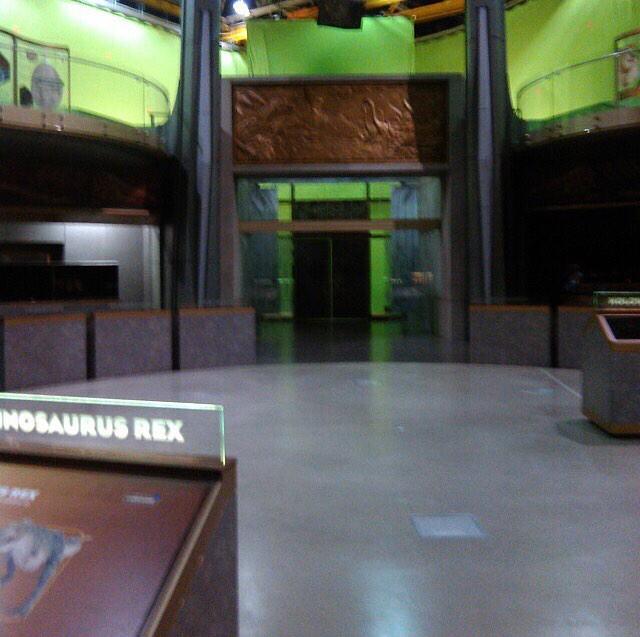
It reveals the inside of the new Visitor Center in the Jurassic World theme
park! Here it is below:
Welcome to Jurassic Pa- Oops! I mean Jurassic World!
So what can we gather from this
picture? Well, it appears to be rather similar to the Visitor Center from the
first film. However, it's going to be different in several ways. You might notice
the green wall in the background; this is likely for special effects, like
hologram images that are rumored to appear in the film. And in the foreground
of the picture, to the left, you can see an information panel labeled “...nosaurus
Rex”. I think we all know what the full word is. Of course, I can't be
sure, but I think that in the center of the platform in the middle of the
picture, we might have the skeleton of a Tyrannosaurus, like in the
first movie. Whatever happens, I can't wait to see this movie!
Topic of the Week by Christian Ryan
Meet Allosaurus fragilis, the Lion of the Jurassic
Unless you are a paleontologist or dinosaur enthusiast, it's
unlikely that you will have heard of Allosaurus, or recognized it before
when you've seen it in various forms of dinosaur pop-culture. Even though this
dinosaur might look a little like a lesser-evolved T. rex at first glance, Allosaurus was jam-packed with its own unique
specially designed features and abilities that made it an awesome and efficient
killing-machine; it was intelligently designed to thrive in the habitat God
placed it in 6,000 years ago.
Allosaurus was a very different dinosaur from Tyrannosaurus.
So what is an Allosaurus? Well, first of all,
the name Allosaurus (meaning “different lizard”) is one of the largest
theropod dinosaurs of the Jurassic habitat; the “lion of the Jurassic”. The
average Allosaurus was 28 feet long and stood 8-10 feet from head to
toe. Despite its size however, the creature only weighed about 2 ½ tons. The
largest confirmed Allosaurus specimen ever found is 32 feet long. As you
will find out, life in the Jurassic was tough for an Allosaurus – the
prey they hunted was often either really fast, really well-armored or really
huge, (and I do mean really huge) and there was competition from other
predators for resources. Somehow though, fossil evidence shows us that Allosaurus
was the ultimate Jurassic survivor.
Size comparison between several Allosaurus specimens and an Epanterias and a human.
Before we get into the behavior and ecology of this dinosaur,
let's learn some basics about its anatomy and the history of its discovery.
Allosaurus was discovered during the Bone Warsand was described
by paleontologist Charles Marsh in the year 1877. This dinosaur broke the
record for being the largest carnivorous dinosaur; the previous title-holder
was probably Megalosaurus, a carnivore about 20 feet long. It is
classified in the group Carnosauria, and inside of that group it is
assigned to the Allosauridae family. For a long time, Allosaurus
was portrayed as a creature very similar to T. rex, but smaller. If you have
mistook an Allosaurus for a T. rex sometime in the past, you're not
alone. Ray Harryhausen – one of the most important stop-motion creators of his
time – is quoted for saying,
“They're (T. rex and Allosaurus) both meat eaters, they're
both tyrants... one was just a bit larger than the other.”
Nothing could be farther from the truth. Scientists continued
to portray Allosaurus as a dwarf T. rex for much of the 20th
century until some special discoveries were made in the Cleveland-Lloyd
Dinosaur Quarry in Emery County, Utah. Even though the site was described in
1945, major fossil hunting didn't start until 1960. Between the years 1960 and
1965, paleontologists discovered a treasure trove of dinosaur bones, mostly
from Allosaurus. In fact, it's estimated that they found at least 46
individuals of the Jurassic predator! This evidence seems to suggest something
catastrophic killed and rapidly buried the Allosaurus and other dinosaur
species found at the Cleveland-Lloyd Dinosaur Quarry, such as the Genesis
Flood. These findings helped us know a great deal more about Allosaurus.
It is thanks to these finds that we've been able to piece together the truth
about Allosaurus.
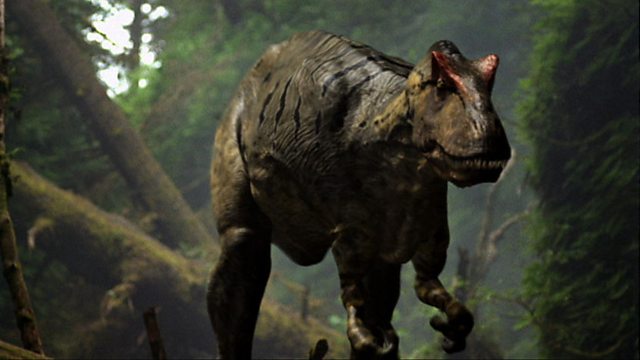
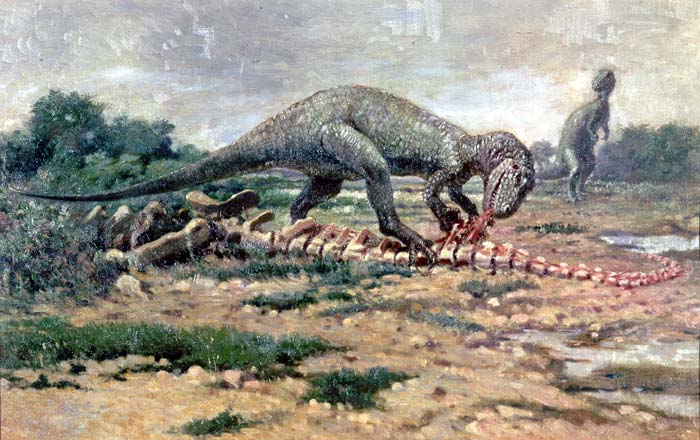
For a long time, Allosaurus was assumed to be a slightly smaller version of a T. rex.
Contrary to many depictions through much of the 20th
century, Allosaurus walked with its body held forward and its tail off
the ground. It wasn't a sluggish predator either; instead, it was fast and
agile. There are two, possibly three, known species of Allosaurus known
to science, Allosaurusfragilis (the type specimen),
Allosaurus europaeus and possibly Allosaurus jimmadseni, with
other potential species coming, going and being hotly debated over the years.
To keep it simple, I will stick to mostly talking about A. fragilis unless
otherwise specified. As its species name suggests, europeaus fossils
have been uncovered in Europe, Portugal to be precise. Jimmadseni
fossils have been found in Tanzania, Africa and A.fragilis
fossils are found in the western United States.
The yellow area represents the Morrison Formation; the dots represent where notable Allosaurus specimens have been discovered; plus marks represent the location of several Allosaurus fossil finds.
Allosaurus fragilis was one of the apex predators of its
Jurassic domain, which is why it is sometimes nicknamed the “Lion of the
Jurassic”. The western United States where this dinosaur lived (represented by the Morrison Formation) were very different in the pre-Flood
Jurassic world than it is now. Instead of being a dry desert, these areas were
much more lush. Fossil evidence suggests that this area was filled with
river-lining forests of conifers and ferns, gallery forests and fern prairies.
Roaming these areas was a vast array of herbivorous dinosaurs, from the
diminutive and fleet-footed Dryosaurus and Othneilosaurus to the
large sauropods like Apatosaurus, Brachiosaurus, Camarasaurus
and Diplodocus. Other herbivores like the well-known Stegosaurus
also made their home here. With ample herbivores, there's no doubt that there
was a load of carnivores able to hunt many of them down, and Allosaurus
wasn't the only one. Ceratosaurus was a smaller carnivore that lived in
the region. Like Allosaurus, it had a crested head, but it might have
been more of an opportunist than the aforementioned carnivore, as fossil
evidence reveals it ate a wide variety of prey. Another carnivore Allosaurus
had to compete with was Torvosaurus – on average, this predator was
larger than Allosaurus and could have caused a major threat. In order
for these three carnivores to coexist, they must have filled different
ecological niches within their environment.
Torvosaurus was a major competitor of Allosaurus. In Europe, Allosaurus was smaller than this dinosaur.
Ceratosaurus would always have to have been wary of Allosaurus, because it was smaller than the Lion of the Jurassic.
But what's the point of living in a place with lots of prey
without the equipment to bring it down? Well, Allosaurus had just that!
As I've said before, this dinosaur was faster than Tyrannosaurus,
meaning it would have been able to chase after prey for a longer period of
time. Scientists predict Allosaurus could run up to 30 mph in short
bursts. This dinosaur was ready to bring down its prey once it was in range. Allosaurus'
jaws bore 4-inch teeth; each tooth was re-curved and serrated both front and
back, just like a steak knife. Like other theropods, the teeth are specially
designed to break and fall out quite often. This is because the teeth are
replaced continuously to always insure Allosaurus has a set of sharp
teeth ready for action. In addition to its teeth, Allosaurus also has a
set of three sharp claws on each hand.
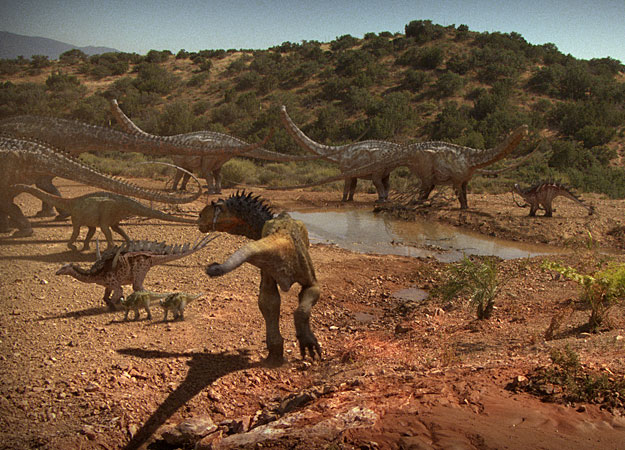
Allosaurus had a lot of herbivorous dinosaurs to prey on.
Now it's time for an Allosaurus to go on the hunt!
Even though studies reveal it likely had relatively poor hearing capabilities,
it seems that this dinosaur could hear low frequency sounds very well. This is
useful when tracking down herds of large dinosaurs that would have been making
low frequency noises with each footstep. A good sense of smell and a wide range
of vision would have helped it pinpoint the location of its target. When an Allosaurus
attacked, you can be sure that other dinosaurs would have been terrified! Once
close enough, Allosaurus would have put its claws and teeth to work.
Remember when I talked about this creature's teeth and how they are pointing
backwards? This is to ensure that the victim can't escape without suffering
devastating slash-like wounds. Scientists were curious about Allosaurus'
bite force. Surely an animal weighing 2 ½ tons has a bone-crushing bite, right?
After running tests, paleontologists were in for a surprise when their
calculations suggested this dinosaur had a bite force of 805-2,148 newtons!
This is less than a lion; in fact, it's rather on par with a leopard.
Ironically, Allosaurus' skull, the scientists found out, could withstand
great amounts of pressure that would be expected for a predator that's tackling
active prey.
Allosaurus had a bite force weaker than a lion!
However, Allosaurus didn't need a strong bite
to bring down prey! You see, Allosaurus had teeth designed for slicing
through flesh, unlike the bone-crunching Tyrannosaurus, and this
(combined with this dinosaur's bite force and skull design) suggests that it
actually used its head like an ax when attacking prey. It would probably latch
onto prey with its jaws and begin slashing flesh away with its teeth without
breaking the prey's bones. This way, after making enough devastating damage, Allosaurus
could take a step back and wait for the prey animal to succumb to its injuries,
suffering from a massive amount of blood loss and shock. Then Allosaurus
could go in to start the feast. Of course, it's likely Allosaurus could
have used other methods to bring down prey as well.
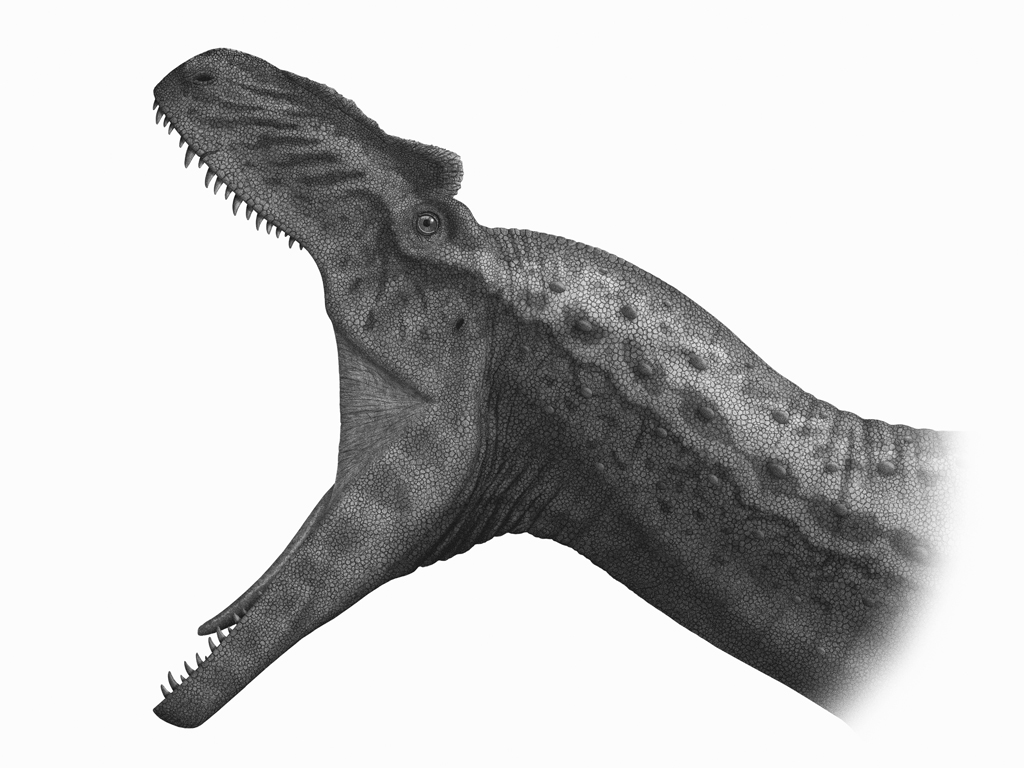
Opening its jaws nice and wide, Allosaurus was able to cut deep wounds into prey by slashing into it with its teeth, sort of like an ax.
Even using this technique, the 2 ½ ton Allosaurus
would have no conceivable way of tackling the large adult sauropods. However,
we have evidence that sauropods were at least scavenged upon by Allosaurus,
as several sauropod fossils have gouges and bite marks caused by Allosaurus.
But there might have been a way for these predators to tackle creatures like
the 35-ton Apatosaurus – maybe they worked as a team. This way, only the
largest adults could be safe from this predator. Evidence for pack-hunting in
this species comes from fossil sites such as the Cleveland-Lloyd Quarry in
which these dinosaurs have been found in the same location. As you might
recall, several tens of allosaurs have been uncovered there, ranging from
adults to youngsters. It's possible that during the Genesis Flood, several
packs of Allosaurus would have become trapped on islands that formed as
the Flood waters rose upon the earth as it describes in Genesis 7.
This is a good time to bring up Allosaurus' small horns on
top of its head. Paleontologists aren't sure what they were used for, but they
were likely covered in a horny sheath in life and brightly colored, perhaps to
attract mates or used in species recognition. Species recognition would have
been very important to these dinosaurs if they at least occasionally hunted in
packs.
An Allosaurus attacks a mother Stegosaurus and her young.
As I mentioned before, Allosaurus is really an amazing
survivor! These dinosaurs often had tough lives – individuals of this species
are often discovered with nasty injuries. Several pathologies have been found,
including:
Willow breaks in ribs
Humerus and radius fractures
Distortion of joint surfaces in foot due possibly due to
Osteoarthritis (yes, dinosaurs had this disease too)
Amputation of a chevron and foot bone (possibly caused by
bits)
Coossification of vertebral centra near end of tail
Etc.
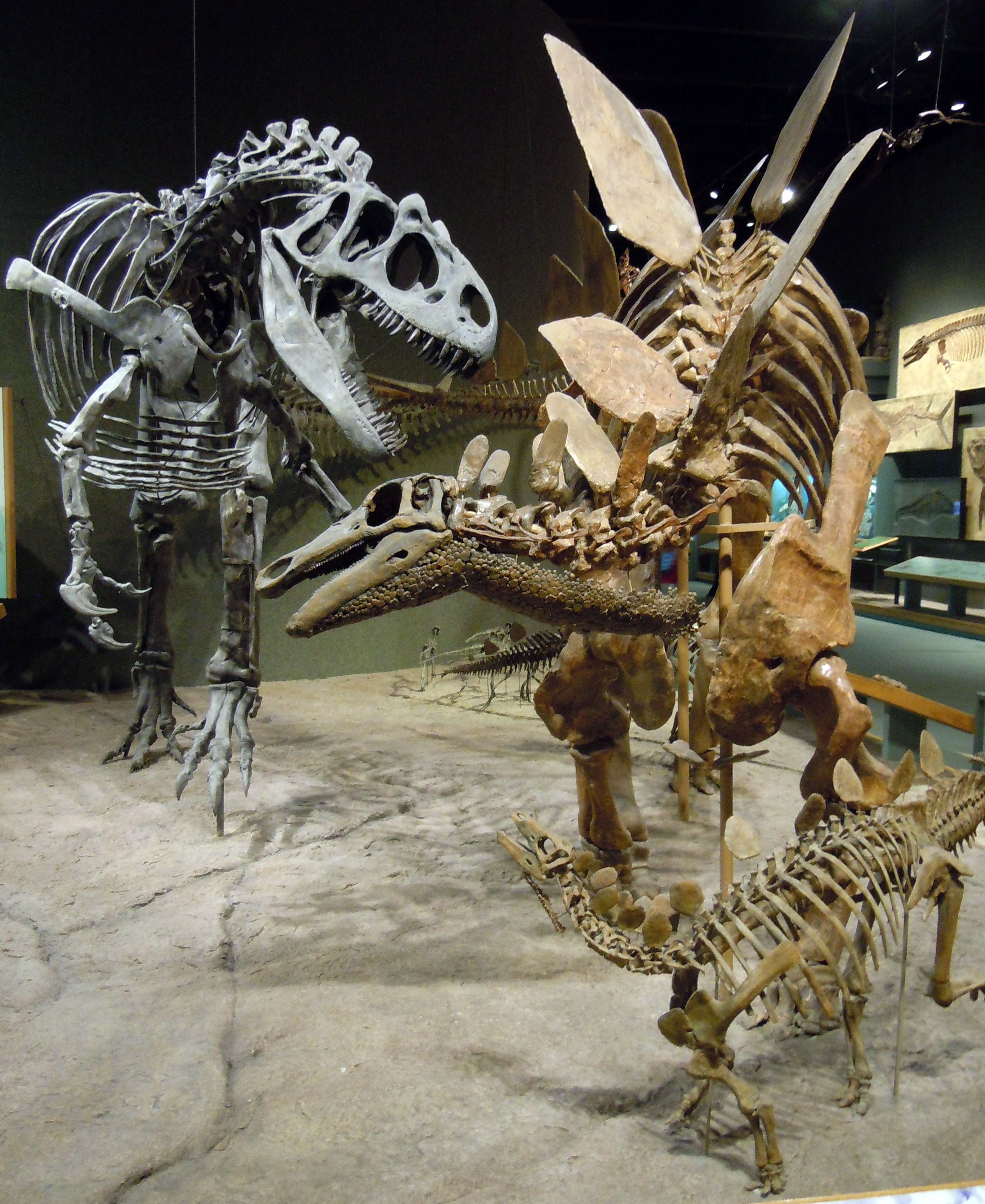
There is an Allosaurus vertebrae with a hole punched
into it; the tail spike of a Stegosaurus fits the hole perfectly,
suggesting that it wasn't always easy for Allosaurus to bring down these
creatures. The interesting thing about these injuries is that, believe it or
not, many were in the process of healing (this includes the Stegosaurus-inflicted
injury). This means that the injuries happened while the Allosaurus were
alive and they continued to live for months, or even years after the injuries
occurred! Many of the pathologies suffered by these and other dinosaurs would
be life-threatening to a human. One Allosaurus specimen, named Big Al,
is a sub-adult individual who suffered from at least 19 deformities caused
either by disease or injury, including broken ribs (which were in the process
of healing before he died) and even a swelling toe infection! Paleontologists
believe Big Al was about six years old at the time of his death.
Big Al was one of the most complete Allosaurus skeletons ever found; by the time of his death, he had several broken bones and even a toe infection.
And as if this isn't impressive enough, there's another Allosaurus
discovery that took place in the western United States – during the Bone Wars,
the lower jaw bone of a dinosaur was discovered, but it was so distorted, that
paleontologists couldn't identify it for a long time. Finally, they were able
to determine the jawbone's owner was an Allosaurus. The jawbone was
distorted to the fact that it was broken. And again, the jawbone was in the
healing process at the time the animal died, months or years after the injury
was inflicted. Scientists aren't sure how this Allosaurus broke its jaw,
but some have suggested it happened when tasseling with prey, such as the
whiplash-like tail of a sauropod as is portrayed in Discovery Channel's
Dinosaur Revolution. Isn't it amazing? Even 4,350 years ago (years before
veterinarians), God designed these animals with the ability to heal themselves
from these horrific pathologies.
This Allosaurus suffered with a broken jaw for months or even years before his death.
As Ceratosaurus wasn't as large and Torvosaurus didn't appear to be as common, nothing could have taken Allosaurus' title as one of the apex predators of the Jurassic habitat . . . no living creature that is! The fossils of Allosaurus that we find buried in rock layers are all that remain of these creatures that lived in the world before the Genesis Flood. At the time of the Flood, around 4,350 years ago, the Bible records that all land-dwelling, air-breathing creatures perished in the waters of a global Flood except those that were on board Noah's ark. This would have included dinosaurs. But we also know that these dinosaurs were later killed off after the Flood by environmental changes and also probably human's hunting them and forcing them from their natural habitat. The last dinosaurs soon met their doom.
Fossil tooth marks prove Allosaurus at least scavenged on the carcasses of sauropods like Apatosaurus. They probably hunted juveniles of the species as well.
Allosaurus was one of the top predators of Jurassic
Portugal, Tanzania and western North America. And as we just learned, it was
beautifully designed to thrive in its dangerous world. Even though life (after
the Fall of Man) was tough for these creatures, the species was able to
survive. What an impressive and wonderfully designed dinosaur.
This is Ebenezer, the Creation Museum's Allosaurus skeleton. This mighty Allosaurus is a wonderful reminder of the devastating Flood that destroyed the pre-Flood world 4,350 years ago.
Disclaimer: Many (or in some cases all) of
the photographs and images above are not mine. If you own one or more of them
and would like them to be removed, politely let me know via one or both of the
email addresses above.
Hi everyone! Things are moving right along this week with our latest theatrical drama at church: The Cheatham's - Howey's Wedding Celebration. I can't believe it's going to be time to present it soon (in November). Other than that, there isn't anything to share this week. So onto our "usuals".
Days till:
It is: 3 days till Elephant Appreciation Day
It is: 24 days till Columbus Day
It is: 42 days till Harvest Day, usually referred to as "Halloween"
In the Spotlight:
Unfortunately, there wasn't really anything for me to report on this week.
Topic of the Week by Joy Hammond
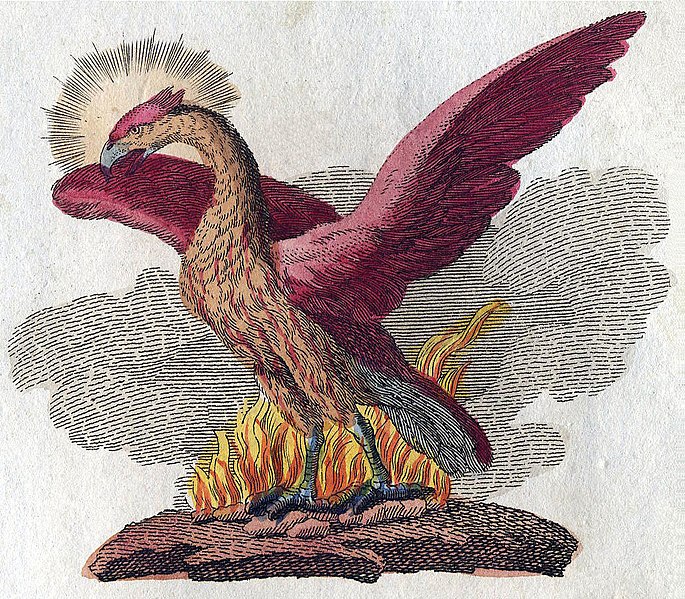
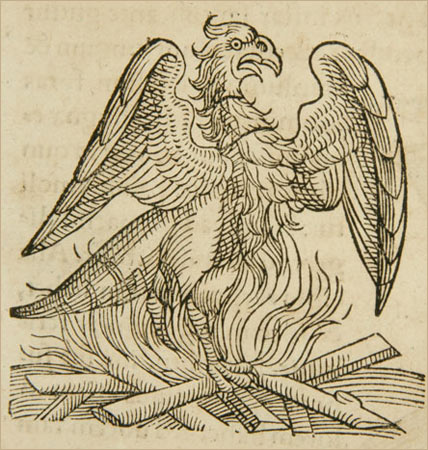
The phoenix is a powerful bird of Greek and Egyptian mythology.
Imagination is one of the best attributes in a human, more or less. Today I'll be talking about the Phoenix bird. It's origin is in Ancient Greek and Egyptian Mythology. It was a bird that is one of a kind. Sort of like in that movie the Water Horse, the Phoenix is the only one in existence and when it dies another one comes to take it's place. This bird is different than normal birds...it doesn't just die. It burns up in a fiery flame and then in ashes a new bird is born. There's actually an example of this exact even in a Harry Potter movie. But like all movie making magic, unfortunately the Phoenix bird is not real.
Before death, the phoenix is said to construct a nest before burning up in flames. In its place is a phoenix egg, continuing the life cycle once again.
Supposedly the bird could live over 1400 years. It has feathers of green, purple, red, and yellow. It's been used as a symbol of royalty or even of rebirth, the sun, or time itself. Some people have referred to the phoenix being a raven of some sort or another common bird somewhere else. Sometimes known simply as a peacock or an eagle.
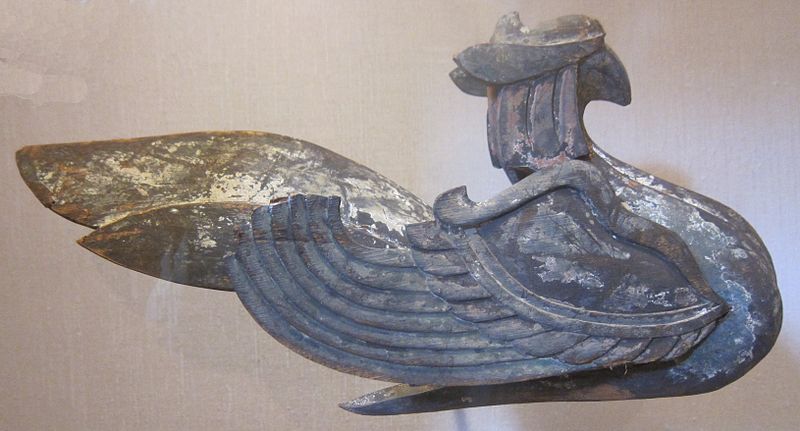
This is a sculpture of the phoenix from Japan.
In Egypt, the bird was known to sing a beautiful song and the sun god, Re (or Ra), would stop his chariot to listen to the music. Later the bird would eventually make a nest and set it on flames, consuming itself in the fire. In the ashes would be an egg and another phoenix was born. It would put the egg on the alter of the sun god. The phoenix is very powerful and it's tears could heal someone. The Phoenix has been known to be the symbol of resurrection as well. This incredible bird would be a sight to see, if it was real. The phoenix bird is an important symbol for many people but it's unfortunate it's not alive. Stories about the phoenix is probably the only reason it exists in the first place. Words may disappear but the memories won't.
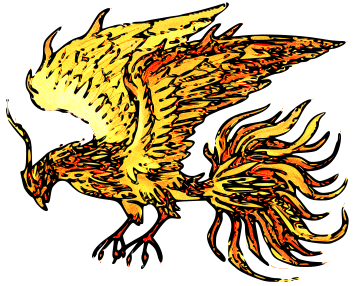
Though not real, the phoenix is a symbol of renewal.
Disclaimer: Many (or in some cases all) of the photographs and images above are not mine. If you own one or more of them and would like them to be removed, politely let me know via one or both of the email addresses above.
Hello, welcome to my blog. I can't believe that Dolphin Tale 2 is out in theaters today! I'm so excited! Finally, three years after the first one, a sequel has been produced. To celebrate the release of the movie, I'll dedicate this blog post to Dolphin Tale 2 and its dolphins.
Days till:
It is: the theatrical release of Dolphin Tale 2 today!
Yesterday was: Patriot Day
In the Spotlight:
Well, with the filming of Jurassic World complete, as I expected, updates that are being released to the public are becoming few and far between. However, this shouldn't last too long, perhaps until January, a mere five months before the film's release.
Though there isn't much news to report today, ComicBookMovie.com revealed some important information concerning one of the characters in the film portrayed by Judy Greer. In her interview, she explained that she is in fact portraying Claire's (Bryce Dallas Howard) sister in a "small, but poignant role." Whether or not she'll meet any dinosaurs is at this point uncertain. Whatever the case though, I can't wait to see the film!
In additional news, Dolphin Tale 2 is being released in theaters today! I can't wait to see it.
Topic of the Week by Christian Ryan
Dolphins are surely one of the most interesting of God's creatures.
Just last week, the film Dolphin Tale 2 came out in
theaters. So I figured why not focus on everyone’s favorite marine mammals?
Dolphins are popular with everybody. Everywhere you go, you'll see dolphins in
movies, books, TV shows, aquariums and even theme parks like Sea World.
But how much do you really know about these amazing creatures?
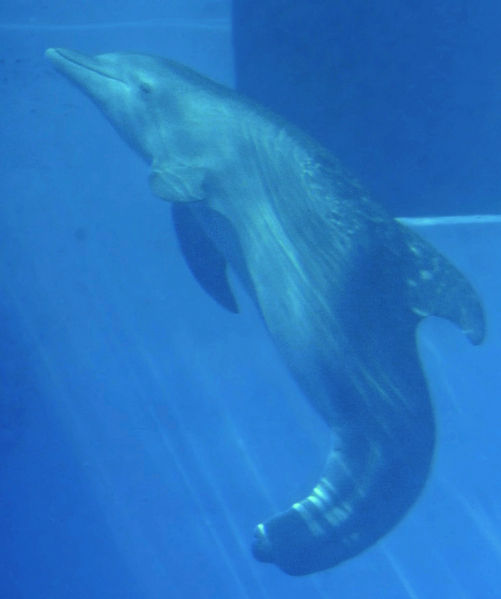
Here is Winter the dolphin from the Clearwater Marine Aquarium!
When the word “dolphin” is said or read, people picture a
gray-colored creature with a relatively long-snout. But there are many
different species of dolphins within the suborder Odontoceti and are
classified in the order cetacea (this group contains all whales and
dolphins). Most of the dolphins we'll be looking at today are members of the
family delphinidae, or the dolphin family. But before we start talking
about different species of dolphins, let's go over what dolphins are in
general. Despite the fact that they are aquatic animals, dolphins aren't fish;
they're mammals, just like dogs, cats, elephants and us. Dolphins come in a
great variety of shapes and sizes. As sea creatures, the Bible tells us that
God created dolphins on Day 5, with other sea and flying animals.
A mother bottlenose dolphin swims with her calf.
Dolphins vary in size, the smallest is Maui's dolphin at 4
feet long, while the largest is none other than the orca, or killer whale at 30
feet long and 11 tons! However, as the genus Tursiops, or the bottlenose
dolphin is the most famous and easily recognized, this is the one we'll focus
most of this article on. However, we will also touch on other species of
dolphins. The bottlenose dolphin can grow between 6-13 feet in length and weigh
330-1,430 lbs in weight; males are generally larger than females.
Maui's dolphins are one of the smallest dolphin species, measuring only four feet long!
Dolphins are specially designed for life underwater. Firstly,
they have long and streamlined bodies. Unlike all other mammals, dolphins are
mostly hairless – a few hairs are found on the tip of their snouts and are lost
either before birth or shortly after. The lack of hairs means that dolphins are
able to move through the water at fast speeds, as hair would produce drag.
Another important feature dolphins have is the blowhole on top of their heads.
Since they don't filter oxygen out of water with gills like fish do, they must
return to the surface to breath. They often hold their breath for 2-3 minutes
at a time. To propel them through the water, God designed these mammals with a
strong tail fluke. The tail fluke is so important to a dolphin, that dolphins
in the wild would die if the tail was lost. This is clearly evident in the case
of Winter, the now-famous bottlenose dolphin with a prosthetic tail at the
Clearwater Marine Aquarium.
Dolphins are able to use their tails to "walk" through the water.
Dolphins live in every ocean on the planet, from the warm,
clear waters of the equator, to the frigid waters of the Arctic and Antarctic;
whatever the habitat, dolphins have adapted to thrive. Did you know dolphins
aren't only found in the ocean? Different species of river dolphins can be
found in bodies of water in the Amazon, and in Asia. It's very easy to forget
that these mammals are fierce predators (it's just that humans aren't on the
dolphin's menu). The bottlenose dolphin and most of its kin like to eat small
fish (though some dolphins in some parts of the world include tuna and mackerel
in their diet), crustaceans and squid, which they catch with their needle-sharp
teeth.
The blue coloration represents where bottlenose dolphins like to live.
How do dolphins catch their prey? Well to answer that, we
have to learn a bit about their social behavior. Many species including the
bottlenose are social and live in groups called pods. The number of bottlenose
dolphins within a pod varies depending on what region the dolphins live in,
their gender and whether or not females are in the mood for mating. Adult males
are normally found alone or in groups of two or three. Females and young
individuals are much more social, living in groups of up to 15. But, as I said
before, dolphins are very social creatures and groups of dolphins will
often fuse together to create a massive pod numbering 100 to over 1,000
animals!
Dolphins, like these spinner dolphins, often form large groups called pods, sometimes numbering in their hundreds and thousands!
Now we can tackle the question of how dolphins catch their
food. God gave dolphins and several other animals an amazing ability: they can
use echolocation to navigate. Here's how echolocation works: the dolphin emits
up to 1,000 high-pitched clicking sounds per second. The sounds zoom through
the water until they bump an object and travel back to the dolphin's head. The
dolphin then receives the bouncing sounds through a special organ in the
forehead called the melon. Now the dolphin knows everything about its
surroundings. In fact, dolphins are so good at using echolocation that they can
be blindfolded and still find their way around as if they could see! This
method is much like sonar used on submarines. Isn't the Creator of the dolphin
amazing?
This is how echolocation works: the dolphin sends out a high-pitched sound; when the sound bumps into an object in the water, it returns to the dolphin.
Ready to go on the assault, dolphins have a number of ways of
catching the fish and other prey they like to eat, but they like working as a
cooperative team. If they encounter a shoal of fish, they will drive the fish
into a large ball shape and they all take turns diving into the fish-ball to
gobble down fish. Some dolphins in Georgia and South Carolina engage in a very
unique way of catching fish called “strand feeding”. What they do is herd the
fish toward the shore until they are practically on the sand itself and the
dolphins breach themselves to catch the squirming fish. What makes this
technique interesting is that only dolphins in Georgia and South Carolina have
been known to do this, meaning this behavior is not instinct. It is in fact a
learned behavior and the dolphins have passed down from generation to
generation.
Dolphins use a variety of techniques to catch fish; above you can see one example.
Speaking of which, dolphins are extremely intelligent animals.
They're some of the most intelligent organisms on the planet. Not only are they
capable memory, acoustic and behavioral mimicry, monitoring self-behavior,
mirror self-recognition and numerical values, but they also are able to
interact cooperatively with other species, including humans. Some dolphins have
learned to assist Mauritanian fishermen to catch fish, and both parties reap
the rewards.
To sleep, dolphins shut off half of their brain and close one of their eyes; meanwhile the other half of the brain and other eye are still functioning, alert and active.
Dolphins are smart and social creatures. They not only are
fierce hunters, but they can also prove more than a match for many predators.
The only predators that pose a threat to dolphins are sharks, such as the
dusky, bull, tiger and great white shark. Dolphins not only are agile enough to
dodge many shark attacks, but they also can fight back with great ferocity by
charging at the predatory fish; a group of dolphins will also team up to mob
the predator, forcing it to retreat or risk serious injury (dolphins often
target the vulnerable gills of sharks when driving them off). Some killer
whales (which are dolphins themselves) sometimes also hunt smaller dolphins,
but others swim with smaller dolphins peacefully.
Just like humans, dolphins love to surf!
Now that we've learned a lot about dolphins, let's look at a
few species:
Bottlenose Dolphin
Bottlenose dolphins are some of the most intelligent animals on the planet.
Bottlenose dolphins are the most easily recognized and common
species of dolphins. They can often be found in large pods, as they're sociable
creatures. When it comes time for a pregnant dolphin is ready to give birth
after a 12-month gestation period, the teamwork and sense of community are
clearly seen in this genus. The mother dolphin is sometimes assisted by another
dolphin when the baby dolphin (called a calf) is born. At birth, calves aren't
very good swimmers, so several members of the dolphin pod will assist the
mother dolphin get her baby to the surface to get its first breath. A
bottlenose dolphin calf is only 20-66 lbs at birth. Like all mammals, dolphins
feed their young with milk. The calf will continue to rely on its mother's milk
for 18 months to 8 years and will remain with its mother for several years
after it is weaned. Bottlenose dolphins can live up to 40 years or so in the
wild.
Atlantic Spotted Dolphin
Atlantic spotted dolphins resemble bottlenose dolphins at birth; they develop spots as they mature.
As their name suggests, Atlantic spotted dolphins (Stenella
frontalis) are found throughout the Atlantic ocean and are covered in
beautiful white spots. These animals typically grow seven feet long and weigh
up to 310 pounds. Strangely enough, spotted dolphins don't have spots or
dark-colored skin at birth, but as they grow and mature, the skin darkens and
spots are more distinctive. These incredibly fast swimmers often ride the waves
caused by the bows of ships.
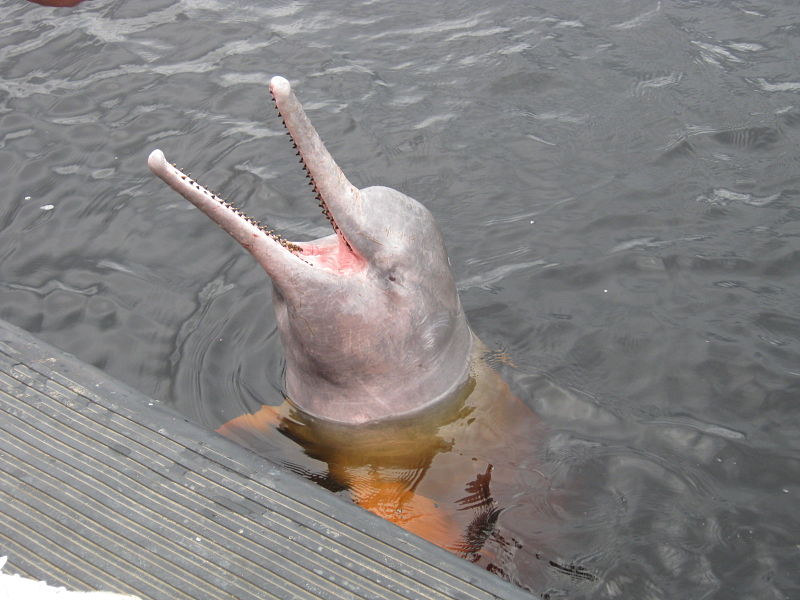
Amazon River Dolphin
Amazon river dolphins are also called Botos.
Before you saw the picture above, you would probably think
I'm telling tales if I spoke of a pink dolphin that lives in Amazon rivers.
Well, the Amazon river dolphin is no joke! These dolphins are quite unlike any
found in the ocean – they have long snouts and large foreheads. Their diet
consists of crabs, catfish, crustaceans, shrimp, small turtles and other river
fish. For the Amazon river dolphin, echolocation is extremely important because
the rivers of the Amazon are often murkier than the ocean and are therefore
much harder to see through (and in the flooding season, echolocation helps the
dolphins navigate through the tree trunks). Some river dolphin species in Asia
have lost their eyesight almost completely, relying on echolocation.
False Killer Whales
False killer whales were once thought to be extinct.
The creature you see in the picture above may look
like a cross between a killer whale and a dolphin, the false killer whale is a
member of the dolphin family and is not in the same genus as the true killer
whales (hence their name). Nonetheless, they're very similar in appearance and
thrive in many of the same waters. Believe it or not, the false killer whale,
described by paleontologist and biologist Richard Owen (the same scientist who
invented the word “dinosaur”), was thought to be an extinct species until
Johannes Reinhardt found a large pod of them in Kiel Bay in 1861. These awesome
cetaceans can grow up to 20 feet long and can weigh 4,900 lbs.
Orca
The Orca is the largest species of dolphin.
Despite their awesome size, the killer whale, or Orcinus
orca, or orca for short, is also a member of the dolphin family. At 30 feet
from snout to tail fluke and weighing up to 11 tons, they're the largest
species of dolphins. The name “killer whale” is a bit of a misnomer, as they
aren't “killers” as they were often depicted in movies – as oceanic savages
ready to eat anything they see – and they're closer related to other dolphins
than true whales. Orcas are quite different from most other members of their
kin, as they're the top natural predators of the ocean. There are three to five
different “races”, types or subspecies of orca. In fact, scientists are
wondering if they should be split into different species. The three main types
are resident, transient and offshore orcas. I mention this because each of the
three types has its own diet. Resident orcas, that live in waters of the
Northern Pacific, eat mostly fish, but will also go for squid. Transient orcas
prefer eating marine mammals (fortunately humans are not on the menu!).
Offshore orcas eat mostly fish, but also mammals and even sharks. (Keep in mind
that orcas are very opportunistic predators and aren't only limited to their
main food choices). Unlike most other dolphins, orcas are not only capable of
fending off sharks, but actually eating them! Even the great white shark is no
match for the mighty orca! Orcas live in large, complex societies and can live
up to 90 years of age.
Dolphins are quite amazing animals that God created, aren't
they? These beautiful creatures are not fast swimmers, intelligent, vocally and
socially sophisticated, but they're also perfectly designed for life beneath
the way, just like we'd expect if they were created by an intelligent,
all-powerful Designer.
Disclaimer: Many (or in some cases all) of
the photographs and images above are not mine. If you own one or more of them
and would like them to be removed, politely let me know via one or both of the
email addresses above.
Hi everyone! The year's moving right along, isn't it? I can't believe it's already the month of September and we'll be having Thanksgiving dinner relatively soon. Without further ado, let's move on to our "usuals".
Days till:
It is: 6 days till Patriot Day
It is: 7 days till Dolphin Tale 2's theatrical release
It is: 38 days till
In the
Spotlight:
Not much to share today, but I've found quite literally a treasure trove of clips and interviews for the upcoming Dolphin Tale 2 movie! I can't believe it's coming out next week! I am so excited (needless to say, right?). I don't know if I'll be able to see it in theaters, but you can be sure that if I can't, I'll be one of the first people to check it out on DVD!
Here are several movie clips, actor and actress interviews for Dolphin Tale 2:
See? I told you I found a lot of stuff! And those are just movie clips (which, I might add, are totally awesome!), below are some interviews for the movie:
Am I finished yet? Nope! I found out some more cool information: remember Cozi Zuehlsdorff, who portrayed Hazel Haskett in Dolphin Tale 1? Well, not only is she reappearing in DT2 (which, if you watched any of those clips above, you should know that), she also wrote and sung the song that's going to be at the end credits called Brave Souls! This is really exciting for me. Here is her beautiful song below:
Topic
of the Week
by Christian Ryan
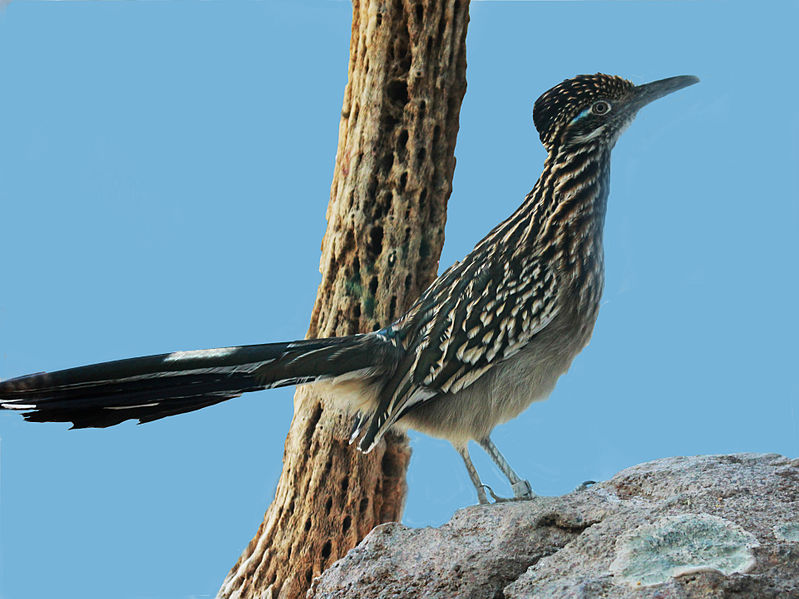
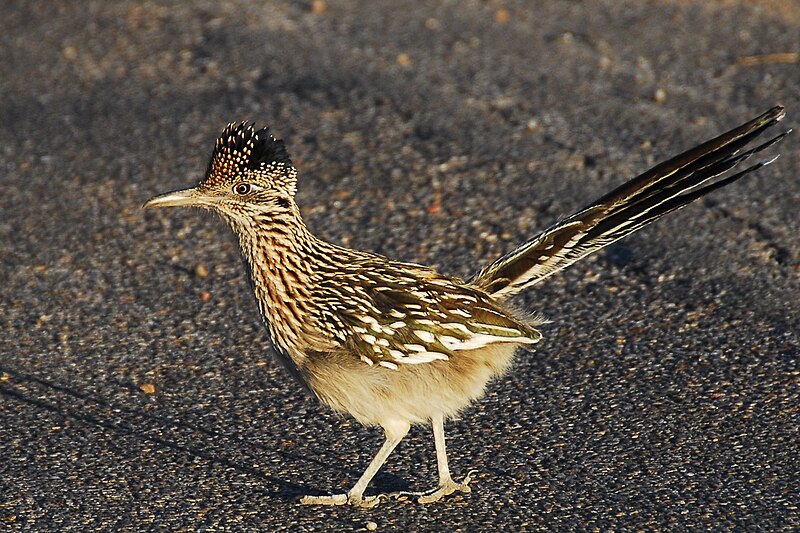
Roadrunners are small, fast ground birds.
After moving to
Utah, my family has seen a lot of really amazing things in nature,
from the red mountains to cool desert plants and animals. One bird
that particularly caught my interest is small ground bird common in
the deserts in the southwestern parts of the United States: the
roadrunner! While strange-looking, they're really interesting things
I learned about the roadrunner that really surprised me and things
that might come as a surprise to you. So let's learn more about the
roadrunner.
Just as portrayed in the show, roadrunners are fast-running ground birds.
Needless to say,
(if you're over the age of 40) you remember a roadrunner from the
television show by the same name, in which this bird frequently foils
Wile E. Coyote's plans to capture the bird and eat him. Despite being
ground birds, roadrunners are the largest members of the cuckoo bird
family, Cuculidae. Today, I plan to focus primarily on the
most well-known roadrunner species: the great roadrunner.
This is a picture I took of a roadrunner in front of an auto repair shop near where we live.
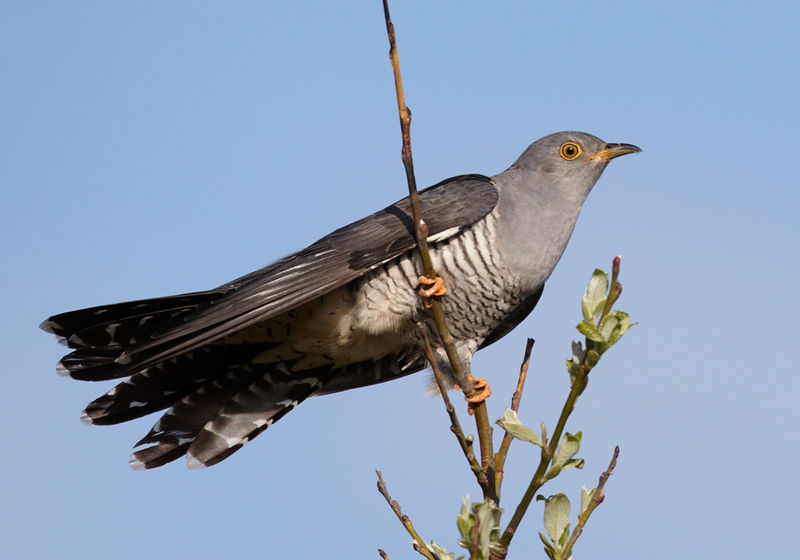
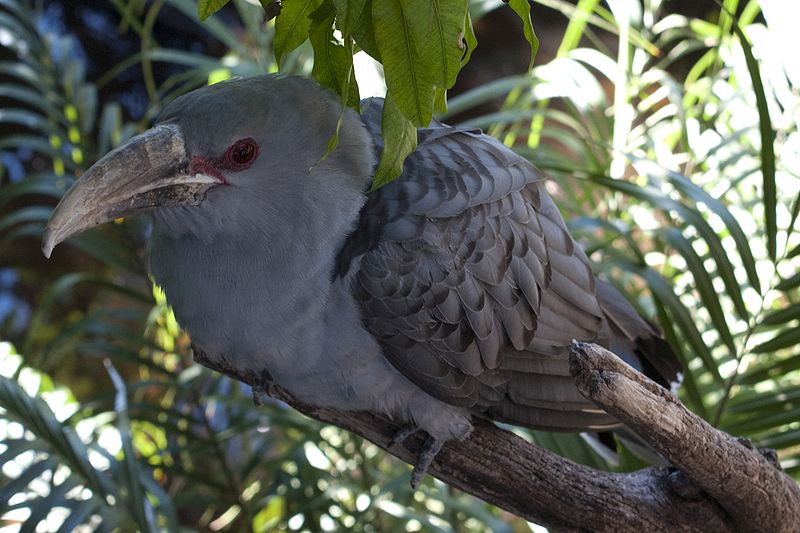
The Cuculidae
family consists of many types of birds, but it was named for the
common cuckoo that lives in Europe. Here are a few species of birds
in this family below:
Common cuckoo
Guira guira
Channel-billed Cuckoo
Blue coua
As you can see,
there is great variety within the cuckoo family. However, both
genetic evidence and the Bible tell us that God created different
kinds (likely referring to the “family” in modern classification
methods, rather than “species” or “genus”) of birds on Day 5
of the Creation week, 6,000 years ago. (At the moment though, we
don't know whether or not God's Day 5 creations included
ground-dwelling birds as well as flying ones or if ground-dwelling
birds were created on Day 6, with other land animals; some evidence
seems to suggest some flying birds changed into ground birds over
time through natural selection processes (not evolution). But this
topic is beyond the scope of this article.) Inside the original
created member of the cuckoo family, was all the genetic information
for other species within this kind of bird, including the roadrunner.
Sometime after the Genesis Flood, the cuckoo family diversified into
various species “according to its own kind” (Genesis 1:21); one
of these species settled in the southwestern United States and became
the greater roadrunner.
Roadrunners live in dry, arid habitats.
This bird grows
only 9-11 inches in height and up to two feet long and weighs 7.8-19
oz, so it isn't very big. I was able to see a roadrunner several
times when it passed in front of where my Dad works. It might have
been the same one every time. Other characteristics of the roadrunner
include a bushy crest of feathers on top of its head, a thick
darkly-colored beak, a long tail and four toes on each foot, two
pointing forwards and two pointing backwards. Take a moment to
observe the beautiful coloration of the roadrunner: it's mostly
colored in brown with black streaks and the occasional pink spots.
The underside is colored white. This perfectly enables this bird to
blend into its habitat.
As seen in the
Roadrunner cartoons, roadrunners actually do live in deserts.
They mainly can be found in the southwestern deserts, open country
and scrub lands of the United States, but they also live in northern
Mexico and have even been spotted as far east as Arkansas, Kansas,
Louisiana and Missouri.
Roadrunners are fierce predators, eating anything from insects, as seen above, to snakes and everything in between!
The goofy appearance of the greater
roadrunner is rather deceptive, God created these animals as fast and
efficient predators (after the Fall of Man occurred, of course). They
have wings and can fly, but they prefer to run after prey, using
their long tails for balance and maneuverability. These birds
regularly eat insects, like wasps, and other arthropods – like
centipedes, spiders, scorpion, and millipedes – small rodents,
eggs, carrion, reptiles and they'll also eat fruit. Roadrunners are
able to kill larger prey by making devastating blows to the base of
the small prey's neck or by beating its prey against a rock. They
will sometimes leap into the air to catch smaller birds and flying
insects and pairs of roadrunners have also been spotted teaming up to
take on a relatively large snake, including the infamous rattlesnake!
Roadrunners are beautifully designed for desert life.
The fact that roadrunner's are
predators, doesn't mean that they don't sometimes become prey for
other creatures. Common predators of roadrunners are animals like
hawks, skunks, raccoons and, yes you guessed it, the coyote. This is
a major reason why roadrunners have speed on their side; able to run
15-26 mph, they're going to give both prey and predator a run for
their money. However, unlike the cartoon, real coyotes can run faster
than a roadrunner, so the bird must rely on agility rather than pure
speed in order to escape.
Roadrunners can run 15-20 mph to escape predators and chase prey.
Another interesting fact about
roadrunners is that they appear to mate for life. During courtship, a
roadrunner will often give its mate a present, such as a twig or a
piece of grass. When it's time to reproduce, the birds make a nest of
twigs and lay 3-6 white or pale-yellow-colored eggs. The male and
female both help incubate, care for, and protect the young before and
after hatching. After about 18-21 days after leaving the hatching,
roadrunner chicks leave their nests and join their parents in the
open, where they will continue to be fed for an additional 30-40
days.
Roadrunners are a common source of food for coyotes.
So there you have it, the skinny on one
of the most iconic and interesting of American birds. Roadrunners may
or may not live near you, but there are loads of other species that
do. What do they eat? Where do they live? Do they fly or mainly walk?
Go outside into God's creation and see what amazing flying creations
you can find!
Roadrunners are just one of the amazingly designed birds God has created!
Disclaimer:
Many (or in some cases all) of the photographs and images above
are not mine. If you own one or more of them and would like them to
be removed, politely let me know via one or both of the email
addresses above.


_-_Mauricio_Ant%C3%B3n.jpg/800px-Woolly_mammoth_(Mammuthus_primigenius)_-_Mauricio_Ant%C3%B3n.jpg)










.jpg)

_(8783448529).jpg/800px-Blue_Horizons_(Dolphin_Stadium)_(8783448529).jpg)




_NOAA.jpg/800px-Atlantic_spotted_dolphin_(Stenella_frontalis)_NOAA.jpg)

.jpg/800px-Orcas_%26_humpbacks_(3730256151).jpg)



_-_Weltvogelpark_Walsrode_2013-01.jpg/800px-Coua_caerulea_(Blauer_Seidenkuckuck_-_Blue_Coua)_-_Weltvogelpark_Walsrode_2013-01.jpg)
_-_12938113005.jpg/800px-Greater_roadrunner_(Geococcyx_californianus)_-_12938113005.jpg)
_-_12937890555.jpg/800px-Greater_roadrunner_(Geococcyx_californianus)_-_12937890555.jpg)
_(3399096675).jpg/800px-Greater_Roadrunner_(Geococcyx_californianus)_(3399096675).jpg)