Showing posts with label evolution. Show all posts

Monday, November 9, 2015

Rerun Article: Did Dinosaurs REALLY Evolve Into Birds?

I hope everyone had a terrific Harvest Day! As you might recall, last year I took part in the Nanowrimo (National Novel Writing Month) challenge, which requires me to write a 50,000-word novel during the month of November. I am doing this challenge again this year, so I will be posting quite a few rerun articles this month. Don't worry though, I'll pick articles from a little ways back.

Anyway, Thanksgiving will soon be upon us? Do you have any Thanksgiving traditions? If so, leave them in a comment below.

Days till:
It is: 16 days till The Good Dinosaur's theatrical release
It is: 17 days till Thanksgiving
It is: 45 days till Christmas

In the Spotlight:
Again, nothing of note to share this week.

Topic of the Week by Christian Ryan
Did dinosaurs really evolve into birds? What does the fossil record actually reveal?
Every Thanksgiving, people all over the United States cook and serve the American turkey. Despite not  being part of the first Thanksgiving, the turkey is a symbol for this holiday. But for many Americans, they aren't merely eating a bird – they're actually eating a dinosaur! Evolutionists believe that all birds, including the turkey, descended from small, feathered theropod dinosaurs; to be more accurate, they actually believe that birds are dinosaurs. Such a claim, if true, would be a major problem for creationists. How should a creationist respond to such this idea? What's the truth behind this belief?

Is this delicious Thanksgiving entree the descendant of dinosaurs?
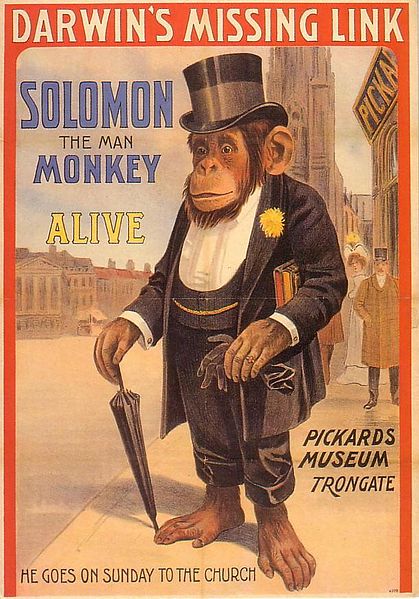
The idea that reptiles evolved into birds isn't new. Not long after renowned naturalist Charles Darwin published his book in 1859 called On the Origin of Species by Means of Natural Selection, or the Preservation of Favored Races in the Struggle for Life . . . it's easy to see why most people just call it The Origin of  Species. In 1860, a feather was discovered fossilized in Germany and the species of which the feather belonged to was called Archaeopteryx. In 1863, Sir Richard Owen (the inventor of the name “dinosaur” and a creationist) described an entire skeleton of the creature; the fossils revealed a relatively small creature, with feathered and clawed wings, teeth and a long bony tail. In 1869, biologist Thomas Henry Huxley, often considered “Darwin's Bulldog” declared the animal as the missing link between reptiles – specifically dinosaurs – and birds. Ever since, most evolutionary scientists cling to the idea that theropod dinosaurs evolved into birds.

The similarities between dinosaurs like Compsognathus and birds led Huxley to believe that dinosaurs evolved into birds.
Before we go any farther, we must understand both perspectives of the origin of birds: the creation perspective and the evolutionary perspective. Let's look at them both now. Most evolutionists believe that sometime between the early to late Jurassic Period, about 201-145 million years ago, the scales of small theropod dinosaurs began evolving into fur-like proto-feathers for warmth. After millions of years of evolution, these proto-feathers evolved to be firmer and longer; dinosaurs began using their longer feathers for display purposes, perhaps to attract mates. Evolutionists are unsure as to how the power of flight came about. Some evolutionists believe these feathered dinosaurs were tree-climbers and began using their feathered limbs to glide through the trees; others believe they developed the power of flight from the ground up, using their proto-wings to increase their leaps into the air, perhaps after prey. Either way, these dinosaurs eventually were able to get airborne and were now technically birds.
An early conception of "proto-birds" from 1916.
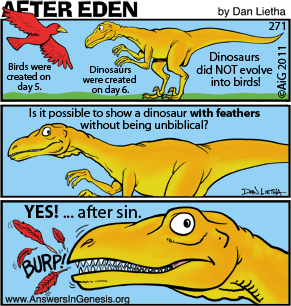
What does the Bible say about the evolution of birds? Well, it says God created all the flying creatures on the Fifth day of the Creation week, 6,000 years ago, the day before He created dinosaurs.
“And God created...every winged fowl after his kind: and God saw that it was good...And the evening and the morning were the fifth day.” Genesis 1:21-23.
This is a major contradiction to the evolution story, which states that dinosaurs came about before birds. Meanwhile the Bible states that land animals – dinosaurs included – came after birds! And instead of evolving through the processes of natural selection and mutation like evolution teaches, birds appeared on earth fully-formed and ready for action.

Evolutionists commonly point to Archaeopteryx as being a transitional form between dinosaurs and birds.
Many evolutionists (specifically atheists) believe that there is too much evidence for evolution for creation to be true. I find it rather interesting how many evolutionists refuse to even consider creation an option; in fact, many will go as far as to say that creationists don't know science. I was browsing the internet and came across an article entitled Feathered Dinosaurs Drive Creationists Crazy by Brian Switek. “Oh, really?” I thought upon seeing this article; I was rather unimpressed by this evolutionist's attempt to denounce creationists. Curious, I read the article, expecting to find much criticism aimed at creationists. Much of the article was devoted to how our view of dinosaurs has changed over the years, but perhaps a quarter into the material, he talked about creationists and the “overwhelming evidence” that dinosaurs evolved into birds, in addition to his other criticisms about dinosaurs living with humans and dinosaurs living 6,000 years ago etc. He also spent a great deal of time talking about Answers in Genesis CEO Ken Ham and the Creation Museum. Here's an excerpt below:
“...dinosaurs with feathers are not welcome at Ham's amusement park [speaking of the Creation Museum]. Even though paleontologists have uncovered numerous dinosaurs with everything from bristles and fuzz to full-flight feathers—which document the evolution of plumage from fluff to aerodynamic structures that allowed dinosaurs to take to the air—creationists deny the clear fossil record.”
He had much more to say of course, some of which I'll get to in a minute. I must say that while reading the article, I was troubled how many misconceptions Switek has about creationism. What really ticks me off is when evolutionists try to make a case for themselves without actually doing the research. I find Switek's ignorance of what we creationists believe appalling. If only he continued to research and find answers to why creationists don't believe dinosaurs evolved into birds, then perhaps he would not have been so bold in his statements. Like any other fossils in the fossil record, even though the observable evidence – dinosaur and bird fossils – can point to or suggest a certain conclusion, they do not speak for themselves and are left to the interpretation of the individual based upon observable evidence. Evolutionists like to claim that creationists start from a presupposition and use that to base their opinions on, while they base their opinions on scientific facts. Now, it is true that we have presumptions, but so do evolutionists! They fail to realize is that they do the exact same thing. In this article, I plan to talk about the evidence for and against the dino-to-bird hypothesis and see what the evidence best suggests.


So what is the “evidence” for this belief in dinosaurs evolving into birds? Switek claims there is a “mountain of evidence that birds are living dinosaurs” and that we creationists deny the clear fossil record. Let's at the so-called evidence now and see whether we're the ones rejecting the clear fossil record. Before we go on though, let me explain that evolutionists do not believe all dinosaurs evolved into birds; they believe the ancestors of birds are maniraptorans, small theropod (meat-eating) dinosaurs. Some of these dinosaurs include Deinonychus, Troodon and the famous Velociraptor.

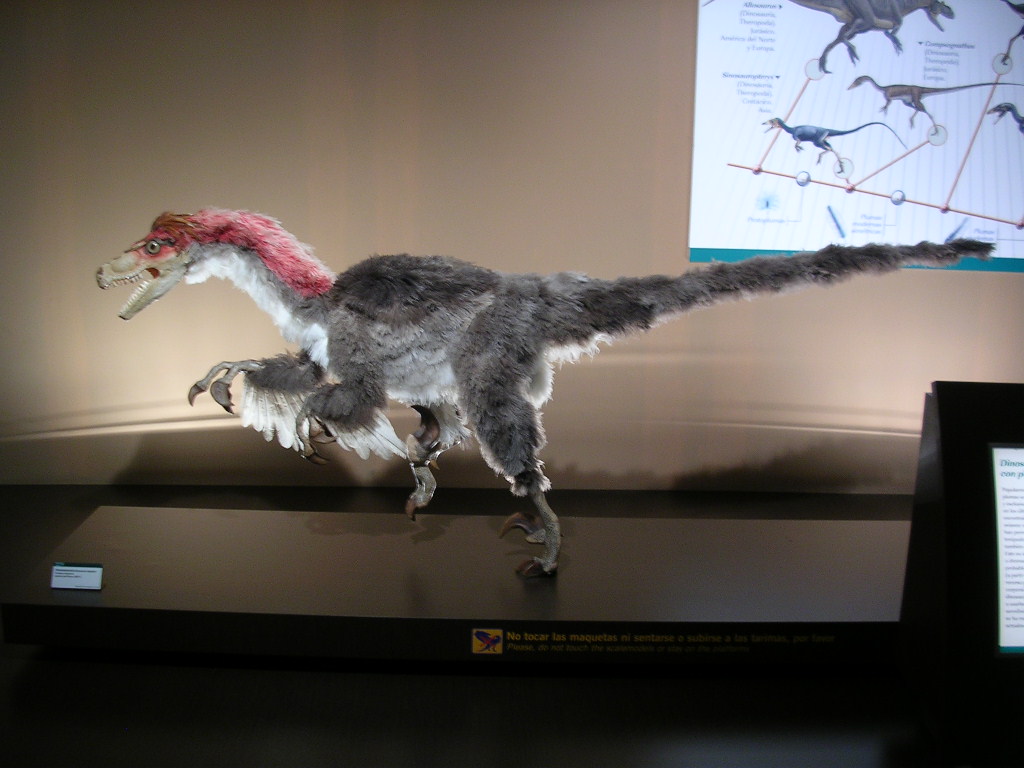
Dromaeosaurs, such as this Velociraptor, are commonly seen as relatives of modern birds.

Bird-hipped and Lizard-hipped Dinosaurs
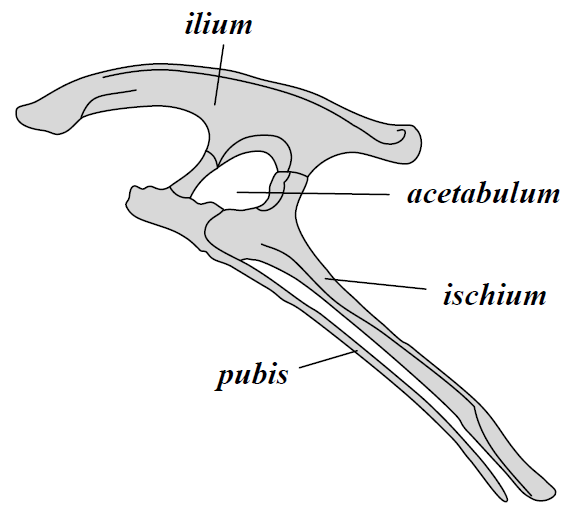
Evolutionists are quick to mention that maniraptorans are very similar to modern birds anatomically. This is true. In fact there are over 100 skeletal features that dinosaurs share with birds; some dinosaurs such as Velociraptor even had a wishbone. But what is often not mentioned are the often quite significant differences between the two. Within the order Dinosauria there are two subcategories in which dinosaurs are divided, saurischians (lizard-hipped dinosaurs) and ornithiscians (bird-hipped dinosaurs). The dinosaurs in these two categories are divided based upon their hip shape. The difference between the two hip shapes is the pubis bone; the pubis bone in birds and bird-hipped dinosaurs points toward the rear instead of to the front as in lizard-hipped dinosaurs, modern reptiles and mammals.

Saurischian or lizard-like hip structure.

Ornithischian or bird-like hip structure.

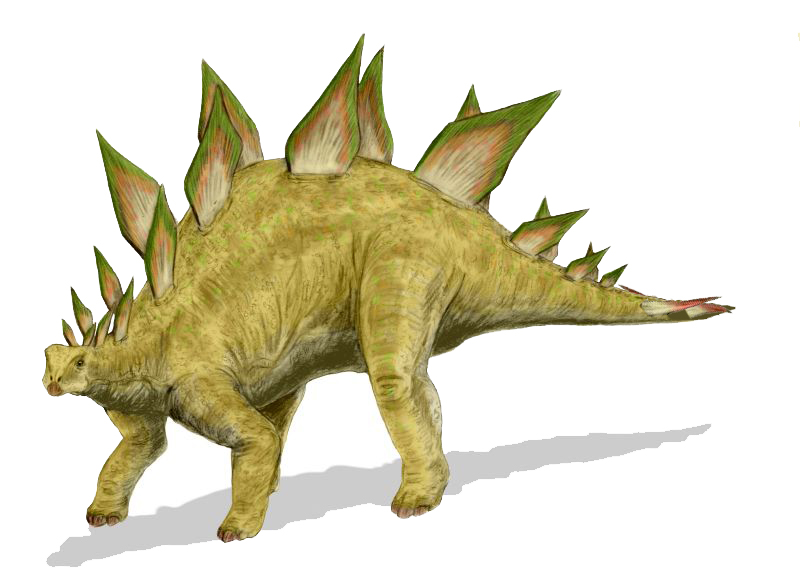
Problem with dino-to-bird evolution? All the dinosaurs that evolutionists believe are related to birds (e.g. Velociraptor, Troodon, Sinornithosaurus) are lizard-hipped! Dinosaurs that are bird-hipped include Stegosaurus, Triceratops and Parasaurolophus. These dinosaurs bear very few bird-like features and are not believed to have evolved into birds. Yet the few times this is ever mentioned in secular literature, documentaries and etc. this problem is never presented any emphasis. And why would they? 

The lumbering 4-ton Stegosaurus is a bird-hipped dinosaur, meaning it must have evolved into birds! Right? Of course not!

Three-Fingered Hands

The hand bones of Dienonychus (left) and Archaeopteryx (right) are quite similar.
Evolutionists absolutely love to talk about how both theropods and birds have three-fingered hand bones. Evidence of a dino-bird relationship? Hardly. As birds supposedly evolved from theropods, you'd expect that the digits represented in the hand bones would be the same in both dinosaurs and birds. However, dinosaurs have the 1st, 2nd, and 3rd digits (the first being the thumb); birds have the 2nd, 3rd, and 4th digits in their hand. What happened?

Avian vs. Reptilian Lungs
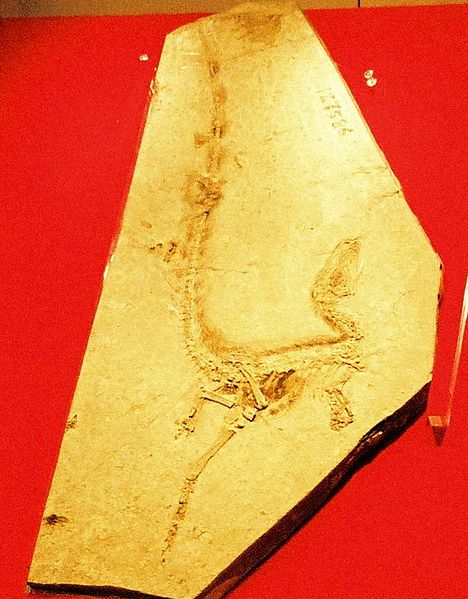
The dinosaur Sinosauropteryx was so well preserved, that the reptilian-like lungs have also been fossilized.
If theropods are the ancestors of birds, you should find avian-like lungs in theropods. Of course, as most dinosaur remains are fossil bones, we can't know too much about their lungs and respiratory system. However, paleontologists have discovered the fossilized remains of a Sinosauropteryx, a small bird-like theropod from China, related to Compsognathus. This Sinosauropteryx specimen retains the outline of the visceral cavity, and it is very well preserved. Much to the dismay of evolutionists, they reveal that the lung is very much like that of a crocodile.

In Switek's article, he mentions how the Creation Museum didn't display feathered dinosaurs, nor does Answers in Genesis portray dinosaurs with feathers in books and DVD's. And he's right. But what if there's actually a scientifically good reason for this? Of course, failing to do his research to see why creationists don't portray feathered dinosaurs, he just scoffs and claims that “they take pride in promoting out-of-date, monstrous dinosaurs that more easily fit their contention that these animals were created separately from all other forms of life.” I'm very sorry Switek, but maybe you are the one who's trying to go against the fossil evidence. Like just about every other evolutionist out there, he claims that creationists just believe in non-feathered dinosaurs because we believe they didn't evolve into birds and then points to so-called “feathered” dinosaurs; no further explanation is given. He would have only had to read a few articles on the Answers in Genesis website to find their true opinion, which I will get to in a minute.

Is there actually evidence to support the belief that dinosaurs, like this Troodon, had feathers?
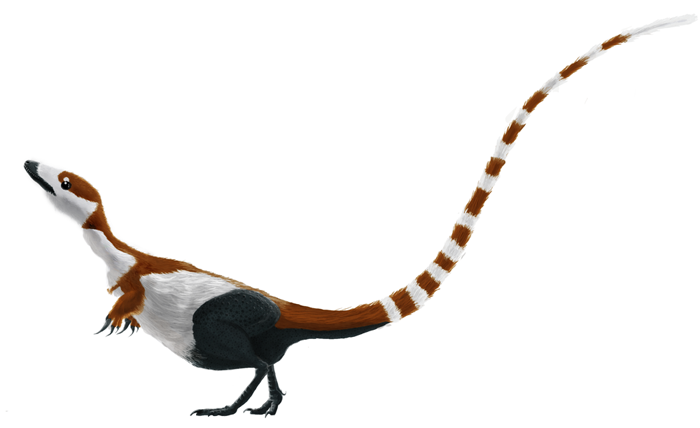
There are two types of “feathered dinosaurs” you'll hear about: dinosaurs with bird-like flight feathers and dinosaurs with proto-feathers. First let's look at the dinosaurs with “proto-feathers”. In 1996, evolutionists thought they found the amazing proof for their theory upon the discovery of Sinosauropteryx. This small carnivorous dinosaur is associated with the outline of what many believe to be fur-like proto-feathers. But upon looking at the “proto-feathers” closely, you can see that they really aren't that feather-like. They are much more similar to hair in appearence. In fact, it seems to some creationists that seems that these features are actually connective tissue fibers (collagen); this is found in the deeper dermal layers of the skin. These features have been found not only on other dinosaurs, but also ichthyosaurs, dolphin-like marine reptiles! Yet no one suggests these creatures were feathered. Another thing about the "fluffy-looking" structures  that creation scientists have noticed is that many of these structures appear almost fur-like. Perhaps some of these dinosaurs were covered in something similar to pcynofibers, fur-like structures found on pterosaurs that are very similar to mammalian hair.

Dinosaurs like Sinosauropteryx might have been covered in a type of "fur".
In this article, Switek mentions this fossil discovery:
“Put feathers on a Velociraptor—we know it had feathers thanks to quill knobs preserved along its arm bones—and you get something disturbingly birdlike, revealing the dinosaur's kinship to the ancestors of Archaeopteryx and other early birds.”
In 2007, scientists published the find of a fossil arm bone of a Velociraptor. Along the forearm are six bumps that they claimed were very similar to those found on the bones of some modern birds. In modern birds the bumps are the quill knobs where feathers were once supposedly rooted. Is this proof of a feathered dinosaur? Perhaps, but sources that talk about this find give no details as to why the quill knobs don't extend further along this bone or if there were other fossils were also examined or how complete the find was. Who's to say this is even the arm bone of a Velociraptor? There are many uncertainties with this fossil. Keep in mind that I'm not doubting the validity of the scientists who studied the fossil, but we should also remember that we should be cautious about such claims based on scant evidence and the claims made by scientists with evolutionary presuppositions.

No feathers seem to have been present on Velociraptor, but pcynofiber-like fuzz is still a possibility.
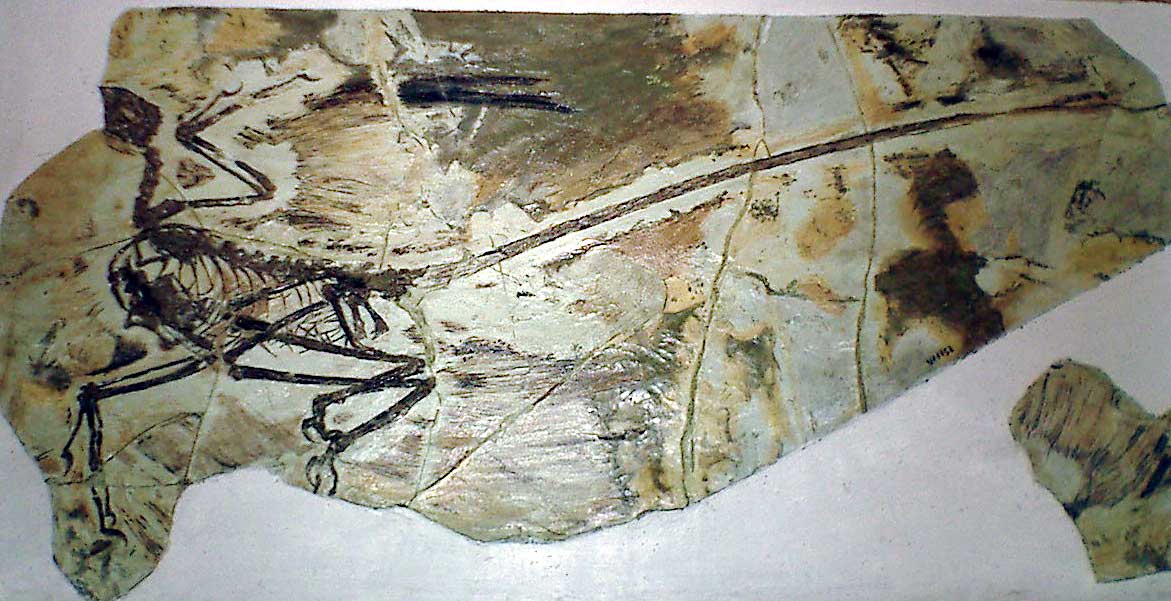
What about “dinosaurs” that actually have fully-functional actual feathers? Archaeopteryx and Microraptor are two such creatures. Both of these animals bear toothy snouts, clawed and feathery wings and bony tails. They also both have a pair of enlarged retractable toe claws like those of raptor dinosaurs, such as Deinonychus and Velociraptor. Surely this is proof that these animals are the missing links between dinosaurs and birds.

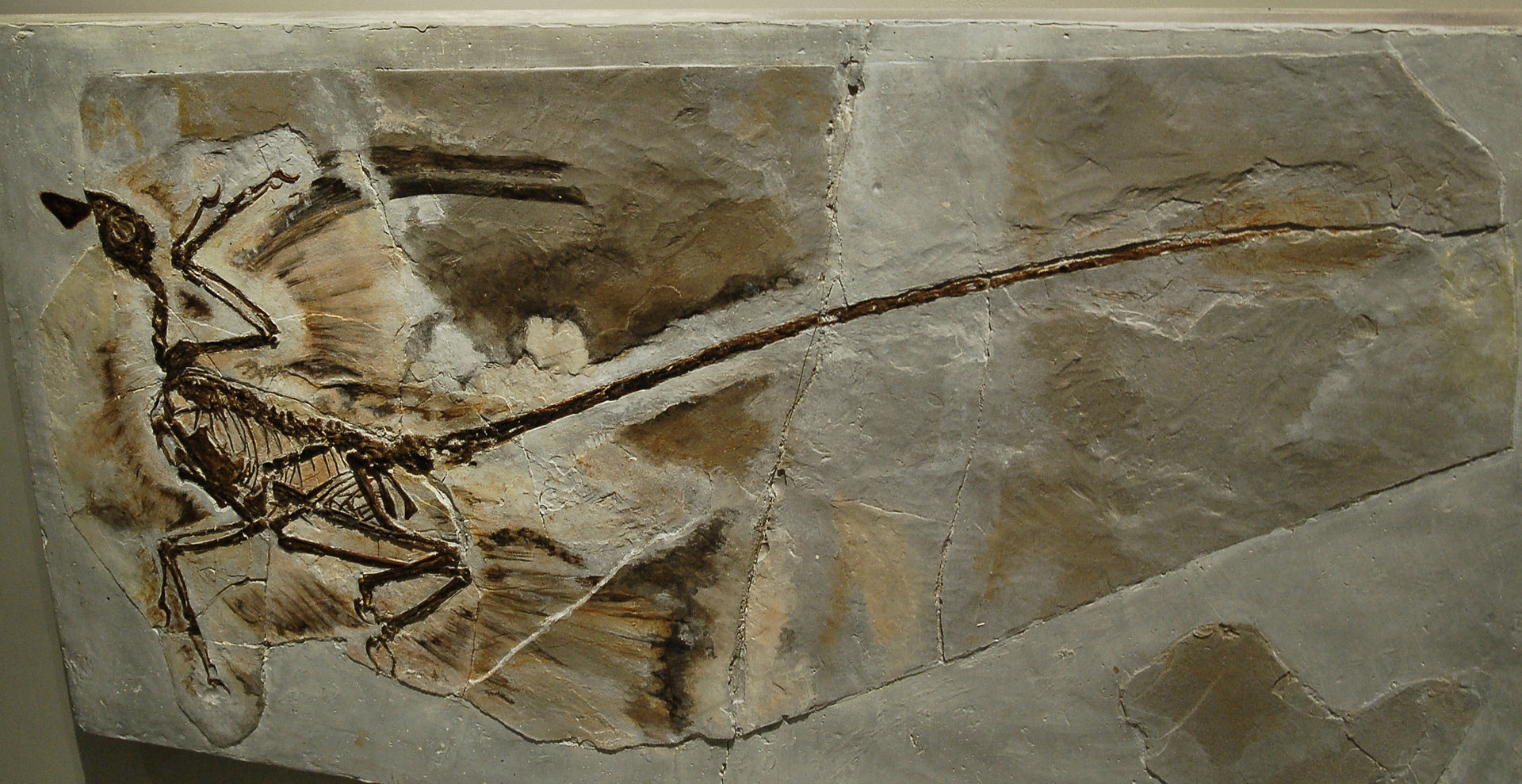
Microraptor is a very unique creature with four fully-functional feathered wings.
First of all the feathers on the bodies of Archaeopteryx and Microraptor are actual feathers and not collagen fibers or fur-like structures. They also have the same digits configuration of modern birds (like modern birds they bear the 2nd, 3rd and 4th digits). Undoubtedly, these animals are birds. The fact that they have reptilian features does not make them half reptile/half bird. In fact, there are several actual birds that have reptilian features: ostriches and baby hoatzins also have clawed wings, and no one questions that these animals are birds; the extinct bird Hesperornis possesses teeth in its beak; and the seriema of today even has an enlarged second toe claw, similar to the ones seen in raptors. If you don't need a missing link between dinosaurs and birds (which creationists don't) then there's no need to call Microraptor and Archaeopteryx anything other than 100% birds.

The seriema is a medium-sized bird living today with an enlarged toe claw, similar to the ones found on dromaeosaurs.
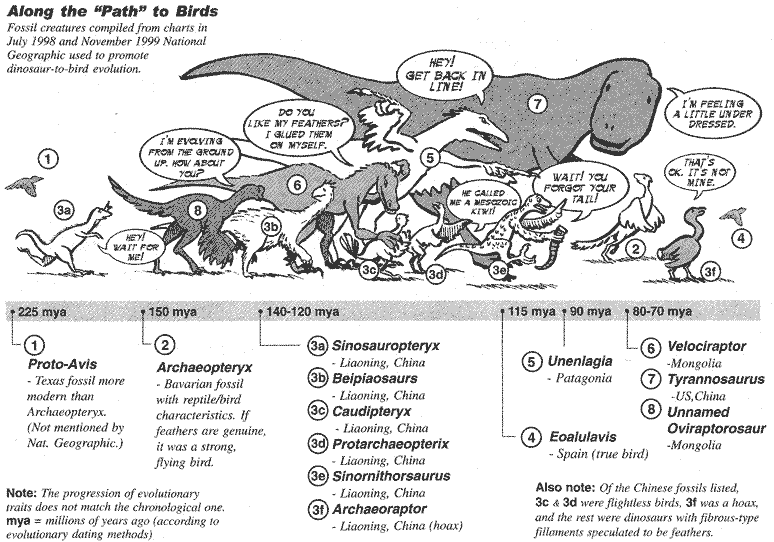
If you look in dinosaur books, you've likely seen diagrams similar to the one below:

This is a typical chart showing the evolution of dinosaurs to birds.
This picture suggests that the fossil record wonderfully displays the evolution from dinosaurs to birds; with more dinosaur-like creatures in lower geologic rock layers and more bird-like creatures in higher layers, slowly evolving more complex feathers. Isn't it strange that we creationists reject the plain evidence in the fossil record as Switek states we do?

Unfortunately, this isn't what the fossil record represents at all! Despite this being portrayed in just about every secular dinosaur book, the “clear fossil record” (as Switek puts it) tells a different story. Archaeopteryx, the famed transitional between dinosaurs and birds is believed to have existed 150-148 million years ago, during the Late Jurassic Period. The problem? Most bird-like dinosaurs that are commonly said to be closely related to birds, according to this worldview, lived before Archaeopteryx! Sinosauropteryx, a dinosaur with “proto-feathers” is claimed to have lived 124-122 million years ago! In fact, most dinosaurs with so-called “proto-feathers” are found above rock layers with more bird-like animals! The only dinosaur with "proto-feathers" that evolutionists have that didn't live after Archaeopteryx is Juravenator. But according to evolutionists, Juravenator lived at the same time as Archaeopteryx! In addition to this, we find birds very similar to the ones we see today living with "dino-birds". A Microraptor skeleton described in 2011 was discovered with tree-perching bird fossils (more bird-like than Microraptor) inside of its abdomen! This animal didn't only live with modern-like birds – it ate them! Even Velociraptor, a very bird-like dinosaur, is usually dated to live about 80 million years ago, long after birds has supposedly been flying through the skies for millions of years. These creatures were hardly ancestors to the birds. I for think the fossil record clearly demonstrates that dinosaurs evolved into birds, don't you? (That was sarcastic by the way).

Of course, I am not at all saying we should find all the transitional forms between dinosaurs and birds if this transition really did occur, but we should find a few. Evolution on this scale would take tens of millions of years and millions of generations between dinosaurs and birds. Where are these fossils? Surely some should have popped up if the "clear fossil record" suggests dinosaurs evolved into birds.

And to make matters even worse for evolutionists, extinct birds such as Anchiornis, Xiaotingia, Aurornis and potentially Protoavis are buried in sediment “older” than Archaeopteryx!

So, Switek, you believe the "clear fossil record" portrays dinosaurs evolving into birds? Hm...

Earlier, I mentioned how Switek claimed creationists don't like feathered dinosaurs. What if a feathered dinosaur with actual feathers were discovered? Would this prove that dinosaurs evolved into birds and that the Bible is untrue? Nope! In fact, nothing in the Bible goes against the idea that dinosaurs might have had feathers. Not only that, but I happen to like the look of feathered dinosaurs; I am not against the notion of feathered dinosaurs in the slightest, just the idea that they evolved into birds. Finding a feathered dinosaur would be no different than finding a mammal that lays eggs. which we actually have! The duck-billed platypus and porcupine-like echidna are monotreme mammals that lay eggs instead of giving birth to live young like all other mammals. Yet they aren't half mammals/half reptiles; they're mammals that lay eggs. We creationists aren't against the idea of feathered dinosaurs at all, it's just that so far, the evidence for feathered dinosaurs is missing in action.

Like Microraptor, the platypus bears characteristics of many different creatures, including the ability to lay eggs, a duck-like bill, a beaver-like tail and webbed feet, a mammal's fur, the ability to use a form of sonar and even a venomous spur. Yet it is not some evolutionary missing link, but a mosaic.
In order to prove that dinosaurs evolved into birds, one would need to find evidence of a transition between the two in the fossil record (like reptile scales evolving into feathers) and the fossil record would need to show dinosaurs and birds evolving in the right order. This is not what we find!

Why haven't evolutionists who love to talk badly about creationists bring up the points I made in this article? An even better question is why would they do such a thing? Never in Switek's article does he even mention these problems with the dino-bird theory (or solutions to them)! Like many other evolutionists out there, he decided to pick on the claim made by creationists rather than the evidence that backs up the claim in order to make creationists sound like unprofessional idiots. What he wrote in this article shows just how utterly and willingly ignorant he is of creationism and what we believe to be true (and more importantly why we believe it to be true).


As I hope to have made clear throughout this article, if one looks at the fossil record from an evolutionary perspective, we don't really learn about the origin of birds. It's really sad how little research Switek did on the truth about creationism, Answers in Genesis, dinosaurs, birds and the fossil record as a whole. I doubt hearing the truth would have actually change his mind, but at least he would have been more informed. Until he decides to learn what creationists actually have to say and only talking about evidence from his own side of the argument, he should avoid talking about creationism altogether. (Unlike him, I used information from both sides).

I do however hope that this article has enlightened you, my readers, and helped you understand that the fossil record doesn't support the belief that birds and dinosaurs didn't share the same lineage, but that they do share the same wonderful Creator God.


You can relax, dinosaur lovers! The turkey you'll have for Thanksgiving this year isn't the descendant of this Velociraptor!

References:
wikipedia.org/wiki/Origin_of_birds
answersingenesis.org/dinosaurs/feathers/did-dinosaurs-turn-into-birds
answersingenesis.org/dinosaurs/feathers/feathered-raptors-not-the-birds
wikipedia.org/wiki/Archaeopteryx
wikipedia.org/wiki/Microraptor
wikipedia.org/wiki/Sinosauropteryx
Feathered Dinosaurs Drive Creationists Crazy

Disclaimer: Many (or in some cases all) of the photographs and images above are not mine. If you own one or more of them and would like them to be removed, politely let me know via one or both of the email addresses above.

Disclaimer 2: I know I've been talking negatively a lot about Brian Switek article, but this isn't because I don't like the guy. I have read much of his other material and admire his writing style; even though I don't agree with everything he believes.

Friday, August 14, 2015

Ten UnBee-lievable Honey Bee Facts

Bees are (or at least should be) on everyone's mind right now, because National Honey Bee Awareness Day is tomorrow! It's the day (every third Saturday of August) we commemorate to nature's little pollinators and honey producers. You might not believe it, but there is a lot more to honey bees than their stinger, yellow bodies and black stripes. If you want to impress your friends with some interesting bee facts, look no further! But first, it's time for...

Days till:
It is: 1 day till National Honey Bee Awareness Day
It is: 24 days till Labor Day
It is: 40 days till Fall
It is: 103 days till the theatrical release of The Good Dinosaur

In the Spotlight:
Sorry, I don't have anything to report on this week...but I do have a short video clip to show, since National Honey Bee Awareness Day is coming up:


Topic of the Week by Christian Ryan
Honey bees are very fascinating insects.
Well, National Honey Bee Awareness Day is right around the corner, so naturally, everyone is unbeelievably excited about honey bees! And why not get excited about these busy little insects? After all, if it weren't for them, where would our honey come from? Beelieve it or not though, there are quite likely some things that you don't know about these little pollinators. So today, instead of beeing beehind on your knowledge of these bee-autiful insects, take a look at my list of ten amazing facts that you may or may not know about our bee-sy bee friends. (Sorry, couldn't help but through a few bee puns in there!)

The Honey Family (Snap, Snap)*
The honey bee, like other insects, has a body made up of three parts (head, thorax and abdomen) and three pairs of legs.
When the word “bee” is said, undoubtedly the honeybee is what comes to most people's minds. However, this extremely undermines the extent of the bee family. In fact, there are over 25,000 members of the family Apidae, or bee family, around the world! Out of those, 4,000 can be found in the United States. These numbers are likely to expand in the future though, because as with many insects, new species of bees are being discovered all the time.

Some species of bees include carpenter bees, orchid bees, cuckoo bees and the bumblebee, which is capable of carrying nearly half its own body weight in pollen back to its hive!

Bumblebees are incredibly strong for their size, as they are capable of carrying half its own body weight of pollen.
* In case you didn't get the reference, this was a nod to the Adam's Family theme song.

Social Workers
Honeybees live in huge colonies that can consist of over 80,000 individuals!
Honeybees are social insects, living in cooperative colonies that can consist of over 80,000 bees! But did you know that there are three types of bees in a hive: workers, drones and the queen?

As their title suggests, the workers carry out all the work in the hive. Worker bees are always female, and their job description includes building and (if need be) repairing their hive, defending the hive, raising the young, collecting food, cleaning the hive, making the honey and many other jobs necessary to keep the hive functional. No wonder they're so busy! In fact, worker bees are so busy, that during the time of year these insects are making and storing honey, they only tend to live five to seven weeks. Thankfully, the queen ensures that these frequent deaths don't deplete the population of the colony.

Honeybees communicate via the "waggle dance", as seen above. The angle and distance of a honeybee's movements tells the other bees where sources of food or a good place for a new hive might be.
Did you know that bees are really talkative too? Instead of using verbal communication like most animals we're familiar with, bees communicate using a series of movements called the “waggle dance”. If a worker bee has located a potential place to make a new hive or a good source of food, she will return to the hive and begin to move in a figure eight while shaking her abdomen. The length and direction of each dance motion tells the other beers the distance and direction of the flowers.

The worker bee in the center of the picture is performing the waggle dance.
But instead of just talking about the waggle dance, why not watch this video on the topic?


I've Got a Stinger and I Know How to Use It! (Or) Honey, I Stung the Kids
"Honey, I stung the kids," this bee might say when she returns to the hive. Worker bees can only sting once, because they die soon after.
Honeybees are little insects that would make a tasty snack for many predators if they didn't possess a stinger at the base of their abdomen. The stinger is attached to a venom gland in the insect's abdomen; it's this venom that gives a beesting its punch. Once a bee stings something (be it animal or human), a fishhook-shaped barb at the end of the stinger prevents it from being pulled out easily. Therefore, the stinger remains in the victim even after the bee flies away, continuing to pump additional venom into the wound. Thankfully, unless a person is allergic to bees, a beesting is not dangerous.

The honeybee might beg to differ, however, as stinging a victim is dangerous for the bee. When a bee stings something, the entire stinger and venom  gland are torn from the bees abdomen. This causes it to die soon after. This isn't the case with all bees though; bumblebees lack a barb on the end of their stingers, allowing them to continue stinging something several times if need be. (The same is true of queen honey bees, but since they rarely leave the hive, the chances of getting stung by one are extremely slim.)

Honeybees and the Flowers
Honeybees are one of our most important pollinators.
Bees share a special relationship with flowering plants. When a worker bee goes out to collect what it needs to make food for the rest of the hive, she finds a flower and crawls into it to access the nectar inside. In the process, pollen attaches to the bee. Every time this bee lands on another flower, she drops and picks up pollen, meaning pollen is carried from flower to flower. It is this pollen that the bee drops off that allows the flower to produce fruit with seeds in it, meaning it can reproduce after its own kind. Isn't this process ingenious? In this fashion, bees and flowers share a symbiotic relationship – the flower is allowed to reproduce and the bee gets nectar she needs to make the food she eats...er, drinks, actually. The flower can't live without the bee and vise versa.

Nature's Honey Manufacturers
Would you believe me if I told you that honey is technically honeybee vomit?
A worker honeybee extracts nectar using her long, tube-like tongue called a proboscis, storing it in a portion of her gut designated for temporary nectar storage, or “honey stomach”, as it's sometimes called. Once full and weighing twice her usual body weight,  she flies back to the hive and honey manufacturing begins. Once arriving at the hive, another worker bee will stick her own proboscis down the nectar-filled bee's throat and she sucks out the nectar. This nectar is then processed in her mouth and honey stomach for about half an hour to give the nectar time to be broken down by special enzymes that make the nectar easier for the bees to digest once it's made into honey. After the 30 minutes or so is up, the honeybee regurgitates the nectar into a honeycomb. So essentially, honey is honeybee vomit...still sound yummy?

The Queen Bee
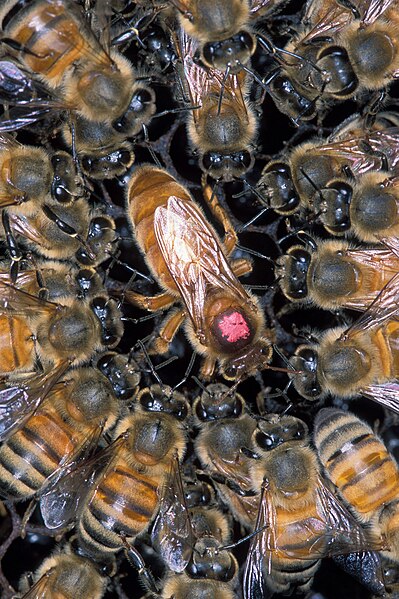
Though she's unlikely to win any spelling bees, the queen bee is one of the most important bees in the hive. Here, she is marked with a red dot by her researchers so they can easily locate her amid possibly 80,000 other bees.
Earlier, I mentioned that there are three types of bees. One of which is the Queen Bee. The queen bee is the largest individual in the colony and it's her job to ensure that there's always a steady addition of new bees born. She also releases chemicals into the hive that stimulate the behaviors of other bees in the hive. Needless to say, the queen is extremely important, and without her, the hive goes haywire fast! So when a queen bee dies, the workers must quickly make a new queen form. How do they create a new queen? The answer lies in a special food called “royal jelly”.

These two queen bees are given royal jelly to help them grow into the roles as queens.
Royal jelly is a special diet that worker females feed to a select group of female baby worker bees. The royal jelly triggers the development of several “queen bee exclusive” features in their body, including reproductive organs. Then when the first queen bee reaches maturity, she will kill off the other developing queens to ensure she has no competition. Now, she top bee in the hive. As their life isn't nearly as busy as that of a worker bee, a queen bee can live between three to five years in the wild.

Did I mention royal jelly is sold for human consumption too?

What About the Boys?
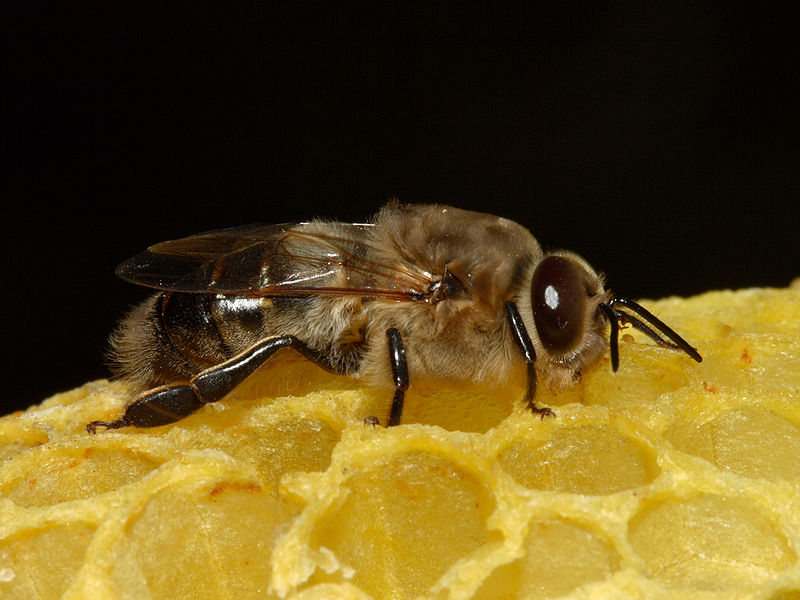
Honeybee drones, or males, do not sting. Their only purpose in life is to mate with the queen bee.
Most often talked about concerning bees are the workers and queen bees, but not all bees are female. There are several hundred drone, or male, bees in a hive. They don't have stingers and have nothing to do with the upkeep of the hive, or collecting food. Their only job in life is to mate with the queen. However, during the leaner winter months, the drones are banished from the hive in order to ensure there's enough food for the colony to last the entire winter.

What Come Winter?
In winter, honeybees, like these giant honeybees pictured above, gather together to conserve warmth.
Honeybees (the workers anyway) work throughout the spring and summer months to ensure there's enough food to last the entire winter, where flowers no longer produce nectar. In order to retain a high body temperature during the colder parts of the year, the colony bunches together into a tight ball. It is also during this time of year that bee larvae are fed and developed for their life of constant work, so that when the spring dawns, the next generation of bees is ready to fulfill their purpose in life.

Once a Bee, Always a Bee
We know exactly what the bees dinosaurs lived with looked like because they are perfectly preserved in fossilized amber. Believe it or not, these bees are almost identical to modern bees.
When the word “fossil” comes to mind, bees are not usually brought up. However, we've found numerous fossils of bees in the fossil record; the lowest rock layer we've found bees in so far has been the lower Cretaceous rock layers, and using unreliable and unverifiable dating methods, age these rocks to be approximately 100 million years old. Unlike dinosaurs, we're able to even learn what these ancient bees would have looked like because we don't only find them as fossils, but also preserved in fossilized tree sap, called amber! Amber is almost like a time capsule, able to preserve the insect so that it remains exactly how it looked in life!

We can learn a lot from bees found preserved in amber. For one thing, we can easily recognize these insects as bees. They've changed very little in the past (alleged) 100 million years. But while evolutionist scientists would argue that these fossil bees are like snapshots of their evolution, this can hardly be the case considering the bees are almost identical to modern bees. The fact that the bees are almost identical better fits a scientific model that evolution hadn't occurred at all in bees. We see no evidence in the fossil record to suggest that bees evolved from any other kind of insect. Instead, just like the Bible says in Genesis chapter one, the fossil record reveals that bees have been reproducing after their own kind. They were created during the creation week around 6,000 years ago and since then have diversified into tens of thousands of different species. But never once have bees developed into anything other than a bee.

Beela Vanilla
This little guy, er...girl, actually, is a Melipona bee, the kind of bee responsible for the pollination of vanilla plants.
So we know we get honey (and of course, beeswax) from bees, but there's something else that we get from bees that most of us couldn't imagine living without: vanilla! That's right! Vanilla is also produced by bees! The bees responsible for making vanilla are called Melipona bees. These bees are native to South America and, unlike their honey-making relatives, don't have a stinger. Melipona bees have a symbiotic relationship with the vanilla orchid. This species is one of the few capable of pollinating these orchids, making them just as important to the orchid as the orchid is to the bee. It is thanks to these little pollinators that we have vanilla today.

I hope you learned an unbeelievable amount of bee facts from this article. Tomorrow, as we celebrate National Honey Bee Awareness Day, be sure to spare a thought for these little creatures. Because if God had never made them, we'd never have beeswax, (vanilla in the case of the Melipona bees) or honey.

Happy National Honey Bee Awareness Day everyone!

References:
www.wikipedia.org/wiki/Apidae
www.buzzaboutbees.net/types-of-bees
www.npr.org/sections/thesalt/2015/08/03/427844248/heavy-loads-of-pollen-may-shift-flight-plans-of-the-bumblebee
www.orkin.com/stinging-pests/bees/honey-bee-life-span
www.fcps.edu/islandcreekes/ecology/honey_bee
www.hiveandhoneyapiary.com/TheWaggleDanceTalk
www.pbs.org/wgbh/nova/nature/waggle-dance
www.hiveandhoneyapiary.com/howbeesmakehoney
www.animals.nationalgeographic.com/animals/bugs/honeybee
www.wikipedia.org/wiki/melipona

Disclaimer: Many (or in some cases all) of the photographs and images above are not mine. If you own one or more of them and would like them to be removed, politely let me know via my email address.

Friday, July 24, 2015

The Mystery of the Cambrian Explosion: Solved!

I've definitely had an interesting week between juggling work, writing my blogs, fanfiction, novels and all that other stuff I do. But the week's almost over and I'll finally be able to relax a bit. I'm glad! Today's article isn't as long as some of my others, but it still has a lot of interesting information. So I hope you guys enjoy it!

Days till:
It is: 45 days till Labor Day
It is: 61 days till Fall
It is: 124 days till The Good Dinosaur

In the Spotlight:
Jurassic World is a huge theatrical success. In fact, it was just reported that it is the third-highest grossing film of all time!!! Grossing $1.520 billion (and counting), it's only third behind Titanic ($2.186 billion) and Avatar ($2.788 billion). That's incredible! With all the movie finally released in theaters, it looks like the hype for Jurassic World is nearing its end...or is it?

NOPE! In fact, Variety just reported that the Jurassic freight train has only just left the station: Jurassic World II (or is it Jurassic Park 5?) is officially in the works!!! Exciting, right? It even has a release date of June 22, 2018, only 1064 days away! OK, I know that's a bit of a wait, but it'll fly. Especially if you're over the age of 15. Trust me.

In addition to this news, Variety also reported (in the same article) that Owen Grady (Chris Pratt) and Claire Dearing (Bryce Dallas Howard) are returning for the upcoming film! Will we see Rexy and Blue return as well? Who knows? However, I suspect we'll also be seeing Dr. Henry Wu in the next film, as his exit was a bit inconclusive in Jurassic World. In any case, I'm so excited!

If Jurassic World II is too long of a wait for you, perhaps you can get excited about Pixar's latest movie, The Good Dinosaur. A new trailer was just released and it is awesome! Check it out:


Topic of the Week by Christian Ryan

The Cambrian Explosion is one of the most unexplained mysteries in the history of paleontology...for evolutionists anyway! (IMAGE CREDITS)
According to evolutionists, the process of evolution is generally a slow one, generated by natural selection and mutation. Over long periods of time and countless generations, new animals develop from older ones that are either fit enough to survive in the ecosystem they live in or they perish and become extinct. As time moves on, the fittest animals survive to give rise to new kinds of animals. But is this view really supported by the fossil record? Allow me to introduce to you: the Cambrian Explosion!

Trilobites are one of the most common fossil discoveries in Cambrian rocks.


The “Cambrian Explosion” is a term used to refer to the “explosion” of new life forms that appear in the deepest rocks that commonly bear fossils called the Cambrian, and the rocks beneath it, appropriately called the Precambrian. Geologists and paleontologists who subscribe to the evolutionary worldview believe that 530 million years ago or so (that's over 200 million years before dinosaurs allegedly appear), about 40 major marine animal phyla appear to pop into existence over a period of somewhere around 10 million years. Now do bear in mind, the appearance of 40 animal phyla in 10 million years isn't exactly an “explosion”, and some animal fossils have been found in Precambrian rock layers, but this period of time is still relatively quick for so many different groups of animals to arise.


Hallucigenia was one of the many creatures that allegedly evolved during the Cambrian Explosion.
The fossilized remains of many strange and wonderful creatures have been discovered in Cambrian rocks all around the world and include critters we would be familiar with today such as mollusks, sea stars, crustaceans, sponges and worms. Less familiar creatures have also been found, like the pillbug-like arthropods known as trilobites and a three-foot long, shrimp-like predator with large compound eyes and flexible arms for grabbing food called Anomalocaris. What brought about all these new animals?

The bug-eyed Anomalocaris was a top predator of Cambrian reefs.
Well, scientists have puzzled over this mystery for hundreds of years. Even Charles Darwin knew about the Cambrian Explosion over 150 years ago, and he admitted it cast several problems with his concept of evolution. You see, with animals as unique and diverse as the ones of the Cambrian, longer amounts of time and many, many more generations of animals would be required to bring forth those we find regarding the Cambrian Explosion. But not only is there not enough time given, but we also don't find the fossilized ancestors needed to support this idea. (As I said before, we have found creatures in Precambrian rock layers, but they are too different from those of the Cambrian to be related). I mean, the best ancestors evolutionists have been able to come up with closely resemble the animals they are supposed to have evolved into and no great evolutionary change is present.

The problems with the evolutionary view of the Cambrian Explosion don't end here. Evolutionists believe that creatures from these rocks descended by a common ancestor sometime during the Precambrian eon. If this were true, than we should expect to find a multitude of closely related species in the Cambrian; but this isn't what we find. In fact, not only are many of the animal species unrelated, but we don't find enough of them. And as if there still weren't enough problems, another one that has been pointed out is the amount of differentiation between animals in the Cambrian rock layers and those found in rock layers higher up. These creatures seem as different from fossils found in the Cambrian rock layers as those found below them! Yet, the creatures found above the Cambrian are supposed to be over 100 million years older. In other words, 100 million years of evolution (which is a more normal rate for the process, if it had occurred) happened in roughly 10% of the time during the Cambrian Explosion! Surely there is a better way to explain the Cambrian Explosion.

Certainly there is a better way to explain the Cambrian Explosion than the theory evolutionists have come up with!
In fact, there is. When we look at Cambrian fossils buried in the ground, we notice they are of global extent...as if a global catastrophe had buried them. There's one event in history that we know was capable of this feat: the Genesis Flood of Noah's time. Using the only history book that accurately describes the events of the Flood, we can find answers regarding the Cambrian Explosion.

Before the Flood, fossil evidence suggests that the flora and fauna contained within the Cambrian rock layer represents a single ecosystem. This Cambrian Ecosystem was a hot-water reef near the edge  of the continental shelf in the pre-Flood world and was home to a variety of different forms of marine life. Imagine swimming through this reef, with shoals of ancient fish swimming past you, strange squid-like creatures with shells called ammonites drifting above you and on the seafloor, dozens of trilobites are sifting their food out of the sand. Among these creatures, predators stalk the water; an Anomalocaris or two might be seen nearby, swimming through the reef on the lookout for their next meal. What happened to what must have been a beautiful, thriving ecosystem and how did these creatures become deposited near the bottom of the geologic column?

Anomalocaris, trilobites and other creatures from these rocks lived in the hot-water reefs near the edge of the pre-Flood continental shelves.
The Bible reveals in Genesis 7:11 that “fountains of the great deep” broke apart, spewing hot water from the earth's crust and creating violent tectonic movements. Creation paleontologists and geologists believe these forces would have eliminated any pre-Flood fossils (therefore creating mostly empty Precambrian layers). But it didn't stop there! Tectonic forces caused the edges of the continental plates to crumble and form underwater landslides which dragged loads of Cambrian animals and plants to their doom where they were deposited in water-lain sediment and later fossilized.

When we use the Bible as our guide to the past, the cause for the Cambrian Explosion in the fossil record becomes clear. But as creation scientists find answers to questions, more will undoubtedly come to replace them, so our quest for answers about our past is far from over. Isn't it wonderful that God gave us curious minds that want to investigate and learn more about the exciting world we live in?

Using the Bible as a history book (rather than merely as a cute bedtime story), we can learn a lot about trilobites and the Cambrian world that they lived in.

References:
www.answersingenesis.org/fossils/fossil-record/one-lifes-unexpected-explosion
www.wikipedia.org/wiki/Cambrian_explosion
www.evolution.berkeley.edu/evosite/evo101/VIIB1cCambrian

Disclaimer: Many (or in some cases all) of the photographs and images above are not mine. If you own one or more of them and would like them to be removed, politely let me know via my email address.

Friday, March 27, 2015

The Case of the Missing Links

I can't believe that this Sunday is Palm Sunday, and the Sunday after that is Easter! How exciting! Our drama, Victory at the Cross is also this Friday. That should be pretty cool too.

Days till:
It is: 2 days till Palm Sunday
It is: 7 days till Victory at the Cross
It is: 9 days till Easter Sunday

In the Spotlight:
Not much to share today, but the final Lego Jurassic World set has just been revealed, and it is called Raptor Escape. Check it out!

From this, we know Omar Sy's character's name is "Barry".

What do you think is happening in this scene?

Topic of the Week by Christian Ryan
This photo from 1880 portrays an Archaeopteryx fossil, preserved with feathers. Is this a piece of the "mountains of evidence" for evolution?
“...99% of scientists accept evolution.”
Dr. Brian Alters

“...paleontologists have uncovered numerous dinosaurs with everything from bristles and fuzz to full-flight feathers—which document the evolution of plumage...creationists deny the clear fossil record...The mountain of evidence that birds are living dinosaurs...are among the most gorgeous examples of evolutionary change yet found.”
Brian Switek (emphasis mine)

“...[Tiktaalik's] discovery sheds light on a pivotal point in the history of life on earth...”
author of: “Tiktallik.uchicago.edu/meetTik”

“I think Australopithecus sediba is best seen as a compelling example of the highly experimental nature of evolution...around the time of the origin of Homo.”
Rick Potts

“...impenetrable roadblocks [concerning whale evolution] exist only for those that insist upon blinding themselves to the ever-mounting evidence [for it].”
– author of “Creationist Mindblocks to Whale Evolution

We hear the same thing repeated over and over again: “Creationists are stupid science-deniers because we have rejected and blinded ourselves to the overwhelming evidence for evolution. Evolution has been proven true, foolish anti-science lovers!” Yeah, I've heard it time and time again. But is the “mountain of evidence” for evolution really a mountain...or just the mirage of a mountain? Since, according to evolutionists, evolution happens far too slow us to see it in action today, evidence for evolution must come from the past, and as we can't directly observe what happened in the past, we can't apply the scientific method (true science) to the theory of evolution. Therefore evolutionists are forced to look at the fossil record, where we can see the long-dead remains of organisms that once lived on this planet.

Evolutionists, such as Brian Switek, insist that creationists deny what can “clearly” be seen in the fossil record. They regard creationists as ignoring the fossil evidence. How much of that is actually true? Has evolution been proven by the fossil record? The ultimate “proof” evolutionists like using to lend evidence to their case is to talk about transitional forms (otherwise known as the “missing links”). What exactly is a transitional form, or fossil? Well, according to the website Understanding Evolution, transitional forms are:
“Fossils or organisms that show intermediate states between an ancestral form and that of its descendants...There are numerous examples of transitional forms in the fossil record, providing an abundance of evidence for change over time.”
Really? How true is that statement? Well, over the years, several transitional fossils have been brought forth as the “overwhelming evidence” for evolution. Today, we are going to look at a few of the most popular and see just how well evolutionary thinking really stands up to the fossil evidence. Resources will be provided at the end of this post so that you may dig into deeper research.

Tiktaalik

Tiktaalik is supposed to be the missing link between fish and amphibians.
While far from being the first transitional form ever proposed, I figured this was the best place to start because this creature is one of the “oldest” transitional fossils in the fossil record. Tiktaalik roseae was a fish that we can find fossilized in the Devonian rock layers, usually dated about 375 million years ago. Growing three to nine feet long, it was discovered in Canada in 2006 and is believed by evolutionists to be the missing link between fish and amphibians.

This is where Tiktaalik was discovered.
What is their basis for this? Well, according to the evolutionary scientists, Tiktaalik had several adaptations for becoming the world's first “fish out of water”. The evidence for this that is presented is its had strong front fins, allegedly used haul itself out of the water and support its weight on land. To many atheists, such as Richard Dawkins, Tiktaalik was the transitional fossil they'd been looking for that was wonderfully in-between fish and amphibians. In fact, this fish has become so popular that you will often see the “walking fish” symbol on the bumpers of cars, on shirts and other places; there's even a popular song about it! Is all this evolutionary-hype really based on fossil evidence, or is this claim of “Tiktaalik, the walking fish” having a hard time standing up-and-out of the water under pressure? (Pun intended).

Was Tiktaalik really the "walking fish", or should that idea just walk right back into the water? (Pun intended)
What truths can we glean from the fossils of this extraordinary fish? Firstly, Tiktaalik's famous fins are not connected to the main skeleton. So how could it possibly hope to support its body on land? It couldn't! Evolutionists have tried to side-step this glaring problem by claiming that it instead used its fin for propping its body up as it moved across the water bottom. This is a nice story, but it also brings to mind what evolutionists were hoping would be the case in another type of fish called the coelocanth. This idea was based upon only mere fossils of coelocanth. But after the coelocanth was discovered in 1938, scientists found out the truth: coelocanths actually use their fins for steering as they swim and have never been observed using them to walk, even underwater!

The coelocanth was also once thought to use its fins for walking until the discovery of the living creature in 1938.
As if this wasn't enough, there's an even larger problem for calling Tiktaalik a transitional fossil. The problem concerns a fossil discovery made in 2010 of a clearly-quadrupedal amphibian trackway. Now, if this trackway had been found in rocks dated, say, 370 million years old, evolutionists would declare it to be magnificent evidence of evolution in action. But that's not the alleged age assigned to those tracks. The actual age is around 384 million years, nine million years before Tiktaalik came into existence! This means an amphibian was walking about on land before Tiktaalik (the transitional form between fish and amphibians) came on the scene. Few evolutionists seem to realize this fact. Since you can't be your grandfather's father, one must wonder why Tiktaalik is still considered proof of evolution.

The supposed evolution of fish to amphibians.
When looking at the actual fossil evidence, it looks like Tiktaalik just stopped (walking), dropped and rolled back into the water, where it was really designed to live. If Tiktaalik is considered one of the best proofs of evolution...what can be said for the other “proofs”?

Archaeopteryx and other “Dino-Birds”

Archaeopteryx has long been the poster boy for transitional forms.
It wasn't long after the discovery of the feathered bird Archaeopteryx in Germany, 1863, that biologists, including Thomas Huxley brought forth the idea that theropod (specifically maniraptoran) dinosaurs evolved into birds. Now I've already discussed the tremendous problems with the theory in this article, so I will only briefly discuss some of the issues here.

What is the evidence evolutionists use to insist such a claim? Most of this evidence has come from northeast China. As “evidence”, most evolutionists point to the similarities between maniraptoran dinosaurs and birds. The bird Archaeopteryx, and the “feathered dinosaurs” such as Microraptor and Anchiornis all have characteristics of birds, including feathered wings (Microraptor had a wing on each limb), and hollow bones, as well as characteristics generally associated with reptiles, such as teeth, fingered wings, bony tails, and no keel. There seems to be two genres of “feathered dinosaurs” that have been discoveries: dinosaurs preserved with what evolutionists call “protofeathers” and creatures with actual feathers, like the ones discussed above. Evolutionists seem to believe the debate upon whether theropods evolved into birds has already been settled; Brian Switek insists, “The mountain of evidence that birds are living dinosaurs...are among the most gorgeous examples of evolutionary change yet found”. But is this claim really just another feathery flight of fantasy?

Microraptor is allegedly a feathered dinosaur from China.
Despite all the hype about evidence for “feathered dinosaurs”, there is good reason to consider this claim based more upon wishful-thinking rather than on fossil evidence. For example, several scientists actually disagree with the common deduction that several “feathered” dinosaurs were actually feathered. Ornithologist (and evolutionist) Alan Feduccia deduces that the “protofeathers” on dinosaurs like Sinosauropteryx are nothing more than decayed parts of the dinosaur's skin called collagen fibres. Similar structures to the ones on Sinosauropteryx and other dinosaurs have been discovered on fossils of pterosaurs, ichthyosaurs, dinosaurs held to be unrelated to birds (e.g. Tianyulong confuciusi) and even a dead dolphin! So in summary, dinosaurs with “protofeathers” have most likely just been preserved with frayed collagen fibres.

This Sinosauropteryx is a close relative to Compsognathus, a small dinosaur found in Europe.
What about creatures with actual feathers (e.g. Microraptor, Archaeopteryx and Caudipteryx)? Some creationists have suggested these are dinosaurs with collagen fibres, but the structures seen on these animals are quite different from the alleged “protofeathers” seen on dinosaurs like Sinornithosaurus. Instead, these are clearly actual feathers. Many evolutionists consider Caudipteryx, Microraptor, and fairly recently, Archaeopteryx, nothing more than feathered dinosaurs. Is there a problem with this belief? You bet there is! After conducting a sophisticated analysis of such creatures, scientists such as Alan Feduccia (among others), concluded that “dinosaurs” with actual feathers are actually birds and not related to reptiles in the slightest. The bird-like characteristics clearly indicate they are birds; one such characteristic is the teeth of both Microraptor and Anchiornis which were bird teeth, not dinosaur teeth.

Caudipteryx and other feathered "dinosaurs" were actually birds. Caudipteryx itself was likely flightless.
Another large problem is the order of the fossils in the fossil record. If dinosaurs evolved into birds, one should expect to find a transition, like the alleged ones we often see depicting Australopithecus-to-man or Hyracotherium-to-Equus. But let's look at this a little more closely, shall we? Creatures like Archaeopteryx (which, until recently, was thee transitional form between dinosaur and birds), with fully-functional modern-like feathers, has been found in rock layers usually dated 150-148 million years old. So in layers below and therefore older than the ones possessing Archaeopteryx fossils, we should expect to find feathered dinosaurs, and in layers above and younger we should find more modern birds...right? That's not what we find in the fossil record! One of the deepest-buried creature with confirmed feathers we've found so far is Pedopenna, said to have lived 164 million years ago. This is an astounding 14 million years before Archaeopteryx! This also means, according to the theory of evolution, that feathers would had to have already evolved prior to 164 million years ago, and to date, most dinosaurs with “protofeathers” have been discovered in lower Cretaceous sediments, several tens of millions of years after feathers had evolved.

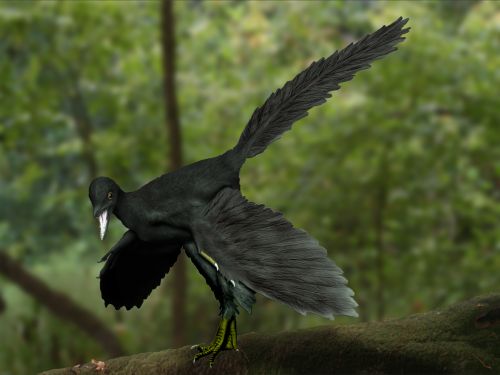
Thanks to findings of fossilized color pigments, we have evidence that Microraptor was at least partially black in color.
As I discussed in my previous article about dinosaur-to-bird evolution, the evidence for this claim is all but lacking.

Hyracotherium and the Equus

Horse evolution is clearly seen in the fossil record...or is it?
The evolution of the horse is one of the classic examples of “proof” for evolution. Several extinct species of horses have been discovered over the past century or so and evolutionists have used them to create a lineage. The tiny, dog-sized Hyracotherium, a creature not actually related to the horse, is at the beginning of the evolutionary line. Evolutionists believe horse evolution was driven primarily of the habitat change – as the climate became less forested, drier and more open/plains-like, the horse evolved larger, lost its original number of toes and over a period of millions of years, it evolved into Equus: the modern horse.

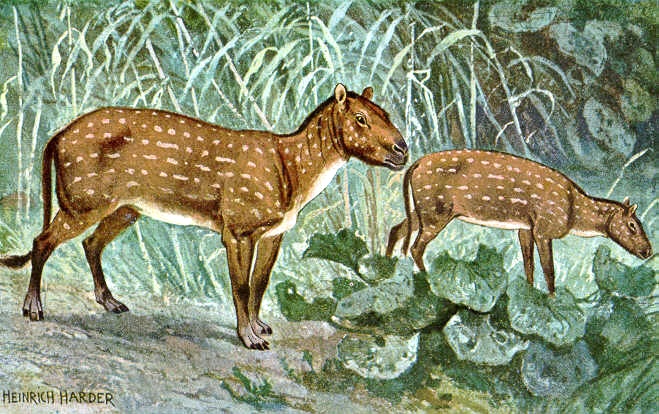
Hyracotherium is supposed to be the first phase of horse evolution.
Once again, I will demonstrate the glaring problems with this idea. Firstly, evolutionists believe horses lost their toes as they evolved larger and more adapted to life on the open plains: Hyracotherium and other early horses (the “slightly more evolved” Eohippus) had four toes in the front and three toes in the back. Equus has only one toe on each foot. So, evolutionists present us with the evolutionary lineage of the horse: Hyracotherium, Eohippus, Orohippus, Epihippus, Mesohippus, Miohippus, Parahippus, Merychippus, Pliohippus and finally Equus. Is this evolution in action? Or were the scientists who originally proposed this theory unknowingly horsing around?

This is the skull of Pliohippus.
Unfortunately for evolutionary thinkers, the problems with this evolutionary line are as alarming as a herd of galloping horses. If the horse sequence were correct, you would expect Hyracotherium to be found beneath rock layers containing Eohippus, which would be beneath Orohippus, which is underneath Epihippus...etc. In other words, you would except to see these horses getting larger and loosing toes the higher you go up the geologic rock layers. This is anything but the case. In fact, many of these horses are actually seen to be living at the same time (according to the evolutionists'!). For example, Hyracotherium, Eohippus and Orohippus  lived at the same time as Epihippus! Mesohippus and Miohippus appear in the fossil record as the same time as Merychippus and Parahipus. It is interesting to note that, save a few exceptions, most of the other horses I mentioned (Parahippus, Merychippus, Pliohippus, Equus and possibly Miohippus) all coexisted at same time! To make matters worse, Hyracotherium fossils have been discovered in Pliocene rock layers, when most of their fossils are found in those of the Eocene. These Pliocene Hyracotherium fossils are usually considered to have been uncovered and reburied in Pliocene sediments by evolutionists, even though there is no sign of them being redeposited.

Hyracotherium wasn't even a species of horse!

Whales

Whale evolution is commonly regarded as the best evidence for evolution.
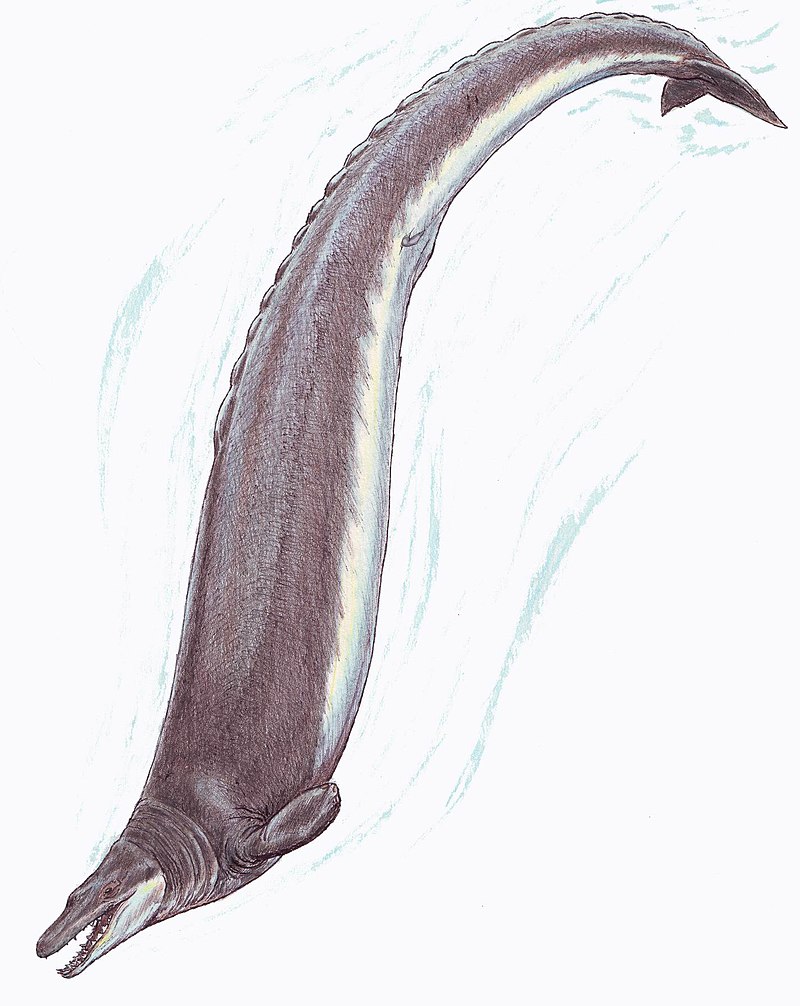
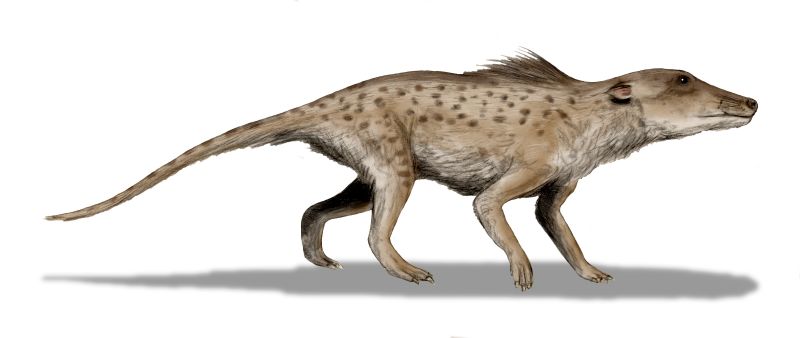
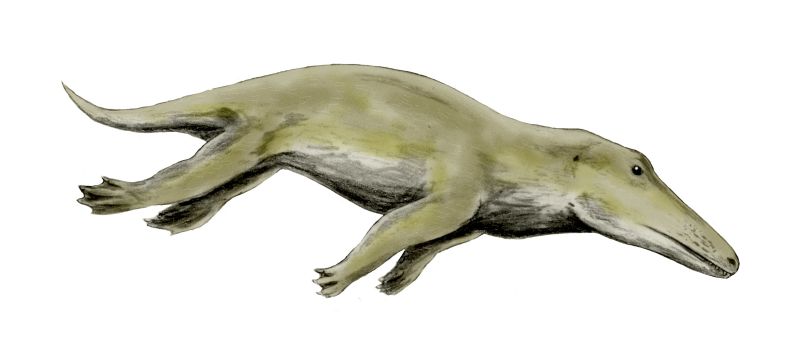
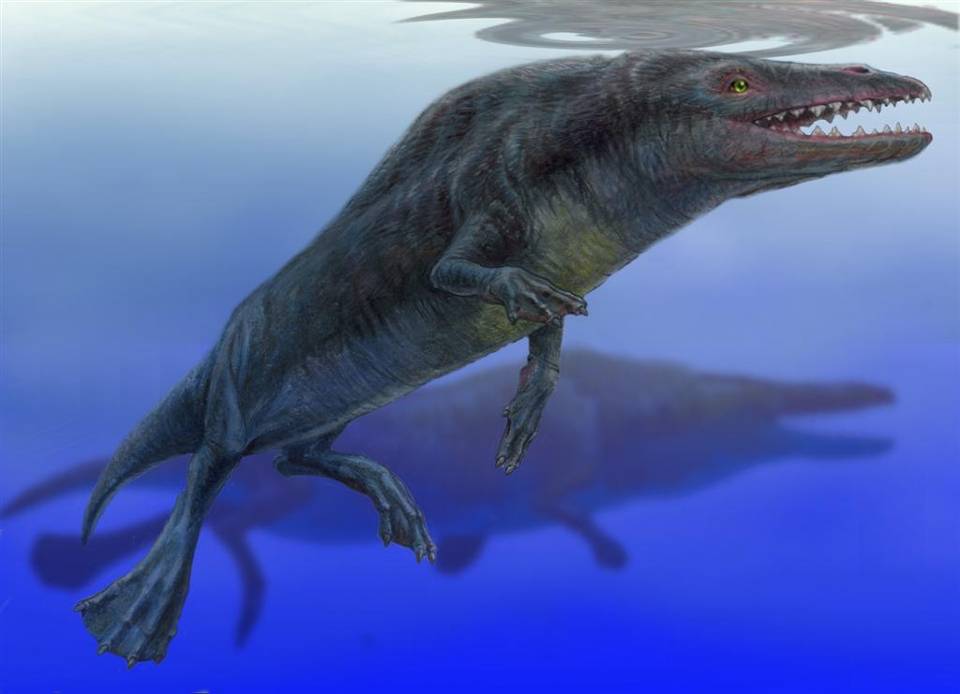
Up until fairly recently, creationists pointed out that evolutionists had no answer for the question of how whales evolved. Over the past few decades, fossil discoveries have allowed evolutionists to (attempt) to fight back. In fact, the evolution of the whales is claimed to be one of the best examples of evolution in action. Evolutionists believe whales evolved from land mammals such as the Pakicetus. Over a period of around 9-15 million years, it evolved into a semi-aquatic creature and eventually into a fully-aquatic one that we call the whale. The lineage of land mammal to whale, according to this website, goes something like this: Pakicetus (land mammal), Ambulocetus (semi-aquatic mammal), Kutchicetus (semi-aquatic), Rodhocetus (semi-aquatic) and Dorudon and Basilosaurus (both fully-aquatic).

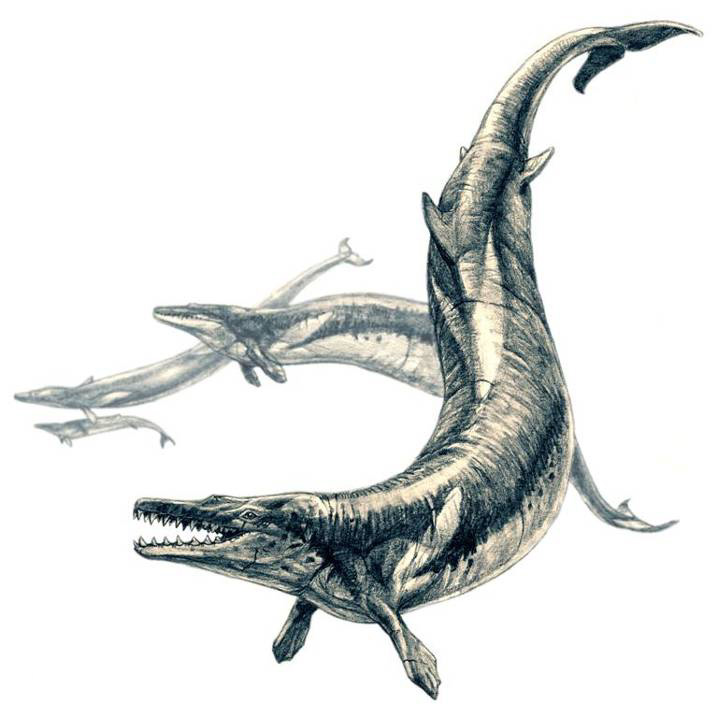
Did whales like Basilosaurus really evolve from small, furry, land mammals?
Have evolutionists really proven their case against creationists? Is the theory of whale evolution really as clear-cut at evolutionists want us to think? Or is this another whale-of-a-tale? Well, let's use some logic. In order for a land mammal like Pakicetus to evolve thrive as an aquatic mammal like Basilosaurus, several changes would have to occur. Whales have:

  • Enormous lungs that can hold their breath for a very long time
  • A powerful, horizontal tail fluke
  • Eyes that can see with great clarity underwater and can withstand high pressure
  • Ears for hearing underwater and with an eardrum protected from high pressure
  • Nostrils on top of the head

Now, evolution is propelled forward by chance-random processes – primarily gene mutations and natural selection. Therefore, whale evolution is depending upon new genetic information for tail flukes, a blowhole and other aquatic-adaptations to come about by pure accident. This Creation Ministries International's article sums up the problems with this idea pretty well:

“One thing to note [about whale evolution] is the lack of time for the vast number of changes to occur by mutation and [natural] selection. If mutation results in a new gene, for this new gene to replace the old gene in a population, the individuals carrying the old gene must be eliminated, and this take time. Population genetics calculations suggest that in 5 million years (one million years longer than the alleged time between Ambulocetus and Rodhocetus), animals with generation lines of about ten years (typical of whales) could substitute no more than 1,700 mutations. This is not nearly enough to generate new information that whales need for aquatic life, even assuming that all the hypothetical information-adding mutations required for this could somehow arise.”

Pakicetus was a small wolf-like animal.
So what about the whale evolution sequence itself? Let's start at the best place to start – the beginning. Even though initially thought to be semi-aquatic, Pakicetus shows no adaptations to living a semi-aquatic lifestyle. In fact, it is clearly terrestrial and the only feature that associates it to whales is mainly the structure of a bone called the auditory bulla. Ambulocetus, the next creature in the sequence. The skeleton of this beautifully-designed mammal was rather incomplete, so many of those so-called whale-like features claimed as evidence that Ambulocetus was a whale-ancestor have not been found, including the hip bones. It has been claimed that it had an inner ear structure much like that of a modern whale, but this is really not the case; they are quite different in design. In addition to this, Ambulocetus fossils have been found in rock layers above actual, undisputed aquatic whales.

Ambulocetus might have been semi-aquatic, but it was no whale-in-the-making!
Problems don't stop here – Rodhocetus has often been portrayed as a semi-aquatic creature, complete with flippered-feeth and a tail fluke – a creature evolving into a marine mammal. But as with Ambulocetus, Rodhocetus remains that have been found are far from complete. In fact, no tail fossils were found; thus, there is no evidence for a tail fluke. Now foot bones have been found since the initial discovery, but when asked about how it is known Rodhocetus had flippered feet, this animal's discoverer, Dr. Philip Gingerich is quoted for saying, “Since then we have found the forelimbs, the hands, and the front arms of Rodhocetus, and we understand that it doesn't have the kind of arms that can spread out like flippers on whales”. So in summary, Rodhocetus lacked the two features that “proved” it was evolving into an aquatic beast were not present. Finally, we reach fully-aquatic creatures like Dorodon and Basilosaurus. These animals are considered to be whale ancestors mainly because they possess tiny rear leg bones. Evolutionists believe that this is because these creatures were slowly “evolving away” these features. But these legs were so small that they were useless for walking; instead, they were probably used to clasp onto the other sexual partner during copulation.

Rodhocetus is an early whale...I'm totally convinced! Yeah, right.
In summary, evidence for whale evolution has been formed primarily upon incomplete fossil discoveries and lots of speculation. Hm...if this is the best-yet evidence for evolution, evolutionists might want to consider re-thinking their theory.

Basilosaurus and other whales were designed for life in the ocean.
Australopithecus and Mankind

Australopithecus is supposed to be the missing link between ape and mankind.
No compilation of alleged transitional forms would be complete without bringing up the so-called evidence for evolution of man from apes. To clear up any confusion, evolutionists do not believe humans evolved from chimpanzees (so using the “if we evolved from chimps, why are there still chimps today?” argument is a bad idea). Evolutionists actually believed we evolved from apes that lived roughly 3 million years ago in Africa called Australopithecus, that swung down from the trees, the ancestral home of primates and evolved the ability to walk upright; later, apes increased brain size and developed a taste for meat. As with the whale evolution sequence, there is also claimed to be a clear-cut sequence from apes to humans that goes something like this: Ardipithecus, Australopithecus, Homo habilis, Homo erectus, Homo antecessor, Homo heidelbergensis and Homo sapiens, our own species. (contrary to popular belief, neanderthals are considered to be a sister or cousin species of Homo sapiens, by both evolutionists and creationists, not an ancestor).

Evolutionists often emphasize human features on fossil apes to make them more human, ignoring the loads of ape-like features.
How does the story stack up to the evidence? Well, much of this evolutionary story hinges the belief that apes such as Australopithecus could walk upright, like humans. As we can't observe an Australopithecus take a bipedal stroll, we must look at the fossil evidence. One of the initial “evidences” evolutionists used to “prove” Australopithecus walked upright was the knee joint, supposedly human-like in structure. However, there is much evidence to suggest that Australopithecus is really just a knuckle-walking ape. After conducting scientific studies on Australopithecus fossils, several scientists have noticed that much of its skeleton was very ape-like, especially its long, curved fingers and toes (they were even more long and curved than a chimpanzee, a very arboreal ape) and the skull, which lacks the bony ridge found in the human nose, but not in apes. Even the hand and fingers themselves were very much like a knuckle-walking ape. Granted, there are several differences from Australopithecus and most modern knuckle-walking apes, but it appears that this species was merely a unique species of ape designed for a unique lifestyle. Also, there is evidence for bipedal walking in species allegedly more human-like and that lived earlier than Australopithecus, such as Orrorin tugenensis.

The Laetoli footprints were made by a human being living at the same time as Australopithecus.
What about other members of the Homo genus, such as Homo erectus? Are these “ape-men” in the process of evolving? Not at all! Despite initial beliefs, the members of the Homo genus (e.g. erectus, neanderthals and Cro-magnon) I mentioned two paragraphs ago are just humans. Just like us, they were capable of making fire, hunting and butchering tools, and quite likely even seafaring vessels. They also buried their dead. No primitive “ape-man” brute can do all that! Not only that, but despite the fact that there are similarities present, ape fossils and human fossils are quite easy to tell apart in the fossil record.

Neanderthals, cro-magnon and Homo erectus were just ancient people!

Summary
This article doesn't cover nearly a quarter of the information proposed in evolutionary internet articles, books and other sources. Evolutionist claims will continue to pop up on a regular basis. However, as creationists, I urge you to take them all with a  pinch of salt, because they are never as solid as they seem on the outside. As I continue to research more and more about these “transitional forms”, I realize a pattern emerges: most transitional forms are proclaimed loud and clear as the latest evidence for evolution based upon fragmentary and speculative evidence. Then, after the hype dies down, a few years pass until 1) new fossil discoveries reveal this “transitional fossil” can't really be what it was originally claimed to be or 2) another fossil of a transitional form will override the previous discovery. It happens almost every single time! If proof of evolution in the fossil record is so apparent, why must they keep switching out transitional fossils for other, “better” ones? Is it possible that they don't exist at all?

Of course, in light of several of the issues with “transitional fossils” I've displayed, some evolutionists will argue that the fossil record is incomplete, so we shouldn't expect to find every fossil in the right sequence. That's true, but compared to all the “complete” creatures we've discovered, the number of “transitionals”, all of which are controversial, even among evolutionists. If evolution were true, we should expect even more transitional fossils than we do complete ones!

So what of these creatures with features that are usually used as “proof” that they are transitional? Don't these similarities mean they are related to each other? Not at all! Think about the duck-billed platypus, a mammal that lays eggs and has a beak like a duck and webbed feet and flattened tail like a beaver. It has features of several different kinds of animals, just like Archaeopteryx, Tiktaalik, Australopithecus and Ambulocetus. But no one suggests the platypus is related to ducks or beavers. The best way to describe such creatures is to refer to them as “mosaics”. This is exactly what we expect to find in light of Genesis 1:21 and Genesis 1:25:
“So God created the great creatures of the sea and every living thing with which the water teems and that moves about in it, according to their kinds, and every winged bird according to its kind. And God saw that it was good.” Genesis 1:21.
“God made the wild animals according to their kinds, the livestock according to their kinds, and all the creatures that move along the ground according to their kinds. And God saw that it was good.” Genesis 1:25.
As you can see, God created all the different “kinds” (usually referring to the “family” level of classification rather than “species” or “genus”) of creatures to reproduce after their own kind; in other words, all other creatures that descended from these “created kinds” were of the same “kind” of animal. Animals were not supposed to change from one kind into a completely different kind, and this is just what we see today and in the fossil record. Therefore, creatures with features similar to other kinds of animals don't show evolution, but rather, the creativity of God, our Creator.

Archaeopteryx and other "transitional fossils" were really just mosaics rather than transitional.
References:
www.evolution.berkeley.edu/evolibrary/article/lines_03
www.transitionalfossils.com
www.creation.com/tiktaalik-roseae-a-fishy-missing-link
www.answersingenesis.org/missing-links/is-tiktaalik-evolutions-greatest-missing-link
www.wikipedia.org/wiki/archaeopteryx
www.creation.com/bird-evolution
www.creation.com/the-evolution-of-the-horse
www.answersingenesis.org/fossils/transitional-fossils/another-whale-of-a-tale-creationists-without-a-whimper
www.creation.com/refuting-evolution-chapter-5-whale-evolution
www.creation.com/rodhocetus
www.creation.com/did-lucy-walk-upright
www.answersingenesis.org/human-evolution/cavemen/who-were-cavemen

Disclaimer: Many (or in some cases all) of the photographs and images above are not mine. If you own one or more of them and would like them to be removed, politely let me know via my email address.