Well, since I've seen Jurassic World, as promised, I have written a three-part overview of the movie. I personally loved the film*, so it was only natural that I'd want to write my own "review", like I did with the BBCPrimeval series. Jurassic World's release wasn't the only thing that's happened lately. As you know, Father's Day was last Sunday, as was the first day of summer and Summer Solstice, the longest day of the year! From now on, the days will continue to get shorter and shorter until December 21st. So, to celebrate the arrival of summer, I'd also like to bring up a TV series dedicated to summer itself: Phineas and Ferb.
Sadly, the last episode of Phineas and Ferb aired not too long ago and was appropriately titled "The Last Day of Summer". Of course, I've sad that the show is coming to a conclusion, but it is for a good reason. The creators of the show wanted to have a grand finale and leave fans of the series feeling good about the show rather than waiting to cancel the show until fans lost interest in the series. So as a tribute to the "104 days of summer vacation", I've posted the final Phineas and Ferb song below:
Days till:
It is: 8 days till Independence Day
It is: 73 days till Labor Day
It is: 152 days till The Good Dinosaur is released
In the Spotlight:
With Jurassic World released, I'd like to point out that the dinosaur hype doesn't have to be over just yet! To catch up with their lack of films released last year, Pixar Animation Studios is releasing another film this November: The Good Dinosaur. I'm excited about this film because I've been following its progress for several years; not nearly as long as I have been with Jurassic World, but several years nonetheless. A trailer was uploaded to the internet. You can view it below:
Excited now? The Good Dinosaur released November 25, 2015.
Topic of the Week by Christian Ryan
In response to the release of Jurassic World, I now present my long-awaited overview!
13 years in the making and breaking the previous opening weekend records held by The Avengers with $208.8 million (The Avengers only got $207.4 million), Jurassic World really brings us back to a world where genetic engineering has de-extinctioned the dinosaur into a living, breathing creature. I saw Jurassic World on June 11, the day before it “officially” came out, and I was blown away by the dinosaurs, the story and its characters. While I could go on and on about how this movie was resurrected from its uncertain past today, I won't, because I've essentially done that all before. No, today, I'm going to start my three-part overview series of this fantastic movie. As I've done in the past with my overviews of the various Primeval seasons and Walking with Dinosaurs: The Movie, I will spend the first part looking at the movie's plot in general; in part two, we shall delve into the characters that make this movie exciting; and last but not least, in part three, we'll encounter all the dinosaurs this movie has to offer as we dig into the amazing canon of this movie. So, as John Hammond would say, “Welcome...to Jurassic World!”
Jurassic World was released after a long 13-year wait.
In 1982, John Hammond – the CEO of International Genetic Technologies, aka InGen – came up with the desire to bring dinosaurs back to life through the miracles of genetic engineering. He decided to use these dinosaurs in a theme park located on an island off the coast of Costa Rica called Isla Nublar. By 1993, he had almost accomplished his dream. But after an infamously well-known set of circumstances, his dream collapsed – his park lay in ruins on Isla Nublar and his research facility responsible for creating the dinosaurs in the first place lay forgotten by the world on Isla Sorna (a nearby island).
Jurassic World sees the dream of Jurassic Park creator John Hammond come to life.
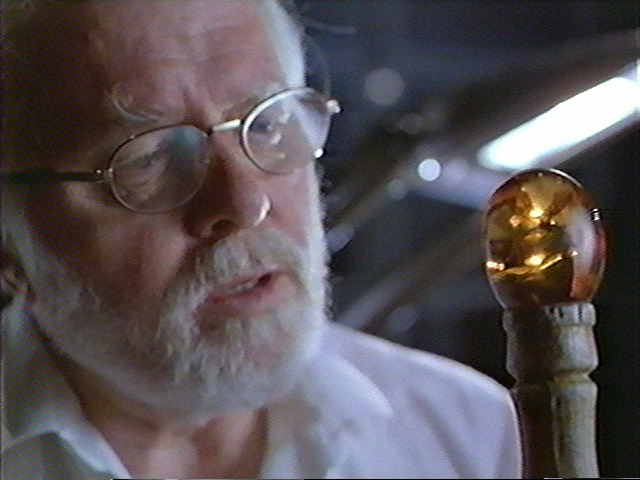
This all changes in 1998, when John Hammond dies (RIP Lord Richard Attenborough!). Due to nasty lawsuits, InGen is on the verge of Chapter 11 ever since that accident on Isla Nublar in 1993, but hope dawns as Masrani Global Corporation comes into the picture. MGC's CEO, Simon Masrani, sees the great potential in InGen and buys them out, saving them from bankruptcy and turning them into a successfully-operating company once again. By 2002, Simon Masrani sets his sights on making John Hammond's dream come true – he decides to recreate a dinosaur theme park. Things turn out better than for the original park and by 2005, the new theme park, Jurassic World, opens to the public. Pretty soon, tourists are pouring into the park gates. The park caters to over 20,000 people everyday!
Simon Masrani, CEO of Masrani Global Corporation.
Now while the original park was more exclusively a biological preserve for dinosaurs that tourists could explore, Jurassic World is more of a theme park within a biological preserve, with many attractions – the Gyrosphere, Egg Spin and Gondola Lift to name just a few – and shows – e.g. the Mosasaurus Feeding Show and T. rex Kingdom. The park remains very successful for a decade, but that's when things begin to head downhill. Public interest in the park begins to decline. They are so used to seeing the dinosaurs now, that, according to Jurassic World's public assets manager, Claire Dearing, who says, “Now, kids look at a Stegosaurus like it was an elephant.”
Isla Nublar - the home of the new Jurassic World theme park, where dinosaurs and man once again live on the earth together.
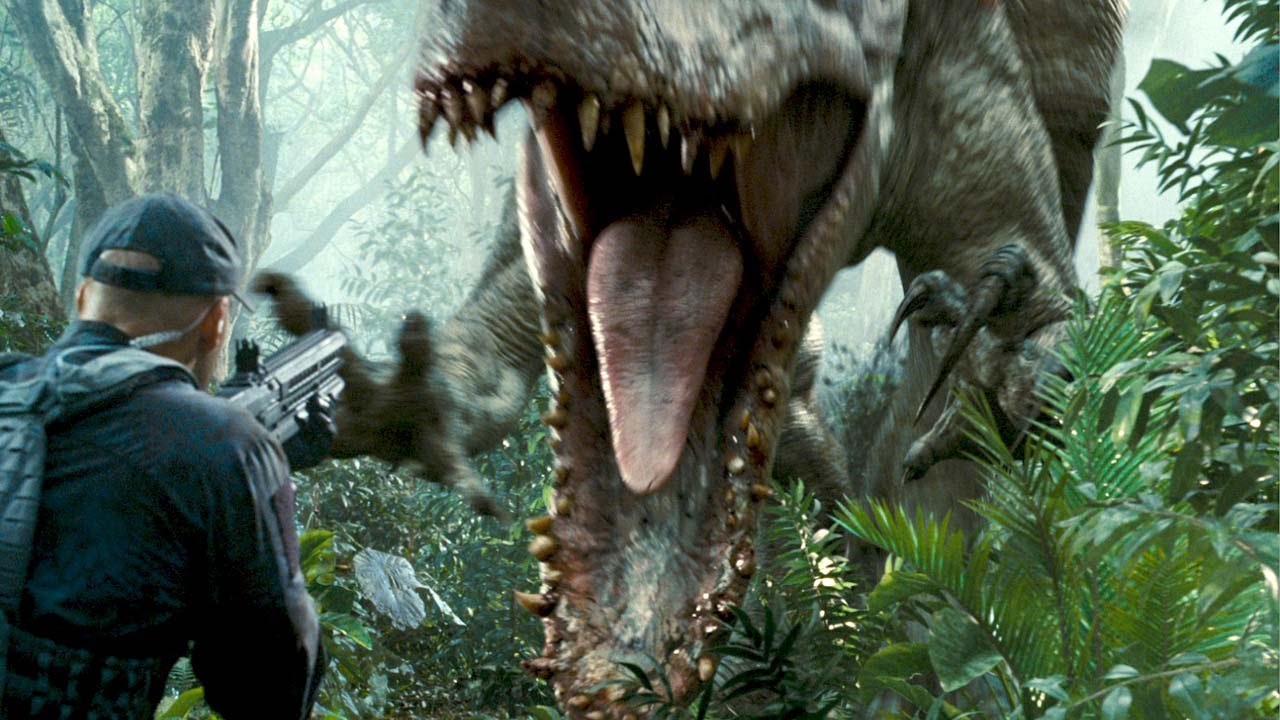
This is where Jurassic World picks up, 22 years after the events of Jurassic Park. Claire Dearing explains to investors that she knows public interest in the park needs to be reinstated every few years, like the NASA program. This is when we are introduced to Dr. Henry Wu, the head geneticist responsible for bringing dinosaurs to life in Jurassic Park, 22 years before. He explains that he's created a brand new species of dinosaur, never before having existed on earth, called Indominus rex. This dinosaur is the park's “first genetically-modified hybrid”. Indominus rex was not only “designed to be bigger than the T. rex”, according to Dr. Wu, but T. rex was in fact the main dinosaur this hybrid consists of. The DNA of many other species was combined to create the I. rex, including those of Carnotaurus, Majungasaurus, Rugops, Giganotosaurus and several other classified species. In any case, Indominus rex, when revealed to the public, will definitely keep tourists coming back to Jurassic World for more.
Claire Dearing is one of the overseers of the Indominus rex project.
While Claire is tending to the investors (and later showing Mr. Masrani the hybrid itself), her nephews, 11-year old Gray and 16-year old Zach Mitchel are also visiting the park, specifically to visit her. Unfortunately, Claire finds her schedule to busy today and instead sends them into her assistant Zara's care for the day. But if Zara finds herself distracted for any reason, Zach and Gray could potentially find themselves in big trouble...40-50 feet of sharp-toothed-and-clawed big trouble!
Gray and Zach ride one of the park's attractions, the Gyrosphere ride, while observing an Apatosaurus.
Elsewhere in the park, other exciting things are happening, whether it's six kids that reside in the lost-and-found, or a Pachycephalosaurus that needs tending. But one particular project of interest is being headed by ex-military man, Owen Grady. He's researching the behavior of his own pack of Velociraptor mongoliensis. To date, his “raptor squad” consists of four Velociraptor: Blue, the pack's beta with extreme aggression, Charlie, the rookie who always looks up to Blue, Delta, the raptor known for her stalking abilities, and Echo, the individual who once challenged Blue for dominance in the park, leaving her with a scar down one side of her face. Owen is the alpha of this pack and it's his job to keep it that way. He has raised the animals since birth and developed a unique relationship with them based on mutual respect. However, these dinosaurs are still extremely dangerous and will rip Owen limb from limb if he makes a wrong move. All of Owen's work is watched by Vic Hoskins, the head of InGen's Security Division...and he seems to have a little too much interest in Owen's raptor pack...
Owen Grady is the first person to successfully train Velociraptors...to some extent. It's a tenuous relationship to say the least!
Knowing all this really sets the stage for Jurassic World. In the next part of this series, we'll examine the characters that make up the film. Our journey back to Isla Nublar has only just begun!
Welcome back...to Jurassic World!!!
* Keep in mind that I do not condone everything in Jurassic World. For example, there are several references to millions of years and evolution, both of which contradict both the Bible and REAL science. There are also several uses of foul language in the movie. Violence and gore is another reason parents will want to use discernment before taking children to see this film. Aside from these things I've pointed out however, I LOVE Jurassic World!
Disclaimer: Many (or in some cases all) of the photographs and images above are not mine. If you own one or more of them and would like them to be removed, politely let me know via my email address.
Just look at this beautiful Mosasaurus leaps from the water to snag her prey in Jurassic World.
Well, since Jurassic World was just around the corner, I found it only fitting that today's article should focus on an animal that will be appearing in the film: the mosasaur! Specifically, the mosasaur appearing in Jurassic World is a Mosasaurus maximus, but I will be talking about several different species of mosasaurs in the article. But first, let's move on to...
Days till: It is: 0 days till Inside Out's release! It is: 2 days till Father's Day It is: 15 days till Independence Day
In the Spotlight: Well, since Jurassic World is already out, I can't talk much about that movie in terms of updates. However, there is one that is rather remarkable: Jurassic World received the highest box office weekend of all time! That's pretty remarkable! It's great to see that Jurassic World was so greatly received.
Jurassic World achieved $208.8 million during its first weekend! That's the highest of any movie in just one weekend!
Thanks to this great turnout, we can now confirm that this is not the last intallment of the Jurassic Park series! You read that right! In fact, Chris Pratt has already signed on for future installments. This is great news for fans of the franchise, such as myself. To read more about this: check this out.
In addition to this news, Inside Out is released in theaters today. Be sure to check it out!
Topic of the Week by Christian Ryan
Ancient pre-Flood seaways would have been stalked by large carnivorous reptiles called mosasaurs!
Jaws, the great white shark, is the reason many feel unsafe about entering the ocean, despite the fact that REAL great white sharks are actually one of the less dangerous species (they only attack humans because they mistake us for their favorite prey or if they are provoked). But there was once a family of predators that roamed the earth's oceans before the Noachian Flood in the book of Genesis; they would have been capable of eating Jaws in one bite. I'm talking about the mosasaurs! These great marine reptiles were not dinosaurs, but they roamed the earth at the same time and were some of the greatest predators ever to stalk the sea. They were true sea monsters.
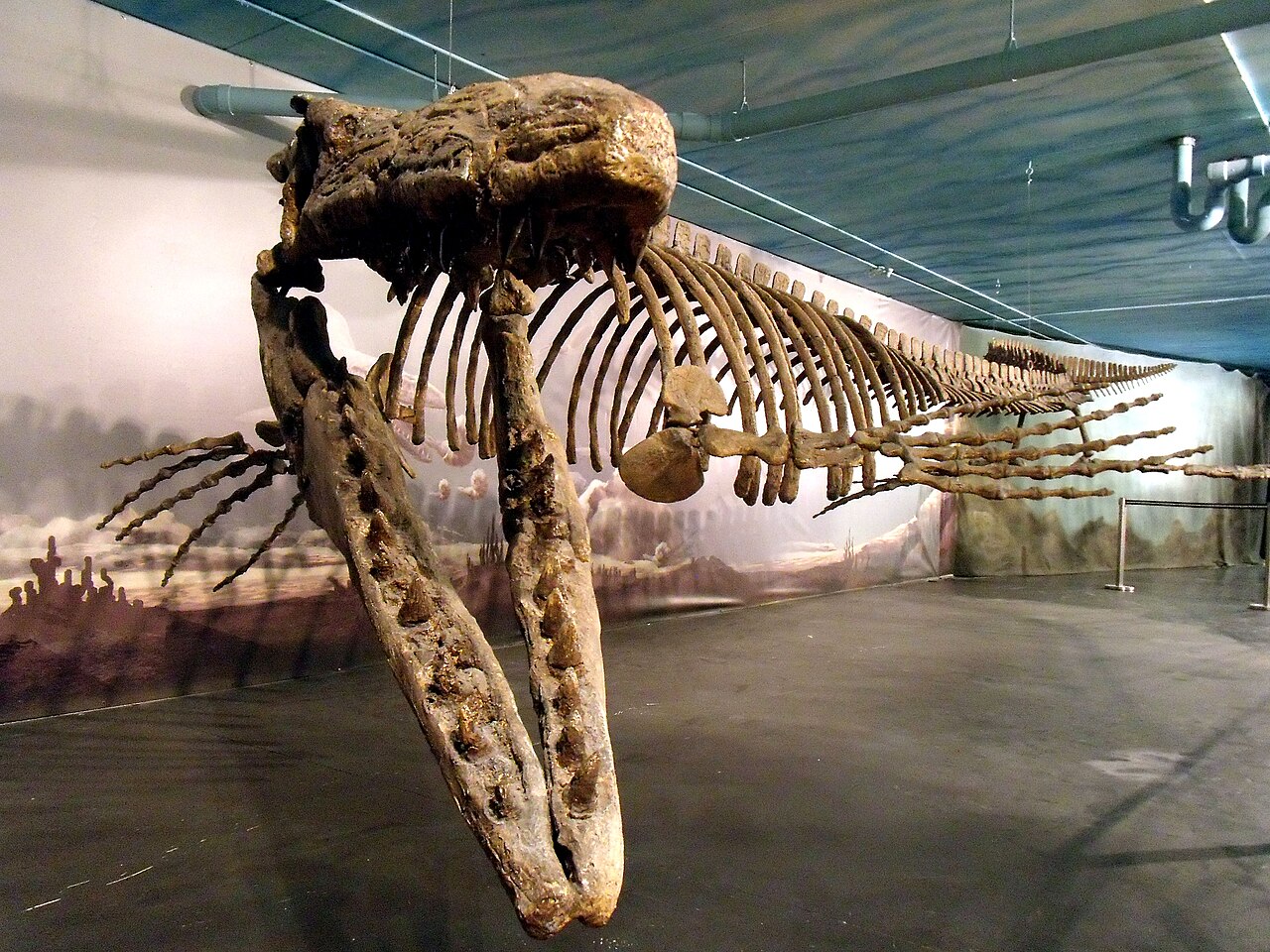
Taniwhasaurus was one of many species of mosasaurs.
Unlike many animals in the fossil record, mosasaur fossils are relatively common and have been found on every continent, including Antarctica. Thanks to fossil discoveries since the 1700's, we've been able to learn a lot about these incredible creatures. Mosasaurs might look like a crocodile hybridized with a shark, but these creatures were actually giant lizards, similar to modern monitor lizards like the Komodo dragon. Unlike the Komodo dragon which God made on Day 6 of the Creation week, 6,000 years ago, mosasaurs were created a day before (Day 5) along with other marine creatures.
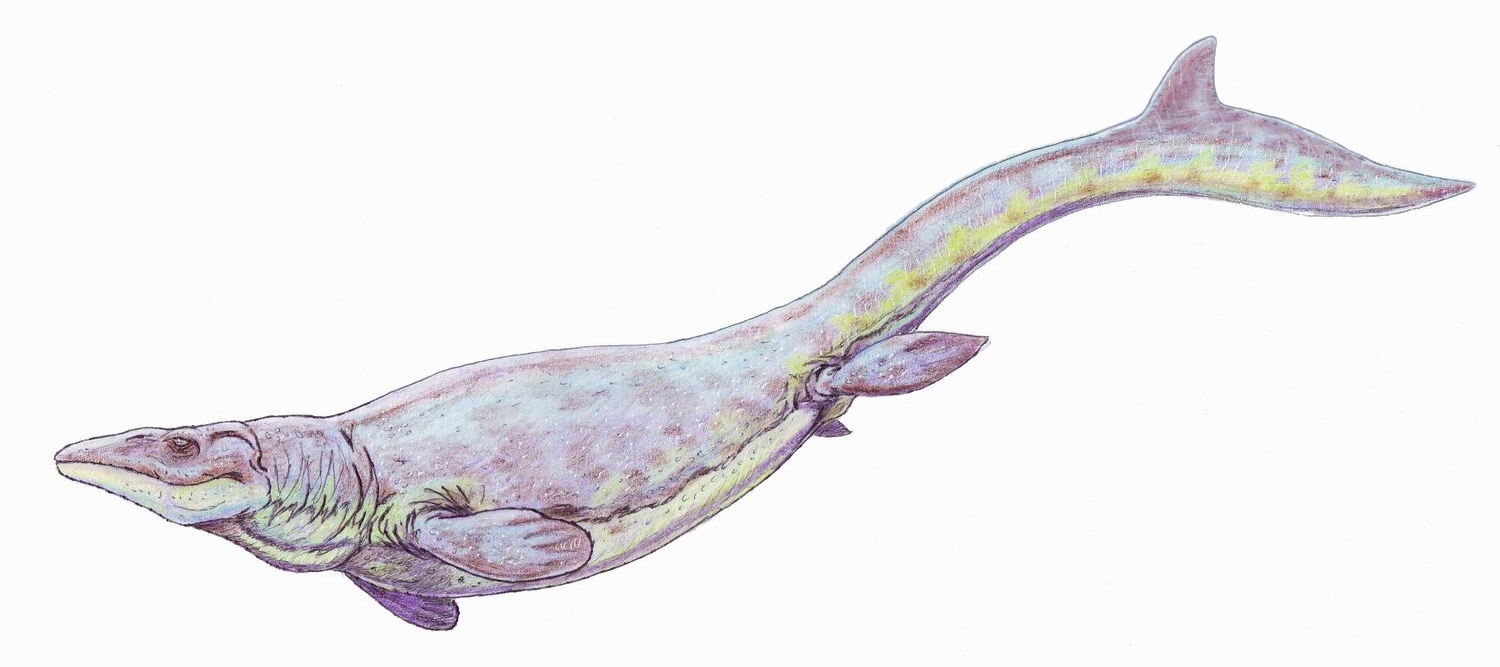
Mosasaurs were an aggressive family of ocean-going predators that came in all shapes and sizes. Some, like Dallasaurus, were only three feet long. Others, such as Mosasaurus and Tylosaurus grew in excess of 50-60 feet and weighed up to 20 tons! Talk about a sea monster! Mosasaurs are known for their elongated skulls, filled with sharp teeth. Since they were reptiles, they would have needed to come up to the water's surface to breath. Though they're similar to monitor lizards of today, God would have needed to install several design features to make these animals suited for life in the water. For example, mosasaurs had elongated bodies for swimming with speed. Mosasaurs were once thought to swim using an eel-like undulation, propelling themselves forward with their paddle-like tails. However, recent fossil discoveries have revealed that mosasaurs actually had a tail fluke, similar to a tuna or a shark. This meant that they would have been able to keep its body relatively stiff in the water, using its tail for propolsion. Mosasaurs also had four flippers to use in steering and stabilizing itself. A sharp pair of eyes sat forward-facing on the lizard's face, perfect for finding prey. Scientists also believe mosasaurs had an acute sense of smell for tracking down their prey.
Mosasaurs such as Platecarpus are now known to have possessed a shark-like tail fluke, enabling them to propel themselves forward with ease.
The discovery of fossil mosasaurs plays a huge part in the origins of paleontology. The first known discovery of mosasaur fossils occurred in 1764 near the Meuse River in the Netherlands. At a time before dinosaurs were known to science, these fossils were erroneously identified as belonging to a fish or a whale by Martinus van Marum, who studied them in 1790. After this discovery, scientists found more and more mosasaur fossils – enough to conclude they weren't just big fish! Some scientists believed these fossils belonged to some whale or a large crocodile, or perhaps a giant monitor lizard. The reason why no one attributed these fossils to an extinct reptile was because most scientists at the time believed that God never allowed any kind of animal have become extinct, an idea not supported by Scripture. The genius who finally was able to identify the fossils as an extinct reptile was Georges Cuvier. After finally being declared an extinct reptile, it was named “Mosasaurus”, by William Daniel Conybeare in 1822. Mosasaurus means “Meuse River Lizard”, in reference to where the first mosasaur fossils were discovered. Since then, the number of mosasaur fossil discoveries have increased and we still are learning a lot about these incredible reptiles.
Mosasauruswas discovered in 1764 and were thought to be large fish or whales.
Mosasaurs have been found in upper Cretaceous rock layers that were deposited late during the Genesis Flood. Before the Flood though, they reigned the ocean supreme. Now God didn't create all the different types of mosasaurs on Day 5. Rather, scientific and Biblical evidence suggests that God only created the original baramin, or “created kind” 6,000 years ago. Between this time and the Flood, the other species of mosasaurs descended from the “created kind” through the process of natural selection. This is similar to what we see in the dog and cat family today. Just a few of the many species of mosasaurs include: Mosasaurus, Tylosaurus, Dallasaurus, Platecarpus, Globidens, and etc.
Mosasaurs have been portrayed extremely inaccurately in the past!
What did mosasaurs eat? Pretty much anything they wanted! How do we know? Well, because they left their bite marks in virtually everything in their domain! We've also found stomach contents inside the guts of these marine reptiles. The diet of mosasaurs varied between the different species based upon their size.
Meter-long Dallasaurus was, as you might recall, one of the smallest species of mosasaurs. Unlike other mosasaurs, it bore legs rather than flippers. It is likely that it was capable of clambering out onto land; therefore it probably consumed both terrestrial and aquatic prey. It probably ate fish, invertabrates and other small animals.
Dallasaurus was probably capable of clambering onto land, unlike most mosasaurs.
Globidens was a medium-sized mosasaur, growing about 20 feet from nose to tail fluke. Most species of mosasaurs had sharp teeth for snatching slippery prey from the water, but not Globidens! Its teeth were semi-spherical in shape with rounded nubbin-like points, hence the meaning of its name: “globe teeth”. Scientists believed that Globidens used its teeth to crunch through the tough shells of small sea turtles, clams and squid-like animals called ammonites. Globidens fossils have been discovered in both North American and Africa.
Globidens' diet consisted of sea turtles, clams and ammonites.
One can't talk about mosasaurs without talking about the really large species, such as Tylosaurus and Mosasaurus, the biggest mosasaur of them all. These creatures were massive – both were about 50 feet in length (Mosasaurus often pushed up to 60 feet) and weighed 15-20 tons in life. The shark Jaws was only 25 feet long by comparison. These predators were fast; scientists estimate that they could swim 30 mph in short bursts. They couldn't keep this speed up for long, so they likely were ambush predators, slowly stalking their prey until the moment of attack. A 2014 study on the newly discovered melanosomes (aka color pigments) preserved associated with mosasaur fossils reveal that some (if not most/all) species of these lizards were dark-colored on the top half of their bodies. This would have made them almost invisible while slowly tracking their prey as they blended in with the dark depths. Prey wouldn't have seen a hungry Tylosaurus until it was too late!
Mosasaurus was one of the largest species of mosasaurs, reaching 50-60 feet in length!
When a large mosasaur – Tylosaurus or Mosasaurus – attacked, the prey wouldn't have stood much of a chance. Imagine the colossal beast rushing from the depths, propelled by its powerful tail. Its jaws would open and grab hold of the prey. Tylosaurus had a five-foot jaw lined with sharp teeth. Its no wonder that this mosasaur and its kin have been nicknamed the “T. rex of the Sea”. As if the teeth lining their jaws weren't enough, mosasaurs also possessed a second set of teeth on the roof of their mouths that could move independent of the rest of the jaw! They would have used this second set of teeth to pull prey further into its mouth. This, combined with their re-curved shape of their serrated teeth, prey could be sure that there was no escape!
Tylosaurus was an apex predator of the Cretaceous ocean. Its double rows of sharp teeth insured prey did not escape.
As I mentioned prior to this point, large mosasaurs left their bite marks and teeth embedded in pretty much everything in their environment. A Tylosaurus skeleton from South Dakota was discovered with the following creatures in its gut: a seabird called Hesperornis, a bony fish, possibly a shark, and even a smaller mosasaur called Clidastes. We also have evidence that these large mosasaurs also consumed fish, ammonites, sea turtles, giant squid, long and short-necked marine reptiles called plesiosaurs, sharks the size of Jaws and, of course, other mosasaurs. But mosasaurs didn't only kill each other for food. A Tylosaurus specimen has been discovered that seems to have had its neck snapped by another Tylosaurus. Perhaps they were fighting over food, a territory or a mate like modern Komodo dragons do today.
Tylosaurus consumed virtually everything that moved: sea turtles, fish, squid, plesiosaurs, birds and even other mosasaurs!
In the dangerous seas mosasaurs lived in, it was important that these creatures reproduce to keep their population in check. Unlike most modern reptiles, we have evidence that mosasaurs gave birth to live young rather than laying eggs (they were unable to crawl out of the water to do so). In 2015, some scientists reported that a collection of fossils from Yale University's fossil collection were misidentified as birds – they were actually the remains of newborn mosasaurs. These fossils seem to suggest that mosasaurs birthed their young live and ready for action out in open ocean.
Unlike most reptiles, mosasaurs gave birth to live young rather than laying eggs on land, something they would have been unable to do. (PHOTO CREDITS)
Giving birth to live young in the ocean presents many challenges. Fortunately, God provided mosasaurs with the capabilities to do just that. Unlike marine mammals, the mother mosasaur's eggs would have developed in her body cavity. The eggshells would disintegrate as the babies grew, still nurtured by an egg yolk. Finally, once the young were large and strong enough, the mother would give birth to them. Would the mother mosasaur care for her newborn young ones? It's certainly a possibility, as crocodilians and even several species of lizards engage in similar parental behaviors. We may never know for sure, but the babies would definitely have benefited from their mother's protection from predators of the deep pre-Flood oceans.
A Mosasaurus snagging a sea turtle in its jaws!
We find fossilized remains of mosasaurs in Cretaceous deposits dating to the time of the Flood, 4,350 years ago. They had up until that time to be supreme rulers of the pre-Flood ocean. However, it is likely that a relative few of these creatures may have lived through the Flood and continued to survive for sometime after (perhaps the tales of sea serpents ancient sailors told were of their observations of mosasaurs?). Nonetheless, these creatures went into decline, ending their reign. We don't know why the mosasaurs went extinct. Perhaps the climatic changes after the Flood were too much for them, or they were unable to find enough food to sustain them. Whatever the reasons, all we have left to hint at their existence today is their fossilized remains, silent reminders of the wonderful and exciting lives these “Meuse River Lizards” lived!
Tylosaurus was a true king of the Cretaceous seas!
Disclaimer: Many (or in some cases all) of the photographs and images above are not mine. If you own one or more of them and would like them to be removed, politely let me know via my email address.
Well, I just went to go see Jurassic Worldlast night (some areas it came out on the 11th, while others it is being released today). Eight years of my life I've been patiently waiting for this film, and I was finally in the theater watching it! The movie was awesome! Expect a fuller three-part overview starting next week that's similar to my overview of the Primeval series I do on occasion. For now,
Days till:
It is: The Park Was Opened Yesterday!
It is: 7 days till Inside Out's theatrical release
It is: 16 days till Father's Day
Topic of the Week by Joy Hammond
I
love it when I'm outside at night and the fireflies start coming out. I
always try to catch a few of them and then watched as they flew away,
off my hand. Fireflies are so much fun and just beautiful in the dark.
They light up the night and are enjoyed by pretty much everyone.
This is a Japanese Firefly showing off its glowing tail.
Fireflies
also known as lightening bugs light up because of a chemical reaction
called bioluminescence. As a larvae however, the light is used to mostly
warn enemies. Some people believe that the light is also used during
mating season. Female fireflies tend to use the light for attracting
males. However there are some fireflies that don't glow. Those
lightening bugs have large antennas and small eyes.
The top photo was taken with the flash on, and the bottom picture was taken with it off to show the firefly's glow.
Night
time is full of life but either we're too busy or already asleep to see
it happen. There is practically a whole new world outside when the sun
goes down and the moon and stars come up. You will see raccoons and
owls, fireflies and Mosquitos, but most importantly, you will always see
light at night and in the daytime. How much have you taken light and
electricity for granted?
This is a beautiful picture of fireflies shining away in a pine forest.
Disclaimer:
Many (or in some cases all) of the photographs and images above are not
mine. If you own one or more of them and would like them to be removed,
politely let me know via my email address.
We literally have only ONE week till Jurassic World is being released! Isn't that crazy? Apparently there was a "private" screening a few days ago and the reception was generally received (of course, there were some negative comments from some of these viewers, but they you can't please everyone!). I can't help but be stoked about the film. Man, I mean, I've been waiting so long. I plan to see it on the 16th of June, which is the soonest possible time I can see it. Can't wait! Did I already say I'm excited about the movie?
Days till:
It is: 7 days till Jurassic World's theatrical release
It is: 14 days till Inside Out's theatrical release
It is: 16 days till Father's Day
In the Spotlight:
Yep, you guessed it, Jurassic World is in full swing and several video segments have been released. As usual, I will post a few of them below, all of which are pretty much spoiler free:
This clip shows several of the film's characters in the Control Room, including Simon Masrani and Claire Dearing discussing how to deal with the Indominus rex breakout.
This clip shows off the cool new interactive features of the Jurassic World Innovation Center.
This final video is of another TV spot.
Topic of the Week by Christian Ryan
Trees and other plants have an agenda of their own: get rid of their seeds so they can be ready to reproduce in the spring. But how do they do this? Well, many get rid of their seeds in a way of deception. Some for instance encase their seeds in delicious-looking (and tasting) nuts. This is when a cute little mammal comes into the scene: the squirrel! We have bunch of these guys living in a giantoak tree in front of our house. They chitter and jump around up there all the time. They now how to make a mess too! Acorns and leaves litter our driveway. Sometimes, an acorn will hit me square on the head! (But unlike Chicken Little, I don’t go around screaming, “THE SKY IS FALLING!!!”) As we all know squirrels will go nuts for . . . well, nuts! They spend a lot of their time collecting them and storing them underground. But sometimes the squirrel will forget a few nuts, so the nut has the opportunity to grow into a mighty tree! Squirrels are also being “green” this fall. Next time you go outside, see how many squirrels you can spot in a tree. If you’re quiet, you might even see them bury a nut for later.
As we all know, squirrels love these things!
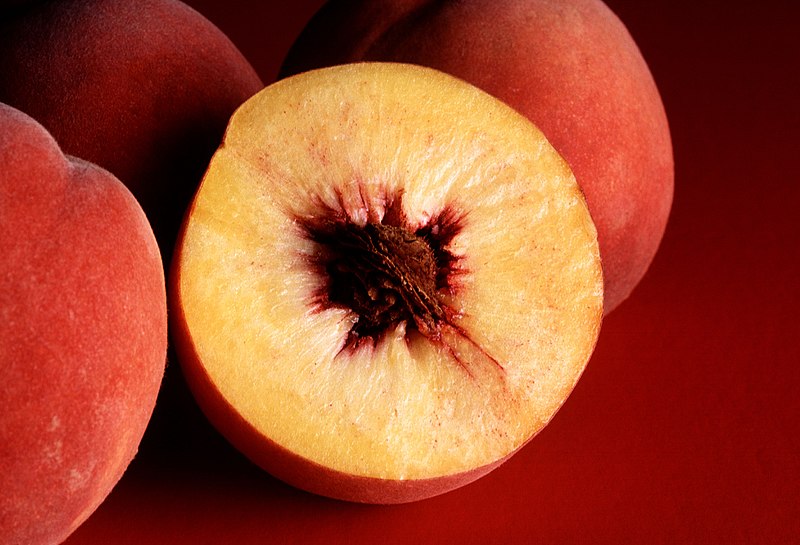
Fruit has always been tempting to eat. Even back in Genesis, Satan tempted Eve to eat the forbidden fruit God instructed not to eat. Of course, today for the most part it is good to eat fruit (it wasn't that Eve eating the fruit was bad, it was the disobedience that was bad, but that's a whole other topic!). When humans eat fruit, they normally just spit the seeds out in the trash, depending on the type of fruit (it's very hard to spit banana seeds out, they are just too tiny). But animals don’t spit their seeds out a lot. They normally eat the fruit, seeds and all. Birds often eat fruit, but while the fruit’s flesh deteriorates in the stomach acids, the seed stays intact and comes out when the bird takes a “bathroom break”. The seed then falls to the ground and is ready to sprout, often times miles from the parent plant. The bird droppings even act as fertilizer for the baby seed. Some fruity seeds include, peaches, apples, bananas, raspberries, blueberries and sunflower seeds. This rule exists in other places too. Take the African Savannah for example. Antelopes, impalas, and giraffes can take seeds many miles across the Savannah! When you go outside, look for trees or shrubs with fruits on them. You can open the fruits up and check out the seed package inside.
The fleshy fruit surrounding the seed of a peach
Back to North America! Some seeds prefer a different method of getting around. Small seeds such as jewelweed, violets, and witch hazel come in little, leafy seedpods. Then at just the right moment, the seedpod will pop open and little seeds go whizzing through the air and land far from the parent plant. Neat trick! You can try out this trick! Try touching a seedpod and if it’s the right time, the seeds will pop and fly off to a new destination!
These pods look about ready to pop!
Some seeds like to get places a little quicker than that. They prefer to stick to moving objects, literally! The seeds of sticktights, burdock and a bunch of others have seeds called burs. You know those spiky objects your dog comes home with in its fur and they take forever to pull out? Those are burs. The bur trick of moving from place to place is to hitch onto to a passing object, such as a dog, a cat, a deer, or even your clothes. You probably guessed that the little spikes on burs keep them clinging on, and you would be correct. The burs simply stick onto whatever they stuck to until they either fall off or the animal (or person) scratches it off! Next time you get a bur on your dog or yourself, instead of throwing it in the trash, look at it closely in a microscope to see what these little guys look like up-close and personal (just don’t get pricked on those spikes!).
Did you know burs gave inspiration for Velcro?
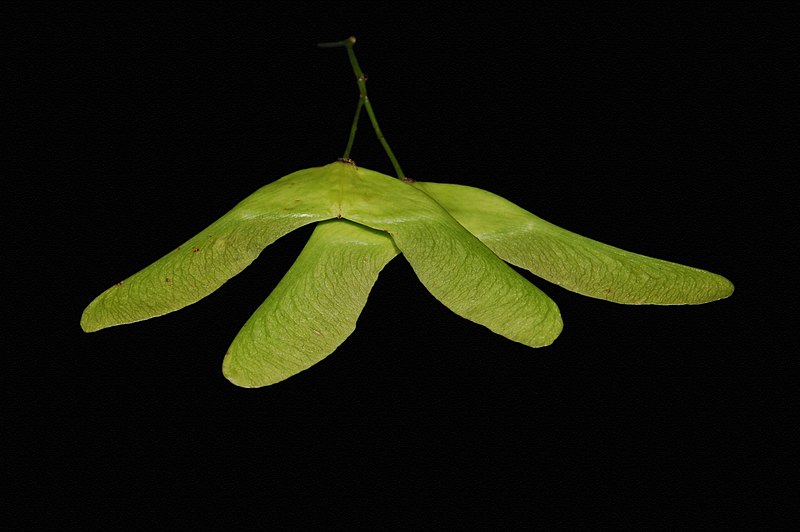
Another way seeds get around is by whizzing through the air. Instead of falling off the tree, maple seeds just get carried off by the wind to lands afar. They have curved “wings” that help it spin in the wind like a helicopter blade does. My sister, Halle and I used to play with them all the time. We would pick up a bunch of them and throw them up in the air and watch them spin! What fun that was! You can give it a “whirl” too, just get some spinners and toss them in the air and watch the fun!
These little guys will appear to "flutter" to the ground after falling off a tree
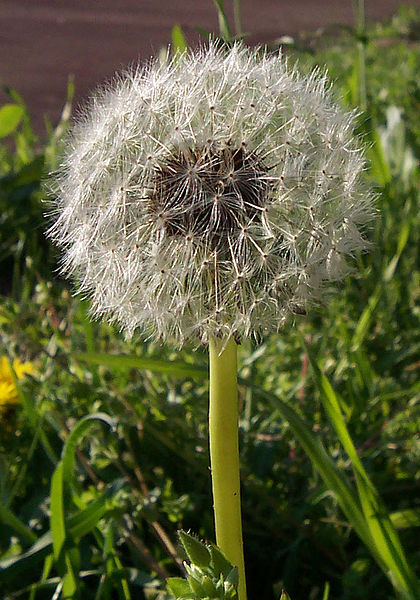
The only problem with the “whirly seed” trick is that the landing has got to hurt if the seeds could feel pain, they would probably scream after falling. One seed doesn't just float in the air and plop down, it gently descends down to earth. You may often blow the seeds of dandelions, milkweed and other plants. These plants have their seeds in, or connected to little tufts of fine, silky hairs. Normally these hairs are tossed about by the wind before gently drifting down to the ground and growing up where they land. However, you can help with this process too! Just get a little dandelion seed and blow really hard. See how far you can get it. You could even have a dandelion race with your friends (just don’t breathe in or you’ll get a mouthful of fluff!).
If you were to blow on these, they'd go up, up, up and awa-a-a-a-a-ay!
While drifting in the air and gently descending down is really fun, what happened if the seed fell in a pool of water? A pond? A lake? A sea? An ocean? The poor little thing would probably not have the opportunity to reproduce. Spinners, burs, and acorn-like nuts can’t travel across bodies of water easily (some fruity seeds can because they are inside an animal’s body while traveling). So therefore, most air-floating seeds can’t cross large bodies of water without falling in it. But some seeds can cross large bodies of water, even oceans. Some seeds such as coconuts can do this. So when a coconut falls into the water, it can float to new places such as islands. Talk about wide-spread! Coconuts aren’t the only water-floaters rocking the dock! Try to get some seeds where you live, toss them in a puddle or a pond and see if they float. (now hearing the rest of this posts title makes sense: . . . but the only place they could seed, seed, seed was the bottom of the deep blue sea, sea, sea! See?)
A Coconut sprouting a leafy stalk
Wow, seeds are way more impressive than what meets the eye! They really know how to get around don’t they. Seeds are just another example of a beautiful creation God has made for us to enjoy!
Disclaimer: Many (or in some cases all) of the photographs and images above are not mine. If you own one or more of them and would like them to be removed, politely let me know via my email address.
I can't believe we're only 14 days out till Jurassic World is released! I'm super, super, super excited! I don't have many updates regarding what's happening in my life as of late. However, I'd like to bring to your attention that I have been rather MIA on Smiley's News over the past few weeks. I've been so busy that I haven't had time to publish new articles. Well, I had time this week so you can click this link to check out the latest article. As of today, the latest articles will be related to the upcoming Jurassic World film! But before you go there, read today's article. Since we're so close to the movie's release, I thought it only fitting to take a look back at one of my older articles on the
Days till:
It is: 14 days till Jurassic World's theatrical release
It is: 21 days till Inside Out's theatrical release
It is: 23 days till Father's Day
Topic of the Week by Christian Ryan
Disclaimer: The article you are about to read is terribly inaccurate based on what we now know about the Jurassic World movie and is only provided here for the purpose of informing readers just how much we've learned about JW since the article was first published.
Now it's time to talk about the interview that recently took place with Jurassic Park IV's consultant, John Horner. In April 2013, Horner said that one of the new dinosaurs in Jurassic Park IV was terrifying. He also said:
"I can't actually tell you who that will be...But you'll want to keep the lights on after you see this movie"
Since no one working on the movie has revealed anything else about this dinosaur, many fans have a list of possible candidates for this "scary dinosaur". I myself have my own little list:
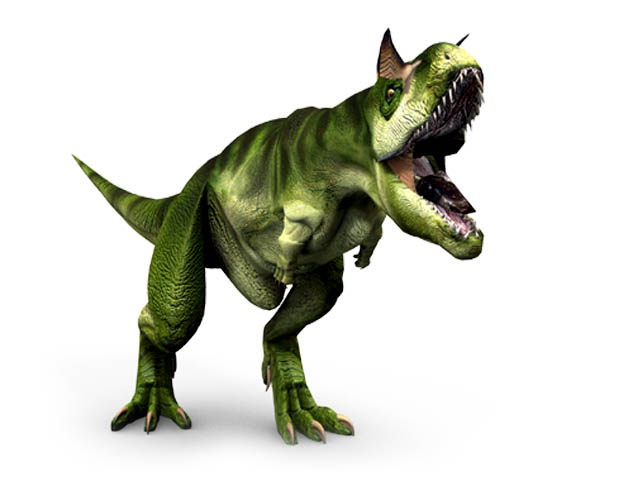
Candidate #1: Carnotaurus
This 30-foot long carnivore that appeared in the novel "The Lost World" (Jurassic Park's sequel) has yet to appear in the movie series. In the novel, it was depicted as a stealthy, nocturnal carnivore that can change the color and texture of its skin to blend into its environment, like a chameleon.
Candidate #2: Troodon Pectinodon
This creepy seven-foot long theropod made its appearance in Jurassic Park: The Game. It is a sickle-clawed assassin, that hunts in packs, is nocturnal and has potent venom that attacks makes the prey disoriented and eventually paralyzed. Due to these reasons, it was supposed to be euthanized in Jurassic Park, but due to a rebellious JP scientist, they still persist . . . wouldn't they be great in JPIV? (Photo Credits)
Candidate #3: Mosasaur
The mosasaur also makes an appearance in Jurassic Park: The Game. These sea-going lizards grew up to 50 feet long and are hungry for anything they could catch: fish, ammonites (similar to the nautilus), sea turtles, sharks and even other mosasaurs! While it isn't a dinosaur, it could make its appearance in the fourth movie! (Photo Credits)
Candidate #4: Inostrancevia
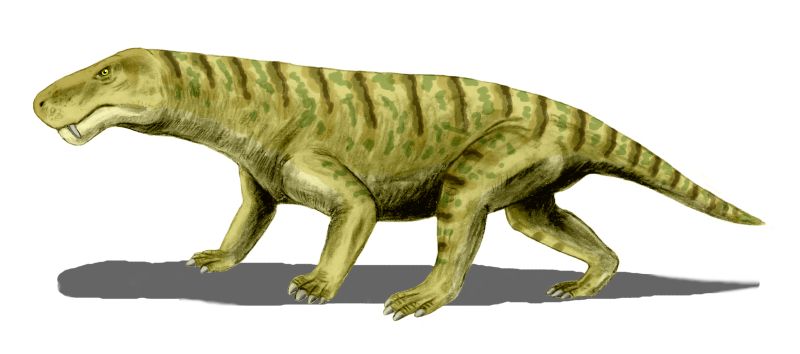
This reptile isn't a dinosaur, but it was still a ferocious predator! At the size of a rhinoceros, this beast was also very fast for its size. If you look at its jaws, you'll even notice that it has four-inch long sabre-teeth, just like a familiar Ice Age cat. This animal hasn't made an appearance in Jurassic Park, or much else for that matter! I think it's definitely time to shed some popularity light on this great beast - and Jurassic ParkIV is just the way to do it!
Do you like my list? What animals do you think will appear in Jurassic Park IV? Please be sure to take my poll on the right side of the page and leave a comment or two!
Disclaimer: Many (or in some cases all) of the photographs and images above are not mine. If you own one or more of them and would like them to be removed, politely let me know via my email address.
Eeee! I'm so excited about Jurassic World! We're only about three weeks away and I can barely stand it! Today, I've got several interesting updates (they just don't stop releasing TV spots...and I love it!) on the film to share with you, plus the final part in my series I've been working on.
Days till:
It is: 3 days till Memorial Day
It is: 21 days till Jurassic World opens
It is: 28 days till Inside Out's release
It is: 30 days till Father's Day
In the Spotlight:
Yep, as usual, we've got more TV spots from Jurassic World. I will show just a few of them here:
In addition to numerous TV spots from Jurassic World, a new trailer for Lego Jurassic World was just released as well. Check it out!
And last but NOT least, we've got an all-new clip from the movie itself, which shows ___ giving Simon Masrani his first look at the hybridized dinosaur, Indominus rex.
As usual, all these new videos get me really stoked for the upcoming film. Three weeks is going to seem like an eternity!
Topic of the Week by Christian Ryan
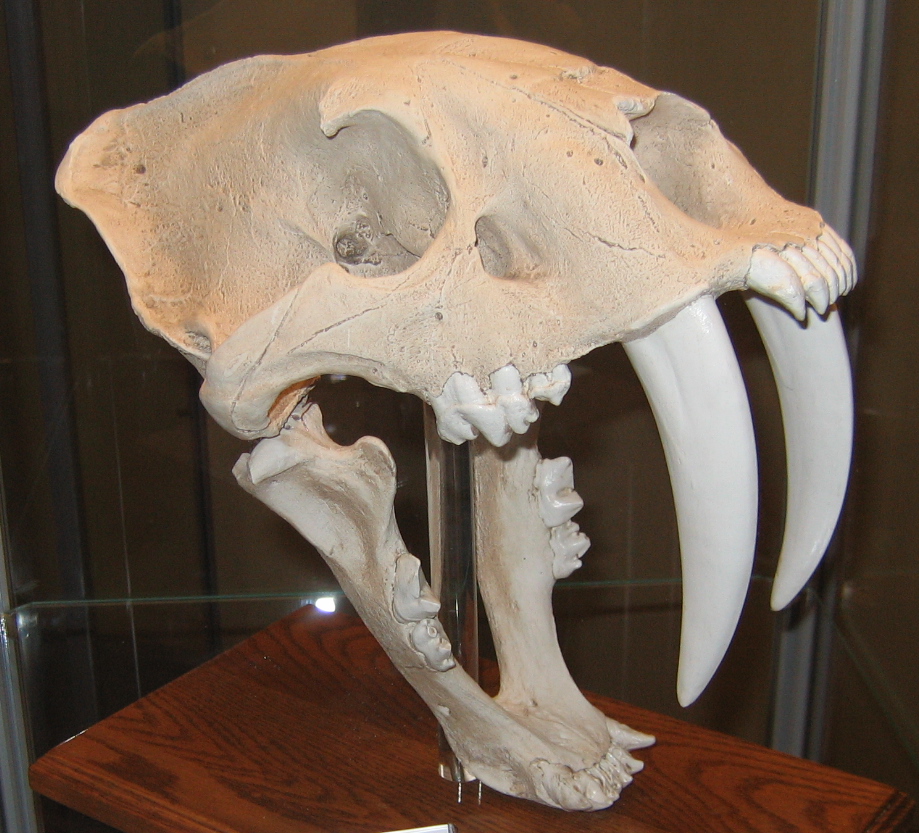
The skull of Smilodonfatilis (boasting 7-inch canines) is an icon of the Cenozoic rock layers.
The geologic column, consists of many rock layers – some rock layers are thick, some are thin. Evolutionists claim that these rock layers represent the entire history of life the earth in time periods, which started 3.5 billion years ago. Now there are several problems with interpreting the geologic column, and the fossil record itself – as the entire history of life on earth over a period of millions of years. Radiometric dating and other commonly used dating methods are flawed due to several unverifiable assumptions. In addition to these problems, there are several reasons to suggest that the earth's fossils aren't nearly as old as evolutionists believe them to be (e.g. soft dinosaur tissue and bent rock layers). Is there another way to interpret the fossil record? In fact, there is. The Bible is the inspired Word of God Himself, the only individual who was there before the beginning of time. Since He cannot lie (Numbers 23:19), we can use His word to develop a worldview – a Biblical, or creation, worldview to look at the evidence we see in the rock layers. This three-part series will take a look at the fossil record through a creation worldview and showcase just how amazing the geological history of our earth was!
In part 2 of this exciting series, we looked at how the Flood of the Genesis account decimated the pre-Flood world, carved canyons, shifted continents and even pushed up mountains! After the Flood, the Bible records that all the animals and Noah's family exited the ark to multiply in the new post-Flood world. At this point in history, most Christians believe that the earth was quite like it is today at this point. This couldn't be farther from the truth! Once again, we can look at the fossil record and, using the Bible to help us interpret it, we can learn what happened in the world after the Flood.
Much of the world would have been fairly barren immediately after the Flood, but it wouldn't stay this way for long!
Most creation geologists believe the K/Pg boundary (the rock layer between the Cretaceous and Paleocene) represents the end of the Flood. But in order to find out what happened after the Flood, we have to travel back to soon after the 150th day of the Flood. What was going on? Well, on the 150th day of the Flood, the waters stopped rising. Even before the waters completely receded, plants regained a foothold upon the exposed earth. Immediately after the final Cretaceous layer was deposited, we find evidence of lots of ferns and similar plants (and let's not forget about the olive branch the dove brought to Noah). Ferns are one of the hardiest plants that reproduce via spores rather than seeds, so it makes since they would be some of the first plants to sprout following the Flood. Since plants began growing as the waters started receding, herbivorous animals and humans exiting the ark would have had plenty of food to eat. Carnivores would also have much to eat, considering the Flood would have undoubtedly left lots of rotting carcasses lying around.
Carnivores would have had little trouble finding enough food immediately after the Flood, given that a lot of rotting carcasses would have been lying around.
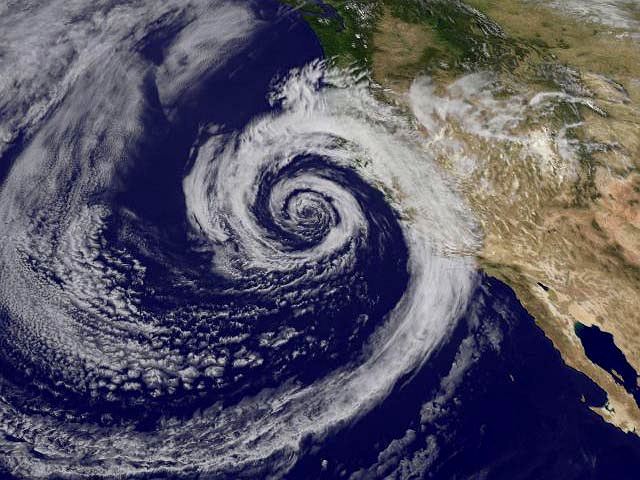
But the earth was still nothing like it is today. Because the Flood had disrupted the earth's climate, the global weather was unstable and unpredictable! Several “freaks of nature” occurred at this time that we don't experience today. For example, the early post-Flood world suffered from hypercanes. As I lived in Florida for the first several years of my life, I know full well what it's like to be in the midst of a hurricane. Don't even get me started about hurricane Katrina of 2005! But the hypercanes of the past were far worse! Caused by the differences in temperature between the ocean and the continents, hypercanes stormed the earth for hundreds of years following the Flood. These hypercanes could cover entire continents and possess intense winds of 500 mph! It would take weeks for these fierce storms to pass and they would have likely dumped 50 inches of rain per hour! This time in history also suffered from massive volcanic eruptions, tsunamis and earthquakes that were still gradually calming down from the Flood.
Continent-sized hypercanes would have torn across the continents with wind speeds of about 500 miles per hour!
This post-Flood, pre-Modern world is reflected in rock layers above the Cretaceous. These rock layers are classified as Cenozoic, or “new life” and were deposited by a series of post-Flood catastrophes. The Cenozoic rock layers are: Paleocene, Eocene, Oligocene, Miocene, Pliocene and the Pleistocene. In these layers are a different set of animals from many of the the ones that appeared before the Flood. Giant killer birds, saber-toothed cats, terminator pigs and mammoths roamed the planet at this time. These animals descended from the collection of creatures that came off of Noah's Ark; as they spread from the cliffs of Ararat where the ark landed, they diversified into a myriad of different species as they adapted to this “new world”.
Many strange and wonderful animals roamed the earth after the Flood, becoming extinct before modern times.
Once again, let us travel back in time and see what strange and wonderful animals existed in this world after the Flood as they struggled to adapt to the ever-changing climates.
Paleocene/Eocene
Loads of volcanic activity pumped carbon dioxide into the atmosphere, which prevented much heat from escaping and fueled the growth of great forests, turning earth into a living greenhouse, rich in biodiversity.
4,350 years ago, following the Flood, volcanic activity during the Flood cast debris and aerosols into the air. Not only did this prevent much of the sun's heat from entering earth's atmosphere, but it also kept the heat from the Flood's volcanic activity in. This created a “green house” effect upon the planet, turning earth into a beautiful, lush landscape. The earth was much warmer than today. Fossil subtropical and tropical plants have been discovered in regions that are freezing cold Arctic and Antarctic regions of today. It was green and lush all over the earth. As animals spread from the ark to the four corners of the earth, they found much food to eat. In the fossil record, we typically find small terrestrial animals and aquatic animals in Paleocene and Eocene rocks. This is exactly what we'd expect to find after the Flood; lots of aquatic animals would have survived the Flood and smaller animals can reproduce, and therefore spread across the earth, faster than large animals, which are found in higher rock layers. We can see one such Eocene habitat that developed shortly after the Flood buried in Germany's Messel Pit.
Leptictidium was a small insectivore living in the Eocene forests of Germany.
The Messel Pit hosts many strange creatures, many exquisitely preserved; this means that they were buried quickly by a regional disaster. Primates like the lemur-like Darwinius, bats (e.g. Palaeochiropteryx), and other primates, like Godinotia. Below the tree canopy, rodents, hedgehogs pangolins, ostriches and Propaleotherium fed in the leaf-litter. Eocene Germany wasn't without its predators though: owls, hawks, falcons, crocodiles and the cat-like Paroodectes were common predators of the region. Another bizarre creature was the Gastornis, a six-foot tall bird with a large beak. Initially, paleontologists believe Gastornis was a predator, but evidence now seems to indicate that it was mostly an herbivore, using its beak to crunch up fruits and tough nuts. While many animals ran from their predators, some could hop like kangaroos. Leptictidium was one such mammal. It consumed small animals like insects, small lizards and frogs; scientists believe Leptictidium had a trunk-like nose, similar to the ones seen in modern elephant shrews.
Gastornis, once thought to be a predator, was more likely a large herbivorous bird, using its strong beak to crunch up fruit and tough nuts...hm, kinda like a parrot...a really BIG parrot!
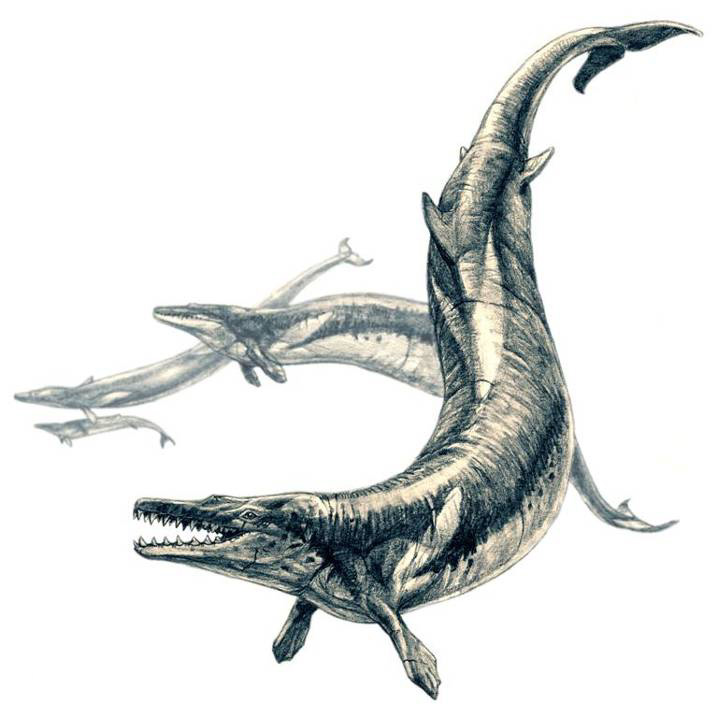
Strange creatures weren't restricted to the land. Different species of whales roamed the oceans, such as the 60-foot Basilosaurus and the dolphin-sized Dorudon. These whales are different from modern whales because they have a tiny pair of back limbs; they were used to help cling to a sexual partner during copulation.
Basilosaurus was a top predator of the Eocene seas, hunting fish, sharks, turtles and smaller whales, like Dorudon.
Oligocene/Miocene
As time passed, the earth began to slowly get drier, and eventually cooler, causing forests to recede and open plains to spread.
As time passes, the climate begins to dry out as the heat escapes the earth's atmosphere. Clouds of debris and aerosols are still blocking a lot of the sun's heat. The earth's great forests began to decline and ice caps appeared in the poles.
Embolotherium was a large Eocene mammal, adapted for life on the newly-formed open plains. Its horn, too fragile for combat, was used for display purposes.
As the climate dried, animals adapted to life in the open plains. Many grew quite large, like the rhinoceros-like brontotheres that roamed the earth for a short period of time as the forests receded and the plains spread. We find abundant fossils of camels and horses that spread across the plains, especially of the Americas. Rhinos at this time came in all shapes and sizes In Nebraska's Ashfall Fossil Beds, the rhinoceros Teleoceras died in great numbers. One specimen even includes a young Teleoceras attempting to suckle from its mother. Herds of these animals died in great volcanic eruptions and were deposited in ash (hence the name of the fossil beds). The Oligocene also brings us the largest land mammal that has ever existed, called Paraceratherium. Paraceratherium was a hornless, 16-foot tall, 15-20 ton behemoth of Eurasia. It was as tall as a giraffe and could reach into tall trees to consume the leaves.
Paraceratherium was the largest rhinoceros that ever existed. Its size alone was great defense against predators.
Some of what many would call the “ugliest” creatures have been found in Oligocene and Miocene rock layers. Meet the entelodonts, or “terminator pigs”; though they looked a lot like pigs, scientists believe the two were unrelated. Daeodon was the largest entelodont ever known, with a three-foot skull and a height of about six feet at the shoulder. Daeodon and other entelodonts were omnivores, eating anything from roots, vegetation, carrion and perhaps even other animals. Daeodon was probably a very aggressive beast. Fossil tooth marks on Daeodon skulls reveals that they even attacked each other! There were also several species of Hyaenodon alive during this time in earth's history, measuring anywhere between the size of martin to about the size of a modern rhinoceros.
The pig-like Daeodon was probably an omnivore, eating a wide range of food.
Despite the wide variety of Oligocene and Miocene creatures, we never see any evidence of evolution in these different kinds of animals. As they adapt to the ever-changing environment, we still clearly see that camels turn into camels, entelodonts into entelodonts, rhinos into rhinos and horses into horses. We only see animals turning into similar animals – animals within their own “created kind” that God created 6,000 years ago.
The Oligocene and Miocene habitats existed for a brief period of time after the Flood. The planet continued to change.
Pliocene
Much of the world in the Pliocene was starting to look like the world we know today.
As we reach the Pliocene, you'll notice that the world looks very similar to the world we know today. But there are still drastic differences. The ice caps were still expanding as the climate continued to get generally cooler and drier.
Bizarre in appearance, Deinotherium was a relative of the modern elephant.
If you visited Pliocene Africa, most of the same animals and plants would be seen (though the forests were probably a bit more extensive). Zebras, rhinoceros, leopards would be common sights here, but you'd also see more really weird and wacky animals, like the giant elephant Deinotherium. It differed from modern elephants thanks to its relatively short trunk and its pair of tusks that protruded from its chin! One animal you would definitely want to see is called Australopithecus. Instead of being the half-human, mostly-bipedal apeman from evolutionary textbooks, Australopithecus was a chimpanzee-like, knuckle-walking ape that would have been at home equally in the treetops and on the ground.
Instead of being the "ape-man" from evolutionary textbooks, Australopithecus was a knuckle-walking ape equally at home in the treetops as it was on the ground.
For a short period of time, the continent of South America appears to have been completely separated from the continent of North America, meaning the animals here adapted to be unlike any other animals on the earth. Toxodon and the trunk-nosed Macraucheenia grazed on the South American plains in massive herds while being preyed upon by the 10-foot tall Phorusrhacos. It was one of the largest species of terror birds – huge birds with long legs, large beaks with a sharp hook on the end and, unlike Gastornis, terror birds were probably carnivorous. Phorusrhacos could run up to 30 mph in pursuit of prey. Let's not forget about the giant armadillo, Doedicurus, which had a club-like tail with spikes on it.
Macraucheenia was likely common prey for terror birds.
Warm oceans after the Flood caused much evaporation; this created large clouds that dumped mountains (yes, mountains) of snow across much of the northern hemisphere and Antarctica. The cool summers and mild winters of this time created the perfect condition for one of the greatest natural history events since the Flood...the Ice Age!
Pleistocene
Huge glaciers, over 2,000 feet high, spread out across the landscape during the Ice Age.
By the time of the Pleistocene sediments, the earth was in the icy grip of the Ice Age. Contrary to what evolutionists believe, there was only one Ice Age in our earth's past. It began approximately 4,250 years ago. During the Ice Age, the snow in the north piled upon the continent until they became massive glaciers. With the cool summers, these mountains of snow and ice didn't melt and they spread southward. During the glacial maximum, about a century into the Ice Age, a third of the planet was covered in glaciers, some of which were over 2,000 feet high!
The woolly mammoth was an icon of the Ice Age; it had thick fur and fat underneath the skin to keep it warm.
The unpredictable climate would have been tough for any animal. But fortunately, God created His creatures with all the necessary genetic diversity to develop special features to help them cope with the cold. The most famous Ice Age mammal of all is probably the woolly mammoth. With thick fur, long and curved tusks and several inches of fat beneath the skin, these hairy elephants were denizens of the Ice Age. They roamed in herds and used their tusks to push through deep snow. Mammoths weren't the only Ice Age beasts – Irish elk (with 12-foot antler-spans), woolly rhinoceros, giant bison and loads of other hairy mammals also grazed upon the open grassy plains just beyond the glaciers. The Ice Age also hosted several predators, like cave hyenas and cave bears of Eurasia, the 12-foot tall short-faced bear of North America and the infamous Smilodon, or saber-toothed cat with its seven-inch long canines.
The Irish Elk's antlers span 12 feet from the tip of one to the tip of the other!
Smilodon were apex Ice Age predators. Many scientists believe these cats hunted large prey in packs.
With all these animals roaming the earth, where were the humans at the time? Fossils of humans and their artifacts don't appear until the highest Pleistocene sediments. The Bible reveals that contrary to the instruction God gave humans, which was this:
“Then God blessed Noah and his sons, saying to them, 'Be fruitful and increase in number and fill the earth.'” Genesis 9:1.
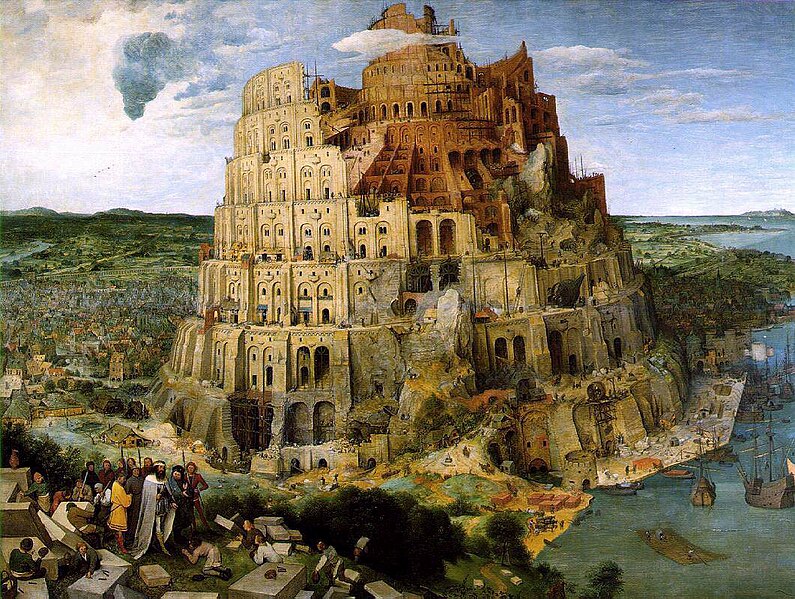
God told Noah and his sons to fill the earth and multiply. But as they multiplied, the human population disobeyed God. In Genesis 11, we learn that they remained in one place in the Middle East and decided to construct a tower that would reach to the heavens. As usual, God insured that His will came to pass and He confused their languages. Since humans could no longer work together, they (finally!) spread across the earth. Just like the animals, humans adapted and diversified to cope with the different environments they faced. This is why we have different people groups throughout the world today.
Even though God told Noah and his descendants to spread across the earth, humans remained in one place and attempted to construct a large tower that reached to the heavens, later to be called the Tower of Babel.
Some varieties of human beings existed during the Ice Age and became extinct. Neanderthals are a wonderful example of how mankind can adapt to thrive in a difficult environment. In order to adapt to the cold, neanderthals developed tough, heavily-built bodies and large noses (this helped warm the air before breathing it into the lungs so that their lungs didn't freeze). As the Ice Age progressed, they relearned how to make tools for bringing down large animals; this knowledge was lost in the Flood.
Even though they had several differences from us, neanderthals were 100% human, capable of speech, art and a concept of the after life.
Alas, the Ice Age was not to last forever. Finally the oceans cooled and the summers got warmer and the winters colder (too cold for snow to frequently build up). The glaciers receded north and forests began to recolonize much of the earth. Woolly mammoths, saber-toothed cats, woolly rhinoceros and many other Ice Age creatures eventually died off at the end of the iciest period on earth, around 2,000 years ago. This was about the time of Abraham. With the earth's more predictable weather patterns returning, humans could build civilizations and animals pushed south by the cold could move back north. Finally, the world we know today had arrived!
The Ice Age ended as glaciers receded north and the climate changed. Animals like the woolly mammoth became extinct.
Over the course of this series, we traveled into the Cambrian seas, explored the Carboniferous forests, climbed out onto dry land on the Permian coasts, learned about the incredible dinosaurs, witnessed how the pre-Flood world was destroyed by the Genesis Flood, checked out some of the weird creatures that lived in earth's unpredictable climate after the Flood and journeyed through the world during the Ice Age. Using the Bible as the “history book of the universe”, there is so much we've learned, and are still continuing to learn, about our planet's exciting past!
Using the Bible as our guide, fossils provide us an excellent window into the exciting history of our planet's past!
Disclaimer: Many (or in some cases all) of the photographs and images above are not mine. If you own one or more of them and would like them to be removed, politely let me know via my email address.














.jpg/1280px-..._in_the_desert_(2429171652).jpg)




_2_(15443578282).jpg/604px-Megaloceros_giganteus_Irish_elk_skeleton_(Pleistocene%3B_peat_bog_near_Dublin%2C_eastern_Ireland)_2_(15443578282).jpg)


.jpg/606px-Woolly_mammoth_mount_(1).jpg)
