Thursday, May 8, 2014

Nine Terrific Animal Mothers

Well, as you all know, Mother's Day is almost here; the day we dedicate to the special women in our lives who gave us life! That's not the only great news I have to share: I've finished Animal Face-Off: Brown Bear vs. Siberian Tiger! But before you view that, let's take a look at our “usuals” and the topic of the week.

Days Till
It is: 3 days till Mother's Day
It is: 36 days till Father's Day
It is: 57 days till Independence Day

In the Spotlight
As you probably already know, there's loads of new things we're learning about the upcoming film, Jurassic World. Two new cast members have just been revealed: Andy Buckley and Brian Tee:

Brian Tee will probably portray an animal ranger in Jurassic World.

Andy Buckley (left) has a part in Jurassic World.
We don't know what Buckley will be doing in the film, but we know that Tee will be portraying Hamada! Many of you might remember Hamada from the leaked pages from the film's script that we learned about a little while ago. From what we know, Hamada will probably be portraying the new theme park's ranger and possibly dinosaur wrangler. In the leaked script pages, he tells Mr. Sourian and Beth why they don't want to feed an, as of yet, unknown dinosaur, live prey and a story of a pet snake he once had. He said that the snake was fine eating dead mice until the day he fed it a live one. The snake never ate dead mice again. Hamada explains that they really don't want the mystery creature to eat live prey . . . sounds like a very exciting dinosaur!

Now it's time for the moment you've all been waiting for: the next episode of my Animal Face-Off series! To see it, just press this link.

Topic of the Week by Christian Ryan
Mother's Day is approaching – the day we all use to celebrate what our mothers have done for us. We give flowers, cards and candy to our mothers to show them our thanks. But human mothers aren't the only mothers who deserve a little praise for their hard work. Just check out mothers in the animal kingdom and you'll see what I mean! Sometimes, what lengths animal mothers go to for their children makes what human mothers do look easy (not that I'm saying a human mother's work isn't hard; I fully appreciate what my Mom does for me!). So let's dive right into my list of animal moms!

Bear
Mother bears have a reputation for fiercely protective of their young.
With the exception of when love is in the air, bears only live together when it's a mother and her cubs. While many human mothers want to see their children the moment they are born, bear cubs are born in the middle of winter, while the bear is in hibernation. The number of cubs born is normally between one to three and they are born hairless, blind and toothless. As with any newborn, newborn bear cubs are starving upon being born, but their mother doesn't even wake up, even to feed them! Another interesting thing you might want to know is that she also doesn't wake up to feed herself or get herself a drink to even produce milk for her babies. So how on earth do the young cubs survive? Well, God had it all planned out – He created the mother bear to be able to produce milk by recycling the fluids already in her body that would normally exit the body as urine. Yes, it sounds disgusting to us, but isn't God amazing that He even takes care of little details like that. If He cares this much for bear cubs, how much more can He care for us! Finally, when spring approaches, the mother bear and her cubs – which will continue to drink their mothers milk for most of their time spent in their mother's care – leave the den. As any wildlife-lover knows, you do not want to get between a mother bear and her cubs! Despite popular belief, bears won't normally go after a human unless provoked, but this all changes if you mess with a mother's cubs! Mother bears will attack literally anything that bothers her cubs with great ferocity, even larger male bears that want to kill the cubs so that she'll come into season again. Surprisingly, mother bears are quite successful at this. The bear cubs stay with their mother for another three years until the mother comes into heat again; this is when she drives her young away.

Kangaroo
Mother kangaroos carry their offspring in their pouches to keep them safe and carry them around with ease.
Out of all the animals in this list, the baby kangaroo (among other marsupials) must have one of the weirdest births! Unlike most mammals, the mother kangaroo doesn't have to worry about pushing a large baby out of her body because it's born prematurely. Before the joey is born, the kangaroo mother licks a “path” through her fur from the birth canal to her pouch. Then out comes the joey – when born, it is blind, hairless, lacks back legs and doesn't look much like its mother at all! In fact, it's only about the size of a jellybean! No more than a few seconds old, the baby kangaroo begins its first challenge in life, reaching the pouch. It uses its strong forelegs to haul itself through the “pathway” in the mother's fur until it reaches the cozy and warm pouch – all within three to five minutes. Isn't it amazing that God designed the joey to know where to go and how to get to the pouch the second it is born? Once in the pouch, the baby kangaroo attaches its mouth to one of its mother's four teats. 190 days later, the joey has developed its fur and sight and begins making its first adventures out of its mom's pouch. A bizarre fact about the mother kangaroo is that from the moment her baby is born, she can get mate again. However, she can postpone her pregnancy until her young one is out of the pouch.

Baby kangaroos look nothing like their mothers when born!

Koala
A mother koala carries her baby around until it's fully weaned.
Incorrectly called the koala bear, this mammal is a marsupial, like the kangaroo. Koala mothers give birth between October and May and the gestation period lasts around 33-35 days. She will normally give birth to one joey (yes, baby koalas are called joeys too), but twins are not unknown. Much like the kangaroo, the joey of the koala also has to crawl into its mother's pouch after being born. A major difference from most marsupials is that a koala's pouch faces backwards. Finally, after about 26 weeks, the baby koala can poke its head out of its mother's pouch and is covered in fur, just like mom. As many know, koalas mainly eat the leaves of the eucalyptus tree, but did you know that eucalyptus leaves are poisonous? To cope with this, koalas possess special bacteria in their guts so that the poison doesn't harm them. Unfortunately, koala joeys don't have this, but God provided a remedy: the mother koala gives her joey baby food . . . from her rear end. In other words, she feeds her baby her own dung. The dung is rich in the bacteria that protects the koala from the poison in their food and is eaten for about a month while the baby switches from drinking milk to eating leaves. By nine months, the joey leaves the pouch forever and begins clinging onto its mother's back. This continues until the baby is fully weaned and begins spending less and less time with its mother.

Octopus
The mother octopus doesn't leave her eggs unguarded for any reason, not even to eat.
Perhaps one of the most bizarre creatures in today's animal mom list, the octopus nonetheless fits the title of “Aquatic Mother of the Year”. How could this eight-armed, boneless creature be a good mother? Well, after mating, the pregnant octopus will swim into a hole in the seafloor and lay as many as 200,000 eggs at a time (depending on the species)! That in and of itself is an amazing feat for any mother – you can bet that the octopus is glad her eggs are really small. But what comes next is even more extraordinary – unlike most invertebrates which lay their eggs and move on, the mother octopus stays by them. She will ward off enemies and gently blow water over the eggs to keep them clean. This behavior continues for about four long months. The mother never leaves her post during this period, not even to eat. In fact, in order to avoid starving, she'll eat her own arms in order to stay alive. At long last, it is finally time for the young to hatch. As they escape their eggs, the mother octopus drags (yes, drags) herself away from the den to avoid attracting predators to her young. Despite her strength pretty much depleted, she manages to get far enough away to give her young a better chance of survival and she dies. This is why octopus often don't live past the age of four (males normally die a few months after mating). All that work and she doesn't even get to celebrate Mother's Day!

Orangutan
Orangutan mothers spend several years taking care of their offspring . . . a long time compared to most animals.
Orangutan mothers can be great parents toward their young. They are able to have their first children when they're between 14 and 15 years of age. Their gestation period lasts the same lengths as humans: nine months. After mating, orangutan males play no part in the child-rearing process, leaving most of the responsibility on the female. When the baby is born, it will cling tightly to its mother's stomach for the first four months of their lives, never leaving physical contact with its mom; however the young one will remain almost utterly dependent on its mother for two years. They will even share the same nest every night. After reaching the age of two, the young orangutan begins to learn how to climb through the trees like his mother; sometimes the two will hold hands while climbing together. Orangutan babies are weaned off of their mother's milk when around four years old and are generally pretty independent after they turn five.

Alligator
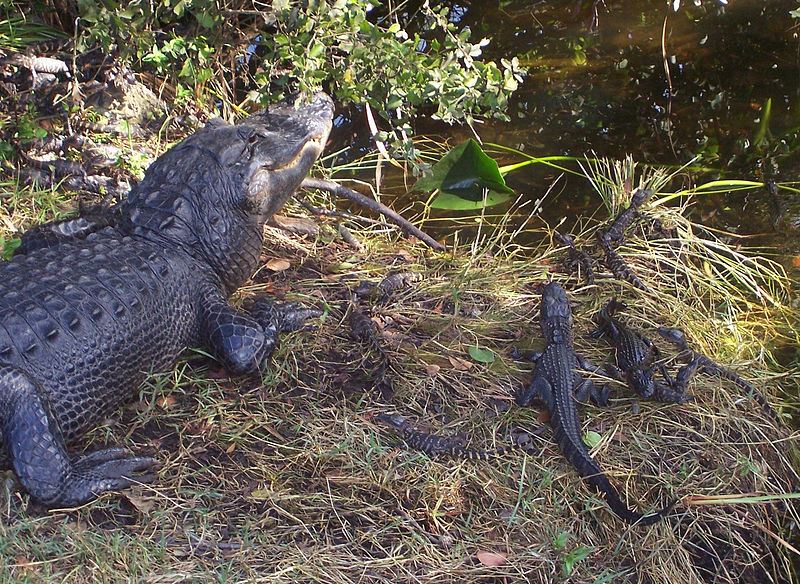
Unlike most reptiles, alligators not only protect their nests, but the young after they hatch as well.
Unlike most reptiles, alligator mom's take good care of their young. First, she'll build a large mound of vegetation, leaves, sticks and mud in a relatively safe spot, not too far from the water. Then, she'll lay 20-50 goose-sized eggs in the nest before covering it up with more vegetation. She won't sit on her nest like a bird, but instead the nest acts like a natural incubator – the vegetation the nest is made of rots, and as it does, it releases heat and keeps the eggs snug and warm. Did you know that the baby alligator's gender is decided based on their temperature? That's right! If the eggs are kept at around 93 degrees Fahrenheit or more, they will be male, but if they are kept at 86 degrees Fahrenheit or lower will all be females. This is why the mother alligator does her best to keep the nest between the two extremes. For the next three months, the alligator mom will fiercely guard her nest to see that no intruders come anywhere close to it. Unlike the mother king cobra, the mother alligator's duty is not finished when the eggs are about to hatch, they're only just beginning! The hatchlings produce squeaking sounds as they hatch and this makes the mother start to uncover the nest of eggs. Then, she'll gently take her babies into her mouth and place them into the water. The mother alligator will continue to protect her babies as they learn to hunt for food for as long as three years.

Stegodyphus spiders
The mother Stegodyphus spider makes an ultimate sacrifice for her young.
Stegodyphus spiders are perhaps one of the most giving animal mothers of all. They give all that they have for the survival of their infants . . . literally. When it comes time to lay their eggs, they make a cocoon of silk and lay hundreds of eggs inside before sealing it up. Then, the mother begins her long duty of watching over her previous young ones. While most spiders show no parental care toward their young, Stegodyphus spiders not only continue to watch them, they feed them as well. She feeds her spiderlings with a nutrient-rich soup-like liquid that she regurgitates from her previous meals. Most baby spiders would soon leave the web, but not these spiders. When the spiderlings reach about a month old, the mother spider will lay on her back and allow her children to clamber onto her body. But this doesn't mean it's story-time! No, it's actually mealtime – the baby spiders bite their own mother and inject venom and digestive enzymes into her body to kill her. Then the kids consume her and the previously family-friendly nest becomes a food-fest as the young spiders attempt to eat the weaker siblings before finally leaving the web.

Sea Louse
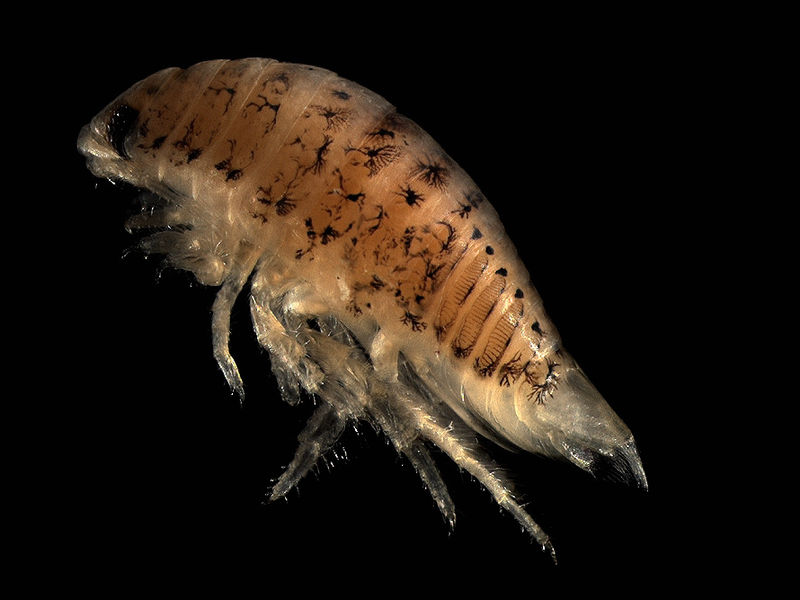
Sea lice can have hundreds of babies at a time!
Now it's time for probably one of the most gruesome motherhood stories in the animal world. You know those annoying sea lice that get under your skin and make you itch like crazy after swimming in the ocean (especially in the summer!). Well, when it comes time to mate, some species of male sea lice search for and drag female members of their own species into their dens, sometimes as many as 25 females! However, the story gets worse than that when it comes time to give birth. The mother sea lice's hundreds of babies begin to grow quickly inside her body. However, she doesn't ever intend on laying eggs. Unlike what happens to the spiders we've already learned about, the mother louse doesn't get the chance to feed her young ones regurgitated liquid. Instead, the baby sea lice will begin to eat their way out of their mother's body before she literally bursts open and the babies are free. As you might imagine, the mother sea louse doesn't even get to celebrate her first Mother's Day.

Elephants
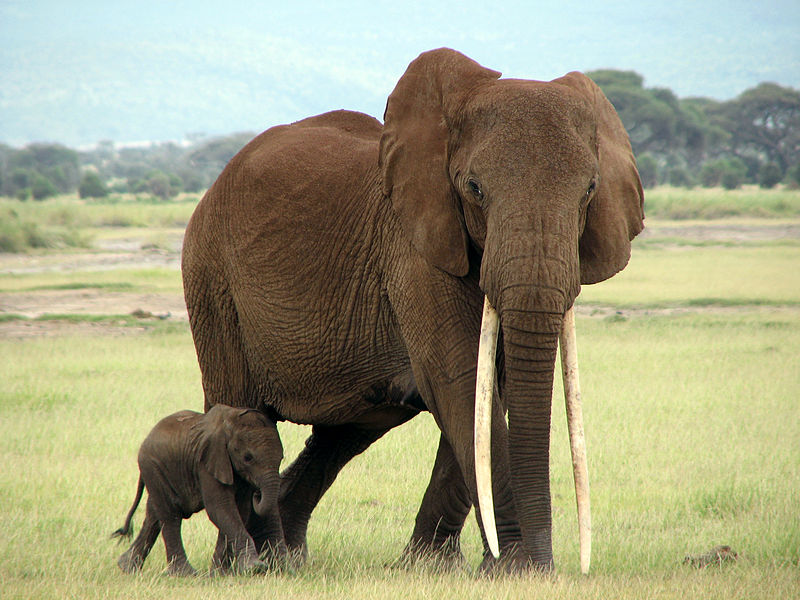
Mother elephants take great care to raise their calves.
After those two rather gruesome tales of motherhood, I figured we'd end this post with a more positive mother's story from the animal kingdom. Now it might seem rather appropriate to talk about elephant mothers since it wasn't too long ago I wrote an article about elephant reproduction habits for Valentine's Day. As we all know, after the romance, there's the pitter-patter of tiny paws . . . or whatever you'd call elephant feet! The mother elephant is very dedicated when it comes to motherhood! First of all, she carries her baby in her womb for the longest amount of time of any creature on the planet – 22 months – that's almost two years! (And human mothers think nine months is long!) As you can imagine, the mother elephant is probably more than ready to give birth when the time comes! The elephant calf exits its mother at around 33 inches in height and about 260 pounds in weight! That's a big baby! It's a good thing that elephant twins are rare, because that's a lot of weight for a mother to carry. Unlike most mammals, the whole herd helps take care of the baby elephants. Just like with humans, the birth of an elephant causes much excitement in a herd. Other herd members will caress and touch the baby with their sensitive trunks. When first born, the elephant calf's eyesight is quite poor and is an unsteady walker, so its mother and other members of the herd give it assistance. Elephants continue to suckle their calves for three years. The elephant could be called one of the most committed mothers on earth because not only is the gestation period long, but so is the time the elephant calf spends with its mother until it's about 12 years old!

Well, I hope you enjoyed learning about all the amazing animal moms out there, and how they'll do anything to insure the life of their offspring (even if that means dying in the process). Now for you offspring of wonderful mothers, spend this Mother's Day with your mom to let them know you appreciate them and most of all, be sure to thank God for giving you such a great mom to raise, care for and love you, because there's not much else better than that. To all our mothers out there, Happy Mother's Day!

PS 1: To post a comment (this is highly encouraged), please simply click the post you wish to comment on, scroll to the bottom of the page and put what you wish to say or ask in the comment box. Then in the box below the comment box choose who you’re going to comment as. And then click preview or publish. If you aren’t signed into Google, you’ll be asked to type in a word and a number in the space provided. Type the word, put a space and then put the number. Then your comment is on the blog!

PS 2: Have a puzzling question about animals (including dinosaurs), myself, my latest book, my stop-motion movies, Creation or etc? Please post your question as a comment or send me an email at animaladventures@aol.com.

PS 3: What’s the new in the news? Check it out at SMILEY’S NEWS.

Thursday, May 1, 2014

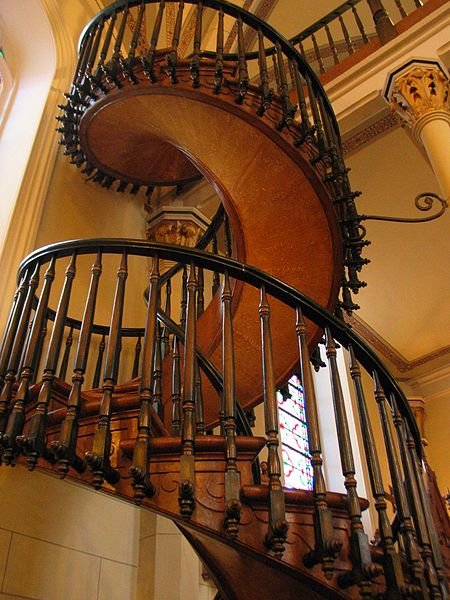
The Miraculous Spiral Staircase of Loretta Chapel

Happy May 1st everyone! I wasn't able to finish my next stop-motion series episode, “Animal Face-Off: Brown Bear vs. Siberian Tiger” by today, but I should be able to have it published next week. It's going to be really cool! I have taken all the photographs necessary to complete it, so I'd say that I'm roughly 50% finished. As I mentioned before, Animal Face-Off season two is going to have more episodes and more cool creatures than the first season. I'm very pleased with how well Animal Face-Off season one went last year. One of my videos (Tyrannosaurus vs. Spinosaurus) has over 10,000 hits as of the last time I checked! Season 2 will hopefully be really awesome! Now let's move on to our “usuals”.

Days Till
It is: 10 days till Mother's Day
It is: 45 days till Father's Day
It is: 64 days till Independence Day

In the Spotlight
As with last week, more production pictures from the upcoming Jurassic World movie (which used to be called Jurassic Park IV) have appeared on the internet over the past week. I'm really glad that the news topic for this film has changed from casting rumors. Now that we know most of the main cast, there's not that many rumors to be made! Anyway, here are a selection of photographs from the Jurassic World set area. Do some of them look vaguely familiar?


The first two photos are from the same set we saw being constructed in some other recent photographs several weeks ago. Theories as to what it was ranged from a viewing platform to view dinosaurs to a research station of some kind. Thanks to these pictures, we now know that this is a helipad. We don't know if this is just for the helicopter the camera guys will use to film from the sky, or if it is actually a set. Whatever the case, it looks cool. The last picture is one of the choppers the film makers are using to film air shots.

Here are some more photographs that have been taken of the interiors and exteriors of the Hawaii Convention Center, the location some believe to be the where the shots for the Visitor Center in the movie will be filmed


It hasn't yet been confirmed, but it looks like this building could indeed serve as the filming location for the Visitor Center. Of course, special effects will have to be applied in order to make it look like a Visitor Center on the tropical island of Nublar where tourists will be preparing to see real life dinosaurs!

This last photograph is of a helicopter that will be in the film:
As you can see, the words "InGen" are on the helicopter's side. This is important because as many of you might already know, InGen was the company that bioengineered the dinosaurs and created Jurassic Park. It's nice to know that InGen might be appearing in the film in one way or another. I was kind of hoping that it would.

Topic of the Week by Joy Hammond, as told to by Lizzy the Lizard

Who constructed these beautiful staircases in the Loretta Chapel in 1872? We don't know, but read more about them in the article below.
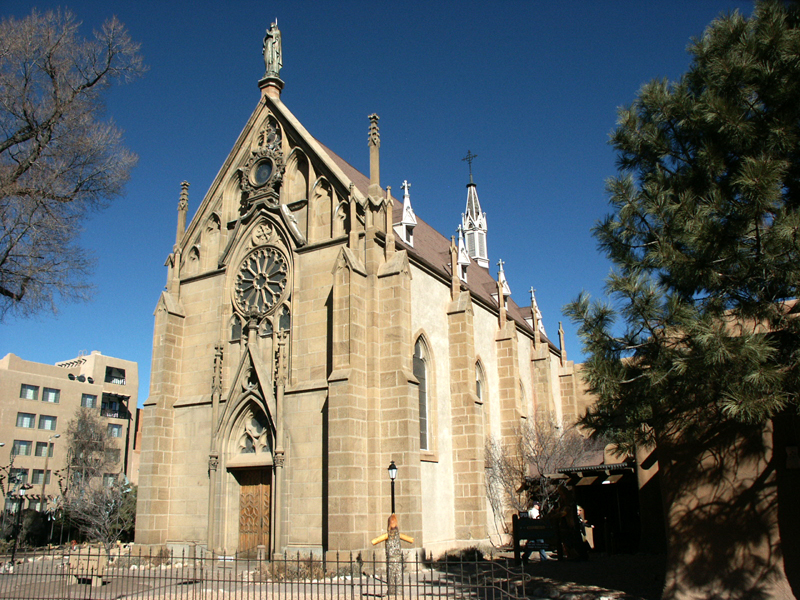
A mystery that has plagued people for decades has intrigued me to go with and take a look myself. Allow me to introduce myself, my name is Lizzy the Lizard and I've asked Daniel P. Smiwthwater, my boss's photographer to come with me on interesting journey to the Loretta Chapel in Santa Fe, New Mexico. Rumor has it that a staircase was built there and that it's maker's identity lays unknown. I've decided to go check out this sight. I asked for a private tour with Nathaniel and asked some questions to our tour guide Bill.
“What makes this staircase famous other than the mysterious identity of it's maker?”
“Well in order to explain that I'd have to take you back to 1872.” Bill exclaimed, “Jean-Baptiste Lamy ordered for a convent to be built for the Loretta sisters.”
“How does that explain anything?” i interrupted,as Nathaniel took some pictures.
“Where's the support beams and all?” Nathaniel muttered.
“Hold a second, listen” Bill stated, “They hired a french architect named Antoine Mouly to build this convent. However he died suddenly and later on after much of the building was complete did the builders realized that a staircase was needed to reach the choir loft. They were in a huge predicament since the the staircases then where too big. One day a carpenter came by and asked if he could build a staircase for them.”
“Saint Joseph!” I interrupted.
“Actually no one know his name,” Bill insisted. “So it is said, the carpenter asked for complete privacy and locked himself up in the chapel for three months. When it was finished, he vanished without a trace. He made a spiral staircase, with no supports beams or anything. He just used his primitive tools and his own two hands. The wood that he used was like nothing seen in New Mexico. No one knows who he is, how he built the staircase, or where he got his wood from.”

“Why did they name him Joseph, if they didn't know who he was?” I asked.
“Good question” Bill said, rubbing his chin. “The sisters of Loretta offered a reward for the identity of the carpenter but no one came. Eventually they believed that it was the St. Joseph that built the impossible staircase.”

“Wow that is an amazing story!” I exclaimed, “boy I wish I could go back in time and found out what happened to him.”

“Don't we all” he chuckled, as I looked at the staircase.
So as we packed up our bags and headed back to New York, I thought about the carpenter and his good dead. How he didn't accept the praise. People like that are rare to find but when they come to your door, you are very blessed. Doing something to help others and not accepting any praise or reward is one of the amazing ways people reveal who they truly are. So the next time you notice a problem that you can fix such as helping someone out. Do a secret good deed and don't let them know. You'll realize you feel good inside and so will the person you helped.

The Loretto Chapel in Santa Fe, New Mexico.

PS 1: To post a comment (this is highly encouraged), please simply click the post you wish to comment on, scroll to the bottom of the page and put what you wish to say or ask in the comment box. Then in the box below the comment box choose who you’re going to comment as. And then click preview or publish. If you aren’t signed into Google, you’ll be asked to type in a word and a number in the space provided. Type the word, put a space and then put the number. Then your comment is on the blog!

PS 2: Have a puzzling question about animals (including dinosaurs), myself, my latest book, my stop-motion movies, Creation or etc? Please post your question as a comment or send me an email at animaladventures@aol.com.

PS 3: What’s the new in the news? Check it out at SMILEY’S NEWS.

Disclaimer: Some (or all) of the photographs above are not my own; if you own them and would like them taken off this blog, politely make the request and it will be done.

Thursday, April 24, 2014

Monitor Lizards: The Living Dragons

Note from Christian Ryan: I have a big announcement to make: this blog has officially reached 10,539 pageviews!!! I can't believe it! Thanks to everyone who reads my blog!

Can you believe it's already the end of April? I can't! The time has flown so fast. For those of you that are interested, “The King on a Cross” drama went quite well. We had well over 100 people in attendance on Friday night, and around a quarter less on Saturday. It was a great turn out. By the way, my next stop-motion series episode (Animal Face-Off: Brown Bear vs. Siberian Tiger) is in the works. I should have that finished very soon, perhaps by either next Thursday, or the Thursday following it. Without further ado, let's dive into our “usuals”.

Days Till
It is: 16 days till Mother's Day
It is: 52 days till Father's Day
It is: 71 days till Independence Day

In the Spotlight
With filming underway for the long-waited-for third sequel to Jurassic Park, Jurassic World is still keeping the lid on a lot of information regarding plot, details on specific characters, which dinosaurs will be in the film and etc. However, some more information regarding the film has been released this week.

Not too long ago, you'll recall that one of the extras in JW took some pictures of one of the JW sets (presumably of the theme park itself) and posted them onto the internet. This week, more photographs from the set have emerged. Here they are below:


Disclaimer: I don't own any of these photographs; if you own them and would like them taken off, politely make the request and it will be done.

Exactly what the structure is or what it will be used for is uncertain at this point. This has got many fans wondering what it is. If you look closely at the pictures, it appears that the structure has what might be electric fencing at the top. Also, the surroundings of the structure indicate that this area of the park isn't for tourists and is for staff only. This suggests one of two things: either this is what's left of the raptor pen from the first film, or it's where a species of dinosaur – maybe Velociraptor or a scary new dinosaur – is kept. Who knows?

And is if those pictures didn't get you excited enough, we have more photographs from the JW set via Entertainment Weekly:

One photograph shows Bryce Dallas Howard's character (who is believed to be named Beth) in what looks like a control room of some kind. The second is of a construction vehicle which appears to have suffered some dino-damage (dino-damage insurance anyone?). The third is a photo of the director's chair overlooking the picaresque Hawaiian flora.

And if you still aren't excited enough, Empire Magazine had the chance to interview JW's director, Colin Trevorrow. Trevorrow didn't only reveal some details about the film he's directing now, but also that the chances are that Jurassic World won't be the last of the Jurassic Park films. Trevorrow is quoted for saying:
"We wanted to create something that would be a little bit less arbitrary and episodic, and something that could potentially arc into a series that would feel like a complete story"
He also went on to explain a little bit about a relationship between Chris Pratt's and Omar Sy's characters in the film:
"They work together and have some pretty cool action scenes together. I wanted to create a relationship there that could be memorable and potentially carry on to future films."
Last but not least, he revealed something that gets a Jurassic Park fan like me extremely excited: plot details (AWESOME!!!). I've been hoping for more plot details for quite a while, and I finally got my wish. Here is what Trevorrow had to say concerning the film's plot:
"so now we’ve brought back another that happened to be the alpha species during its time, and we have to co-exist, so what is that relationship."
Perhaps the alpha species he's referring to is that scary new species of dinosaur that's been talked about since last year. If that's the case, then we're are getting closer to figuring out the identification of this mysterious creature! Since it might be the “alpha species” Trevorrow talked about, the scary new dinosaur is probably relatively intelligent, like raptors. And it's probably relatively small like raptors too. To me, this makes it seem clear that the new scary dinosaur is a Troodon, or a similar theropod dinosaur. Troodon definitely fits the bill, as it was the most intelligent dinosaur and in the Jurassic Park franchise, has spooky-looking glowing eyes and a nightmarish venom . . . definitely a dinosaur who's appearance will make you want to leave the lights on at night!

Of course, this is all speculation. We'll have to wait until the movie is released to find out!

Last but not least, in an interview with Empire Magazine, Trevorrow confirms the usage of live-action dinosaurs along with CGI dinosaurs, just like the first three films.

Topic of the Week by Christian Ryan
Most species of lizards God created are harmless and rather small, but nothing could be further from the truth when talking about a special group of lizards called monitor lizards! They arguably some of the coolest reptiles God made; at first glance, they look a lot like dinosaurs; but unlike the dinosaurs, monitor lizards are still alive today. The Komodo dragon is probably one of – if not the most – popular species of monitor lizard, but the many species come in all kinds of shapes and sizes. Let's learn more about the monitor lizard – the living dragons!

Monitor lizards come in all shapes and sizes.
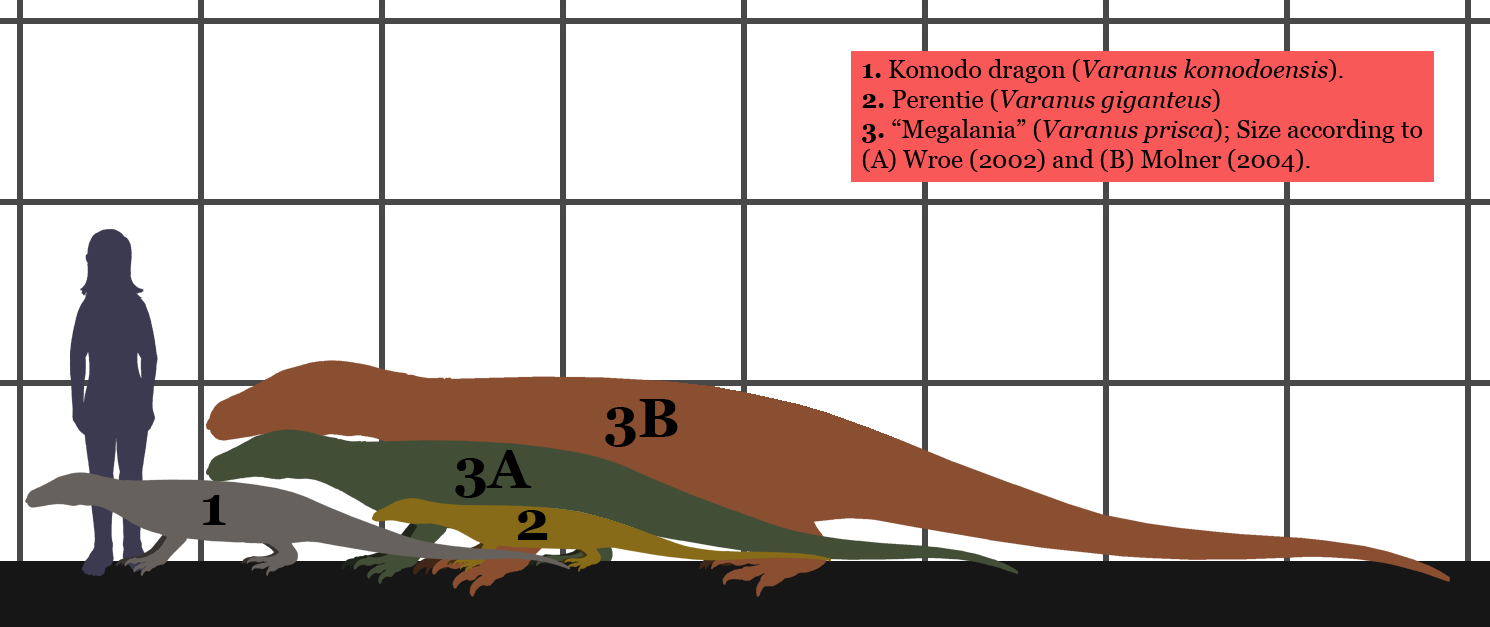
Being terrestrial, God created monitor lizards on the Sixth Day of the Creation week, 6,000 years ago. There are 73 species of monitor lizards currently described, and while many of them have slightly different appearances, diets and sizes, these lizards share many common features. All monitor lizards – like other lizards – walk on all fours and possess somewhat elongated skulls filled with loads of needle-sharp teeth, long powerful tails and strong claws on their limbs. Various species of monitor lizards are native to many parts of Africa, southeastern Asia and Australia. However, they have been introduced to Florida – especially in the Everglades. As mentioned before, monitor lizards come in different sizes; some of the smallest species of monitor lizards grow only 7.9 inches in length. What about the biggest? Well, that title belongs to none other than the Komodo dragon, of course! Komodo dragons can grow on average between 7.5-8.5 feet from nose to tail! But that's nothing compared to the largest monitor lizard (and the largest terrestrial lizard) ever to exist on the planet: Megalania! Megalania – which looked like a giant version of the Komodo dragon – lived in Australia during the Ice Age and grew 23-26 feet in length!

The size of various monitor lizards compared to a human.
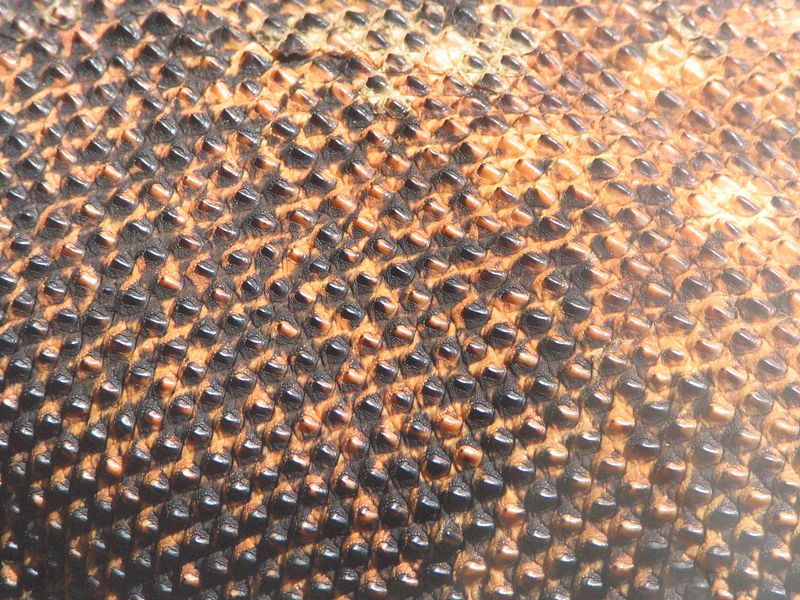
One of the first things you'll notice about monitor lizards is their skin – their unique scales are reinforced with tiny bones known as osteoderms. These osteoderms are kind of like natural chain-mail and keep the lizards safe from many dangers.

The scales of a monitor lizard act like chain mail and protect the lizard from harm.
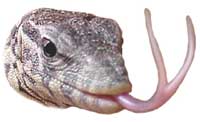
Now let's look at some of the other features of the monitor lizards. Monitor lizards like the Komodo dragon can see up to a distance of 980 feet, but their eyesight isn't all that great. Nor is their hearing. However, God had these lizards excel in two of their other senses: smell and taste. Like snakes, monitor lizards smell using their forked tongues instead of their nostrils. They do this by first, flicking their tongues out of their mouths to taste and collect scent molecules. With the scent molecules on its tongue, the lizard retracts it back into the mouth where it is able to decipher the scents its tongue collected using the Jacobson's organ. Pretty cool, huh? Did you know that a Komodo dragon can smell carrion from over 2.5-5.9 miles away depending on how the wind is blowing?

Monitor lizards smell with their tongues like snakes do.
They may not look it, but did you know monitor lizards are very intelligent reptiles? Studies have proven that not only are some species able to count, but they also can figure out clever ways to get food. In the wild, a monitor lizard was once observed luring a mother crocodile away from her nest, allowing his fellow lizard to sneak to the nest and eat the crocodile's eggs! Then the first monitor lizard got his turn to steal eggs. Monitor lizards have also been known to gang up on prey. And Komodo dragons at the National Zoo in Washington, D.C. are able to recognize their keepers and even have their own unique personalities. Monitor lizards aren't nearly as dopey as they might look!

Komodo dragons and other monitor lizards are very smart animals.
The habitat in which a monitor lizard lives and the lizard's size influences what prey it eats. Most monitor lizards, like the Lace and Nile monitor lizards, are carnivorous and aren't very picky eaters – they will consume birds, eggs, fish, small mammals and even smaller reptiles. Others prefer larger meals. Komodo dragons would starve if they had to live off of what their smaller relations eat! No, dragons prefer to eat a wide variety of food including carrion, other reptiles (including smaller dragons!), birds, eggs, monkeys, small mammals, wild pigs, deer, goats, horses and water buffalo! Despite their large size, Komodo dragons are surprisingly fast and can reach speeds of 12 mph in short bursts and will even dive up to 15 feet underwater in pursuit of a meal. Monitor lizards can maintain higher rates of activity than most other reptiles because they have a relatively high metabolic rate for reptiles.

Monitor lizards are expert swimmers, climbers and runners.
You might be wondering how on earth a creature like a Komodo dragon is able to bring down water buffalo. Sure, its got strength and sharp teeth . . . but it is a lizard, and it's relatively low to the ground compared to the buffalo. Well, you might have heard that Komodo dragons can kill their prey thanks to special deadly bacteria in their mouth. The bacteria was believed to thrive in their jaws because little bits of meat from previous meals would get stuck in between the teeth and rot. Once bitten, the buffalo or other prey animal later dies of infection. But guess what? Recent studies have revealed that the bacteria of Komodo dragons actually isn't actually that deadly. In fact, it's no more deadly than the bacteria found on one of their prey animals, or in the mouth of a lion, or even in the mouth of a kindergartener! So what's the secret?

The mouth of a Komodo dragon isn't actually filled with deadly bacteria-filled saliva.
It wasn't until very recently that scientists took a close look at the flaps of skin hanging from where the lower jaw bones are, and this is the same location where you'll find a venom gland in many venomous snakes. See the connection? Perhaps Komodo dragons were actually venomous? Scientists examined the head of a Komodo dragon and found their hypothesis to be correct: venom glands were indeed present in that spot. So how does a Komodo dragon kill its prey? What it does, is it sits and waits patiently for a prey animal to get close before it strikes! It bites the prey and allows it to escape. However, the venom causes the bitten animal to suffer from blood clotting, lowering blood pressure, muscle paralysis and other nasty effects that cause shock and loss of consciousness. Then the dragons move in for the feast. Afterward, researchers also found out that other monitor lizards, such as the Lace monitor, also have a venomous bite. Yikes!

Komodo dragons kill large animals like buffalo with a venomous bite.
Now let's look at several species of monitor lizards:

Lace Monitor (Varanus varius)
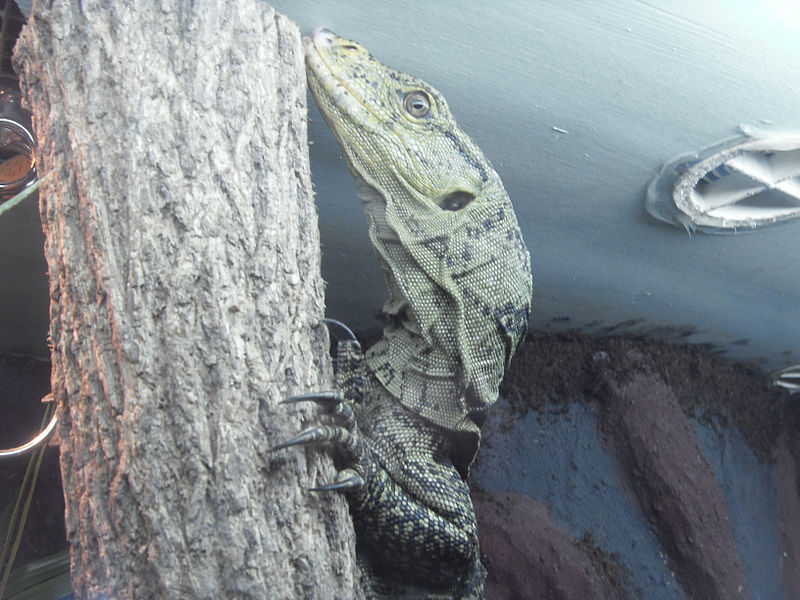
As one might suggest based on this photograph, Lace monitors often climb trees in the wild.
This species of monitor lizard is the second largest in the world, measuring almost seven feet in length, most of which being due to their long tails. The largest individuals weigh around 44 pounds. Lace monitors make their home in eastern Australia and unlike the largest lizard in the world, these guys are largely arboreal. Their diet consists of bird eggs, other reptiles, insects, small mammals and birds. Like other monitors, they love eating carrion. Up until recently, Lace monitors were thought to possess deadly bacteria in their mouths like the Komodo dragon was thought to have. Today we know that they're mildly venomous.

Komodo Dragon (Varanus komodoensis)
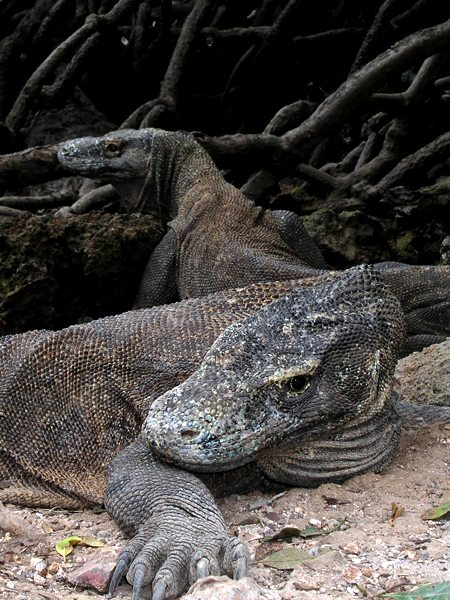
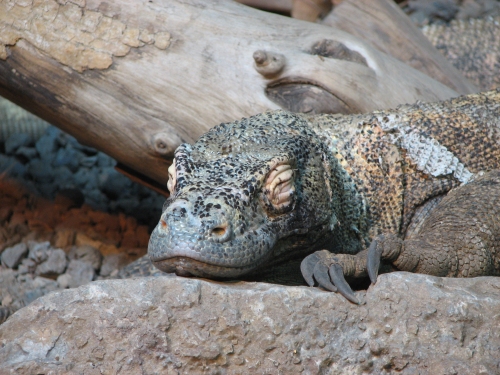
Komodo dragons are the largest lizards living today.
As its name suggests, the Komodo dragon lives on the island of Komodo in the Indian Ocean. With the largest of the species growing up to 10 feet long and weighing on average about 150 pounds, these lizards are far larger than most other monitor lizards. Often times once an animal species reaches an island, it will either grow larger or smaller over time through a process of natural selection (which is different from evolution). When a creature that reaches an island grows larger, the process is called Insular gigantism. No one is quite sure why this occurred in Komodo dragons, but some scientists theorize that they grew big is because they hunted the island's now-extinct population of dwarf elephants known as Stegodons. As you read a few paragraphs before, Komodo dragons are now known to be venomous, and they use their venom to bring down large prey that can be found on Komodo Island such as wild boar, deer and water buffalo. After the initial attack, the dragon follows the victim via its acute sense of smell and once the animal dies from the venom or is too weak to put up a fight, the biter and other nearby Komodo dragons join in the feast. These lizards have also been observed using their tails to knock down large mammals. Sometimes, dragons will also eat humans, but these attacks are rare (fortunately). When it comes time for a mother dragons to lay their eggs, they either dig large burrows to lay them in, or they lay them in abandoned nesting mounds of the local Orange-footed scrubfowl. Around 20 eggs are laid and they incubate for approximately 7-8 months. Once they hatch, they emerge from the nest into an unforgiving world. Mother dragons don't show any parental care for their young and adults are known to be cannibalistic – juvenile dragons make up 10% of the adults' diet! So the young dragons are mostly arboreal, meaning they live mostly in trees, since adults can't climb and there's plenty of food for the young lizards in trees. Komodo dragon babies also have another way to avoid being eaten by older individuals: they roll around in dung. Yes, it's disgusting, but adult dragons can't stand eating faeces. It's a tough life for a young dragon!

Nile Monitor (Varanus niloticus)
Nile monitors are known for stealing eggs from crocodile nests.
A relatively large species of monitor lizard growing up to five feet from snout to tail. Some specimens have been known to reach sizes of around eight feet though. As their name suggests, they live around the Nile River, but they can also be found just about everywhere else on the continent of Africa as well. Though not native there, populations of these lizards are found in Florida and they are suspected to be responsible for many missing pets from that area. Nile monitors make their home around rivers and feed mainly on crocodile eggs and young, fish, frogs, carrion, small mammals, snakes, birds, large insets and snails. Thanks to a relatively high metabolism for a reptile, Nile monitors an run rather fast on land and are excellent climbers and swimmers.

Gray's Monitor (Varanus olivaceus)
The Gray's monitor, also known as the Butaan, is one of the few largely fruit-eating monitor lizards.
Like all other species of monitor lizards, Gray's monitor – also called the Butaan – possesses an acute sense of smell, a forked tongue, sharp teeth, strong claws and limbs and tough scales. But this lizard's diet might surprise you: while it occasionally supplements its diet with crabs, birds, eggs, snails, spiders and beetles, the Butaan mainly eats ripe fruit! That's right! The 180-centimeter long relation of the ferociously carnivorous Komodo dragon eats mainly fruit – especially the ripe fruit of the Pandanus. This might explain why it's largely arboreal. Unlike many monitor lizards, Butaan are rather shy creatures and will hide from humans if possible. They are unique to the lowlands of some islands in the Philippines. Why do these lizards have such a bizarre diet? Scientists believe that it might be so that it doesn't compete with water monitors, which live in the same places.

Megalania (Varanus priscus)
Megalania was the largest terrestrial lizard and possibly the largest venomous creature ever to exist on the planet.
The largest species of monitor – as well as the largest species of terrestrial lizard – is the Megalania. It isn't the largest species of lizard of all though; that title belongs to an unrelated extinct family of marine lizards known as the mosasaurs, some of which grew over 50 feet in length! Megalania made its home in southern Australia during the Ice Age that occurred soon after the Genesis Flood had ended; back then, around 4,250 to perhaps 3,650 years ago, Australia was a much wetter place than it is today. Forests stretched over much of the now-dry continent and made a perfect hunting ground for the giant lizard. Very few Megalania fossils have been found, so it's a good thing their relations still live on today. Scientists look at Megalania's relatives, Komodo dragons, Lace monitors and other monitor lizards to help piece together what Megalania would have looked like and behaved. Megalania grew about 23-26 feet long and weighing 710 to a maximum of around 4,280 pounds. That's a big lizard! What on earth would feed such an awesome lizard? How about a rhino-sized wombat or a ten-foot tall kangaroo? Extinct relatives of many of today's marsupials were giants when Megalania was alive. Procoptodon was a giant ten-foot kangaroo, and Diprotodon was a giant wombat, the size of a rhino or a car! It is also likely that Megalania had a venomous bite like its monitor lizard cousins. We can't be completely sure, as venom glands don't fossilize, but if it was indeed venomous, it would have been the largest venomous animal ever known to exist on the planet! How did the Megalania go extinct? Well, we don't know for sure, but it's likely that the great lizard's food supply was greatly effected by the loss of its main food supply. Its main food supply probably died off due to the drying of the Australian continent as the Ice Age progressed. With no food, Megalania would have starved out of existence.

I'm very glad that God created monitor lizards, and who wouldn't be? They're cool looking and have really amazing features that help them survive. But there's still much to learn about these incredible lizards!

Venomous, carnivorous, predatory and dangerous, monitor lizards deserve respect.
PS 1: To post a comment (this is highly encouraged), please simply click the post you wish to comment on, scroll to the bottom of the page and put what you wish to say or ask in the comment box. Then in the box below the comment box choose who you’re going to comment as. And then click preview or publish. If you aren’t signed into Google, you’ll be asked to type in a word and a number in the space provided. Type the word, put a space and then put the number. Then your comment is on the blog!

PS 2: Have a puzzling question about animals (including dinosaurs), myself, my latest book, my stop-motion movies, Creation or etc? Please post your question as a comment or send me an email at animaladventures@aol.com.

PS 3: What’s the new in the news? Check it out at SMILEY’S NEWS.

Friday, April 18, 2014

Animal Face-Off is Back!!!

Yes, you read the title of this blog post right: my very first stop-motion series, Animal Face-Off is back! But that's far from the only news I have to share (more on Animal Face-Off later)! In other news, our Easter drama, “The King on a Cross” is this weekend! I can't believe it! It seemed like just yesterday that we began memorizing our lines and the such. There will be two dramas held: one on April 18, which is today, at 6:00 p.m. and one on April 19, which is tomorrow, at 2:00 p.m. The cast and I can't wait to once again portray the end of Jesus' life, death and eventual resurrection and its far reaching implications. I'm also so excited that we'll be celebrating Christ's resurrection this Sunday! Easter's almost here!

Days Till
It is: the Friday night performance of “The King on a Cross” today!
It is: 1 day till the Saturday performance of “The King on a Cross”
It is: 2 days till Easter Sunday
It is: 4 days till Earth Day

In the Spotlight
As many of you already know, Jurassic World (formally called Jurassic Park 4) is in the filming process; they are filming in Hawaii. Some photographs from the first day of shooting can be viewed below:


I do not own any of these images, they are from this link.
I don't know what scenes they shot for the film, but based on the images, it appears that the theme park in the film will be quite busy! Let's hope the T. rex doesn't get too hungry if she breaks out . . . again!

In other news, while Jurassic World is still filming, another sequel to a popular movie has just released its first trailer! The movie I'm talking about it Dolphin Tale 2, which will be coming out on September 19th! You can view the trailer to the upcoming film below:


I for one really like this trailer; it appears that it will have the same story qualities that we loved from the first one. But hey, so long as its family friendly, has a good story, Nathan Gambles, Cozi Zuehlsdorff and Winter in it (which we know it does), I'm good to go!

Topic of the Week by Christian Ryan
This week, our topic isn't going to consist around an article. I had an article in mind of course, but I decided that I'd bring my latest stop-motion video to everyone's attention since it's been almost a year since I published my last one! As you've already guessed based on this post's title, I have officially started season 2 of my Animal Face-Off series! I'm really impressed by how the first series turned out. As you might recall, there were nine episodes in the first season: Lion vs. Tiger, Hippo vs. Bull Shark, Elephant vs. Rhino, Velociraptor vs. Protoceratops, Velociraptor vs. Ankylosaur, Tyrannosaurus vs. Ankylosaurus, Tarantula vs. Scorpion, Tyrannosaurus vs. Spinosaurus and The Battle at Kruger. I'm not exactly sure how many episodes this season will have, but probably close to 11 episodes. I can't wait for them to be completed!
Here are many of the creatures planned for Animal Face-Off season 2!
Last year, you probably remember that I was working on a series called Planet of the Dinosaurs. Why did I not do episodes 3-6 and skip to Animal Face-Off season 2? Well, frankly, for several months I didn't have the time or space to set up to create the stop-motion videos. But now that I do, I wasn't really “into” doing Planet of the Dinosaurs, so I figured I'd start with something short and relatively easy to do before mounting the huge Planet of the Dinosaurs project.

So with all that out of the way, what's in this first episode of Animal Face-Off? Well episode number one is called Cougar vs. Gray Wolf. These two creatures are natural enemies. I would now like to take some time to actually talk about each of the creatures before I show you my face-off.

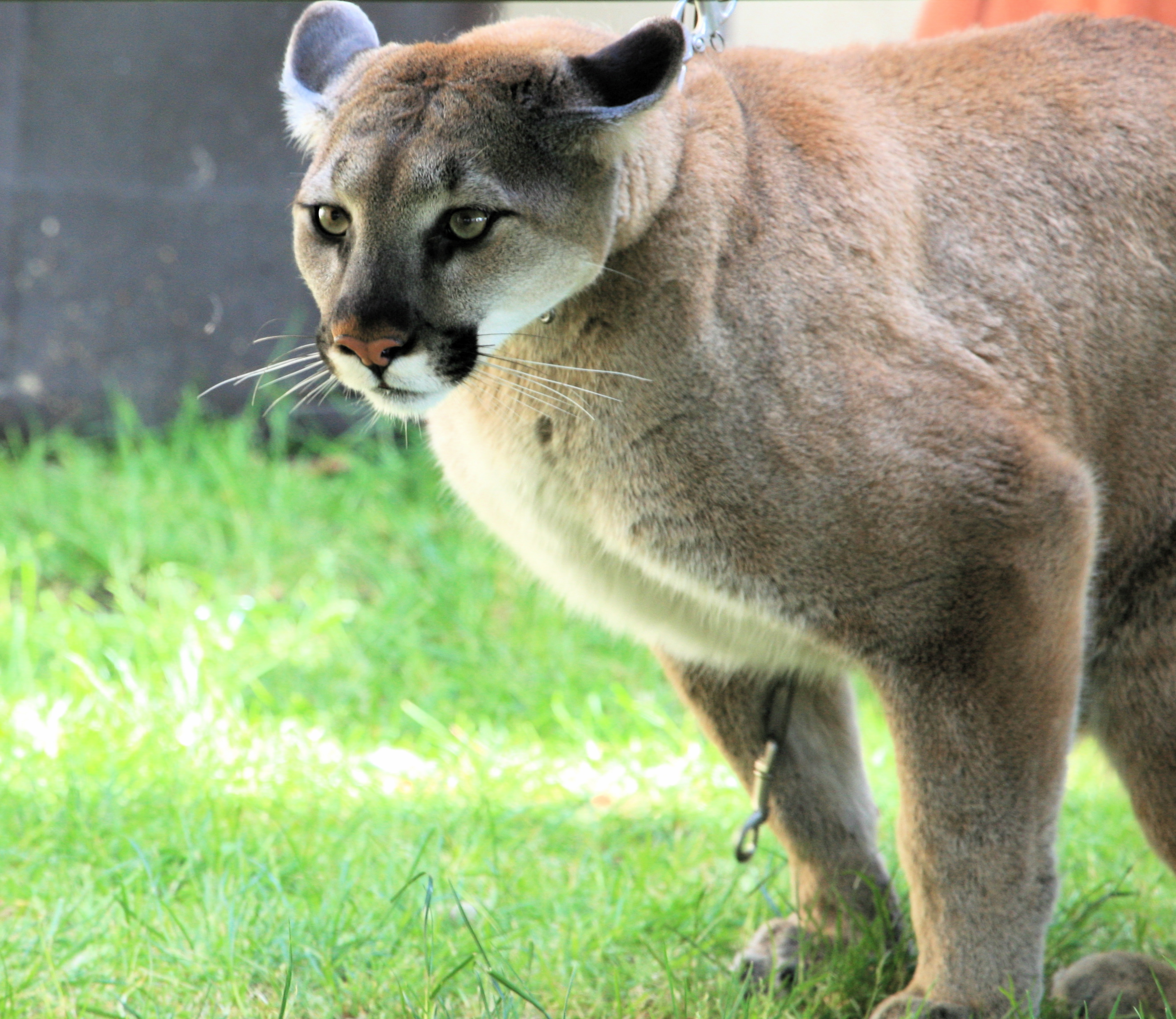
The cougar is also known as the catamount, the mountain lion, the puma, the Florida panther and the painter.
The cougar is known by many different names: the catamount, the Florida panther, the puma, the mountain lion and the painter. It can grow almost three feet tall at the shoulders, nine feet in length and average a weight of 220 pounds. These cats are also very adaptable and can be found in a variety of different habitats. Some are found in the high, rocky mountains of the Rockies – where today's face-off takes place – others live in desert canyons and lowlands, and still others can be found in tropical jungles, swamps and everywhere in between. They can be found in both North and South America. Cougar's used to have a much wider range than they do today and used to live pretty much all the way to the eastern seaboard of the United States; today they're restricted mostly to the western side of the country (though there are some in Florida's Everglades). Did you know that the cougar also has a wide dinner menu? They have been known to eat anything from small mammals to deer and elk! The cougar likes to use the element of surprise to attack its dinner and when it attacks, it rarely misses and uses a swift neck bite to kill the prey quickly. Cougars are fascinating leapers, jumping 45 feet straight into the air!

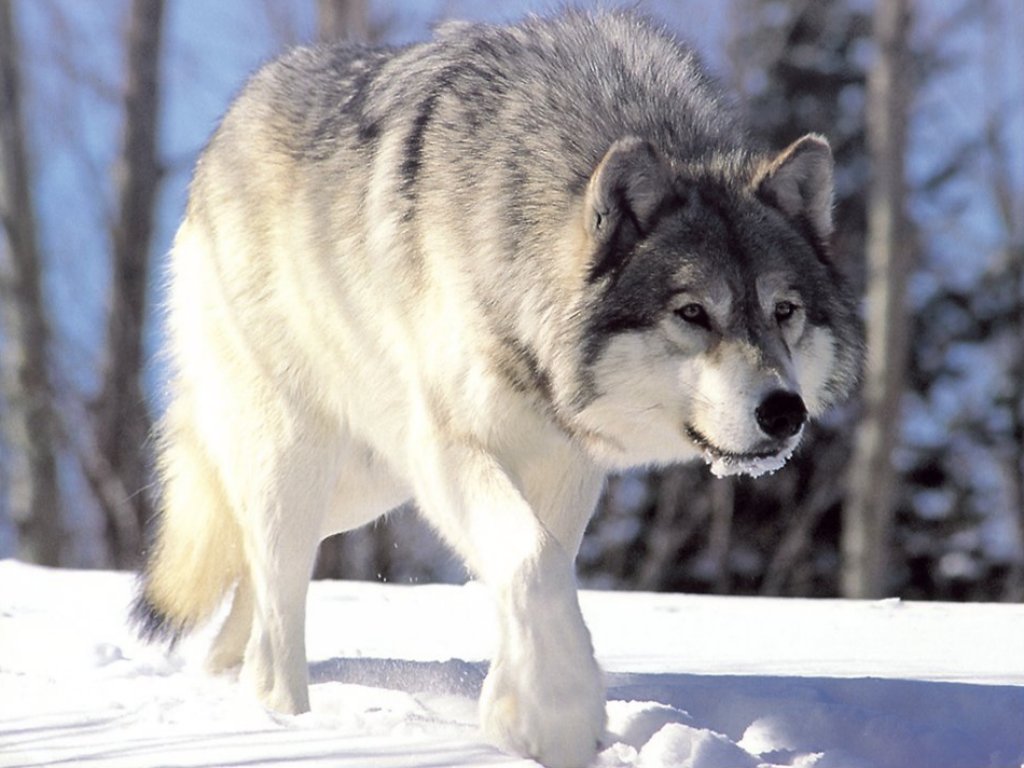
The gray wolf uses numbers, speed, endurance, craftiness and teamwork to bring down prey larger than itself.
The gray wolf is also quite adaptable and is found through much of North America. It grows around five feet in length, 32 inches tall at the shoulders and weighs around 79 pounds. Unlike the cougar, wolves hunt in packs to bring down their prey, which usually consists of small birds and mammals to large elk, moose and bison. Wolves don't usually try to muscle prey larger than themselves to the ground. Instead, they use teamwork to chase the prey over long distances until they either tire the prey out, or bite particular parts of the leg that cause the animal to stumble and fall. The wolf's howl is one of the most iconic of animal sounds; contrary to popular belief, they don't really howl at the moon. Instead, the wolf howls to communicate with other wolves – often times a whole pack will howl at a rivaling wolf pack in the distance to keep them off their turf! Wolves can run up to 40 miles per hour when chasing after prey.

Now that we know a little bit about each animal in today's face-off, let's watch the video! Here it is:


Well, how did you all like the face-off? Please be sure to let me know in the comments below. Have a very, very Happy Easter everyone!

PS 1: To post a comment (this is highly encouraged), please simply click the post you wish to comment on, scroll to the bottom of the page and put what you wish to say or ask in the comment box. Then in the box below the comment box choose who you’re going to comment as. And then click preview or publish. If you aren’t signed into Google, you’ll be asked to type in a word and a number in the space provided. Type the word, put a space and then put the number. Then your comment is on the blog!

PS 2: Have a puzzling question about animals (including dinosaurs), myself, my latest book, my stop-motion movies, Creation or etc? Please post your question as a comment or send me an email at animaladventures@aol.com.

PS 3: What’s the new in the news? Check it out at SMILEY’S NEWS.