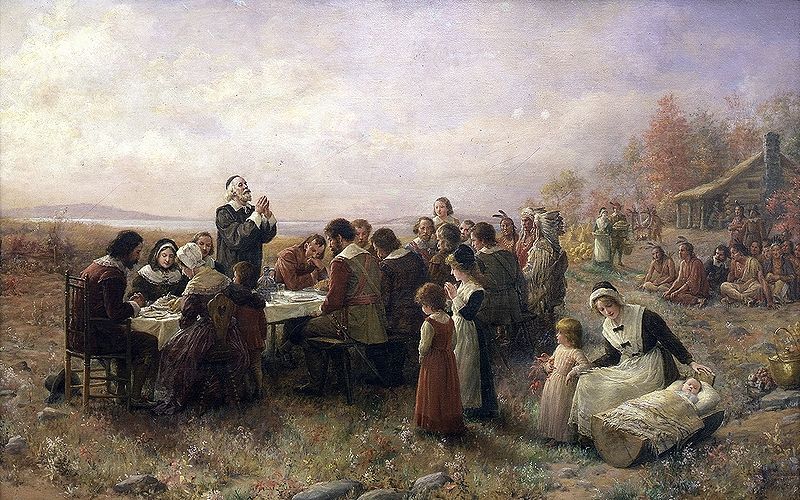
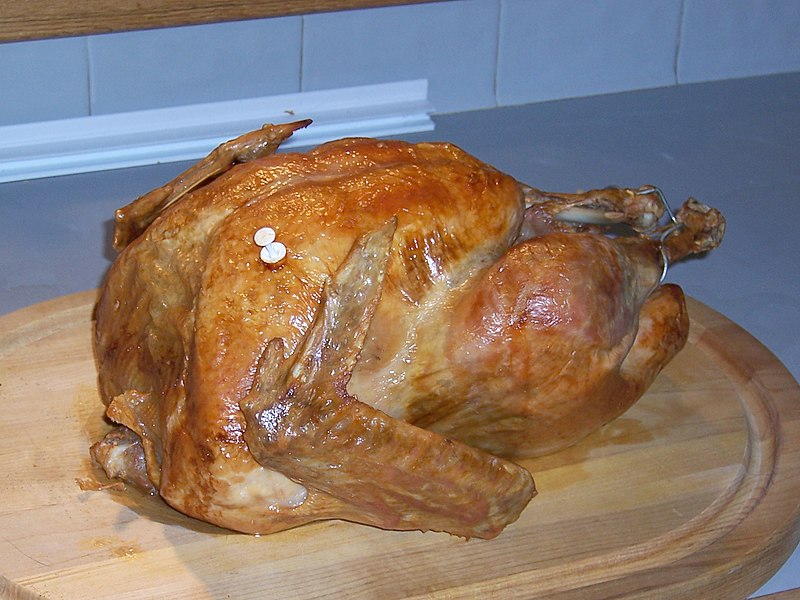
What do you know, Thanksgiving is right around the corner! Don't you just love this time of year? If not, you should. So let's get started with:
Days till:
It is: 2 days till The Good Dinosaur's theatrical release!
It is: 3 days till Thanksgiving
It is: 31 days till Christmas
In the Spotlight:
Pixar has been at it for years - rumors of this company making a dinosaur movie have been around since Up. The Good Dinosaur is that movie and it is finally coming to life! So naturally, since it is coming out in theaters in a measly two days, here is a new TV spot for the film!
And in addition to that, I have also found some fossilized clips from the movie itself:
Remind me never to mess with Butch! That guy's tough! Those raptors are pretty nasty too, I can't wait to see them in the movie.
Topic of the Week by Christian Ryan
Thanksgiving is normally a time of giving thanks and eating. There's
one meal item that just about everyone eats; I'm talking about, a bird
loved by millions – Meleagris gallopavo, otherwise known as the turkey.
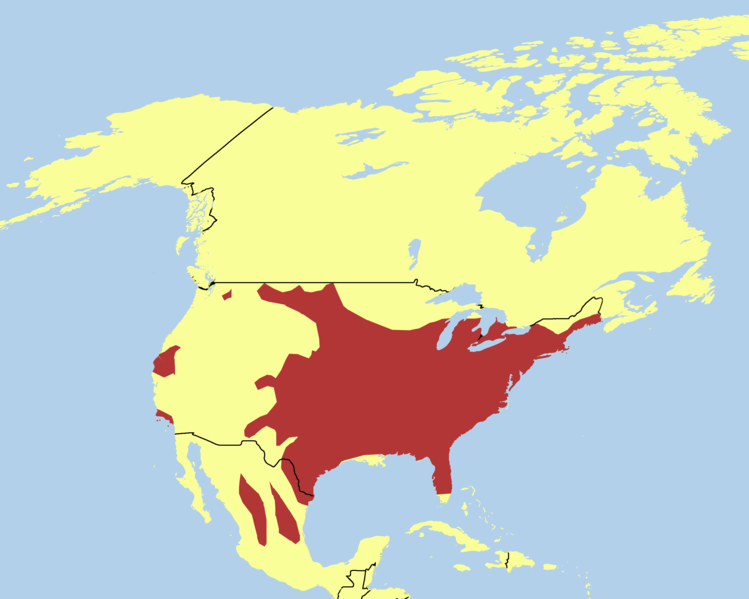
This bird is a common species that is found all over the United States.
When my family was living in North Carolina, Vermont and New York (yeah,
my family's lived a lot of places in my time), we often saw flocks of
these birds on their search for food, often just outside out house.
Despite the popularity of the turkey, many myths have been made up about
these birds and a lot of people don't know much about these birds
except the fact that it tastes really good. So let's learn more about
America's favorite bird! (Next to the bald eagle, perhaps).
The turkey (also known as the wild turkey) is in the
Phasianid family, which also contains chickens, pheasants, partridges,
junglefowls, quails and peacocks. All these birds are probably in same
baramin, also called a “created kind” – one of the original created
kinds of animals God made. Being a bird, God created the first member of
the Phasianid family on Day 5 of the Creation week recorded in Genesis
chapter one (remember that it says “every winged fowl”). It might also
be handy to know that the domestic turkey is a descendant of their wild
ancestors. However, we're mainly going to talk about the wild turkey
today. There's a lot more to these simple-looking birds than what meets
the eye. (For instance, did you know that it's a myth that turkeys hold
their heads up when its raining so that they drown?) So what makes a
turkey a turkey?
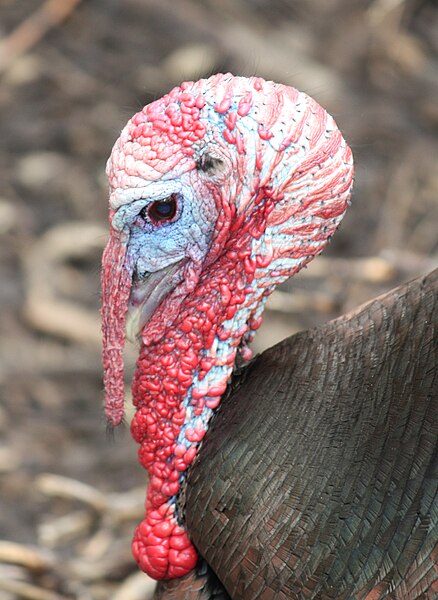
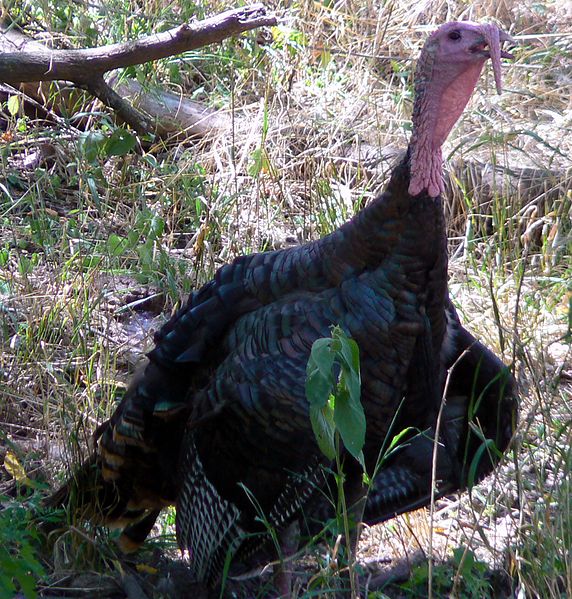
Well, to start it off, the turkey has a long legs, a
feathery body, a relatively small head and beak and, on males, one of
the most noticeable features – that fleshy growth on a male turkey's (or
tom's) beak. That “fleshy growth” is called a snood. A tom gets up to
49 inches long and weighs 11-24 pounds. A female turkey, also called a
hen, stretches 30-37 inches long and weighs 5.5-12 pounds. Toms and hens
have quite a few differences between each other. As you might have
guessed based on the size and weight estimates mentioned above, toms are
larger than hens. Toms are also the only ones to have a snood. The
turkey also has the second heaviest weight of any North American bird.
Did you know that turkeys also have the amazing ability to change the
color of their skin according to their mood? For instance, if the head
and neck are rather white, that means that the turkey is excited. The
color of a turkey's skin can range from brilliant shades of red, blue
and white.
Domestic turkey's are plump birds and can't fly. Wild
turkeys, however, are agile fliers. Another interesting fact you might
not have known about these birds is that they're omnivores, eating a
variety of things they find on the ground. Some foods they eat are nuts,
seeds, berries, roots, grasses and insects. Sometimes turkeys have been
known to consume amphibians and small reptiles (e.g. lizards and
snakes)! That's what I call a varied diet! If you want to watch wild
turkeys feeding, the best time to be on the lookout for them would be
early in the morning or in the late afternoon because these are their
favorite times to feed. Turkeys sometimes can be found alone, but they
are generally social birds, roaming their range in relatively small
flocks.
Turkeys are one of many species of animals that are
polygamous. This is a fancy term that means one male will mate with as
many hens as they can. Turkey courtship starts in March and April and
this is when toms like to strut their stuff . . . literally! When trying
to attract hens, a male turkey will puff out their feathers, drag their
wings and, much like a peacock, they'll fan out their tail feathers.
This sort of behavior is also known as strutting. After mating season is
over, it is time for hens to build and nest and lay the next generation
of turkeys. Normally laying 10-14 eggs over a period of 10-14 days
(they most often lay one egg per day) in a shallow depression in the
dirt covered in woody vegetation, the eggs take at least 28 days to
hatch. Soon, it's time for the eggs to hatch! Baby turkey's are called
poults, and even though they can leave the nest 12-24 hours after
hatching, they'll continue to follow their mother around for four to
five months as they mature.
It's a plain fact – turkeys are found delectable to
many different species of animals at just about every stage of life!
Poults and eggs are often picked off by opposums, raccoons, skunks,
foxes, birds of prey, groundhogs (unbelievable, right?), other rodents
and snakes . . . and those are just predators of the young! Predators of
both young and adult turkeys include coyotes, bobcats, mountain lions,
eagles, great horned owls, domestic dogs and (especially in the fall)
humans! Humans are actually the top predators of these large birds; so
much so that we've domesticated these birds to meet the demand. When
faced with danger, most turkeys will run away rather than fly (though
they'll fly at times for short distances), but when push comes to shove,
turkeys can defend themselves. Large toms especially can be extremely
aggressive toward predators; when faced with danger, they can fight with
the spurs on the back of their legs, bite with their beaks and bump
their large bodies against predators. Many small to mid-sized mammals
are deterred by a turkey's defense methods. So long as a human doesn't
have a gun, a large turkey will also occasionally fight off a human
being, especially where natural habitats are rare. So if you see turkeys
in the wild, it's best to give them space and let them forage,
undisturbed.
The turkey is quite a survivor. And for good reason –
they're smarter, have more complex behavior than we give them credit
for and can even put up a good fight at times. So this Thanksgiving,
instead of merely thinking of the main course of your Thanksgiving's Day
meal as good food, but think of it as the amazing, un-dumb and
beautifully designed bird God created it to be!
| ||||||||||||



Disclaimer:
Many (or in some cases all) of the photographs and images above are not
mine. If you own one or more of them and would like them to be removed,
politely let me know via one or both of the email addresses above.