Thursday, October 25, 2012

Harvest Day Special - Halloween or "All Hallows Eve"?


Bad news comes in all shapes and sizes. Life is full of disappointment. Life is a world of sad tribulation. And yet, there is beauty and life at the same time.” Christian Ryan, 2012

The statement above is so, so true. Ok, maybe what I’m about to say isn’t quite as bad as the statement above suggests, but it is indeed a bummer: my Christmas play, “A Big Misunderstanding,” is officially cancelled L. I’m bummed, but it really is for the best, I mean, really, it’s only a few tens of days till Christmas (61 days to be exact). Not a whole lot of time to do a Christmas play! So now we can turn our attention to the Easter play I also wrote called, “The King on a Cross”, formally known as, “Worthy is the Lamb”. We plan to work on that this coming January of 2013.

Many of you may be wondering how my next stop-motion film: “Animal Face-Off: Elephant vs. Rhino is doing. Well, it’s coming along great; I’d say it’s about 25% finished. I plan to release it sometime in early November. Don’t forget to check out my last movie a few posts ago and post your comments about it (that will help me make better and better movies).

Many are very excited this time of year. Not about Christmas or Thanksgiving, but another “holiday” coming much sooner than that: Halloween! Stores all over the country make millions (if not billions) of dollars every year on Halloween decorations and costumes, the only holiday that makes more money is Christmas. Now only do they make money on costumes and decorations, but they also make money on candy, tons and tons of candy. They also have those creepy tours through those supposedly “haunted houses”. “The gorier the better” seems to be today’s slogan of Halloween. Over the years, costumes and decorations have become creepier and gorier. I mean, on my Dad’s way to work, he passes a house with at least . . . say, 20-40 decorations (I’m not exaggerating) ranging from eerie skeletons that appear to be rising out of the ground to a GIANT inflatable black cat, to an inflatable horse and headless rider (the rider is carrying his head under his arm). I mean, one of those big inflatable cats can be worth $40 by itself, and they have a bunch of things like that in their yard, so they probably have well over $100 worth of decorations in their yard.

A spooky looking Jack-o-Lantern
Now, being a born again Christian, my family and I don’t celebrate Halloween. Some Christians do celebrate Halloween, but I really don’t condone it. When we talk something positive about this day, we call it “Harvest Day”. Should Christians really be celebrating this holiday? What is a Christian to do on October 31st? Well, that is what this post wishes to tackle. So please continue reading to learn stuff about this holiday you never knew about (by the way, Halloween is not an official holiday, contrary to popular belief).
I firmly believe that in order to address and tackle an enemy, we must know something about it. The same applies to evil “holidays”. So let’s take a look at its history and see how not harmless some of those Halloween traditions are.

Now where did Halloween begin? Well, there are many ancient cultures that have days very similar to Halloween. These cultures range from Ireland to Mexico (the Mexican version of Halloween is called, “The Day of the Dead”). Now if there were only a few places around the world that have Halloween-like events, then it would be considered “coincidental”, but with so many different cultures around the world celebrating Halloween-like “holidays”, it’s unlikely that they all just coincidentally are similar, no, it’s way older than you think!

Some tell you that Halloween-cultures started a few thousand years ago, but really, the world’s human population was already spread apart by that time, so it is more likely that its origins are older than that. They probably route back to a time when the world’s human population was in one location. And there’s one and only one time after the Flood when the world population was together – right after Noah’s Flood and before Babel, around 4,300 years ago! That’s old! How can we even assume that? Well, the Flood of Noah killed a whole lot of people. Only eight people survived – Noah, his wife, his sons and their wives. From them, the human population came, including everyone on the planet today. Now considering Noah and his family probably lost a lot of relatives who failed to listen to God’s warning, they must have been a little sad. Perhaps the people living right after the Flood made a special event to remember those souls lost in the waters (of course this is just speculation since the Bible says nothing about this “remembrance day”). Another theory deals with Noah’s wife. Noah’s wife isn’t mentioned in the Bible a little while after the Flood. We don’t know for sure, but perhaps this is because she died soon after the Flood. We know in that portion of the Bible that people lived hundreds of years at a time, so Noah’s generation (which at this time only would have consisted of him and his wife) would have lived to see their children grow up to have children of their own, and have grandchildren and great grandchildren and great, great grandchildren and great, great, great grandchildren and so forth. So it could be that after having many great, great, great . . . grandchildren, Noah’s wife died and her grandkiddies held a special “remembrance day” for this woman.

We may never know exactly where this “holiday” begun, but either way, after leaving the Tower of Babel as described in Genesis, people would have taken the “remembrance day” culture with them as they traveled the globe, but as they did so, they did some tweaking to this day as we’ll see in a minute.

Flashing to the bit more recent time of more than 2,000 years ago, the Druids, or Celtic people of Ireland, Great Britain, France had morphed this “holiday” a lot. These people had elaborate and religious pagan festivals, one of the most important was the Fire Festival called Samhain (it’s pronounced sow-en, nothing at all like it’s spelled, is it?) that was observed in harvest time. Now the Celtic people had a lot of strange beliefs, one of which was that on this particular night, the barrier between natural world and the supernatural world was removed and the spirits of the dead can roam among us in the form of ghosts. This event was nowhere near as “fun and lighthearted” as today’s Halloween, but this is where the “spooky version” of it originated.

Halloween wasn’t all paganized though. Actually, early Christians made their own “Halloween” day . . . sort of. The customs of this day were Christianized in 835 A.D. when Pope Gregory IV decided to dedicate a day to the believers who had died. This day was called “Feat of All Saints” and was originally in the spring but was moved to November 1st to replace Samhain. The day before “Feast of All Saints” was called “All Hallow’s Eve” and was a sacred vigil in church. Apparently, “All Hallow’s Eve” was too long for most, so it was shortened to “Hallow’s Eve”, then to “Hallow’en” and today most of us just write (or type in my case) “Halloween”. So we have two “holidays” that are somewhat similar: Samhain, a 100% pagan thing and “All Hallow’s Eve”, a Christian-type thing. Which one do you think is the one that stuck around?

Every year, Halloween costumes and decorations get more and more gruesome!
If you guessed Samhain, you’re wrong! Today’s Halloween is a mixture of Samhain AND “All Hallow’s Eve”. But there’s more to the story than that. The knocking on door thing was started in the British Isles where people in masks would go from door to door putting on a simple performance to earn (what else?) food and drink! Many times these shows had Christian themes. (Keep in mind I did say, “many times”. Some of these people would simply go up and ask for something and then if they got it they’d bless the house, if they didn’t they’d curse the house) So how did we get from putting on a show to earn food to simply knocking on a door and yelling, “Trick or treat!”?

When first started, Trick-or-Treater's Costumes were never this spooky!
Well that story started back when Irish and Scottish folks brought Halloween customs to America in the 19th century (Halloweens much more complex than you thought, isn’t it?). On Halloween night, “some” vandals (a lot, actually) started doing “cute” pranks and mischief. These folks did stuff like soap windows, tipping outhouses and yanking doors off their hinges (doesn’t sound very “cute” to me!). These were said to have been the work of mischievous ghosts, goblins and witches. When we reached the 1920’s though, these jokes weren’t very humorous at all! This is why Halloween is the policeman’s least favorite day of the year, they have to always stay on their toes! The sabotage was getting worse. So community clubs such as Boy Scouts decided to help the situation. They decided it would be a good idea to have children going from door to door and yell, “Trick or Treat!” as soon as the door was opened. This would keep those vandals away. It didn’t take long to catch on, by the 1930’s it was a popular Halloween activity. So this type of Halloween wasn’t bad. It was fun, playful, and entertaining. It wasn’t bad at all . . . yet!

As we all have noticed over the years, costumes get more and more gory and horrific. And the Samhain part of Halloween has started to come out. Ghosts, goblins and witches (along with their witch craft) is creeping out and haunting like they did 2,000 years ago. However, unlike the legend, they don’t really haunt the earth, except in the form of imaginations. Today’s Halloween, a “holiday” intentionally supposed to be a Christian day, is a day filled with spooky, creepy paganism that deals with the souls of those who’ve died. Now you know exactly how bad Halloween really is and why my family doesn’t celebrate!

Some of you might be asking yourselves, “What’s so bad about witchcraft?” (Supposed ghost encounters is a whole other topic, I’ll talk about that later). Think my talk on this subject is cheap? Well, God’s talk is definitely not cheap! God Himself speaks against paganism and witchcraft in the books of the Law (the first five books of the Bible). Yes, witches are also not new, they were around 3,000 years ago, about the time of Moses. . . . So as you can see, God warned us to not follow paganism, as harmless as it seems, it has a much, much deeper thing to it. It’s all in Satan’s evil plot to get people away from God. As I’ve expressed in previous posts, Satan is very real indeed! There is a Heaven and Hell.

A lot of people don’t know this, but Satan is really an expelled angel who used to live with God. In the book of Ezekiel, we read that his sound was like that of a beautiful instrument. However, when Satan got prideful, he was banished. Believe me, Satan is no joke, he’s got lots of power. However, being his Creator, God has even MORE power. Satan really wants to lure people away from God and Halloween is just one of those times he uses to do this, in the form of “harmless” witchcraft, fake devils (by the way, Satan doesn’t have horns, a pointy tail and pitchfork either), ghosts, goblins and skeletons. (And after all, the main themes of today's version of Halloween are death, curse, spookiness and just plain gory) Even things that really aren’t bad are used a lot on this day, such as black cats, bats, spiders and crows. None of these animals are bad at all (see my previous article: “WE'RE BATTY FOR BATS” for more information). So seriously, what’s a Christian to do on this evil “holiday”?

Well, there’s lots to do! First of all, one option is to pray for all those poor lost souls engaged in this paganism. Another thing you can do is along with your candy, give out Bible tracks. Kids will take just about anything if there’s candy involved. If you don’t feel like the whole “trick-or-treaters” thing (or even if you do), you can go to your church and help out with your church’s Halloween, or rather, “Harvest Day” event. If your church doesn’t have this event planned, you should inquire about it (and if it’s too close to the date, simply suggest it for next year). Beware, Satan is out to stop all lost souls from God’s holy Word. But together, and with God’s help, we can use this paganism’s “holiday” to reach more lost souls and lead them to God by telling them about Jesus’ message of salvation!

Wowee! We learned A LOT about Halloween, er . . . “Harvest Day” today didn’t we? I learned a lot myself! (I’m not kidding like they do on those little preschooler TV shows, I really did learn a lot!) This topic is rather heavy so please, if you have a puzzling question about anything in this post (or anything about myself, my book, THE KING ON A CROSS, animals (including dinosaurs), Creation, God or etc.) please feel free to send your question as a comment. You don’t have to sign in to do this. Or you can send an email to animaladventures@aol.com. Thanks for reading today! Bye for now!

PS: Please help expand our wiki, Exploration Books Pedia. It’s free!

PS 2: Be sure and check out Smiley’s News to see today’s latest news.

Thursday, October 18, 2012

We're Batty For Bats!


Hello everyone! Welcome back to my blog! First, as always, I’ll give you guys updates on the stuff going on around here.

The casting call for the play, “A Big Misunderstanding” is not planned yet, so I can’t give any information on that. Unfortunately, the chances are that the play won't happen next year so we might just have to cancel it. However, there is a small chance of it happening, so if you would like to be involved in the production (because we still have three speaking roles and 12 non-speaking roles to fill), please send me an email to animaladventures@aol.com and I’ll be sure to see what I can do.

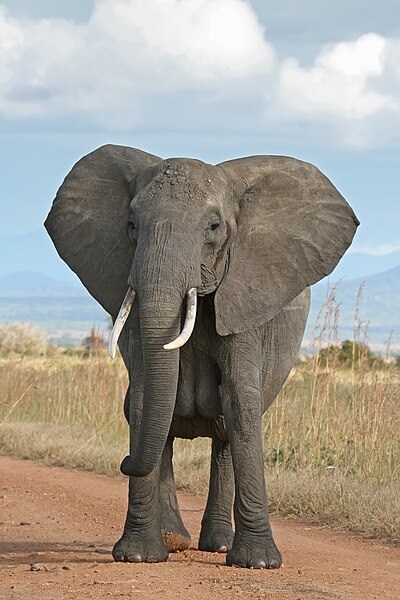
If you enjoyed my latest stop-motion film, you will be glad to know I will be working on my fourth one soon (if you missed it, please click this link: ANIMAL FACE-OFF: HIPPO VS. BULL SHARK). So what is my fourth one? Well, it’s the third episode in my Animal Face-Off series called: Elephant vs. Rhino. This face-off will be taking place in eastern Africa. Don’t think elephants and rhinos would fight in the wild? Believe me! They normally are quite harmonious with each other, but when they get feisty, all fury breaks loose! I don’t want to give away the outcome of the fight though, you’ll just have to wait for that. I plan to start production somewhere between now and the second week of November. I can’t wait. This will be one of my favorite episodes no doubt because elephants are some of my favorite animals (don’t think I’ll take it easy on the elephants though!).

Who Will WIN?!?
African Elephant
vs.
White Rhinoceros

Now, we all know it, but many of us have different reactions to this: Christmas is only 68 days away! Some of us are really excited and 68 days is ages away. Meanwhile to some of us, 68 days is as a week! But regardless of the reaction, it’s coming!

This time of year, one kind of animal is seen around this time of year quite often. This kind of animal is none other than the bat! Bats are everywhere, they’re in movies, Halloween decorations, scary novels, and spooky video games. Perhaps one of the most famous “bat” of all is Dracula, a vampire that supposedly turns from man to vampire bat and vice versa. But how much do you really know about these little flyers? Is everything you’ve learned about bats really true? Take this pop quiz and after that we’ll delve into the world of the bats.


Where are bats origins?

True or False: Bats are Birds

True or False: All bats fly around by night searching for people to blood-suck

True or False: Bats occasionally get stuck in people’s hair

True or False: Bats are blind

True or False: All bats roost in caves

True or False: Most bats carry rabies

Now, I’ll tell you the answers as we learn about these creatures and face our fears. There are four groups of animals that have been gifted with the power of flight. These animals are birds, the extinct pterosaurs (or flying reptiles), insects and bats. All other “flying” creatures such as the flying squirrel, flying snake and the flying lemurs don’t actually fly – they glide. There is a difference. Bats are mammals but not rodents as commonly believed. Bats are the only mammals that can actually fly. We know this because bats are covered with fur, and only mammals have fur (pterosaurs and insects also have “fur”, but it’s a different type of fur).
Most scientists will tell you that bats evolved from little shrew-like mammals that chased insects by jumping from branch to branch and eventually evolved a wing membrane and were able to fly. But this is incorrect. Bats actually were created around 6,000 years ago when God created all the flying and swimming creatures on Day 5 of the Creation week (notice, this is before shrew-like animals came into existence on Day 6), just as the Bible says.

You may not know this, but there are actually hundreds of species of bats. They range from creatures the size of a mouse, to creatures with six-foot wingspans. Bats live in just about everywhere on the planet, in just about every habitat and continent, except for Antarctica. They can be found in jungles, deserts, mountains . . . just about everywhere. Bats are a very complex group of animals, so we don’t have time to discuss them all today, we will just discuss a few species.

There are two main groups of bats, the megabats and the microbats (the ones we’re going to look at today). The difference between the two is simple: Megabats are the really big, or mega-sized ones, and Microbats are the micro-sized ones. These are the bats we will look at today.
There are a lot of different species of microbats, and they have a wide range of diets. Most eat insects, and some eat . . . or rather drink . . . blood. But that’s not most bats. We’ll talk about the ones that drink blood in a minute though. Anyway, as I said before, bats are just about everywhere, and they are probably living near where you are too, it’s just that they’re nocturnal, so you’d have to go out at night to see them.
Bats wings are very different from bird wings (they aren’t just birds without feathers). Bird wings are consisted of the wing bone with skin and feathers attached. But bat wings are made up of the bat’s fingers that stretch out and have a special wing membrane in between them. Here are a few species:

Big Brown Bat

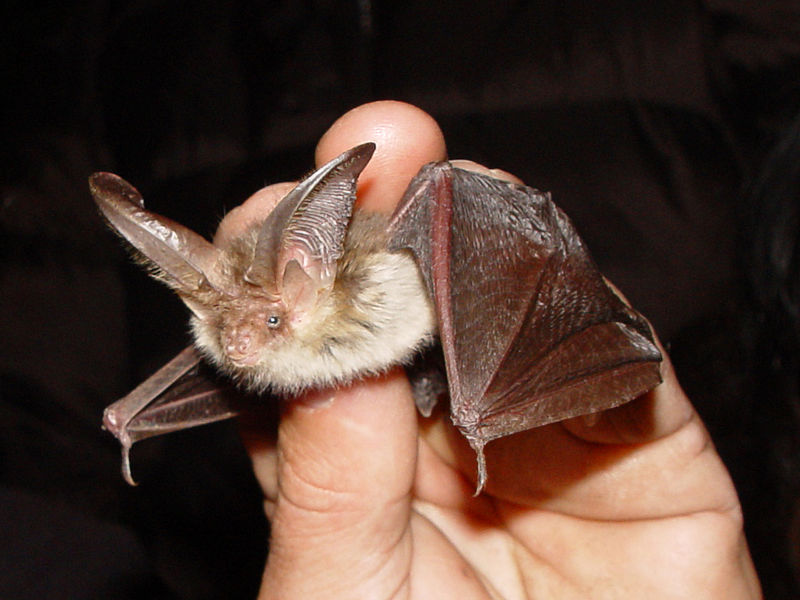
Long-Eared Bat

Vampire Bat

Horseshoe Bat

Tent-Making Bats
One common bat that lives a lot of places around the United States is called the Big Brown Bat (one of my personal favorite microbats, it can be found above). These bats grow about 4 to 5 inches long and have a wingspan of about 11 to 13 inches wide. Like most other bats, the big brown bat eats insects including mosquitoes, moths, beetles and wasps that they catch while in flight. Now a common belief is that bats are blind. Instead of sight, God gave them echolocation to find prey at night. But wait, before we go into what echolocation is, first we must find out if bats really are blind. And the answer is – they aren’t! So where’d that myth come about? Well, it may have something to do with an experiment with a bat. One time, some people blindfolded a bat to see if it could fly out of its cage (the bars had wide spaces), and it did. So those people probably figured that it was blind since it didn’t need eyesight to find its way out. (That also means the phrase, “Blind as a bat,” is a misnomer) Now, echolocation is a special thing God gave the bat. 

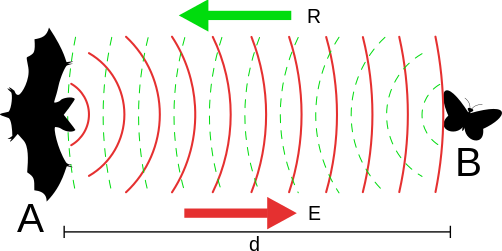
The red lines represent the bat's sounds and the green lines represent the sound bouncing off the insect and to the bat's ears
Echolocation works a lot like the sonar on a submarine. The trick is simple: the bat makes sounds (too high for us to hear with our naked ears – that is without special equipment) and the sounds bounce off objects around the bat and they come back to the bat. This is how bats can find prey in total darkness. Cool, huh? For big brown bats and other bats, this normally works out just great . . . except for some species of moth. Bats love moths, but some species of moths have a special “ear” that helps them hear the echolocation and at the last moment they can swerve out of the way. It drives the bats crazy! So that is why one bat has a special trick for catching those types of moths. It’s called the Long-Eared Bat. The long-eared bat uses echolocation to find where the moth is, but as it closes in for the kill, it turns its sonar off and just uses those big ears to hear exactly where the moth is before bon appetite! By the way, bats don’t get tangled in people’s hair. People probably thought this because sometimes bats will seem to swoop down on people. But in fact, it’s the insects that swoop down near the people and the bat is merely following the insects!

Big brown bats are the bats we often see flying around at night here in North America. They roost in large colonies that can be found in caves or even sometimes in old barns (not all bats roost in caves, some even roost in trees). Other than moths, they also eat mosquitoes, gnats, flies, and can even take spiders out of their webs. Taking a spider off of its web is not as easy as it sounds, as the bats can easily become tangled in the sticky silk. However, they do manage. Don’t think bats are restricted to invertebrates (e.g. spiders and insects), some species also specialize in fishing and “mousing”. You read right, they go “mousing”! I’m not sure that’s a word, but they really do hunt mice!

Bats however are not without predators, owls love to eat bats. This is why bats love going out on the darkest of nights, as owls, which rely on sight, can’t see very well in pitch black. Meanwhile bats use sound, not sight to “see” so they don’t need any light.

It is true that most microbats eat insects, but there are some with a more “horrific” diet. They drink blood and they are called Vampire bats! Vampire bats, contrary to popular belief aren’t outside waiting to suck your blood. First of all, they only live in central and south America! So there’s no way a bat could suck your blood in the United States! And another reason? There are only three species of bats that suck blood. Don’t think that the United States has always been safe from Vampire bats though, fossils show that they used to live in the Southwestern portion of the USA. If you lived back then in the other parts of the USA, France, Canada, Australia, Africa, Asia and etc. you’d always be safe – Vampire bats never lived in any of those places.
You have to admit, this Vampire Bat's face is absolutely cute!
But Vampire bats aren’t really that bad once you get to know them. So what do they do exactly? Well, a Vampire bat will leave its shelter at nighttime to find a large animal, perhaps a cow or a chicken (I know chickens aren’t large too us, but to a little bat they’re huge!), or perhaps a person. Then they land on the ground near the animal and use those sharp teeth to bite into the leg and draw blood. But perhaps the term “blood-sucking” is incorrect. For these bats don’t suck blood, they lap it up. Doesn’t that sound nicer? Special stuff in the bat’s saliva stop the blood from clotting, so the bat can just go on feeding. Then the bat will get up in the air (often making a quick bathroom break so it isn’t too heavy to fly home) and go back to its cave. These bats may seem mean, but they really have a “tender soul”, when arriving at their home cave, some bats didn’t get the chance to fly out and get some blood, maybe they were injured or sick. Then these hungry bats merely lick the side of the blood-stuffed bat’s head and the bat will cough up some drink for the hungry bat to eat, er . . . drink. See, Vampire Bats even make donations to help the poor!

As we just learned, bats are terribly misunderstood. They don’t get tangled in your hair, they aren’t (all) waiting there to suck blood, and they also don’t always carry rabies. It’s true that some bats might have rabies, but they are just as likely to get rabies as a dog or cat. So it would be unfair to call bats “rabies carriers”. Bats have been mistreated for years because of their bad rap. People have killed whole innocent bat colonies (and these weren’t even vampire bats), just because they didn’t understand them. We really should take care of the bats. God provided them to eat harmful and pesky insects and some bats that we didn’t discuss also work as pollinators for many plant species. Sometimes, bats need a little more helping hand though than just not killing them.
Check out the bat in the picture below:
That yucky white stuff on the cute little face of this bat is a fungus.
Notice that white stuff on its nose? Well, that’s a fungus. Bats with fungus growing on their noses have a disease called white-nose syndrome (WNS). It isn’t completely understood, but it is killing millions of bats, and millions of bats dead means billions of more flies, gnats and mosquitoes! So when a 13-year old named Gwynne Domashinski, needed a project for a science fair, she chose to study WNS and look for a solution. Her theory was that perhaps the moistness in the caves was causing the fungus to grow on the bats, since fungus grows extremely well in moist places. Perhaps by lowering the humidity the fungus will stop growing. So Gwynne got in touch with a bat scientist named Deeann Reeder and Gwyanne was invited to the lab to test the ideas about WNS and the humidity. It will take time to unravel the secrets of WNS, but every little thing helps (by the way, Gwynne won third place in the science fair in a statewide competition!).

So there’s a lot more to bats than what meets the eye. Even if we don’t get the opportunity to do something like Gwynne did (who’s was only 13 at the time), there are still ways we can help bats. For instance, we can educate other people about bats and what their job is in nature. And we can also preserve bats habitat and give them places to sleep in the form of bat houses (sort of like a bird house). We should be good stewards of bats, just like God had instructed us in the book of Genesis in the Bible, because bats are really wonderful creatures.

Thanks for stopping by today. Please be sure to come back next Thursday to get more facts on really cool things God made for us to enjoy and more! Bye for now!

PS: Have a puzzling question about nature, animals (including dinosaurs), God, the Bible, myself, my book, “THE KING ON A CROSS” or etc.? Post your question as a comment or send me an email to animaladventures@aol.com.

PS 2: What’s the latest Smiley’s News headline? Check it out by clicking the link.

PS 3: Please help us expand Exploration Books Pedia, it’s free!

Thursday, October 11, 2012

The Bull Shark and Hippo Face-Off!


Hey everyone! Today we’re going to have a ton of fun! Not only is today the premier of my latest stop-motion movie, but we’re also going to look at the other animal in the face-off: the Bull Shark, after some updates of course!

Now we just had a casting call for my Christmas play, “A Big Misunderstanding” this past Saturday New Beginnings Church. My expectations were a bit high unfortunately, and guess what? Just about no one showed up! Again! Fortunately however, I wasn’t sitting there bored for a few hours. I hung out with the one actor who showed up (the actor portraying Ben). But we simply didn’t have enough people to do the casting call. So I say it’s time for Plan D! Plan D is to have a casting call at one more church if the Pastor says yes. But seriously, if we don’t get actors soon, we’re going to have to cancel it for this year. I’m still hopeful though! (For need-to-know information on how and who can be in this performance (no prior experience required) please contact me at animaladventures@aol.com)

Anyway, it’s time we depart from depressing news and get on with it! Right? Now as I already mentioned, today’s animal we’re going to look at is called the Bull Shark or Carcharinus leucas.
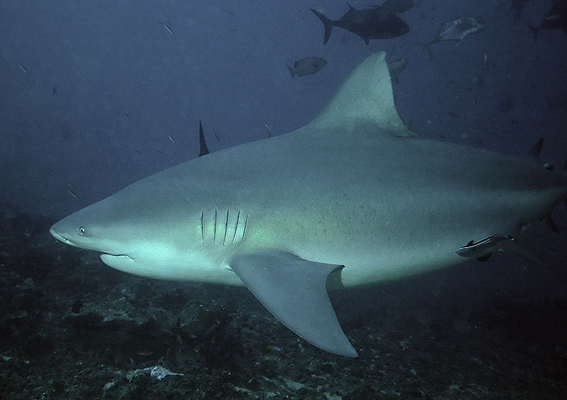
The bull shark is about 11 feet long from nose to tail, weigh over 510lbs and lives in many oceans around the world. Bull sharks eat a variety of things, including fish, invertebrates such as crustaceans, small mammals, carcasses and even other sharks, including young bull sharks. In its mouth it has rows of small but sharp serrated teeth that can cut through the flesh of most victims. But can it bite through two inches of hippo hide in our face-off? You’ll have to wait and see!

The big, bad Bull Shark!
Many of you guys might think that it’s weird for a bull shark to be fighting a hippo considering sharks are usually found in ocean water, but that’s most sharks. The bull shark is a totally different shark! God made the bull shark in such a way that it can live happily in a freshwater lake or river. Most sharks have to stay in salty ocean water just to survive. But not the bull shark! These fish have been found swimming in the Amazon 1,870 miles away from the ocean. The Zambizi Shark, the Lake Nicaragua Shark, the River Whaler, and the Swan River whaler are all the same animal: the bull shark! There is even evidence that they’ve been found in Australian and (*GULP*) American rivers! But don’t worry, bull sharks don’t normally swim in American rivers . . . I don’t think.

The range of the Bull Shark (as you can see, it might include American rivers!)
Some of you might be thinking the hippo can easily kill the shark. But the bull shark has defenses. Like the hippo has thick skin, the shark has tough scales (yes shark have scales). Shark scales are different from scales of most fish. These scales on a shark are made up of little overlapping teeth-shaped objects. Which is why you should never drag your hand across a shark’s skin or else there will be blood in the water, and considering a shark is around, that’s not a good thing to have as we all know!
The bull shark has the highest testosterone level of any animal ever measured. It has also been blamed for more attacks on people than any other shark, yes including the Great White. Compared to Great White Sharks, bull sharks are much worse. But even still, bull sharks aren’t mean, evil, man-hungry animals, they’re just killing for food.

Very few fish are safe from the Bull Shark's jaws!
Now that we’ve learned a bit about each of today’s contestants (if you forgot your hippo facts, please go to the previous blog entry) it’s officially time to start the show! So let’s get started! Simply click on the video below to see which animal wins this face-off:


Wow! That was really cool. That big animal drove his teeth into the contestant, didn’t he?  What’d you think of the face-off? Please post your opinion as a comment! In a few weeks, we I will (Lord willing) be able to show the next face-off: Elephant vs. Rhino. That one should be exciting!

The other large stop-motion film series I’m working on is only just passed the scripting stages. I plan to show it sometime in early 2013. But for now, I’ve got a question to ask:

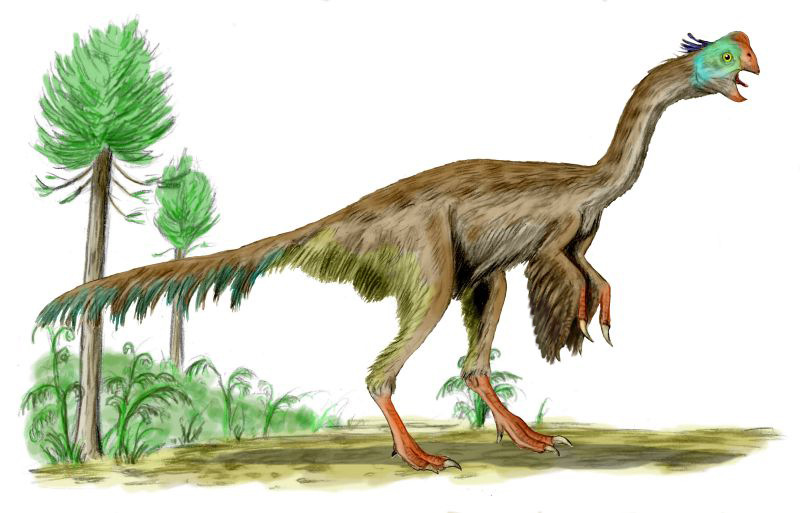
Will this weird-looking creature be in the up-coming stop-motion film series?
Thank you for stopping by today! Please tune in next week to check out a lot more cool facts, updates and other stuff. Bye for now!

PS: Have a puzzling question about animals (including dinosaurs), Creation, Christianity, myself, my book, “THE KING ON A CROSS”, or etc.? Post your question as a comment or send me an email to animaladventures@aol.com.

PS 2: Please help expand Exploration Books Pedia. It’s free!

PS 3: Be sure to check out what my bud Mr. Smiley has on his blog, Smiley's News.

Thursday, October 4, 2012

The Amazing Hippopotamus

Welcome back to my blog everyone! A lot of stuff has been going on around here.

First of all, the casting call for the Christmas play I wrote called, “A Big Misunderstanding,” is scheduled for October 6th at 11 0’ clock. For more need-to-know information, please contact me at animaladventures@aol.com. Hopefully, this casting call will be wa-a-a-a-a-a-a-a-y better than the last one we had. I still remember that day, the day I sat on that uncomfortable bench for a whole three hours just waiting for someone to show up . . . but I’ll stick with the positive stuff today!

The next stop-motion film, “Animal Face-Off: Hippo vs. Bull Shark,” is coming along great! Unlike the other films I’ve made, such as “Jurassic Park: The Game: Triceratops Trouble” and “Animal Face-Off: Lion vs. Tiger” this film will have something the other two didn’t: verbal narration! I’ve discovered how to use the audio recording system on the computer I’m using so I can narrate the film (I will still have to use some subtitles for some of it though because while music is playing on the film I can’t also put narration in – in other words, I can’t have two pieces of audio playing at one time). I expect the “Hippo vs. Bull Shark” film to be finished by October 11th or sooner! I can’t wait! As we speak, this movie is about 99.5% finished! In an earlier blog post I mentioned that I am working on a longer stop-motion film series. I won’t give the title away, but I will merely just say script writing for it is going well.

Sure, we all have seen hippos in books, movies, cartoon shows and even board games, such as “Hungry, Hungry Hippos”. But do you really know everything about hippos? We’ll see in a minute!


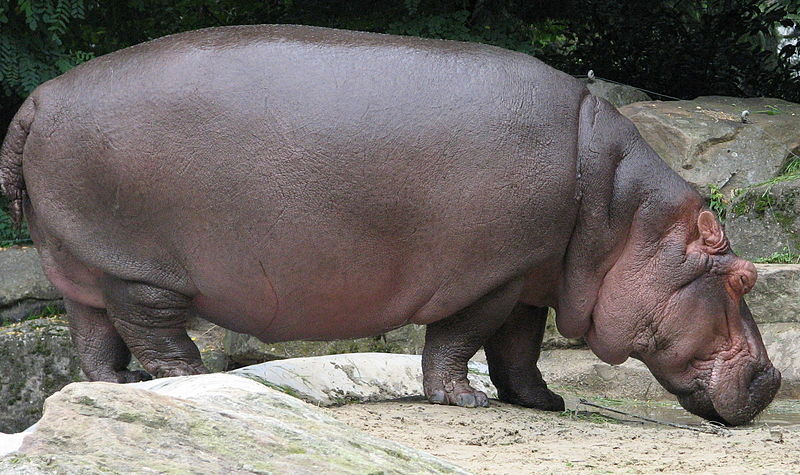
Now, the Hippopotamus amphibius or hippopotamus, lives in the lakes, ponds and rivers in Africa. Did you know the word “Hippopotamus” actually means “River Horse”? It gets the name from the way it moves underwater. A lot of people believe hippos love to swim. While hippos do swim on occasion, most of the time they live in shallow water that is just deep enough to fully cover their bodies. So when the hippo meets the shark in the face-off, it won’t be swimming, it will be walking across the bottom, almost as if it is slowly “galloping” like a horse.

Hippos underwater
A full grown hippopotamus, which is about 11 feet long and 7,000 pounds, may look fat, clumsy and slow, but do not, I repeat, DO NOT be fooled. On land, hippos can run up to 30mph! In Africa, people say never get between a hippo and the water, because then it will be able to run you down easy. While a hippo may look fat, most of that is actually muscle and bone, and hardly any fat at all. No wonder they can run so fast! Even though they look a lot like land animals, as we all know, they prefer to spend their time in the water because their skin can dry out in the heat. Fortunately, God gave these animals the ability to produce a sort of “sunscreen” that comes out of their skin. In the wild, hippos live in herds that is ruled by a dominant bull. The dominant bull is the biggest, meanest bull in the area and he will jealously defend his territory from rival hippos. Why is he so protective? Well, he wants to be the only one to be able to mate with the females. A herd of hippos consists of a dominant male, a few younger males, and up to 200 females and their young. However, most herds only consist of about ten members.

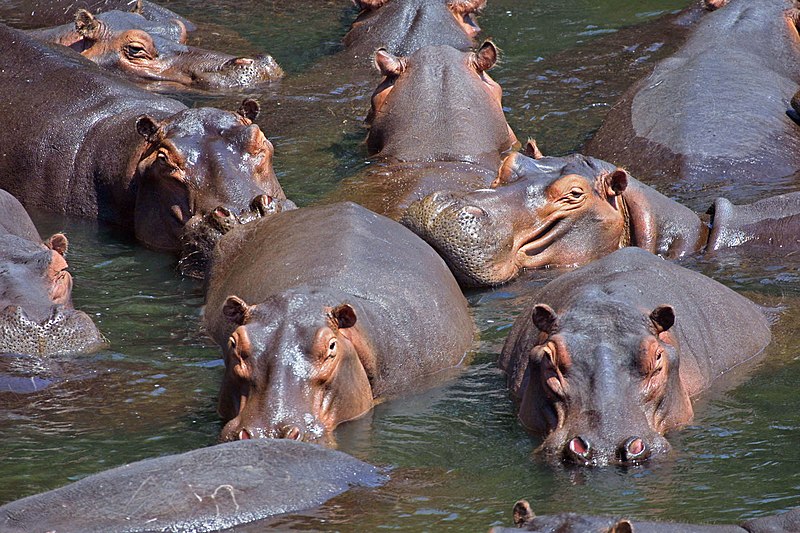
A pod of hippos
Hippos are famous for their large gapes. These creatures can open their mouths almost 180 degrees! That’s almost all the way back! If you ever travel to Africa, you might notice a male hippo yawn. They do this to scare rivals away. But when yawning doesn’t work, the male hippos face-off. This is what they use those teeth for – to fight with other males and defend themselves. Hippos can inflict deep wounds in other rival hippos. However, God gave these animals tough immune systems so they don’t get infected. I myself have seen hippos fight and believe me, they don’t play nice with each other. I must have been only 5, 6 or 7 when we went to Disney’s Animal Kingdom’s hippo exhibit and two hippos had a brief fight (fortunately it didn’t get blood, and unfortunately, I couldn’t get a picture). Don’t think wild hippos would treat you any nicer than they’d treat a rival! Hippos have killed more people in Africa than lions, elephants, crocodiles and buffalo combined! Why do they kill so many people in the first place? Well, a lot of people will go out on African rivers in these tiny canoes. The hippos (especially males) see the boats as a threat so they (violently) tip it over. And if that doesn’t kill you or make you drown, and then often times crocodiles will come by after the hippo has left and kill the people. Even crocodiles however treat hippos with respect. Hippos have been known to bite crocodiles in half!

A hippo's open jaws
Despite their terrible side, hippos are vegetarians. But they don’t eat water plants. Instead, they come out of the water at night, when the sun won’t dry their skin out, and eat grass. Hippos are also wonderful parents. Surprisingly, hippos don’t give birth on land, instead they give birth underwater. A mother hippo will fiercely protect their young from predators.

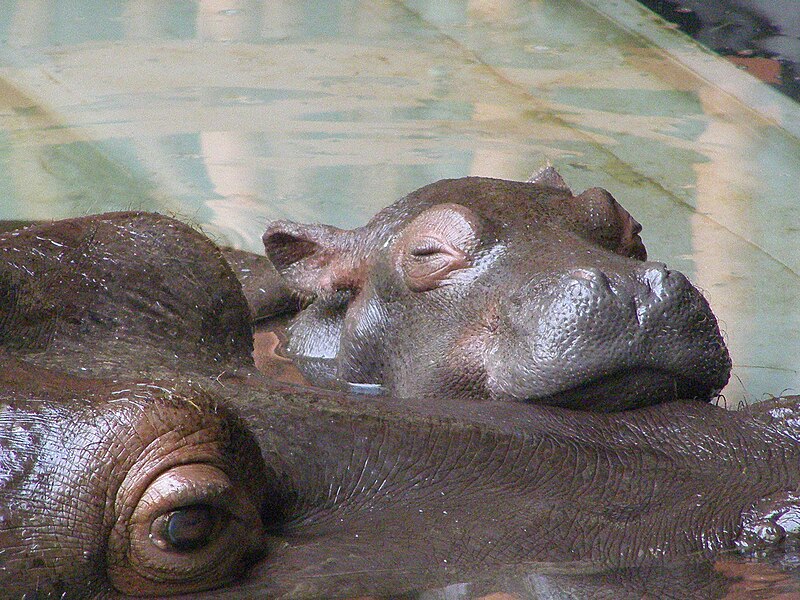
A hippo calf resting on an adults head
When most people hear the word “hippo” a large hippopotamus comes to mind. But there is another species of hippo called the Pygmy Hippo, lives in Central African Rivers. But either big or small, hippos are definitely another amazing animal God created.

Thank you for stopping by today. Check back next week to learn about more really cool facts, updates on various stuff, and in a few weeks, the next stop-motion movie. Bye for now!

PS: Have a puzzling question about animals (including dinosaurs), Creation, God, the Bible, myself, my book, “THE KING ON A CROSS” or etc? Post your question as a comment or send an email to animaladventures@aol.com. Also send me an email to receive more information on the Christmas play.

PS 2: What’s the latest headline? Check it out, straight from my friend Mr. Smiley at Smiley’s News.

PS 3: Please help expand our wiki: Exploration Books Pedia.

Thursday, September 27, 2012

Three Seeds Went To Sea, Sea, Sea To See Where a Seed Could Seed, Seed Seed . . .


Hi guys, welcome to today’s post. As always, before I get to the new stuff, I’ll give updates on the old stuff.

First of all, the Christmas play, “A Big Misunderstanding,” is still on hold until we get some actors. December is approaching very fast, so if we don’t get actors soon, we might have to wait till next year! And everyone knows that’s way too long to wait. So if you would like to help, please contact me at animaladventures@aol.com to get locations, times and other need-to-know information.

The stop-motion film I will be working on, “Animal Face-Off: Hippo vs. Bull Shark”, will begin production during the first week of October (Lord willing). So it’s not that long to wait. I am also working on another great work, that will come out after I finish the Face-Off series. I don’t want to give away too much, but I will say it’s very cool.

Boy time flies doesn’t it? It’s fall already! For those of you that don’t know, fall began on the 22 of September, five days ago. A lot of things are getting ready for the season. Humans are gathering food from gardens and fields, and we are also getting ready for a big holiday: Halloween (I don’t celebrate Halloween, but we’ll talk about that a little later). Nature is getting ready for the change from summer to autumn as well – God gave the leaves on the trees the ability to change colors. Some trees shed their leaves, others just lay dormant. Some plants will wither and die. Animals are also getting ready for the change. Bears will be entering hibernation and some birds will be flying south for the winter for instance. Every day around 7:30ish a.m., while I am typing something on my computer, I will hear Canadian Geese honking as they fly over my house. I suspect I won’t see them any more soon until spring arrives once again.

Trees and other plants have an agenda of their own: get rid of their seeds so they can be ready to reproduce in the spring. But how do they do this? Well, many get rid of their seeds in a way of deception. Some for instance encase their seeds in delicious-looking (and tasting) nuts. This is when a cute little mammal comes into the scene: the squirrel! We have bunch of these guys living in a giant oak tree in front of our house. They chitter and jump around up there all the time. They now how to make a mess too! Acorns and leaves litter our driveway. Sometimes, an acorn will hit me square on the head! (But unlike Chicken Little, I don’t go around screaming, “THE SKY IS FALLING!!!”) As we all know squirrels will go nuts for . . . well, nuts! They spend a lot of their time collecting them and storing them underground. But sometimes the squirrel will forget a few nuts, so the nut has the opportunity to grow into a mighty tree! Squirrels are also being “green” this fall. Next time you go outside, see how many squirrels you can spot in a tree. If you’re quiet, you might even see them bury a nut for later.

As we all know, squirrels love these things!
Fruit has always been tempting to eat. Even back in Genesis, Satan tempted Eve to eat the forbidden fruit God instructed not to eat. Of course, today for the most part it is good to eat fruit (it wasn't that Eve eating the fruit was bad, it was the disobedience that was bad, but that's a whole other topic!). When humans eat fruit, they normally just spit the seeds out in the trash, depending on the type of fruit (it's very hard to spit banana seeds out, they are just too tiny). But animals don’t spit their seeds out a lot. They normally eat the fruit, seeds and all. Birds often eat fruit, but while the fruit’s flesh deteriorates in the stomach acids, the seed stays intact and comes out when the bird takes a “bathroom break”. The seed then falls to the ground and is ready to sprout, often times miles from the parent plant. The bird droppings even act as fertilizer for the baby seed. Some fruity seeds include, peaches, apples, bananas, raspberries, blueberries and sunflower seeds. This rule exists in other places too. Take the African Savannah for example. Antelopes, impalas, and giraffes can take seeds many miles across the Savannah! When you go outside, look for trees or shrubs with fruits on them. You can open the fruits up and check out the seed package inside.

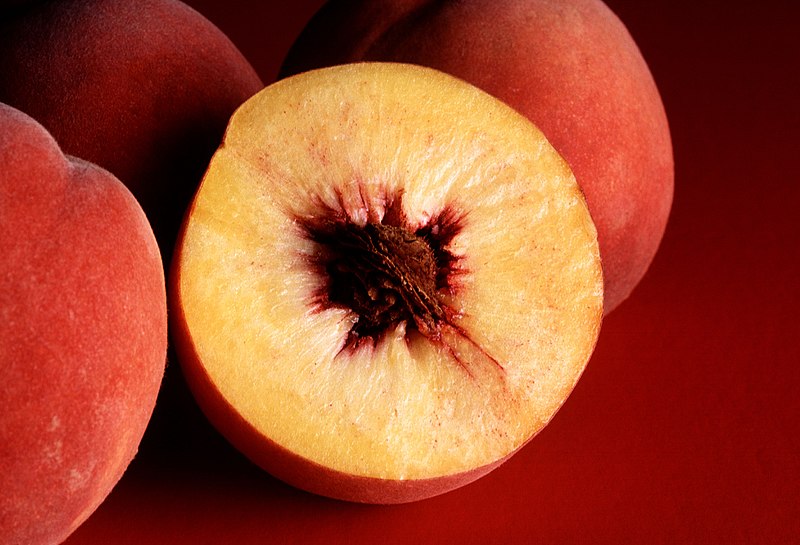
The fleshy fruit surrounding the seed of a peach

Back to North America! Some seeds prefer a different method of getting around. Small seeds such as jewelweed, violets, and witch hazel come in little, leafy seedpods. Then at just the right moment, the seedpod will pop open and little seeds go whizzing through the air and land far from the parent plant. Neat trick! You can try out this trick! Try touching a seedpod and if it’s the right time, the seeds will pop and fly off to a new destination!

These pods look about ready to pop!
Some seeds like to get places a little quicker than that. They prefer to stick to moving objects, literally! The seeds of sticktights, burdock and a bunch of others have seeds called burs. You know those spiky objects your dog comes home with in its fur and they take forever to pull out? Those are burs. The bur trick of moving from place to place is to hitch onto to a passing object, such as a dog, a cat, a deer, or even your clothes. You probably guessed that the little spikes on burs keep them clinging on, and you would be correct. The burs simply stick onto whatever they stuck to until they either fall off or the animal (or person) scratches it off! Next time you get a bur on your dog or yourself, instead of throwing it in the trash, look at it closely in a microscope to see what these little guys look like up-close and personal (just don’t get pricked on those spikes!).

Did you know burs gave inspiration for Velcro?
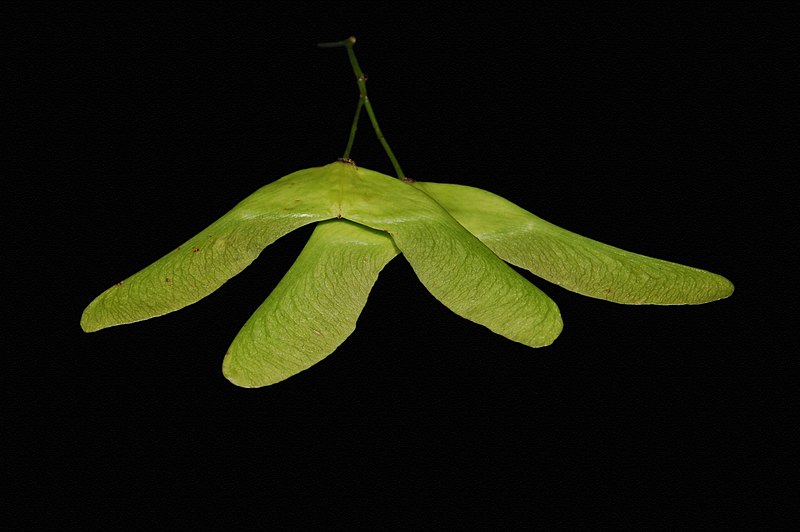
Another way seeds get around is by whizzing through the air. Instead of falling off the tree, maple seeds just get carried off by the wind to lands afar. They have curved “wings” that help it spin in the wind like a helicopter blade does. My sister, Halle and I used to play with them all the time. We would pick up a bunch of them and throw them up in the air and watch them spin! What fun that was! You can give it a “whirl” too, just get some spinners and toss them in the air and watch the fun!

These little guys will appear to "flutter" to the ground after falling off a tree
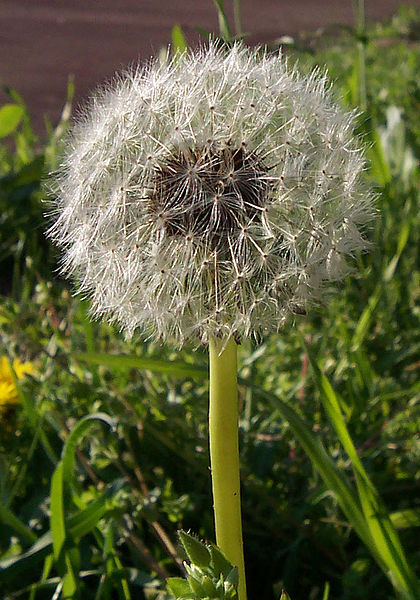
The only problem with the “whirly seed” trick is that the landing has got to hurt if the seeds could feel pain, they would probably scream after falling. One seed doesn't just float in the air and plop down, it gently descends down to earth. You may often blow the seeds of dandelions, milkweed and other plants. These plants have their seeds in, or connected to little tufts of fine, silky hairs. Normally these hairs are tossed about by the wind before gently drifting down to the ground and growing up where they land. However, you can help with this process too! Just get a little dandelion seed and blow really hard. See how far you can get it. You could even have a dandelion race with your friends (just don’t breathe in or you’ll get a mouthful of fluff!).

If you were to blow on these,  they'd go up, up, up and awa-a-a-a-a-ay!
While drifting in the air and gently descending down is really fun, what happened if the seed fell in a pool of water? A pond? A lake? A sea? An ocean? The poor little thing would probably not have the opportunity to reproduce. Spinners, burs, and acorn-like nuts can’t travel across bodies of water easily (some fruity seeds can because they are inside an animal’s body while traveling). So therefore, most air-floating seeds can’t cross large bodies of water without falling in it. But some seeds can cross large bodies of water, even oceans. Some seeds such as coconuts can do this. So when a coconut falls into the water, it can float to new places such as islands. Talk about wide-spread! Coconuts aren’t the only water-floaters rocking the dock! Try to get some seeds where you live, toss them in a puddle or a pond and see if they float. (now hearing the rest of this posts title makes sense: . . . but the only place they could seed, seed, seed was the bottom of the deep blue sea, sea, sea! See?)

A Coconut sprouting a leafy stalk
Wow, seeds are way more impressive than what meets the eye! They really know how to get around don’t they. Seeds are just another example of a beautiful creation God has made for us to enjoy! 

Thanks for joining me today. Be sure to check back next Thursday to see what’s what in the amazing world we live in. Goodbye!

PS: Have a puzzling question about myself, nature, animals (including dinosaurs), Creation, God, my book, “THE KING ON ACROSS”, or etc.? Post your question as a comment or send an email to animaladventures@aol.com.

PS 2: Can’t get enough of nuts? Then you and squirrels have a lot in common! Check out the latest headline of Smiley’s News to see what my buddy Mr. Smiley has to say!

PS 3: Don’t forget, if you want to take part in the Christmas play, “A Big Misunderstanding,” send me an email.

PS 4: Ok, no one thinks this joke is funny, but maybe you will: Why didn’t the Sloth Bear cross the road? I’ll answer the joke next week.

PS 5: Please help expand our wiki: Exploration Books Pedia! It's free and fun!

Thursday, September 20, 2012

Polly Want Lamb Chops?

Welcome back everyone. Today we’ve got a lot of cool and wacky stuff to go over, so let’s get started!

First of all, the Christmas play I wrote, “A Big Misunderstanding,” is sort of on hold. We only have three actors so far (two of which being my sister, Halle, myself and another youth). We really need to get this play going though, considering we plan to produce it on December 8th. So if you’d like to help with this production, please send an email to me at animaladventures@aol.com.

Other than that, what else is going on . . . hmmm . . . oh! I remember! My next stop-motion movie: Animal Face-Off: Hippo vs. Bull Shark will be coming up soon. I plan to start “filming” during the first week of October and then after that it should (Lord willing) be easy-peasy lemon-squeazy. But how much do you really know about each contestant? Well, we will take a really close look at each animal soon, but today we’ll learn a few things about each animal.

The Hippopotamus is a large herbivore living in the rivers, lagoons, lakes and ponds of Africa. It has huge jaws and large canine teeth. These are mainly used for fighting other males. They may look fat and slow, but don’t be fooled – an angry hippo can run at over 30 mph! And hippo’s aren’t fat either, most of that bulk is actually made up of muscle and bone and almost no fat.

The Bull Shark has the highest testosterone level of any other animal ever measured (since dinosaurs are extinct, we obviously can’t know how much testosterone they had). These sharks have killed more people than any other shark, including the Great Whites. This shark has also had some interesting remains in its stomach – hippo flesh!

Who Will Win?!?
Hippopotamus

vs.
Bull Shark
So which contestant will win the fight? Well, you’ll just have to wait till it’s all finished in a few weeks!

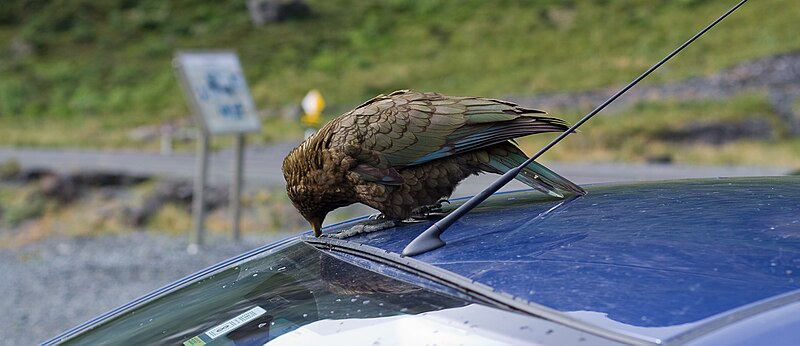
People just love birds. One of everyone’s favorite types is no doubt the parrot. Parrots are very smart birds. We can train them to talk and recent tests even prove that at least some parrots actually know what they’re saying instead of just calling out words! God made these birds for us to enjoy. Parrots come in a wide range of sizes, from small Budgerigars to the giant Kakapo. Haven’t heard of the Kakapo? Well, it’s this large green parrot that lives on New Zealand. It’s not very parrot-like at all; it can’t fly! Most parrots, as we all know, can fly very well. We often like to have them sit on our shoulders, especially pirates. But one species of parrot is bound to surprise you. 
A Kea sitting on a rock.

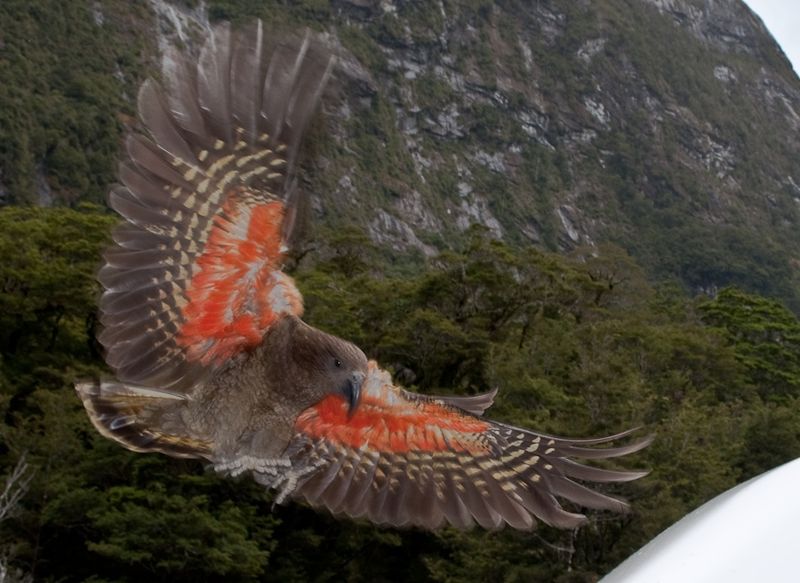
This Kea Parrot is about to land on a white car. As you can see, the undersides of its wings are a beautiful orange color.
It’s called the Kea, a small green parrot (about 19 inches long) living in New Zealand. Most parrot species are loved by millions, but not the Kea. It denies normal parrot behavior and is rather . . . “mischievous”. First of all, it likes to live in urban areas where they will tip over trash cans, break car windows, invade camping sites, and play with windshield wipers to the point of breaking them! (So they’re sort of like foxes on the wing) Another thing that makes this parrot unique is that instead of living in the lush tropical forests, it lives in the snow on the alpine slopes. Keas are the only parrots known to live in this kind of habitat.

But probably the most surprising thing about the Kea is that instead of asking it, “Polly want a cracker?” you may want to ask, “Polly want a lamb chops?” This parrot will eat fruit, but lately, they've decided to go . . . no . . . it couldn’t be . . . could these guys be turning . . . CARNIVOROUS?!? Strange but true, in the spring, summer and fall, they normally eat daisies, berries and other fruits, nectar, pollen, insects and etc. But Keas have been seen actually eating not only stuff from trash cans (which is why they tip them over in the first place), but they also will eat carrion. In winter, these foods are harder to find. The rampage began in the 1800’s when people introduced sheep to New Zealand and the Keas started to eat carrion of dead sheep. Then they really went on the rampage! Keas are believed to have actually killed 200 or so sheep in a single night (in 1884) and 15,000 sheep in a season in. Just when you saw some animals appeared to be giving meat up like the lions did in a post I wrote a couple of weeks ago, another animal switches onto meat.
How on earth do they kill sheep anyway? Well, they fly over to the sheep and start pecking at sores and I’d assume the sheep eventually died of shock and blood loss. Four main theories arose as to why the Kea transformed almost overnight to be a sheep-killer:
A Kea damaging a car.
  1. They just switched from eating insects to eating sheep
  2. There were maggots in the carrion they were eating so this is when they developed a taste for meat/ 
  3. The Vegetable Sheep theory is: Keas thought the sheep were plants when they were lying down so they just accidentally ate a sheep and thought, “Hey, this tastes pretty good! We should do this more often!”
  4. The bird’s diet changed because of theory adaptability, intelligence, curiosity and mischievousness

The last theory I mentioned is the one most scientists believe is most likely. Many scientists believe they also used to feast on Moa carrion too (Moas are giant birds that went extinct a few hundred years ago). Boy, I’m sure glad these birds don’t prey on people! If they did, we’d all be in big trouble no doubt! Because of their sheep-hunting behavior, the Kea was hunted and actually became endangered. The good news is, this bird received full protection in 1986.

Fortunately for all sheep-kind, Kea predations on livestock have gone down drastically. They are getting rarer and rarer over the past few years. However, occasional Kea attacks on sheep are still being reported, and most of these attacks are on sheep that are old, weak or sick (but some people sometimes will find healthy sheep with Kea wounds). So it seems as though the Kea is finally calming down . . . at least for the moment . . .

But don’t you start thinking this is the end of it! Kea’s aren’t the only so-called herbivores that weren’t told they are supposed to eat plants! A farmer in India lost 48 of his chickens. He suspected some dogs had done the deed, so he and his brother went out one night to catch the culprit. Boy were they in for a surprise when they saw his cow named Lal sneak into the chicken coop and started to grab and eat the chickens! How shocking in deed. So it turns out those cows promoting Chick-Fil-A aren’t only promoting the business, they’re also eating at the business!

Another example would be the was when someone took a trip to Kangaroo Island in Australia, the person dropped a BBQ steak sandwich. Then two grey kangaroos came in and devoured the sandwich, bread, meat and all.

In 1992, a wild Panda Bear killed and ate 26 goats before being captured and studied. In 2002, a British researcher got quite a shock when she saw a sheep snatch an oblivious grouse and devoured it whole! 

Another sheep was seen gobbling up nine chickens. There’s even a horse that actually will chase down chickens and eat them whole. And believe it or not, when a film crew was filming a migration of Wildebeest in Africa, they were migrating through a river where our “friendly” hippos live. Some wildebeest were killed by crocodiles who also inhabit the river, but before some of the crocodiles could eat, hippos came in and started eating the carcass!

Should I go on? Just as many carnivorous animals will have a vegetarian diet, many animals have become carnivorous herbivores. This, as horrifying as it may be, is a reminder to us that all animals were originally designed to eat plants as it says in Genesis. But after the first people rebelled against God, animals could go either ways. Most chose to go herbivorous because that was what their bodies were most designed for, but others chose to become carnivorous. Of course though, as we just learned, animals can change their diets. Fortunately most animals tend to stick with the diets that best suits their bodies (for instance, while horses can eat chickens, they must have a hard time tearing the bird apart with those dull teeth). Most animals probably would get sick if they tried to eat food that doesn’t suit their body. However, even in this fallen world we live in, God has promised us to one day, restore His beautiful creation.

Well, this must have been an eye-opener for a lot of you! It was for me when I first learned this stuff. That’s all for now, so until we meet again, I’ll look forward to seeing you next time. Bye!

PS: Have a puzzling question about creation, animals (including dinosaurs), myself, my most recent book “THE KING ON A CROSS”, a stop-motion movie or etc.? Post your question as a comment or send me an email to animaladventures@aol.com.

PS 2: Don’t believe anything I said about these carnivorous-herbivores? Check out these links: Carnivorous CowBird-Killing SheepWild and Woolly! and Air Attack.

PS 3: Want to see my latest stop-motion film, “Animal Adventures Presents: Animal Face-Off: Lion vs. Tiger”, or my next-to-latest film, “Jurassic Park: TheGame: Triceratops Trouble” either by clicking the links or by going on Youtube.

PS 4: Want to see the latest headline? Go to Smiley's News

Thursday, September 13, 2012

Animal Face-Off: Lion vs. Tiger!

Hello everybody, thanks for stopping by today. Now I’ve got some good news and some bad news. Bad news first: we lost our “Zoey” for the Christmas play I wrote, “A Big Misunderstanding.” But even though this is pretty bad, there is something good to come out of this. Now a part has opened up. So that means we still need the parts of Kate, Mira AND Zoey, along with the 12 other NON-SPEAKING ROLES. So if you like acting and are close enough to take part in this production, please contact me as animaladventures@aol.com for locations, times and other need-to-know stuff.


Now, I know how you have been waiting anxiously for the good news, here it is: “Animal Face-Off: Lion vs. Tiger” is here for you to view today! This is the third stop-motion movie (or short film) I’ve made, the first one being “Dinosaurs – The Mission.” I didn’t put that one on my blog because it isn’t really that good. As a matter of fact, it’s quite the contrary. But my second one, “Jurassic Park: The Game: Triceratops Trouble” is on this blog for viewing. But enough about stuff I’ve already done, let’s talk about this film. Later, if you want to view it on Youtube, it is on my Youtube channel: ANIMALADVENTURES CHANNEL, where you can see it and the other films I have on the channel (if you choose to watch the whole channel, please check out www.answersingenesis.org to learn some facts from a creation world-view). So, after all these many weeks of waiting, let’s see which jungle cat, the lion or tiger, will win in a virtual face-off right now. Be sure to . . . what? Oh, Ok, I won’t keep you any longer; let’s see the outcome of the fight:

Well now, that was interesting. That cat really nailed the other one down didn’t it? As it said in the video, please be sure to check the next stop-motion film: “Animal Face-Off: Hippo vs. Bull Shark.” I will probably start production on that film a few weeks from now (perhaps it will be finished sometime in October). Also please tell me how you liked the film you just watched by posting a comment or emailing me the feedback.

As for what else is going on around here, well, not much. With the play on standstill we can’t really do much with it until we get some more actors. My next book, the dinosaur one, is also on standstill. My editors have yet to read it because of their busy schedule. But once they read it, Lord-willing, I will be able to publish it. I hope to publish it by the winter of 2014. I’m not saying it will necessarily take that long to publish, but that’s my deadline and Lord willing, it will get finished before that time.

After the Animal Face-Off series, I have some great stop-motion films planned. By that time, I will hopefully be finished with these “practice films” so I can move onto the big stuff. I am working on an episodic mini-series that I hope to “produce” after the Animal Face-Off series. I don’t want to give away too many details yet (that spoils the surprise) but I will say that it’s going to be a great work once finished.

So that’s all the new stuff happening around here. Be sure to check back next week for more cool stuff. See you next time!

PS: Have a puzzling question about me, my latest book “THE KING ON A CROSS”, animals (including dinosaurs), stop-motion movies, Creation or etc? Send me an email to animaladventures@aol.com or post your question as a comment (If you send an email, PLEASE SAY IN YOUR EMAIL THAT YOU KNOW ABOUT THIS BLOG SO I DON’T THINK IT’S SPAM).

PS 2: Be sure to check out our wiki website, ExplorationBooks Pedia and the latest headline on Smiley’s News.

PS 3: Want me to write a post on a specific topic? Have a stop-motion movie idea? Send me an email.